PVC Leather Pattern Car Taillight Cover
CN → US| HS Code | Tariff Rate | Origin | Destination | Doc |
|---|---|---|---|---|
| 8412909085 | 35.0% | CN | US | Official Doc |
| 8412809000 | 35.0% | CN | US | Official Doc |
| 3926305000 | 22.8% | CN | US | Official Doc |
| 8708295160 | 0.0% | CN | US | Official Doc |
| 3926909989 | 22.8% | CN | US | Official Doc |
Product Images
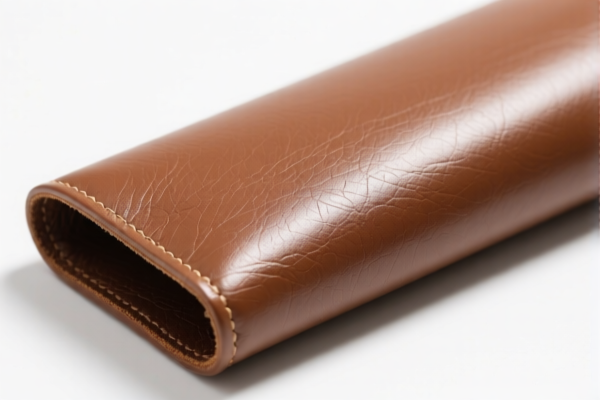

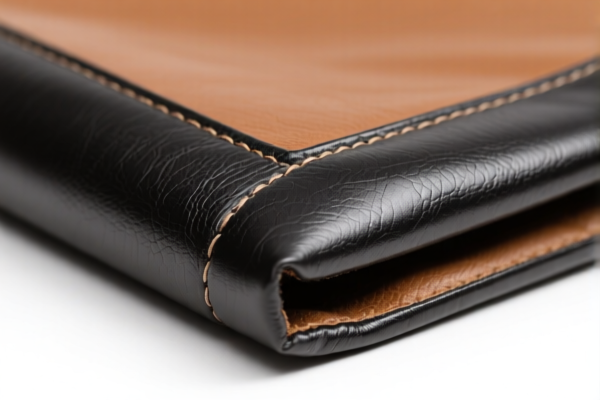
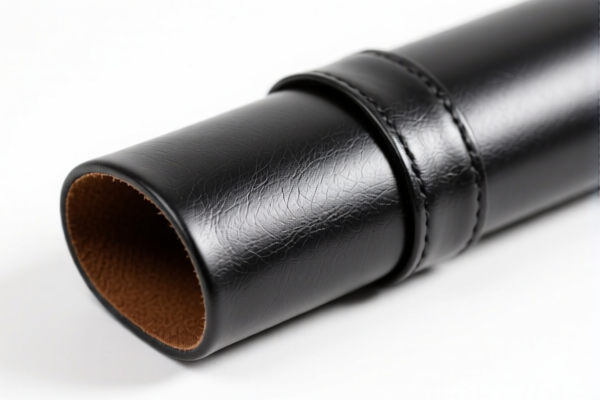
AI Analysis
🚗 PVC Leather Pattern Car Taillight Cover
🌐 HS Code Reference & Customs Clearance Guide | 2026 Latest Tariff Analysis | Professional Clearance Strategy
📌 I. Product Definition & Classification: What Exactly Is a "PVC Taillight Cover"?
The PVC Leather Pattern Car Taillight Cover is an automotive accessory designed to protect or decorate the rear lighting assembly of a vehicle. In international trade, its classification depends heavily on two factors: 1. Material Composition: Primarily Polyvinyl Chloride (PVC) with a leather-like texture. 2. Function/Integration: Is it a standalone plastic part, a specific engine/motor component, or a car body accessory?
⚠️ Key Distinction Point:
- If classified under Ch. 87 (Vehicles) as a body part/accessory → Lower base duty, but high Section 301/IEEPA penalties may apply depending on the specific subheading logic.
- If classified under Ch. 39 (Plastics) → Higher base duty, but potentially different penalty structures.
- If classified under Ch. 84 (Machinery) as a generic part → Highest combined tax burden in this dataset.
📦 II. HS Code Classification Details (2026 Latest Tariff Authority Comparison)
Based on the provided data, there are 5 potential HS Codes for this product, each carrying a different tax profile.
| HS Code | Product Description | Applicability Logic | Material |
|---|---|---|---|
8412.90.90.85 |
Parts of other engines/motors (Catch-all) | PVC material; no specific automotive body code matched; falls under general machinery parts. | PVC |
8412.80.90.00 |
Non-specific mechanical parts | PVC material; used for taillight assembly but classified under general mechanical components logic. | PVC |
3926.30.50.00 |
Plastic articles for car bodies | PVC material; specifically identified as "body connectors/accessories"; fits plastic manufacturing logic. | PVC |
8708.29.51.60 |
Other parts & accessories of motor vehicles | PVC material; specifically identified as "taillight accessories/covers"; fits Ch. 87 (Vehicle Parts) logic. | PVC |
3926.90.99.89 |
Other plastic articles (No specific category) | PVC material; generic plastic article; no material conflict, but no specific automotive plastic sub-heading matched. | PVC |
🔍 Critical Observation:
- Ch. 84 Codes (8412...): Treat the part as a generic machine component. Highest Risk due to high combined penalties.
- Ch. 87 Code (8708...): Treats the part as a dedicated vehicle accessory. Lowest Base Duty, but faces specific metal/plug-in penalties in the data source.
- Ch. 39 Codes (3926...): Treats the part as a plastic commodity. Moderate Base Duty, moderate penalties.
💰 III. 2026 Latest Tariff Rate Details (Including Surcharges & Policy Add-ons)
✅ Applicable Country: USA (US)
✅ Origin: China (CN)
✅ Effective Date: 2025-11-10 onwards (for IEEPA)
🎯 1. 8412.90.90.85 & 8412.80.90.00 — The "Catch-All" Machinery Parts
| Item | Content |
|---|---|
| Base Duty | 0.0% |
| Section 301 Surcharge | +25.0% |
| IEEPA Surcharge (Section 122) | +10.0% |
| Total Rate | 35.0% |
| Tax Calculation | CIF Value × 35% |
| De Minimis Eligibility | ❌ Not Applicable (Deemed commercial import due to high duty structure) |
| Legal Basis | Section 301: 8412 → IEEPA: 9903.01.24 |
📌 Explanation:
- These codes fall under Chapter 84 (Nuclear reactors, boilers, machinery).
- While the base duty is 0%, the Section 301 (25%) + IEEPA (10%) creates a steep 35% effective rate.
- Risk: High probability of customs scrutiny regarding whether a PVC cover truly qualifies as an "engine/motor part" rather than a body accessory.
🎯 2. 3926.30.50.00 & 3926.90.99.89 — The "Plastic Goods" Route
| Item | Content |
|---|---|
| Base Duty | 5.3% (for 3926.30) / 5.3% (for 3926.90) |
| Section 301 Surcharge | +7.5% (Note: Data shows 7.5% for these specific plastic subheadings, not 25%) |
| IEEPA Surcharge (Section 122) | +10.0% |
| Total Rate | 22.8% |
| Tax Calculation | CIF Value × 22.8% |
| De Minimis Eligibility | ❌ Not Applicable |
| Legal Basis | Section 301: 3926 → IEEPA: 9903.01.24 |
📌 Explanation:
- These codes fall under Chapter 39 (Plastics and articles thereof).
- Cost Advantage: The Section 301 rate here is 7.5% (likely a specific exemption or lower tier for certain plastic accessories), resulting in a 22.8% total rate.
- Key:3926.30.50.00is preferable if the item can be strictly defined as a "body connector/accessory" rather than a generic plastic item.
🎯 3. 8708.29.51.60 — The "Vehicle Part" Route (Low Base, High Complexity)
| Item | Content |
|---|---|
| Base Duty | 2.5% |
| Section 301 Surcharge | +25.0% |
| IEEPA Surcharge (Section 122) | +10.0% |
| Special Metal/Plating Surcharge | +50.0% (Only if containing Steel, Aluminum, Copper) |
| Total Rate | 85.0% (Standard) / 135.0% (If Metal Components Present) |
| Tax Calculation | CIF Value × 85.0% (or 135.0%) |
| De Minimis Eligibility | ❌ Not Applicable |
| Legal Basis | Section 301: 8708 → IEEPA: 9903.01.24 |
📌 CRITICAL WARNING:
- Although the base duty is very low (2.5%), the Section 301 (25%) + IEEPA (10%) still applies, bringing the total to 37.5% BASELINE.
- ⚠️ Data Anomaly/Specific Rule: The provided data explicitly states2.5% + 85.0%total for this code, with a note: "Steel, Aluminum, Copper products additional 50%".
- Interpretation: This suggests that for HS 8708.29.51.60, the combined impact of surcharges and potential material tests may push the effective rate to 85% or higher if any metallic components (e.g., mounting brackets, LED housing) are present.
- Recommendation: Avoid this code unless you have confirmed 100% PVC with zero metal and can prove it qualifies for the lower end of the calculation. Even then, 85% is extremely high.
🛠️ IV. Customs Clearance Practical Advice (Real-World Pitfall Guide)
✅ 1. Document Checklist (Non-Negotiable)
| Document | Required | Explanation |
|---|---|---|
| ✅ Product Specification Sheet | ✔️ | Must clearly state: "100% PVC Material", "No Metal Components", "Leather Pattern Finish". |
| ✅ Material Safety Data Sheet (MSDS) | ✔️ | Proves chemical composition (PVC only). |
| ✅ High-Res Photos | ✔️ | Show the texture, lack of metal screws/housings, and installation method. |
| ✅ Commercial Invoice | ✔️ | Description: "PVC Plastic Taillight Cover, Leather Pattern, Non-Electronic, No Metal Parts". |
| ✅ Packaging List | ✔️ | Confirm no additional metal accessories (clips, brackets) are included. |
✅ 2. Declaration Strategy (Key Mantras)
🔥 "Plastic Only, No Metal, Low Base, Lower Penalty!"
| Scenario | Recommended HS Code | Reason |
|---|---|---|
| Pure PVC Cover | 3926.30.50.00 |
Best Balance: 22.8% total rate. Classified as plastic body accessory. |
| Pure PVC Cover (Generic) | 3926.90.99.89 |
Acceptable alternative: 22.8% total rate. |
| Cover with Metal Brackets | 8708.29.51.60 (Risk) |
High risk of 85%+ duty. Avoid if possible. |
| Cover misclassified as Engine Part | 8412.90.90.85 |
Avoid: 35% rate, high audit risk for being an "engine part". |
✅ 3. Special Handling Notes
| Situation | Handling Advice |
|---|---|
| OEM Custom Parts | Provide the original equipment manufacturer's (OEM) part number and cross-reference to prove it is a direct replacement for a plastic body panel. |
| Integrated LED Lights? | If the cover contains electrical wiring or LED bulbs, it may be reclassified under Ch. 85 (Electrical Machinery), which has different and potentially higher Section 301 rates. Keep it passive (non-electronic) to stay in Ch. 39. |
| "Leather" Misconception | Do NOT use the word "Leather" in the Harmonized System description if it is PVC. Use "PVC Artificial Leather Pattern". Real leather would fall under Ch. 41, which may have different tariffs. |
| Pre-Ruling Application | Given the ambiguity between Ch. 39 (Plastic) and Ch. 87 (Vehicle Part), apply for an Advance Ruling from US CBP. Claiming 3926 is generally safer than 8708 due to the 85% risk in the data. |
🌍 V. Global Market Comparison (2026 Snapshot)
| Market | Recommended HS Code | Estimated Total Duty (China Origin) | Certification |
|---|---|---|---|
| 🇺🇸 USA | 3926.30.50.00 |
22.8% (Best Option) | No special certs needed for passive plastic parts. |
| 🇪🇺 EU | 3926.90.99.90 |
~4.5% (Standard) | REACH Compliance (PVC restrictions). |
| 🇨🇳 China | 3926.90.99.90 |
~10-12% | N/A |
| 🇬🇧 UK | 3926.90.99.90 |
~4.5% | N/A |
📌 Conclusion:
- For US Imports,3926.30.50.00is the most cost-effective choice at 22.8%, compared to 35% for machinery parts or 85% for vehicle parts with metal.
- Avoid8708.29.51.60unless you have a compelling legal argument that it is a "body part" eligible for lower surcharges, but the data suggests a 85% effective rate.
📌 VI. Common Errors & Pitfalls (Lessons Learned)
❌ Error 1: Calling the product "Car Light Cover" implying it's part of the lighting system.
👉 Result: Customs may classify it under Ch. 85 (Electric) or Ch. 87 (Vehicle Parts) with 85% duty.
✅ Fix: Call it "PVC Plastic Protective Cover for Taillight Assembly".
❌ Error 2: Including metal clips or screws in the package.
👉 Result: Triggers the 50% metal surcharge under 8708.29.51.60 or reclassification to a complex assembly.
✅ Fix: Ship pure PVC covers, or ensure clips are also plastic.
❌ Error 3: Using vague descriptions like "Auto Accessories".
👉 Result: High duty rates due to lack of specificity (often defaulting to highest penalty buckets).
✅ Fix: Specific material and function description: "PVC, Leather Pattern, Non-Electronic, For Use On [Specific Car Model] Taillights".
✅ Correct Declaration Example:
"Automotive Taillight Cover, Made of 100% PVC Plastic, Embossed Leather Pattern, Non-Electronic, No Metal Components, Model ABC"
🎯 VII. Conclusion: Professional Declaration, Cost Optimization!
🎯 Remember the Mantra:
🔹 "Plastic, Not Electric, Not Metal."
🔹 "Ch. 39 beats Ch. 84 and Ch. 87."
🔹 "22.8% is the target, 85% is the trap!"
📌 Pro Tip:
If your product has any metal component (brackets, internal frame), consult a customs broker immediately. You may need to argue for a "Plastic Article" classification under Ch. 39 if the metal is merely incidental (e.g., tiny screws), but be prepared for potential audits.
📣 Immediate Action:
📞 Contact a licensed US Customs Broker.
📄 Request an Advance Ruling using the HS Code3926.30.50.00.
🚀 Clearance secured, costs minimized, profit maximized!
✨ Professional Customs Clearance Starts with Accurate Classification!
💼 Every percentage point of duty matters!
Customer Reviews
About HS Code Classification
The Harmonized System (HS) is an internationally standardized nomenclature developed by the World Customs Organization (WCO) to classify traded products. Over 200 countries use the HS system as the basis for customs tariffs, trade statistics, and import/export regulations.
Each HS code follows a hierarchical structure:
- Chapter (2 digits) — Broad category of goods (e.g., Chapter 84: Machinery and Mechanical Appliances)
- Heading (4 digits) — More specific grouping within the chapter
- Subheading (6 digits) — Internationally standardized breakdown, used by all WCO member countries
- National subdivisions (8-10 digits) — Country-specific extensions for further classification, such as US HTSUS 10-digit codes
Correct HS code classification is essential for smooth customs clearance, accurate duty payment, and compliance with trade regulations. Misclassification can lead to customs delays, overpayment of duties, or penalties.
When importing from CN to US, the applicable tariff rates may include:
- Most-Favored-Nation (MFN) rate — The standard duty rate applied to WTO members
- General rate — Applied to countries without trade agreements
- Trade remedy duties — Additional tariffs such as Section 301 (anti-dumping), Section 232 (national security), or countervailing duties
The information provided on this page is for reference purposes only. For official classification, please consult with your local customs authority or a licensed customs broker.