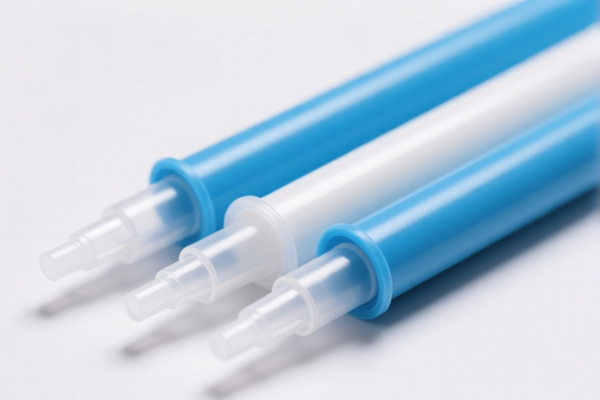
PVC Medical Tube
CN → US| HS Code | Tariff Rate | Origin | Destination | Doc |
|---|---|---|---|---|
| 3917230000 | 38.1% | CN | US | Official Doc |
| 3917320010 | 38.1% | CN | US | Official Doc |
| 3926909987 | 22.8% | CN | US | Official Doc |
| 3926909989 | 22.8% | CN | US | Official Doc |
Product Images



AI Analysis
🏥 PVC Medical Tube (Polyvinyl Chloride Tubing for Medical Use)
🌐 HS Code Reference & Customs Clearance Guide | 2026 Latest Tariff Analysis | Professional Compliance Strategy
📌 I. Product Definition & Classification: Do You Really Understand "Medical PVC Tube"?
PVC Medical Tubes are critical components in the healthcare supply chain, used for intravenous (IV) lines, tubing for dialysis, respiratory equipment, and fluid transfer systems. In international trade, their classification depends heavily on material composition and functional design.
Key Distinction: - Specialized Polymer Products (Chapter 39, Heading 3917/3926): If the product is strictly defined as a "pipe, tube, or hose" made of specific polymers (like vinyl chloride polymers) or "other plastic articles," it falls under Chapter 39. - Medical Articles (Chapter 90): Note: While many medical devices fall under Chapter 90, the provided DATA specifically lists PVC tubes under Chapter 39. This implies these are raw tubing components or semi-finished goods not yet assembled into specific medical devices with complex electronic/mechanical functions.
⚠️ Critical Classification Point:
- If the tube is made of Vinyl Chloride Polymers (rigid/semi-rigid pipes), it is classified under 3917.
- If the tube is made of General Plastic (PVC is a plastic, but if classified as "other plastic articles" rather than specific "pipes" under 3917), it may fall under 3926.
- Do not confuse with Chapter 90 (Medical Devices) unless the tube is part of a finished, certified medical device with specific diagnostic/therapeutic functions beyond simple fluid transfer.
📦 II. HS Code Classification Details (2026 Latest Tariff Authority对照)
Based on the provided DATA, here are the specific HS Codes, their summaries, and tax structures.
| HS Code | Product Summary (Chinese) | English Interpretation | Material/Form | Total Tax Rate |
|---|---|---|---|---|
3917.23.00.00 |
PVC管,材质为氯乙烯聚合物,形态为管、管路 | PVC Pipe/Tubing; Material: Vinyl Chloride Polymer; Form: Pipe/Tube/Line | Vinyl Chloride Polymer / Pipe | 38.1% |
3917.32.00.10 |
PVC管,材质为聚氯乙烯,形态为管 | PVC Pipe; Material: Polyvinyl Chloride; Form: Pipe | Polyvinyl Chloride / Pipe | 38.1% |
3926.90.99.87 |
PVC管,材质为塑料,形态为管,符合硬管/管子要求 | PVC Pipe; Material: Plastic; Form: Pipe; Meets Hard Tube/Line Requirements | General Plastic / Hard Tube | 22.8% |
3926.90.99.89 |
PVC管,材质为塑料,形态为管,符合其他塑料制品定义 | PVC Pipe; Material: Plastic; Form: Pipe; Meets Other Plastic Articles Definition | General Plastic / Other | 22.8% |
🔍 Key Insight:
- Chapter 3917 (38.1% Tax): Specifically targets "Pipes, Tubes, and Hoses" made of vinyl chloride polymers. This is the most precise classification for standard rigid/semi-rigid PVC medical tubing if defined strictly as "polymer pipes."
- Chapter 3926 (22.8% Tax): Targets "Other articles of plastics." If the tube is considered a general plastic article (perhaps flexible, non-rigid, or not strictly meeting the "pipe/tube" legal definition of 3917), it falls here.
- ⚠️ Risk: Misclassifying a3917product as3926to save 15.3% in tariffs can lead to significant penalties, audits, and back taxes. Customs authorities often scrutinize PVC tubes because of the high tariff difference.
💰 III. 2026 Latest Tariff Rate Breakdown (Including Surcharges & Policy Add-ons)
✅ Applicable Country: United States (US)
✅ Country of Origin: China (CN)
✅ Effective Date: November 10, 2025 onwards (for subsequent imports)
🎯 1. Classification: 3917.23.00.00 & 3917.32.00.10 (High Tariff Bracket)
| Item | Details |
|---|---|
| Base Tariff | 3.1% (Ad Valorem) |
| Section 301 Surcharge | +25.0% (USITC Footnote 9903.88.01) |
| Section 122 Tariff | +10.0% (Specific China-related provision) |
| Total Tax Rate | 38.1% |
| Tax Calculation | CIF Value × 38.1% |
| De Minimis Exemption | ❌ Not Applicable (Deny de minimis for Section 301 goods) |
| Legal Basis Path | Section 301: 9903.88.01 → Section 122: 10% → HS: 3917.xxxx.xxxx |
📌 Explanation:
- The 3.1% is the standard Most Favored Nation (MFN) rate for plastic pipes.
- The 25% is the standard Section 301 tariff on Chinese plastic products.
- The 10% is an additional Section 122 tariff (often related to specific trade enforcement measures).
- Total: 38.1%. This is a HIGH cost burden. Any error in classification that pushes this into a different bracket must be justified by physical product differences.
🎯 2. Classification: 3926.90.99.87 & 3926.90.99.89 (Lower Tariff Bracket)
| Item | Details |
|---|---|
| Base Tariff | 5.3% (Ad Valorem) |
| Section 301 Surcharge | +7.5% (Note: Lower Section 301 rate for this subheading) |
| Section 122 Tariff | +10.0% |
| Total Tax Rate | 22.8% |
| Tax Calculation | CIF Value × 22.8% |
| De Minimis Exemption | ❌ Not Applicable (Still subject to Section 301/122) |
| Legal Basis Path | Section 301: 9903.x.x.x (Specific footnote for 3926) → Section 122: 10% → HS: 3926.90.99 |
📌 Explanation:
- The 5.3% base rate is higher than 3917's 3.1%, but the Section 301 surcharge is only 7.5% (vs. 25% for 3917).
- Total: 22.8%. This is 15.3% lower than the 3917 classification.
- ⚠️ Compliance Warning: You cannot simply choose3926to save money. The product must legally qualify as an "Other Plastic Article" rather than a "Pipe/Tube/Hose" under Chapter 3917. If it is a standard medical IV tube, it is often considered a "tube" under 3917. Misclassification is a high-risk area.
🛠️ IV. Customs Clearance Practical Advice (Battle-Tested Pitfall Guide)
✅ 1. Documentation Checklist (Non-Negotiable)
| Document | Required | Description |
|---|---|---|
| ✅ Product Specification Sheet | ✔️ | Must detail: Material (PVC/Vinyl Chloride Polymer), Hardness, Diameter, Wall Thickness, Flexibility. |
| ✅ Material Safety Data Sheet (MSDS) | ✔️ | Crucial for medical goods. Shows composition, absence of heavy metals, and biocompatibility claims. |
| ✅ FDA Registration Certificate | ✔️ | If intended for medical use, the manufacturer and facility must be FDA registered. Customs may request this. |
| ✅ Commercial Invoice | ✔️ | Must clearly state: "PVC Medical Tubing," HS Code, Country of Origin, and Value. Avoid vague terms like "Plastic Parts." |
| ✅ Packing List | ✔️ | Detail rolls, lengths, and packaging type. |
| ✅ Certificate of Origin (CO) | ✔️ | Required for proving China origin (triggers tariffs). |
| ✅ Labeling/Marking | ✔️ | Product must be marked "Made in China" unless exempted. |
✅ 2. Classification Strategy & Declaration Tips
🔥 Golden Rule:
"Material Dictates Chapter, Form Dictates Heading, Function Dictates Risk."
| Scenario | Recommended HS Code | Reasoning | Risk Level |
|---|---|---|---|
| Rigid/Semi-Rigid PVC Pipe for Medical Fluid Transfer | 3917.23.00.00 or 3917.32.00.10 |
Clearly fits "Pipe, Tube, Hose" of Vinyl Chloride Polymers. | 🔴 High Compliance Risk if misdeclared as 3926 to save tax. |
| Flexible PVC Tubing (e.g., IV Drip Sets, Respiratory Tubing) | 3926.90.99.87 or 3926.90.99.89 |
Often classified as "Other Plastic Articles" if not rigid "pipes." Requires strong technical justification. | 🟡 Medium Risk. Needs detailed technical spec to prove it's not a "pipe." |
| Pre-Assembled Medical Device (e.g., Catheter with Hub) | Not in DATA | If assembled, may fall under Chapter 90 (Medical Devices). Check separate tariff schedule. | 🔵 Complex. Not covered in this specific DATA set. |
📌 Declaration Best Practice:
- DO NOT use generic terms like "Plastic Tube."
- USE: "PVC Medical Tubing, Polyvinyl Chloride, Flexible, Sterile, Diameter 4mm, Roll of 10m, For IV Use."
- Justification: If claiming3926(22.8%), provide engineering drawings showing it is not a pressurized pipe but a flexible conveying tube, to argue against3917.
✅ 3. Special Considerations for Medical Goods
| Issue | Handling Advice |
|---|---|
| Sterility | If sterile, ensure packaging is intact. Customs may inspect for biohazard labels. |
| FDA vs. Customs | Customs focuses on HTS classification and tariffs. FDA focuses on safety/registration. Have both ready. |
| Section 301 Exclusions | Check if your specific product SKU was ever excluded from Section 301 tariffs. (Unlikely for standard PVC tubes, but worth checking). |
| Valuation | Ensure CIF value includes freight and insurance. Under-invoicing leads to seizures. |
🌍 V. Global Market Comparison (2026 Latest)
| Market | Recommended HS Code (from DATA) | Estimated Total Tariff (China Origin) | Notes |
|---|---|---|---|
| 🇺🇸 USA | 3917.23.00.00 / 3926.90.99.87 |
38.1% or 22.8% | High tariffs due to Section 301 & 122. |
| 🇨🇳 China | 3917.23.00.00 / 3926.90.99.87 |
~5-10% | Import duties vary, no Section 301. |
| 🇪🇺 EU | 3917.23.00.00 / 3926.90.99.87 |
~6.5% | Standard EU duty. No US-style surcharges. |
| 🇬🇧 UK | 3917.23.00.00 / 3926.90.99.87 |
~6.5% | Post-Brexit tariffs similar to EU for plastics. |
📌 Conclusion:
- The USA is the most expensive market for Chinese PVC medical tubes due to Section 301 (25%) and Section 122 (10%) surcharges.
- Europe/UK/China have significantly lower tariffs (~5-10%).
- Strategic Advice: If targeting the US, optimize supply chain (e.g., final assembly in third country if rules of origin allow, or absorb cost). For domestic China or EU markets, cost is manageable.
📌 VI. Common Mistakes & Pitfalls (Lessons Learned)
❌ Mistake 1: Classifying flexible IV tubing as 3917 (38.1%) out of caution.
👉 Result: Overpaying 15.3% in tariffs.
👉 Solution: Provide technical specs proving it is a "flexible tube" not a "rigid pipe" to justify 3926 (22.8%).
❌ Mistake 2: Classifying rigid PVC medical pipes as 3926 (22.8%) to save tax.
👉 Result: Customs audit, back taxes + penalties (often 2x the difference).
👉 Solution: If it is a pipe/tube/hose of vinyl chloride, it MUST be 3917.
❌ Mistake 3: Ignoring FDA requirements.
👉 Result: Cargo held at port for FDA review, demurrage charges accrue.
👉 Solution: Have FDA registration number on invoice and prior notice filed.
❌ Mistake 4: Vague Description "Plastic Tube."
👉 Result: Customs may assign a higher-risk code or require manual examination.
👉 Solution: Use precise language: "PVC Medical Tubing, Sterile, Non-Rigid."
✅ Correct Approach:
"PVC Medical Tubing, Polyvinyl Chloride, Flexible, Sterile, Diameter 5mm, 10m Roll, For Intravenous Use, HS Code 3926.90.99.89, Made in China."
🎯 VII. Conclusion: Precision in Classification Saves Money!
🎯 Remember:
🔹 "Rigid Pipe = 3917 (38.1%), Flexible Tube = 3926 (22.8%)"
🔹 "Material & Form Are King. Don't Guess, Prove It!"
🔹 "15.3% Difference Is Huge. Get It Right, Or Pay The Price."
📌 Pro Tip:
If you are unsure about the classification (3917 vs 3926), apply for an Binding Tariff Information (BTI) or Advance Ruling from US Customs and Border Protection (CBP) before shipping. This provides legal certainty and protects you from retroactive penalties.
📣 Immediate Action:
📞 Consult with a licensed customs broker.
📄 Gather technical specifications and FDA certificates.
🚀 Clear Customs Smoothly, Minimize Tariffs, Maximize Profit!
✨ Professional Clearance Starts with Accurate Classification!
💼 Your Bottom Line Depends on Your HS Code!
Customer Reviews
About HS Code Classification
The Harmonized System (HS) is an internationally standardized nomenclature developed by the World Customs Organization (WCO) to classify traded products. Over 200 countries use the HS system as the basis for customs tariffs, trade statistics, and import/export regulations.
Each HS code follows a hierarchical structure:
- Chapter (2 digits) — Broad category of goods (e.g., Chapter 84: Machinery and Mechanical Appliances)
- Heading (4 digits) — More specific grouping within the chapter
- Subheading (6 digits) — Internationally standardized breakdown, used by all WCO member countries
- National subdivisions (8-10 digits) — Country-specific extensions for further classification, such as US HTSUS 10-digit codes
Correct HS code classification is essential for smooth customs clearance, accurate duty payment, and compliance with trade regulations. Misclassification can lead to customs delays, overpayment of duties, or penalties.
When importing from CN to US, the applicable tariff rates may include:
- Most-Favored-Nation (MFN) rate — The standard duty rate applied to WTO members
- General rate — Applied to countries without trade agreements
- Trade remedy duties — Additional tariffs such as Section 301 (anti-dumping), Section 232 (national security), or countervailing duties
The information provided on this page is for reference purposes only. For official classification, please consult with your local customs authority or a licensed customs broker.