PVC Mold Resistant Sheet
CN → US| HS Code | Tariff Rate | Origin | Destination | Doc |
|---|---|---|---|---|
| 3925900000 | 40.3% | CN | US | Official Doc |
| 3925200091 | 22.8% | CN | US | Official Doc |
| 3921121950 | 40.3% | CN | US | Official Doc |
| 3921125000 | 41.5% | CN | US | Official Doc |
Product Images

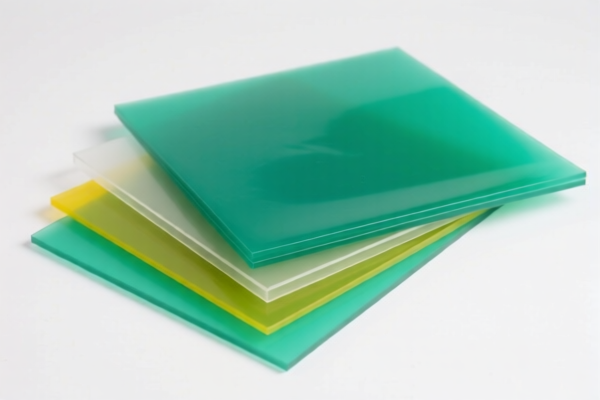
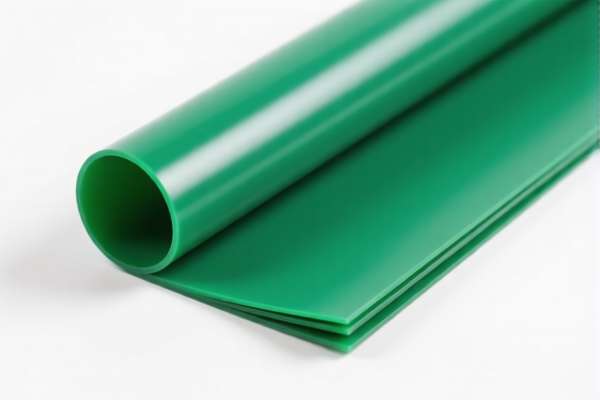
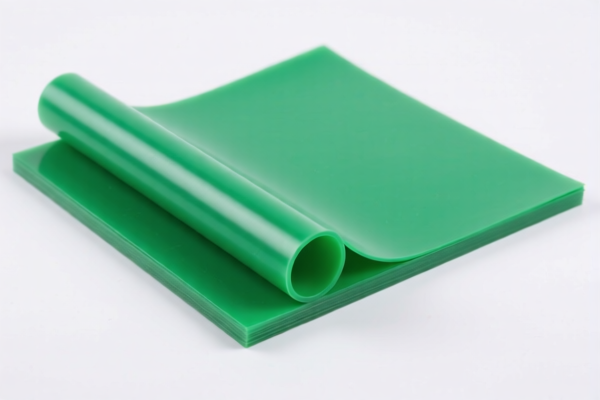
AI Analysis
🏗️ PVC Mold Resistant Sheet (PVC Wall Moisture-Proof Board)
🌐 HS Code Reference & Customs Clearance Guide | 2026 Latest Tariff Analysis | Professional Level Strategy
📌 I. Product Definition & Classification: Do You Really Understand "PVC Mold Resistant Sheets"?
PVC Mold Resistant Sheets, commonly known as PVC Wall Moisture-Proof Boards, are rigid or semi-rigid plastic sheets made from polyvinyl chloride (PVC) or its copolymers. They are primarily used in construction and interior decoration to prevent moisture penetration, mold growth, and bacterial damage on walls, ceilings, and facades.
In international trade, these products are classified based on their physical form, material composition, and end-use purpose. The key distinction lies in whether they are classified as: 1. Finished Construction Components: Integrated boards designed for direct installation as part of the building structure (e.g., wall panels, frame components). 2. Raw/Intermediate Materials: General-purpose PVC sheets or plates that may be further processed (e.g., cut, folded, or laminated) into final products.
⚠️ Key Classification Point:
- If the product is described as a "board," "plate," or "sheet" made of cellulose polymer (PVC) and intended for general use → It often falls under Chapter 39 (Plastics and Articles Thereof) as a basic plastic product.
- If the product is explicitly defined as a "wall panel," "door/window frame," or "building component" specifically engineered for architectural installation → It may fall under 3925 (Articles for use in construction).
- Crucial Distinction: The difference between 3921 (Plates, Sheets, Film, Foil, and Strip) and 3925 (Articles for Use in Construction) can significantly impact the Additional Tariff (Section 301) and 122 Clause rates. Misclassification can lead to massive duty surprises.
📦 II. HS Code Classification Details (2026 Latest Tariff Authority Comparison)
Based on the provided data for "PVC Mold Resistant Sheet", here are the four most likely HS Codes, each with distinct tariff implications:
| HS Code | Product Description | Application Scenario | Material/Form Detail | Total Tax Rate |
|---|---|---|---|---|
3925.90.00.00 |
Other plastic articles for use in construction | General PVC wall panels, moisture-proof boards not specified elsewhere | Plastic material; Used as a building component | 40.3% |
3925.20.00.91 |
Wall panels made of plastics | Specifically labeled as "Wall Panels" (墙面板); Dedicated building material | PVC material; Formed as wall panel; Classified as plastic building components other than doors/windows | 22.8% |
3921.12.19.50 |
Other plates, sheets, film, foil, and strip, of vinyl chloride polymer | General PVC sheets/plates; Not specifically for construction | Vinyl chloride polymer; Formed as "plate/board" | 40.3% |
3921.12.50.00 |
Honeycomb or layered plates/sheets of vinyl chloride polymer | PVC boards with honeycomb structure or laminated layers | Vinyl chloride polymer; Formed as "plate"; Honeycomb or layered structure | 41.5% |
🔍 Important Note:
- 3925.20.00.91 offers the lowest total tax rate (22.8%). This classification is only applicable if the product is explicitly described as a "Wall Panel" (墙面板) and meets the definition of a finished building component.
- 3925.90.00.00 and 3921.12.19.50 both carry a high total tax rate (40.3%). These are used when the product is considered a general plastic article for construction or a basic PVC plate.
- 3921.12.50.00 carries the highest rate (41.5%) and applies only if the sheet has a honeycomb or layered structure.
💰 III. 2026 Latest Tariff Rate Breakdown (Including Additional Tariffs & Policy Surcharges)
✅ Applicable Country: United States (US)
✅ Country of Origin: China (CN)
✅ Effective Date: 2025-11-10 (Including subsequent imports)
🎯 1. 3925.90.00.00 —— Other Plastic Articles for Use in Construction
| Item | Content |
|---|---|
| Base Tariff | 5.3% (ad valorem) |
| Section 301 Additional Tariff | +25.0% |
| 122 Clause Tariff | +10.0% |
| Total Rate | 40.3% |
| Tax Calculation | CIF Value × 40.3% |
| De Minimis Exemption | ❌ Not Applicable (deny_de_minimis) |
| Legal Basis Path | USITC:3925.90.00.00 → FOOTNOTE:9903.88.01 (Section 301) → 122 Clause |
📌 Explanation:
- The 5.3% base tariff is standard for many plastic construction articles.
- The 25% Section 301 tariff is applied to most Chinese plastic goods.
- The 10% 122 Clause tariff is an additional surcharge targeting specific Chinese imports.
- Total 40.3% is a very high cost, significantly impacting profit margins.
🎯 2. 3925.20.00.91 —— Wall Panels (Lowest Tax Option)
| Item | Content |
|---|---|
| Base Tariff | 5.3% |
| Section 301 Additional Tariff | +7.5% |
| 122 Clause Tariff | +10.0% |
| Total Rate | 22.8% |
| Tax Calculation | CIF Value × 22.8% |
| De Minimis Exemption | ❌ Not Applicable |
| Legal Basis Path | USITC:3925.20.00.91 → FOOTNOTE:9903.88.01 (Section 301, lower rate) → 122 Clause |
📌 Critical Insight:
- This is the most cost-effective classification for PVC Mold Resistant Sheets.
- The Section 301 rate is only 7.5% instead of 25%, likely due to specific exclusions or lower-risk categorization for "wall panels."
- Prerequisite: The product must be clearly marketed and described as a "Wall Panel" (墙面板) with a clear construction application. Vague terms like "PVC Sheet" will likely lead to reclassification.
🎯 3. 3921.12.19.50 —— Other Vinyl Chloride Polymer Plates
| Item | Content |
|---|---|
| Base Tariff | 5.3% |
| Section 301 Additional Tariff | +25.0% |
| 122 Clause Tariff | +10.0% |
| Total Rate | 40.3% |
| Tax Calculation | CIF Value × 40.3% |
| De Minimis Exemption | ❌ Not Applicable |
| Legal Basis Path | USITC:3921.12.19.50 → FOOTNOTE:9903.88.01 (Section 301) → 122 Clause |
📌 Explanation:
- Classified as a basic plastic plate/sheet.
- Subject to the full 25% Section 301 tariff.
- High risk if the product is clearly a finished building component rather than a raw material.
🎯 4. 3921.12.50.00 —— Honeycomb/Layered Vinyl Chloride Polymer Plates
| Item | Content |
|---|---|
| Base Tariff | 6.5% |
| Section 301 Additional Tariff | +25.0% |
| 122 Clause Tariff | +10.0% |
| Total Rate | 41.5% |
| Tax Calculation | CIF Value × 41.5% |
| De Minimis Exemption | ❌ Not Applicable |
| Legal Basis Path | USITC:3921.12.50.00 → FOOTNOTE:9903.88.01 (Section 301) → 122 Clause |
📌 Explanation:
- Highest base tariff (6.5%) due to the honeycomb/layered structure, which is often treated as a specialized material.
- Also subject to the full 25% Section 301 tariff.
- Avoid this classification unless the honeycomb structure is the primary feature and cannot be classified as a standard wall panel.
🛠️ IV. Customs Clearance Practical Advice (Real-World Pitfall Avoidance Guide)
✅ 1. Documentation Checklist (Missing items will cause delays)
| Document | Required | Explanation |
|---|---|---|
| ✅ Product Specification Sheet | ✔️ | Must clearly state material (PVC), form (Panel/Sheet), and use (Wall Moisture-Proofing) |
| ✅ Product Photos | ✔️ | Show the product in its installed state (if possible) to support "Wall Panel" classification |
| ✅ Commercial Invoice | ✔️ | Use precise description: "PVC Wall Panel for Construction, Moisture-Resistant" |
| ✅ Packing List | ✔️ | Detail dimensions, thickness, and quantity |
| ✅ Certificate of Origin (CO) | ✔️ | Essential for proving Chinese origin and applying correct Section 301 rates |
| ✅ Third-Party Test Report | ✔️ | Moisture resistance, fire rating, and material composition reports |
✅ 2. Declaration Strategy (Key Mantra)
🔥 "Describe as Panel, Not Sheet; Use in Construction, Not General."
| Scenario | Correct Declaration | Wrong Declaration |
|---|---|---|
| Product is a rigid wall board | 3925.20.00.91 (Wall Panel) |
3921.12.19.50 (PVC Sheet) → Tax jumps from 22.8% to 40.3% |
| Product is a general PVC sheet for later fabrication | 3921.12.19.50 |
3925.20.00.91 → May be rejected if not a finished panel |
| Product has honeycomb structure | 3921.12.50.00 |
3925.90.00.00 → Incorrect form description |
| Vague description: "Plastic Board" | ❌ Risk of Reassessment | ❌ Lead to highest possible duty |
📌 Strategy:
- To achieve the 22.8% rate, your invoice and product documentation must emphasize "Wall Panel" (墙面板) and "Building Component".
- Avoid terms like "PVC Sheet," "Plastic Plate," or "Raw Material" if the product is a finished wall panel.
- Provide photos showing the panel's shape, edges, and intended installation to prove it is a finished construction article.
✅ 3. Special Situations
| Situation | Handling Advice |
|---|---|
| OEM Custom Colors/Patterns | Still qualify for 3925.20.00.91 if the form is a wall panel. |
| Mixed Shipments (Panels + Sheets) | Declare separately! Do not lump together. Panels go to 3925, Sheets to 3921. |
| Honeycomb PVC Panels | If designed as wall panels, argue for 3925.20.00.91. If purely structural honeycomb material, use 3921.12.50.00. |
| Small Samples (De Minimis) | ❌ Not Eligible. Section 301 and 122 Clause taxes apply even to small shipments. |
🌍 V. Global Market Clearance Comparison (2026 Latest)
| Country/Region | Recommended HS Code | Tariff (China Origin) | Certification | Remarks |
|---|---|---|---|---|
| 🇺🇸 USA | 3925.20.00.91 |
22.8% | FCC/CE (if applicable) | Best Rate. Avoid 3921/3925.90 (40.3%+). |
| 🇨🇳 China | 3925.20.00.91 |
5% | CCC (if applicable) | No additional tariffs. |
| 🇪🇺 EU | 3925.20.00.91 |
0-6% | CE + REACH | No Section 301 equivalent. |
| 🇬🇧 UK | 3925.20.00.91 |
0-6% | UKCA | Post-Brexit rules apply. |
| 🇦🇺 Australia | 3925.20.00.91 |
5% | RCM | No major surcharges. |
📌 Conclusion:
- USA is the most challenging market due to Section 301 and 122 Clause tariffs.
- Correct classification is critical: Switching from3921.12.19.50(40.3%) to3925.20.00.91(22.8%) saves 17.5% in duties.
- China, EU, and UK have significantly lower or no additional tariffs, making them more favorable for high-volume exports.
📌 VI. Common Mistakes & Pitfall Avoidance (Blood Lessons)
❌ Mistake 1: Describing the product as "PVC Sheet" or "Plastic Plate"
👉 Consequence: Customs will classify it under 3921 (19.50 or 12.50), applying 25% Section 301 instead of 7.5%. Result: +17.5% higher tax.
❌ Mistake 2: Using vague terms like "Building Material" without specifying "Wall Panel"
👉 Consequence: Risk of being classified under 3925.90.00.00 (General Article), which also has a 25% Section 301 rate. Result: +17.5% higher tax.
❌ Mistake 3: Providing only product photos without technical specs
👉 Consequence: Customs cannot verify if it is a Wall Panel or a Raw Sheet. Result: Delay or Reassessment.
❌ Mistake 4: Assuming De Minimis applies to small shipments
👉 Consequence: Section 301 and 122 Clause taxes do not apply to de minimis values. Result: Seizure or heavy fines.
✅ Correct Approach:
"PVC Wall Panel for Interior Decoration, Moisture-Proof, Rigid, 1220mm x 2400mm, Model XYZ, Certified for Building Use"
🎯 VII. Conclusion: Professional Declaration, Cost Savings!
🎯 Remember the Mantra:
🔹 "Panel = 22.8%, Sheet = 40.3%. Describe as Panel, Save 17.5%!"
🔹 "HS Code Decides Fate. 17.5% Difference Changes Everything!"
📌 Pro Tip:
If your PVC Mold Resistant Sheets are finished wall panels, always use
3925.20.00.91.
Provide installation photos, product specs, and clear "Wall Panel" descriptions on all documents.
Consider applying for an Advance Ruling from CBP if you are unsure.
📣 Immediate Action:
📞 Contact your customs broker + Provide Product Photos + Clear Description
🚀 Let your PVC Mold Resistant Sheets Clear Customs Smoothly, Save Costs, and Boost Profits!
✨ Professional Clearance Starts with Precise Classification!
💼 Every Cent Saved is Pure Profit!
Customer Reviews
About HS Code Classification
The Harmonized System (HS) is an internationally standardized nomenclature developed by the World Customs Organization (WCO) to classify traded products. Over 200 countries use the HS system as the basis for customs tariffs, trade statistics, and import/export regulations.
Each HS code follows a hierarchical structure:
- Chapter (2 digits) — Broad category of goods (e.g., Chapter 84: Machinery and Mechanical Appliances)
- Heading (4 digits) — More specific grouping within the chapter
- Subheading (6 digits) — Internationally standardized breakdown, used by all WCO member countries
- National subdivisions (8-10 digits) — Country-specific extensions for further classification, such as US HTSUS 10-digit codes
Correct HS code classification is essential for smooth customs clearance, accurate duty payment, and compliance with trade regulations. Misclassification can lead to customs delays, overpayment of duties, or penalties.
When importing from CN to US, the applicable tariff rates may include:
- Most-Favored-Nation (MFN) rate — The standard duty rate applied to WTO members
- General rate — Applied to countries without trade agreements
- Trade remedy duties — Additional tariffs such as Section 301 (anti-dumping), Section 232 (national security), or countervailing duties
The information provided on this page is for reference purposes only. For official classification, please consult with your local customs authority or a licensed customs broker.