PVC Patent Leather
CN → US| HS Code | Tariff Rate | Origin | Destination | Doc |
|---|---|---|---|---|
| 3921121950 | 40.3% | CN | US | Official Doc |
| 3921121100 | 39.2% | CN | US | Official Doc |
| 5903102090 | 35.0% | CN | US | Official Doc |
| 5903102010 | 35.0% | CN | US | Official Doc |
Product Images
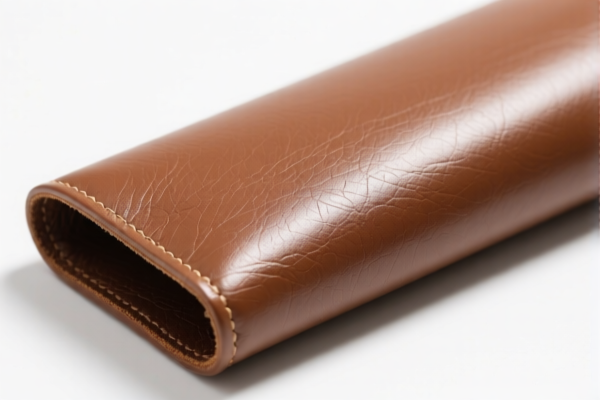

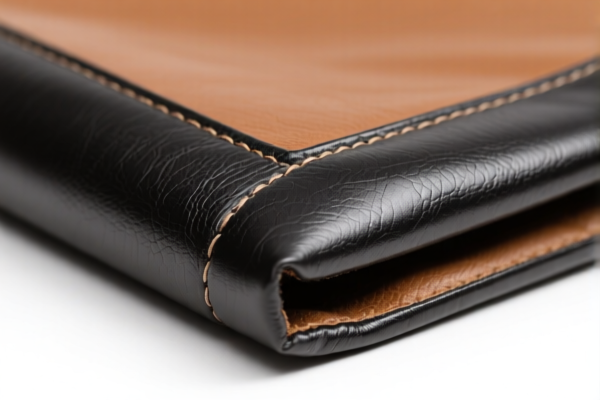
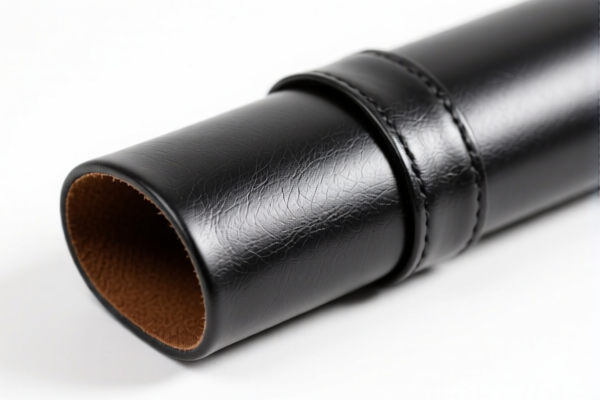
AI Analysis
🧵 PVC Patent Leather (Polyvinyl Chloride Coated Leather/Synthetic)
🌐 HS Code Reference & Customs Clearance Guide | 2026 Latest Tariff Analysis | Professional Clearance Strategy
📌 I. Product Definition & Classification: What is "PVC Patent Leather"?
PVC Patent Leather is a composite material widely used in footwear, handbags, upholstery, and fashion accessories. In international trade, it is not a single homogeneous good but is classified based on the substrate (base material) and the processing method (coating/layering).
The term "Patent" refers to the high-gloss finish achieved by applying a plastic (PVC) coating over a base material. The critical classification factor is whether the base is leather or textile/non-woven fabric, which drastically changes the HS Code and duty rate.
⚠️ Key Distinction Point:
- If the base is actual leather (animal hide) → Generally falls under Chapter 59 (Impregnated/Coated Textile/Fabric if composite) or potentially Chapter 41 if strictly leather. Note: In the provided dataset, it is mapped to Chapter 59.
- If the base is plastic film/sheet (PVC sheet) → Falls under Chapter 39 (Plastics and Articles Thereof).
- If the base is fabric/textile coated with PVC → Falls under Chapter 59 (Textiles).
📦 II. HS Code Classification Details (2026 Latest Tariff Authority Comparison)
Based on the provided data, the following HS Codes apply to PVC Patent Leather variants. Note that the total tax burden varies significantly due to the base tariff structure.
| HS Code | Product Description | Applicability & Summary | Total Tax Rate |
|---|---|---|---|
3921.12.19.50 |
PVC Sheets/Films (General) | PVC (Vinyl Polymer) coated sheets/films. Fits Chapter 39 characteristics regarding vinyl polymer plates/films involving coating and substrate bonding. Applies when classified as a plastic sheet product rather than a textile composite. | 40.3% |
3921.12.11.00 |
PVC Films/Sheets (Specific) | PVC (Polyvinyl Chloride) made patent leather, categorized as film/sheet products. Based on material consistency, it may conform to this specific plastic sheet subheading. | 39.2% |
5903.10.20.90 |
PVC-Coated Leather (Textile Category) | Leather coated with Polyvinyl Chloride (PVC). Classified under the category of impregnated, coated, or laminated textile/non-woven materials. Consistent with 5903.10.20.90 description. | 35.0% |
5903.10.20.10 |
PVC-Coated Patent Leather (Film Type) | PVC-coated patent leather, classified as a coated film fabric. Conforms to characteristics of textile fabrics coated with polyvinyl chloride plastics. | 35.0% |
🔍 Critical Note:
- Chapter 39 (Codes .50 & .11) treats the product primarily as a plastic sheet/film. The base tariff is higher (5.3% or 4.2%), leading to a higher total tax (39.2%-40.3%).
- Chapter 59 (Codes .90 & .10) treats the product as a textile/coated fabric composite. The base tariff is 0.0%, but the high additive tariffs result in a lower total tax (35.0%) compared to Chapter 39 in this specific dataset.
- Choosing the right code is vital: Misclassification can lead to overpayment (if coded under Ch 39 instead of Ch 59) or customs delays/penalties (if the physical characteristics don't match the code description).
💰 III. 2026 Latest Tariff Rate Breakdown (Including Surcharges & Policy Add-ons)
✅ Applicable Country: United States (US)
✅ Origin: China (CN)
✅ Effective Date: Post-2025 (Current Regime Includes 122 Clause & Section 301)
🎯 1. 3921.12.19.50 & 3921.12.11.00 — Plastic Sheet/Film Category
| Item | Detail |
|---|---|
| Base Duty | 5.3% (for .19.50) / 4.2% (for .11.00) |
| Section 301 Surcharge | +25.0% (25% Ad Valorem on Chinese goods under Section 301) |
| Section 122 Surcharge | +10.0% (Specific duty clause applicable to certain Chinese imports) |
| Total Effective Rate | 40.3% (for .19.50) / 39.2% (for .11.00) |
| Tax Calculation Basis | CIF Value × Total Rate |
| De Minimis Exemption | ❌ Not Eligible (Section 301 and 122 duties generally apply to all commercial shipments, de minimis loopholes are often closed for these specific punitive tariffs) |
| Legal Reference Path | USITC:3921.12.11.00 → FTC:301-9901.25 (25%) → FTC:122-Clawback (10%) |
📌 Explanation:
- The 25% Section 301 tariff is the standard punitive duty on Chinese plastic products.
- The 10% Section 122 tariff is an additional layer of duty specific to certain Chinese goods, significantly raising the cost floor even if the base duty is low.
- Result: This is a high-cost classification. Importers must budget for nearly 40% in duties alone.
🎯 2. 5903.10.20.90 & 5903.10.20.10 — Coated Textile/Leather Category
| Item | Detail |
|---|---|
| Base Duty | 0.0% (Most Favored Nation (MFN) rate is often 0% for coated fabrics in this subheading) |
| Section 301 Surcharge | +25.0% (25% Ad Valorem on Chinese goods under Section 301) |
| Section 122 Surcharge | +10.0% (Specific duty clause applicable to certain Chinese imports) |
| Total Effective Rate | 35.0% |
| Tax Calculation Basis | CIF Value × 35% |
| De Minimis Exemption | ❌ Not Eligible |
| Legal Reference Path | USITC:5903.10.20.XX → FTC:301-9901.25 (25%) → FTC:122-Clawback (10%) |
📌 Advantage:
- By classifying under Chapter 59, the base tariff is 0%.
- The total tax is driven solely by the punitive surcharges (25% + 10% = 35%).
- Savings: Compared to Chapter 39 (39.2%-40.3%), this saves 4.2% - 5.3% on the CIF value. For large shipments, this is a significant cost reduction.
🛠️ IV. Customs Clearance Practical Advice (Actionable Pitfall Avoidance)
✅ 1. Documentation Checklist (Non-Negotiable)
| Document | Required? | Explanation |
|---|---|---|
| ✅ Product Specification Sheet | ✔️ | Must detail: Base material (Leather vs. Fabric vs. PVC Sheet), Coating thickness (mm), Gloss level. |
| ✅ Composition Statement | ✔️ | Explicitly state: "Polyvinyl Chloride (PVC) coated on [Leather/Textile] substrate." |
| ✅ High-Resolution Photos | ✔️ | Show cross-section (to prove coating vs. solid plastic) and surface gloss (to prove "Patent" finish). |
| ✅ Commercial Invoice | ✔️ | Clear description: "PVC Coated Leather for Footwear/Bag" – Do not just write "Plastic Sheet." |
| ✅ Certificate of Origin (CO) | ✔️ | Required for China origin verification. |
✅ 2. Declaration Strategy (The "Code Selection" Logic)
🔥 Golden Rule: "Identify the Base, Then Apply the Coating Rule!"
| Scenario | Correct HS Code | Reasoning |
|---|---|---|
| Base is PVC Sheet, Laminated with Gloss | 3921.12.11.00 / 3921.12.19.50 |
Treated as a plastic article. Higher base duty. |
| Base is Textile/Fabric, Coated with PVC | 5903.10.20.10 / 5903.10.20.90 |
Treated as a coated textile. Lower base duty (0%). |
| Base is Animal Leather, Coated with PVC | 5903.10.20.90 (Per Data) |
Note: Standard practice often puts coated leather in Ch 41 or 59 depending on porosity. Per provided data, it is mapped to Ch 59. |
📌 Key Advice:
- If your product is fabric-based PVC leather (common in synthetic bags), strongly consider Chapter 59. The 0% base duty makes the total tax rate (35%) lower than the plastic sheet classification (~39-40%).
- Verify with Customs: If the base material is ambiguous (e.g., non-woven fabric vs. plastic sheet), provide physical samples for a Pre-Ruling (Advance Ruling) to avoid audits.
✅ 3. Special Handling & Risks
| Situation | Handling Advice |
|---|---|
| Mixed Materials | If the product has leather and plastic parts, do not split shipments. Declare as the principal material. |
| "Patent" Finish Claims | Ensure the invoice matches the "glossy" description. Mismatches can trigger customs inspections for misdeclaration. |
| Section 122 Impact | Remember that the 10% Section 122 duty applies to both Chapter 39 and 59 codes in this dataset. It is unavoidable for Chinese-origin goods unless specific exemptions apply. |
| De Minimis (Section 321) | ❌ Avoid relying on De Minimis ($800 threshold) for large B2B shipments. Section 301 and 122 duties are typically collected regardless of value for commercial imports of these types. |
🌍 V. Global Market Comparison (2026 Context)
| Market | Recommended HS Code | Est. Duty (China Origin) | Key Requirement |
|---|---|---|---|
| 🇺🇸 USA | 5903.10.20.10 / 3921.12.11.00 |
35.0% - 40.3% | Section 301 (25%) + Sec 122 (10%) |
| 🇨🇳 China | 5903.10.20.10 |
~10-13% (Import Duty) | Standard MFN rate applies |
| 🇪🇺 EU | 3921.12 or 5903.10 |
~6.5% - 9.5% | CE Marking (if safety relevant) |
| 🇬🇧 UK | 3921.12 or 5903.10 |
~6.5% - 9.5% | Post-Brexit tariffs apply |
📌 Conclusion:
- The US market is the most challenging due to the dual-layer punitive tariffs (301 + 122).
- Cost Optimization Strategy: If your PVC patent leather has a textile/fabric base, prioritize classifying under HS 5903.10 to leverage the 0% base duty, saving ~4-5% compared to plastic sheet classifications.
📌 VI. Common Errors & Pitfall Guide (Lessons Learned)
❌ Mistake 1: Classifying PVC-coated fabric as "Plastic Sheet" (Ch 39)
👉 Consequence: You pay 39.2-40.3% instead of 35.0%. Overpayment by ~5%.
👉 Fix: Prove the substrate is textile/fabric.
❌ Mistake 2: Ignoring Section 122 Duties
👉 Consequence: Underestimating landed cost by 10%. Customs will assess the full duty + penalties.
👉 Fix: Always include the 10% Sec 122 in cost calculations for China-origin goods.
❌ Mistake 3: Vague Description ("Leather")
👉 Consequence: Customs may assume it's genuine leather (Ch 41) or reject the declaration for lack of detail.
👉 Fix: Use precise terms: "PVC Coated Synthetic Leather" or "PVC Coated Textile."
✅ Correct Approach:
"PVC Coated Textile Fabric (Patent Finish), 0.5mm PVC coating on polyester base, for bag manufacturing. Origin: China."
🎯 VII. Conclusion: Precision Classification Saves Money
🎯 Remember the Formula:
🔹 "Base Material Determines Chapter, Surcharges Determine Cost."
🔹 "Ch 59 (Textile Base) = 0% Base Duty + 35% Total."
🔹 "Ch 39 (Plastic Base) = ~5% Base Duty + ~39% Total."
📌 Pro Tip:
For PVC Patent Leather from China, always verify if the base is textile. If yes, HS 5903.10 is your best friend. If it's a solid plastic sheet, you are stuck with HS 3921.
📣 Immediate Action:
📞 Contact your freight forwarder to confirm the substrate material before shipment.
📄 Request a Pre-Production Sample review for HS Code confirmation.
💰 Update your Landed Cost Model to reflect the 35% vs 39.2% difference.
✨ Professional Clearance Starts with Accurate Classification!
💼 Don't let a 4% difference erase your profit margin!
Customer Reviews
About HS Code Classification
The Harmonized System (HS) is an internationally standardized nomenclature developed by the World Customs Organization (WCO) to classify traded products. Over 200 countries use the HS system as the basis for customs tariffs, trade statistics, and import/export regulations.
Each HS code follows a hierarchical structure:
- Chapter (2 digits) — Broad category of goods (e.g., Chapter 84: Machinery and Mechanical Appliances)
- Heading (4 digits) — More specific grouping within the chapter
- Subheading (6 digits) — Internationally standardized breakdown, used by all WCO member countries
- National subdivisions (8-10 digits) — Country-specific extensions for further classification, such as US HTSUS 10-digit codes
Correct HS code classification is essential for smooth customs clearance, accurate duty payment, and compliance with trade regulations. Misclassification can lead to customs delays, overpayment of duties, or penalties.
When importing from CN to US, the applicable tariff rates may include:
- Most-Favored-Nation (MFN) rate — The standard duty rate applied to WTO members
- General rate — Applied to countries without trade agreements
- Trade remedy duties — Additional tariffs such as Section 301 (anti-dumping), Section 232 (national security), or countervailing duties
The information provided on this page is for reference purposes only. For official classification, please consult with your local customs authority or a licensed customs broker.