PVC Pipe Fitting
CN → US| HS Code | Tariff Rate | Origin | Destination | Doc |
|---|---|---|---|---|
| 3917400060 | 40.3% | CN | US | Official Doc |
| 3926909989 | 22.8% | CN | US | Official Doc |
| 3917400020 | 40.3% | CN | US | Official Doc |
| 3926909987 | 22.8% | CN | US | Official Doc |
| 3917320010 | 38.1% | CN | US | Official Doc |
Product Images
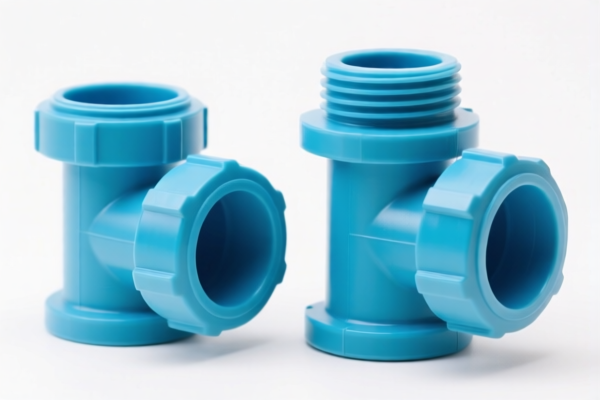
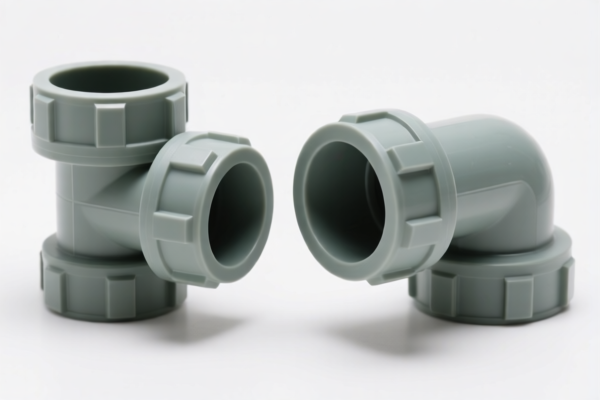
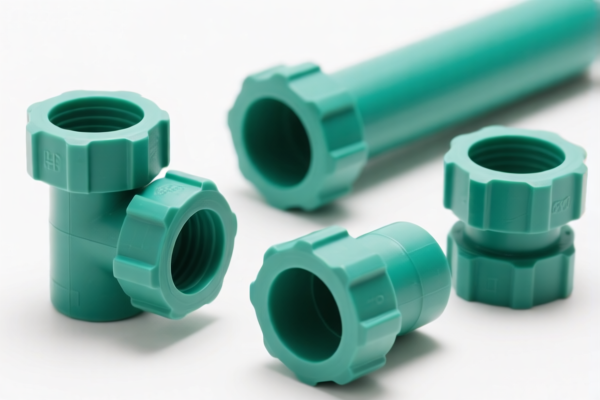
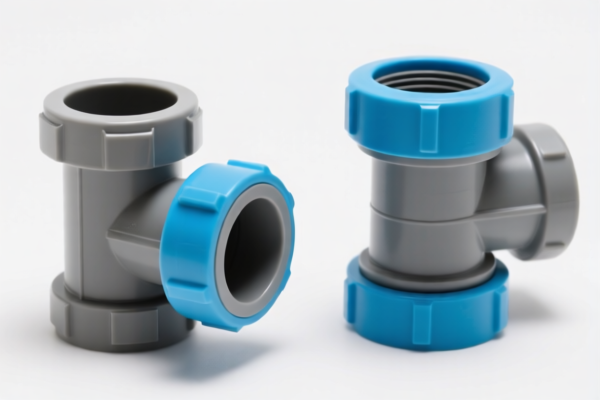
AI Analysis
🛠️ PVC Pipe Fittings (PVC Pipes & Accessories)
🌐 HS Code Reference & Customs Clearance Guide | 2026 Latest Tariff Analysis | Professional Level Clearance Strategy
📌 I. Product Definition & Classification: Do You Really Understand "PVC Fittings"?
PVC (Polyvinyl Chloride) pipe fittings are essential components in plumbing, irrigation, and industrial fluid transport systems. In international trade, these products are not treated as a single category but are strictly divided based on their physical form and functional definition.
There are two main classification paths for PVC fittings: 1. Specific Pipe Accessories (HS 3917): Items specifically shaped or designed to be attached to pipes (elbows, tees, couplings, reducers). These fall under "Artificial Plastics and Articles Thereof." 2. Other Plastic Articles (HS 3926): Items that may function as fittings or conduits but are categorized under "Other articles of plastics and articles of other materials." This often includes wire conduits or general-purpose plastic tubes used in electrical applications.
⚠️ Key Distinction Point:
- If the item is a standard plumbing fitting (elbow, tee, flange) made of PVC →归入 3917.40.00 series.
- If the item is a wire conduit or general plastic tube/accessory not specifically for fluid pipes →归入 3926.90.99 series.
- Note: The distinction between "Fitting" and "Tube" itself matters. Simple PVC pipes fall under 3917.32, while fittings attached to them fall under 3917.40.
📦 II. HS Code Classification Details (2026 Latest Tariff Authority Comparison)
Based on the provided data, here are the specific HS Codes and their corresponding tax profiles for PVC Pipe Fittings:
| HS Code | Product Description | Application Scenario | Tax Rate (Total) | Key Tax Components |
|---|---|---|---|---|
3917.40.00.60 |
PVC Pipe Accessories, Material: PVC, Form: Pipe Accessories | Standard plumbing fittings (elbows, tees, connectors) | 40.3% | Base: 5.3%, Sec 301: 25.0%, Section 122: 10% |
3926.90.99.89 |
PVC Pipe Accessories, Material: PVC, Category: Other Plastic Articles | General plastic fittings, non-specific pipe accessories | 22.8% | Base: 5.3%, Sec 301: 7.5%, Section 122: 10% |
3917.40.00.20 |
PVC Pipe Accessories, Material: PVC, Form: Pipe Fittings | Standard PVC pipe fittings (identical category to .60) | 40.3% | Base: 5.3%, Sec 301: 25.0%, Section 122: 10% |
3926.90.99.87 |
PVC Pipe Accessories, Material: PVC, Category: Wire Conduit/Tubing Accessories | Fittings for electrical conduits or wire tubes | 22.8% | Base: 5.3%, Sec 301: 7.5%, Section 122: 10% |
3917.32.00.10 |
PVC Pipes, Material: PVC, Form: Pipe | PVC Pipes (Not fittings, but related product) | 38.1% | Base: 3.1%, Sec 301: 25.0%, Section 122: 10% |
🔍 Critical Insight:
- High Tariff Path (40.3%): Applies to standard plumbing pipe fittings (3917.40). This includes elbows, tees, couplings, and reducers used for water, gas, or sewage. - Low Tariff Path (22.8%): Applies to other plastic articles (3926.90), such as electrical wire conduits or general-purpose plastic accessories that are not strictly "pipe fittings" in the plumbing sense. - Pipe vs. Fitting: Note that PVC Pipes themselves (3917.32.00.10) have a slightly lower total tax rate (38.1%) compared to their fittings (40.3%), due to a lower base duty (3.1% vs 5.3%).
💰 III. 2026 Latest Tariff Rate Breakdown (Including Surcharges & Policy Add-ons)
✅ Applicable Country: United States (US)
✅ Origin: China (CN)
✅ Effective Time: Current regulations apply (including Section 301 and Section 122 tariffs)
🎯 1. 3917.40.00.60 & 3917.40.00.20 — PVC Pipe Accessories (Standard Plumbing)
| Item | Content |
|---|---|
| Base Duty | 5.3% |
| Section 301 Surcharge | +25.0% |
| Section 122 Surcharge | +10.0% |
| Total Tax Rate | 40.3% |
| Calculation Method | CIF Value × 40.3% |
| De Minimis Exemption | ❌ Not Available (High risk for small packages) |
| Legal Basis Path | HTS:3917.40.00.60 → Section 301: Footnote 9903.88.01 → Section 122: USTR |
📌 Explanation:
- "Base Duty 5.3%": Standard MFN duty for artificial plastic articles. - "Section 301 25%": This is the critical punitive tariff. Most standard PVC plumbing fittings are subject to the full 25% surcharge because they are explicitly listed in the 301 tariff schedule. - "Section 122 10%": An additional surcharge applicable to certain Chinese imports, often related to customs valuation or specific trade remedy measures. - Total 40.3% is a very high cost. Importers must verify if the product truly falls under this code or if it can be classified under 3926 to reduce costs.
🎯 2. 3926.90.99.89 & 3926.90.99.87 — Other Plastic Articles (Wire Conduits/General)
| Item | Content |
|---|---|
| Base Duty | 5.3% |
| Section 301 Surcharge | +7.5% |
| Section 122 Surcharge | +10.0% |
| Total Tax Rate | 22.8% |
| Calculation Method | CIF Value × 22.8% |
| De Minimis Exemption | ❌ Not Available |
| Legal Basis Path | HTS:3926.90.99.89 → Section 301: Lower Bracket → Section 122: USTR |
📌 Note:
- The Section 301 surcharge is only 7.5% for "Other Articles of Plastics" (3926). This is a significant savings of 17.5% compared to the 40.3% rate. - However, this classification only applies if the product is truly an "other plastic article" (e.g., electrical wire conduit, not standard water pipe fittings). Misclassification here can lead to severe penalties.
🎯 3. 3917.32.00.10 — PVC Pipes (For Reference)
| Item | Content |
|---|---|
| Base Duty | 3.1% |
| Section 301 Surcharge | +25.0% |
| Section 122 Surcharge | +10.0% |
| Total Tax Rate | 38.1% |
| Calculation Method | CIF Value × 38.1% |
📌 Note:
- PVC pipes themselves have a lower base duty (3.1%) than fittings (5.3%), resulting in a total of 38.1%. This is still high, but lower than the fittings.
🛠️ IV. Customs Clearance Practical Advice (Battle-Tested Pitfall Avoidance Guide)
✅ 1. Essential Document Checklist (None Can Be Missing)
| Document | Required | Description |
|---|---|---|
| ✅ Product Specification Sheet | ✔️ | Must specify material (PVC), application (Plumbing vs. Electrical), and dimensions. |
| ✅ Technical Diagrams | ✔️ | Show connection types (Slip, Socket, Threaded) to prove it's a "fitting" vs. "pipe." |
| ✅ Product Photos (With Labels) | ✔️ | Clear images of the product, brand, and model number. |
| ✅ Commercial Invoice | ✔️ | Must clearly state "PVC Pipe Fitting" or "PVC Wire Conduit" – Do not use vague terms like "Plastic Part." |
| ✅ Packing List | ✔️ | Detail the quantity and weight. Separate fittings from pipes if shipped together. |
| ✅ Certificate of Origin (CO) | ✔️ | Required for verifying Chinese origin and applying applicable tariffs. |
✅ 2. Classification Strategy (Key Mnemonics)
🔥 "Plumbing Fittings = 40.3%, Wire Conduits = 22.8%! Know Your Function!"
| Scenario | Correct HS Code | Wrong Code (High Risk) |
|---|---|---|
| Standard Water/Gas Fittings (Elbows, Tees) | 3917.40.00.60 / .20 |
3926.90.99 → Audit Risk! |
| Electrical Wire Conduits & Fittings | 3926.90.99.87 / .89 |
3917.40.00 → Overpaid Tax! |
| PVC Pipes | 3917.32.00.10 |
3917.40.00 → Misclassification! |
| Mixed Shipment (Pipes + Fittings) | Split Declaration | Single Declaration → Confusion & Delays |
📌 Crucial Warning:
- If you declare a standard plumbing elbow as "Other Plastic Article" (3926), customs may reject it because its primary function is fluid transport, not electrical or general use. - Conversely, if you declare a wire conduit as a "Plumbing Fitting," you will pay an extra 17.5% in tariffs unnecessarily.
✅ 3. Special Situation Handling
| Situation | Handling Advice |
|---|---|
| OEM Custom Fittings | Provide customer orders and design specs. Clearly state if they are for plumbing or electrical use. |
| Fittings with Valves | If the fitting includes a valve mechanism, it may be classified under a different heading (e.g., 8481). Consult a customs broker. |
| PVC-C (Chlorinated PVC) | If the material is PVC-C, the HS Code may differ. Ensure the material composition is accurately declared. |
| Small Parcels (De Minimis) | Even for small packages, Section 301 tariffs often apply to PVC fittings from China. Do not assume exemption. |
🌍 V. Global Market Customs Comparison (2026 Latest)
| Country/Region | Recommended HS Code | Tariff (China Origin) | Certification Requirements | Notes |
|---|---|---|---|---|
| 🇺🇸 United States | 3917.40.00.60 |
40.3% | ASTM D2466, NSF/ANSI 14 (Plumbing) | High tariff; Section 301 applies. |
| 🇨🇳 China | 3917.40.00.60 |
5.3% | CCC (if applicable) | No Section 301 or 122 tariffs. |
| 🇪🇺 European Union | 3917.23 |
0% - 4.5% | CE, REACH | No additional punitive tariffs. |
| 🇨🇦 Canada | 3917.23.90 |
0% | CSA | Free trade under CUSMA. |
| 🇦🇺 Australia | 3917.23.00 |
5% | AS/NZS Standards | No punitive tariffs. |
📌 Conclusion:
- The US market is significantly more expensive due to Section 301 and Section 122 tariffs.
- EU, Canada, and Australia offer much more competitive tariff environments for PVC fittings.
- For US imports, accurate classification between3917(Plumbing) and3926(Electrical/Other) is critical for cost optimization.
📌 VI. Common Mistakes & Pitfall Guide (Lessons Learned)
❌ Mistake 1: Declaring all PVC items under one generic code.
👉 Consequence: Customs may audit and reclassify, leading to back-taxes + penalties.
❌ Mistake 2: Confusing "Pipes" (3917.32) with "Fittings" (3917.40).
👉 Consequence: Mismatched HS Codes for pipes and fittings in the same shipment causes declaration errors.
❌ Mistake 3: Ignoring the "Section 122" 10% surcharge.
👉 Consequence: Unexpected 10% increase in total tax burden, reducing profit margins.
❌ Mistake 4: Using "Plastic Tube" for Fittings.
👉 Consequence: If it's a fitting, it's not a tube. Misclassification leads to clearance delays.
✅ Correct Action:
"PVC Pipe Fitting, 90-Degree Elbow, 1/2 inch, Schedule 40, for Water Supply, ASTM D2466 Compliant."
🎯 VII. Conclusion: Professional Declaration, Save Costs, Ensure Smooth Clearance!
🎯 Remember the Mnemonic:
🔹 "Plumbing Fittings = 40.3%, Wire Conduits = 22.8%! Know Your Function!"
🔹 "HS Code determines the tax, a 17.5% difference is huge! Declare accurately, save money!"
📌 Pro Tip:
If your PVC fittings are sourced from Vietnam, Thailand, or Malaysia, you may apply for tariff exemptions or lower rates under various trade agreements.
It is highly recommended to apply for an Advance Ruling before shipment to confirm the correct HS Code and avoid post-import audits.
📣 Take Action Now:
📞 Contact a professional customs broker + Provide Product Photos + Apply for HS Code Advance Ruling
🚀 Let your PVC Fittings clear customs smoothly, efficiently, and profitably!
✨ Professional Clearance Starts with Accurate Classification!
💼 Every cent of your cost is worth calculating precisely!
Customer Reviews
About HS Code Classification
The Harmonized System (HS) is an internationally standardized nomenclature developed by the World Customs Organization (WCO) to classify traded products. Over 200 countries use the HS system as the basis for customs tariffs, trade statistics, and import/export regulations.
Each HS code follows a hierarchical structure:
- Chapter (2 digits) — Broad category of goods (e.g., Chapter 84: Machinery and Mechanical Appliances)
- Heading (4 digits) — More specific grouping within the chapter
- Subheading (6 digits) — Internationally standardized breakdown, used by all WCO member countries
- National subdivisions (8-10 digits) — Country-specific extensions for further classification, such as US HTSUS 10-digit codes
Correct HS code classification is essential for smooth customs clearance, accurate duty payment, and compliance with trade regulations. Misclassification can lead to customs delays, overpayment of duties, or penalties.
When importing from CN to US, the applicable tariff rates may include:
- Most-Favored-Nation (MFN) rate — The standard duty rate applied to WTO members
- General rate — Applied to countries without trade agreements
- Trade remedy duties — Additional tariffs such as Section 301 (anti-dumping), Section 232 (national security), or countervailing duties
The information provided on this page is for reference purposes only. For official classification, please consult with your local customs authority or a licensed customs broker.