PVC Pipes and Profiles
CN → US| HS Code | Tariff Rate | Origin | Destination | Doc |
|---|---|---|---|---|
| 3916200020 | 40.8% | CN | US | Official Doc |
| 3926909989 | 22.8% | CN | US | Official Doc |
| 3925900000 | 40.3% | CN | US | Official Doc |
| 3916200091 | 40.8% | CN | US | Official Doc |
| 3926909987 | 22.8% | CN | US | Official Doc |
Product Images
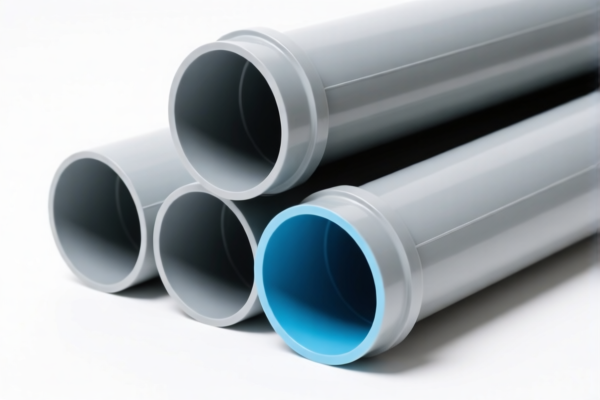
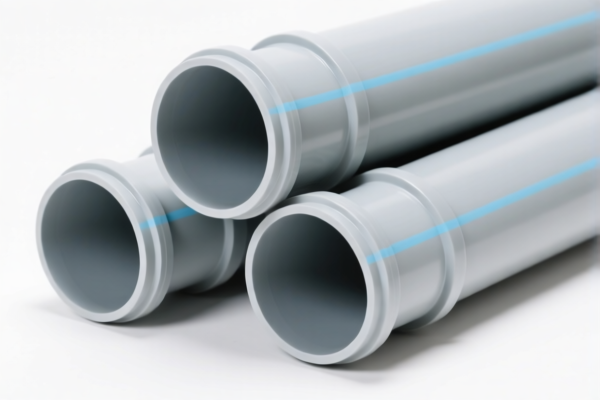
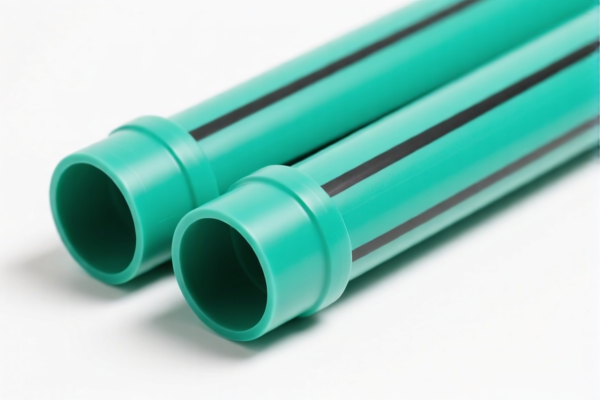
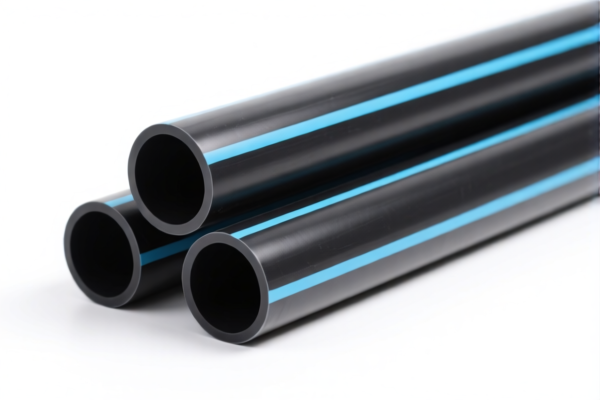
AI Analysis
🏗️ PVC Pipes and Profiles (Polyvinyl Chloride Products)
🌐 HS Code Reference & Customs Clearance Guide | 2026 Latest Tariff Analysis | Professional Transit Strategy
📌 Part 1: Product Definition and Classification: Do You Really Understand "PVC Products"?
PVC (Polyvinyl Chloride) products are ubiquitous in construction and industry, primarily divided into Profiles (for framing, windows, doors, insulation) and Pipes (for fluid transport, drainage, wiring). In international trade, correct classification is critical because the form factor (exuded vs. fabricated) and specific use dictate whether they fall under Chapter 39 heading 3916 (Profiles) or 3925/3926 (Other Plastic Articles).
Key Distinction Logic:
- Heading 3916: Specifically covers profiles, bars, rods, and tubes, extruded from plastics. This is the primary category for standard PVC pipes, windows profiles, and construction beams.
- Heading 3925: Covers plastic building materials (e.g., prefabricated buildings, panels, fences) not elsewhere specified.
- Heading 3926: The "basket" category for other plastic articles (e.g., fittings, industrial components, finished goods not as simple extrusions).
⚠️ Critical Classification Point:
- If the item is a simple extruded shape (straight pipe, window frame profile, insulation conduit) → Likely 3916.
- If it is a finished building component (e.g., a assembled PVC window unit, siding panel) → Likely 3925.
- If it is an industrial part or fittings (elbows, couplings not integral to the pipe) → Likely 3926.
📦 Part 2: HS Code Classification Matrix (2026 Latest Tariff Authority Cross-Reference)
Based on the provided data, here are the specific HS Codes, their logic, and tax implications for PVC products.
| HS Code | Product Description & Summary | Classification Logic |
|---|---|---|
3916.20.00.20 |
PVC Profiles (General) Material: PVC (Vinyl Chloride Polymer). Form: Profiles. Matches definition of plastic profiles. |
Primary Choice for standard extruded PVC pipes, window frames, and construction profiles. Simple extrusion form. |
3916.20.00.91 |
Other PVC Profiles (Not Elsewhere Specified) Material: PVC. Form: Profiles. "Other" category for PVC profiles not fitting specific sub-headings. |
Similar to .20 but used for PVC profiles that do not meet the specific criteria of .20 (e.g., specific dimensions or types not explicitly listed). |
3925.90.00.00 |
Plastic Building Materials Material: PVC (Plastic). Form: Building Components (e.g., siding, assembled structures). |
Applies to fabricated plastic building goods (e.g., PVC siding, fences, prefabricated structures) rather than simple extruded profiles. |
3926.90.99.89 |
Other Plastic Articles (Industrial/General) Material: PVC. Form: Industrial profiles or unspecified plastic articles. |
Used for industrial PVC components, fittings, or articles that don't fit the "building material" or "simple profile" categories. |
3926.90.99.87 |
Other Plastic Pipes/Tubes (Industrial/Other) Material: PVC. Form: Hard pipes/tubes inferred as plastic articles. |
Often used for PVC pipes/tubes that are not simple extruded profiles (3916), perhaps due to specific industrial applications or complex forms. |
🔍 Key Insight:
- 3916.20 is the "gold standard" for standard PVC pipes and window profiles. It attracts the highest tariff burden due to US-China trade tensions.
- 3925 and 3926 are alternative classifications for finished building goods or industrial parts, often with lower base tariffs but subject to different scrutiny.
💰 Part 3: 2026 Latest Tariff Rate Breakdown (Including Surtaxes & Policy Surcharges)
✅ Applicable Country: United States (US)
✅ Origin: China (CN)
✅ Effective Date: 2025+ (Post-Trade War Surcharges)
🎯 1. 3916.20.00.20 & 3916.20.00.91 —— PVC Profiles (Extruded)
These codes are highly taxed due to Section 301 and IEEPA measures targeting Chinese plastic extrusions.
| Item | Content |
|---|---|
| Base Tariff (MFN) | 5.8% (ad valorem) |
| Section 301 Surtax (122 Clause) | 10% |
| Section 301 Surtax (Other) | 25.0% |
| Total Tariff Rate | 40.8% |
| Tax Calculation | CIF Value × 40.8% |
| De Minimis Eligibility | ❌ NO (High value threshold items usually excluded from 80.01/80.02 de minimis) |
| Legal Pathway | HTS:3916.20 → USITC:25% Surtax → IEEPA:10% Surtax |
📌 Explanation:
- 5.8%: Standard US Most Favored Nation (MFN) rate for plastic profiles.
- 25%: The core "Section 301" tariff on Chinese plastic products (List 3/4).
- 10%: Additional IEEPA tariff specifically targeting Chinese imports under "122 Clause" or similar emergency powers.
- Total: 40.8%. This is a very high cost driver. Importers must account for this in pricing.
🎯 2. 3925.90.00.00 —— Plastic Building Materials (Fabricated)
| Item | Content |
|---|---|
| Base Tariff (MFN) | 5.3% (ad valorem) |
| Section 301 Surtax | 25.0% |
| 122 Clause Surtax | 10% |
| Total Tariff Rate | 40.3% |
| Tax Calculation | CIF Value × 40.3% |
| De Minimis Eligibility | ❌ NO |
| Legal Pathway | HTS:3925.90 → USITC:25% Surtax → IEEPA:10% Surtax |
📌 Explanation:
- Slightly lower base rate (5.3%) than profiles (5.8%).
- Still hits with the full 25% + 10% surtaxes.
- Note: Misclassifying a profile (3916) as building material (3925) to save 0.5% is risky if the product is clearly an extruded profile. Customs may reclassify and penalize.
🎯 3. 3926.90.99.89 & 3926.90.99.87 —— Other Plastic Articles / Pipes
These codes represent the "Lower Tariff" Strategy but come with higher classification risk.
| Item | Content |
|---|---|
| Base Tariff (MFN) | 5.3% (ad valorem) |
| Section 301 Surtax | 7.5% (Reduced Rate) |
| 122 Clause Surtax | 10% |
| Total Tariff Rate | 22.8% |
| Tax Calculation | CIF Value × 22.8% |
| De Minimis Eligibility | ❌ NO |
| Legal Pathway | HTS:3926.90 → USITC:7.5% Surtax (if applicable list) → IEEPA:10% |
📌 Explanation:
- Significant Savings: 22.8% vs 40.8%. A 18% differential.
- Why Lower?: Some "other plastic articles" may fall under different Section 301 lists with lower surtaxes (7.5%) or have different exclusions.
- Risk: This classification is disputed. If you ship a standard PVC window profile but declare it as "Other Plastic Article" (3926), Customs may audit and revert to 3916, demanding the additional 18% plus penalties.
- Usage: Typically for industrial fittings, complex extruded shapes, or non-standard pipes that don't fit the strict definition of 3916.
🛠️ Part 4: Customs Clearance Practical Advice (Field Pitfall Guide)
✅ 1. Required Documentation Checklist (Non-Negotiable)
| Document | Mandatory? | Description |
|---|---|---|
| ✅ Product Specifications | ✔️ | Material composition (100% PVC? Blends?), dimensions, wall thickness. |
| ✅ Extrusion Diagrams | ✔️ | For 3916: Prove it's an extruded profile. For 3926: Prove it's a fabricated part or complex shape. |
| ✅ Usage Statement | ✔️ | Clearly state: "For window frames," "For electrical conduit," or "Industrial fluid transport." |
| ✅ Commercial Invoice | ✔️ | Must match HS Code description exactly. Do not use generic terms like "Plastic Parts." |
| ✅ Packing List | ✔️ | Detail quantity, weight, and packaging type. |
| ✅ FSC/CE/RoHS Certs | ✔️ | Often required for US import to prove compliance with safety standards (even if not tariff-related, it clears customs faster). |
✅ 2. Declaration Strategies (Key Mantras)
🔥 "Form Determines Code, Use Determines Subheading, Avoid the 40.8% Trap!"
| Scenario | Correct Declaration | Wrong Action | Consequence |
|---|---|---|---|
| Standard PVC Window Frame Profile | 3916.20.00.20 |
Declare as 3926 (Other Plastic) |
Customs Audit: Risk of 18% penalty + back taxes. |
| PVC Pipe for Water Drainage | 3916.20.00.20 |
Declare as 3926.99.87 |
High Risk: Unless it's a specialized industrial pipe, this is misclassification. |
| Assembled PVC Siding Panels | 3925.90.00.00 |
Declare as 3916 (Profile) |
Overpayment: You pay 40.8% instead of 40.3% (minor saving, but technically wrong). |
| PVC Fittings (Elbows, Couplers) | 3926.90.99.89 or 3926.90.99.87 |
Declare as 3916 (Profile) |
Underpayment: Fittings are not profiles. If caught, you owe the difference. |
📌 Critical Note on
3926(22.8% Rate):
- This rate is very attractive.
- However, it is only valid if the product is not a simple extruded profile/pole/tube.
- If you are shipping standard PVC pipes or window profiles, do not arbitrarily switch to 3926 to save money. The US Customs and Border Protection (CBP) actively audits this.
- Safe Path: Use3916(40.8%) if it's clearly a profile. Use3926only if you have a strong engineering justification that the product is a complex "other article" (e.g., a molded PVC industrial component, not a simple pipe).
✅ 3. Special Cases & Risk Mitigation
| Situation | Handling Advice |
|---|---|
| OEM Custom Profiles | Provide design drawings showing unique cross-sections that may not fit standard 3916 definitions. Justify 3926 if shape is highly irregular. |
| Composite Materials | If PVC is blended with other materials (e.g., wood-plastic composite), ensure it still meets the "Plastic" definition for Chapter 39. If wood content is high, it may move to Chapter 44 (Wood). |
| Pre-Cut vs. Extruded | If pipes are cut to length, they are still 3916. If they are assembled into structures (e.g., a PVC fence panel), they may be 3925. |
| De Minimis Loophole | ❌ Not Applicable: For China-origin PVC products, the $800 de minimis rule is blocked by Section 301 and IEEPA. All shipments are subject to full tariffs. |
🌍 Part 5: Global Market Comparison (2026)
| Country/Region | Recommended HS Code | Total Tariff (China Origin) | Key Requirements | Notes |
|---|---|---|---|---|
| 🇺🇸 USA | 3916.20.00.20 |
40.8% | FCC, UL (if electrical) | Highest tariffs. Consider supply chain diversification (Vietnam, Mexico). |
| 🇨🇳 China | 3916.20.00.20 |
5.0% (Import) | CCC (if applicable) | Low import duty. Export hub. |
| 🇪🇺 EU | 3916.20.00.00 |
6.5% | REACH, RoHS | No Section 301 equivalent. Competitive. |
| 🇬🇧 UK | 3916.20.00.00 |
6.5% | UKCA | Post-Brexit standards apply. |
| 🇦🇺 Australia | 3916.20.00.00 |
5.0% | RCM | Low tariffs, no major surcharges. |
📌 Conclusion:
- USA is the only major market imposing punitive tariffs (40%+) on Chinese PVC products.
- EU, UK, and Australia remain viable markets with low single-digit tariffs.
- Strategy: For US-bound goods, consider Transshipment (if legal and compliant) or Duty-Free Exclusions (if applicable and available for your specific HTS).
📌 Part 6: Common Mistakes & Pitfall Guide (Lessons Learned)
❌ Mistake 1: Declaring PVC Window Profiles as "Plastic Parts" (3926) to pay 22.8% instead of 40.8%
👉 Consequence: CBP audit → Reassignment to 3916 → Back taxes + Penalties + Legal Fees. The risk is not worth the 18% savings for standard products.
❌ Mistake 2: Confusing "PVC Pipes" (3916) with "Plastic Pipes" made of other materials (e.g., PE/PP)
👉 Consequence: Misclassification. PE pipes have different HS codes and potentially different tariffs. Material certification is key.
❌ Mistake 3: Ignoring the "122 Clause" 10% Surtax
👉 Consequence: Underestimating landed cost. The total tax is not just 25% but 40.8%. Budget accordingly.
❌ Mistake 4: Assuming De Minimis ($800) applies
👉 Consequence: Shipment held at border. China-origin PVC products are explicitly excluded from de minimis relief under current trade policies.
✅ Correct Approach:
"PVC Window Profile, Extruded, 100% Polyvinyl Chloride, Model XYZ, for Residential Construction, Compliant with ASTM D1784"
🎯 Part 7: Conclusion: Precision Classification, Cost Efficiency, Risk Mitigation
🎯 Remember the Mantra:
🔹 "Profiles go to 3916 (40.8%), Finished Goods to 3925 (40.3%), Industrial Parts to 3926 (22.8% - with risk)."
🔹 "Do not game the system. If it's a profile, declare it as a profile. The penalty is higher than the tax."
🔹 "Budget for 40.8% for US imports. Plan for 22.8% only if you have legal justification for 3926."
📌 Pro Tip:
If you are a high-volume importer, apply for a CBP Binding Ruling (Prior Ruling) on your specific product design. This provides legal certainty and protects you from retroactive penalties.
Consider Supply Chain Diversification: Moving PVC extrusion to Vietnam or Mexico can avoid the 25% Section 301 tariff, reducing the total tax to ~5.8% (US) or 0-5% (Local FTA).
📣 Immediate Action:
📞 Consult a licensed US Customs Broker.
📄 Provide detailed product drawings and material specs.
🚀 Secure your HS Code ruling today to avoid tomorrow's surprise costs.
✨ Professional Clearance Starts with Accurate Classification!
💼 Your Landed Cost Depends on Your HS Code!
Customer Reviews
About HS Code Classification
The Harmonized System (HS) is an internationally standardized nomenclature developed by the World Customs Organization (WCO) to classify traded products. Over 200 countries use the HS system as the basis for customs tariffs, trade statistics, and import/export regulations.
Each HS code follows a hierarchical structure:
- Chapter (2 digits) — Broad category of goods (e.g., Chapter 84: Machinery and Mechanical Appliances)
- Heading (4 digits) — More specific grouping within the chapter
- Subheading (6 digits) — Internationally standardized breakdown, used by all WCO member countries
- National subdivisions (8-10 digits) — Country-specific extensions for further classification, such as US HTSUS 10-digit codes
Correct HS code classification is essential for smooth customs clearance, accurate duty payment, and compliance with trade regulations. Misclassification can lead to customs delays, overpayment of duties, or penalties.
When importing from CN to US, the applicable tariff rates may include:
- Most-Favored-Nation (MFN) rate — The standard duty rate applied to WTO members
- General rate — Applied to countries without trade agreements
- Trade remedy duties — Additional tariffs such as Section 301 (anti-dumping), Section 232 (national security), or countervailing duties
The information provided on this page is for reference purposes only. For official classification, please consult with your local customs authority or a licensed customs broker.