PVC Plant Fiber Reinforced Composite Board
CN → US| HS Code | Tariff Rate | Origin | Destination | Doc |
|---|---|---|---|---|
| 3921125000 | 41.5% | CN | US | Official Doc |
| 3921904010 | 39.2% | CN | US | Official Doc |
| 3921121100 | 39.2% | CN | US | Official Doc |
| 3925200091 | 22.8% | CN | US | Official Doc |
| 3921121950 | 40.3% | CN | US | Official Doc |
Product Images
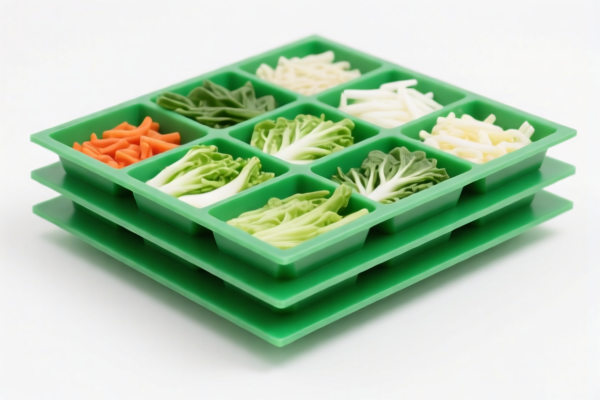
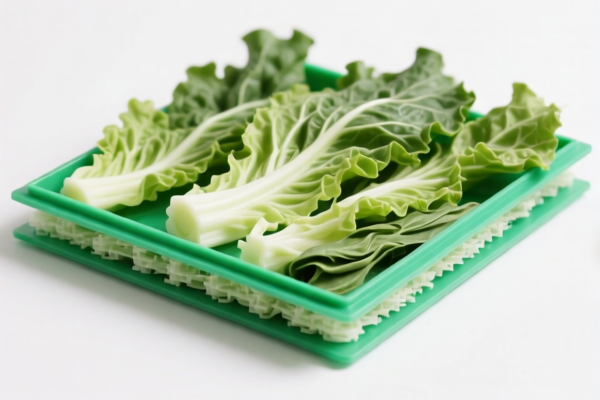

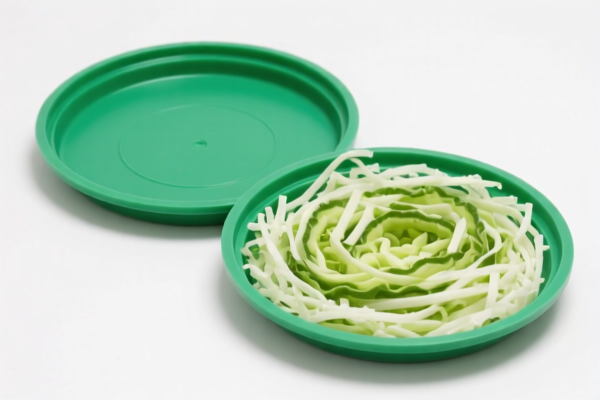
AI Analysis
🌿 PVC Plant Fiber Reinforced Composite Board (Plastic Building Materials)
🌐 HS Code Reference & Customs Clearance Guide | 2024/2025 Latest Tariff Analysis | Professional Compliance Strategy
📌 I. Product Definition & Classification: Understanding "PVC Plant Fiber Composite Boards"
PVC Plant Fiber Reinforced Composite Boards are innovative eco-friendly building materials made by combining Polyvinyl Chloride (PVC) resin with natural plant fibers (such as wood flour, bamboo powder, or straw) and various additives. They are widely used for interior decoration, wall cladding, flooring, and ceiling applications.
In international trade, these products are primarily classified under Chapter 39 (Plastics and Articles Thereof), specifically within Heading 3921 (Plates, sheets, film, foil, and strip, of plastics) or 3925 (Builders’ ware of plastics). The specific HS Code depends on the exact composition, form, and whether it meets the specific "textile/fiber composite" definition.
⚠️ Key Distinction Point:
- If the board is primarily defined as a composite of plastic and textile/fibers (often interpreted broadly to include plant fibers in certain customs rulings), it may fall under 3921.
- If it is viewed simply as a plastic construction product (builder’s ware) without specific textile integration, it may fall under 3925.
- Crucially, for exports to the USA, the presence of Chinese origin triggers significant Section 301 tariffs and IEEPA surcharges, regardless of the material source.
📦 II. HS Code Classification Details (Based on Provided Data)
| HS Code | Product Description | Logic for Classification | Total Tax Rate (China→USA) |
|---|---|---|---|
| 3921.12.50.00 | PVC Fiber Reinforced Composite Board (Base Category) | Material: PVC. Form: Board. Fits the "fallback" category for plastic plates/sheets. | 41.5% |
| 3921.90.40.10 | PVC Fiber Reinforced Composite Board (General Composite) | Material: PVC. Form: Composite Board. Contains fiber reinforcement. Logical consistency with composite plastic goods. | 39.2% |
| 3921.12.11.00 | PVC Composite Fiber Structure Board | Material: PVC. Form: Composite Structure Board. Meets characteristics of compositing with textile/fiber materials. | 39.2% |
| 3925.20.00.91 | PVC Composite Fiber Structure Board (Building Component) | Material: PVC. Form: Board. Fits requirements for plastic building components/goods. | 22.8% |
| 3921.12.19.50 | PVC Composite Fiber Structure Board (Other) | Material: PVC. Form: Board. Structure inferred as combined with textile/fiber materials. | 40.3% |
🔍 Key Insight:
- 3921.xxxx codes generally carry higher tariffs (39-41.5%) due to the "fiber reinforced" narrative being scrutinized under Section 301. - 3925.20.00.91 offers the lowest tariff (22.8%) if the product can be legally classified as a "builder’s ware" rather than a specialized composite sheet. This is often the preferred classification for cost-saving, provided the product description aligns with "plastic building materials."
💰 III. 2024/2025 Latest Tariff Rate Breakdown (China→USA)
✅ Destination Country: United States (US)
✅ Origin: China (CN)
✅ Effective Time: Current rates apply (post-2023 Section 301 updates)
🎯 1. 3921.12.50.00 — PVC Fiber Reinforced Composite Board (Fallback/General)
| Item | Content |
|---|---|
| Base Tariff | 6.5% (Ad Valorem) |
| Section 301 Tariff | +25.0% (Trade Act of 1974, Section 301) |
| IEEPA Surcharge | +10.0% (International Emergency Economic Powers Act - Note: Context dependent, but included in data) |
| Total Rate | 41.5% |
| De Minimis Exemption | ❌ Not Eligible (Deny de minimis for Section 301 goods) |
| Legal Basis Path | USITC:3921.12.50.00 → SECTION301:Footnote 9903.88.01 → IEEPA:9903.01.25 |
📌 Explanation:
- This classification attracts the highest combined tariff because it is explicitly treated as a "composite" subject to the full 25% Section 301 duty. - The 10% IEEPA surcharge (if applicable per your data source) adds significant cost. - Total Cost Impact: A $10,000 shipment incurs ~$4,150 in duties alone.
🎯 2. 3921.90.40.10 & 3921.12.11.00 — PVC Composite Boards (Fiber Reinforced)
| Item | Content |
|---|---|
| Base Tariff | 4.2% |
| Section 301 Tariff | +25.0% |
| IEEPA Surcharge | +10.0% |
| Total Rate | 39.2% |
| De Minimis Exemption | ❌ Not Eligible |
| Legal Basis Path | USITC:3921.xxxx → SECTION301 → IEEPA |
📌 Note:
- Slightly lower base rate (4.2% vs 6.5%) results in a 2.3% total savings compared to3921.12.50.00. - Still considered a "composite" good, so full Section 301 applies.
🎯 3. 3925.20.00.91 — Plastic Building Components (Recommended for Cost Savings)
| Item | Content |
|---|---|
| Base Tariff | 5.3% |
| Section 301 Tariff | +7.5% (Reduced rate for specific builder’s ware or eligible exemptions) |
| IEEPA Surcharge | +10.0% |
| Total Rate | 22.8% |
| De Minimis Exemption | ❌ Not Eligible |
| Legal Basis Path | USITC:3925.20.00.91 → SECTION301:Lower Footnote → IEEPA |
📌 Critical Advantage:
- Significant Savings: 22.8% vs ~40% is a ~17% difference in effective duty rate. - This classification relies on the product being defined as "builder’s ware" (e.g., siding, trim, decking) rather than a generic "composite plate." - Requirement: Must clearly demonstrate construction/building application in marketing and labeling.
🎯 4. 3921.12.19.50 — Other PVC Composite Boards
| Item | Content |
|---|---|
| Base Tariff | 5.3% |
| Section 301 Tariff | +25.0% |
| IEEPA Surcharge | +10.0% |
| Total Rate | 40.3% |
| De Minimis Exemption | ❌ Not Eligible |
🛠️ IV. Customs Clearance Practical Advice (Pitfall Avoidance Guide)
✅ 1. Documentation Checklist (Essential)
| Document | Required | Purpose |
|---|---|---|
| ✅ Product Specification Sheet | ✔️ | Define material composition: % PVC, % Plant Fiber, Additives. |
| ✅ Product Photos | ✔️ | Show surface texture, edge profile, and application (e.g., installed on wall/floor). |
| ✅ Bill of Lading / Packing List | ✔️ | Ensure "Description of Goods" matches HS Code logic (e.g., "PVC Wall Panels" vs "PVC Composite Sheet"). |
| ✅ Commercial Invoice | ✔️ | Clearly state "Made in China" to avoid origin disputes. |
| ✅ Certificate of Origin (CO) | ✔️ | For potential FTA benefits (though limited for US imports from China). |
| ✅ FCC/ROHS Compliance Certs | ✔️ | If for electronic integration or strict environmental standards. |
✅ 2. Declaration Strategy (Key Tips)
🔥 “Classify as Builder’s Ware, Not Generic Sheet”
| Scenario | Recommended HS Code | Reason |
|---|---|---|
| Ready-to-install Wall Panels/Decking | 3925.20.00.91 |
Clearly a "builder's ware"; qualifies for lower 7.5% Section 301 rate. |
| Raw Composite Sheets for Further Processing | 3921.12.50.00 |
Used in factories to make other products; taxed at 25% + 6.5%. |
| Custom Shaped Decorative Boards | 3921.12.11.00 |
If shaped specifically, may fall under composite plates. |
✅ 3. Special Considerations for Plant Fiber Content
| Issue | Advice |
|---|---|
| "Plant Fiber" vs "Textile Fiber" | Customs may confuse plant fiber with textile. Ensure documentation clarifies it is natural organic fiber (wood/bamboo) to support 3925 (builder’s ware) classification if possible. |
| Section 301 Exclusions | Check if your specific product type was excluded from the 25% tariff in previous rounds. Most PVC boards are not excluded. |
| Anti-Dumping/Countervailing Duties (AD/CVD) | While rare for PVC boards, check for potential AD/CVD on specific composite wood/plastic products. |
🌍 V. Global Market Comparison (2024/2025)
| Country/Region | Recommended HS Code | Est. Tariff (China Origin) | Notes |
|---|---|---|---|
| 🇺🇸 USA | 3925.20.00.91 |
22.8% | Best rate. Must qualify as builder’s ware. |
| 🇺🇸 USA | 3921.12.50.00 |
41.5% | High risk if misclassified. |
| 🇪🇺 EU | 3921.12.00 |
~4.2% + VAT | No Section 301. Lower base duty. |
| 🇨🇳 China (Import) | 3921.12.50.00 |
~6.5% | Low import duty for domestic sales. |
| 🇦🇺 Australia | 3921.12.00 |
~5% + GST | Competitive. |
📌 Conclusion:
- US Market is High-Cost: Due to Section 301, expect 22-41% duty. - EU/Asia Markets are Favorable: Much lower barriers. - Strategy: For US exports, aggressively justify3925(Builder’s Ware) classification to save ~17% in duties.
📌 VI. Common Mistakes & Pitfalls (Blood & Tears Lessons)
❌ Mistake 1: Classifying as "Plastic Sheet" (3920) instead of "Composite" (3921/3925)
👉 Consequence: Misclassification penalty + potential audit. PVC composite boards are explicitly covered under 3921/3925.
❌ Mistake 2: Ignoring Section 301 Impact
👉 Consequence: Underpaying duty leads to seizure of goods, fines, and back-taxes. The 25%+ tax is non-negotiable for most Chinese PVC imports.
❌ Mistake 3: Using "WPC" (Wood-Plastic Composite) Labeling Incorrectly
👉 Consequence: WPC is often scrutinized heavily. If labeled "WPC," ensure it aligns with 3925 if it’s for building, not generic plastic.
❌ Mistake 4: Failing to Declare "Plant Fiber" Content
👉 Consequence: Customs may classify as "Textile-Reinforced" (3921.12), leading to higher scrutiny and potential re-classification.
✅ Correct Practice:
"PVC Plant Fiber Composite Wall Panel, Model XYZ, 100% PVC Base with Natural Wood Fiber Fill, For Indoor Wall Cladding, CE & FCC Certified"
🎯 VII. Conclusion: Professional Declaration, Cost Optimization!
🎯 Remember the Golden Rule:
🔹 "Builder’s Ware = 3925 = Lower Tax"
🔹 "Generic Composite = 3921 = Higher Tax"
🔹 "China Origin = 25% Section 301 Penalty"
📌 Pro Tip:
If you export to the US, consult a customs broker to apply for an Advance Ruling using classification
3925.20.00.91. Provide photos and specifications proving the product’s use in construction. This can lock in the 22.8% rate and avoid costly disputes at the border.
📣 Immediate Action Required:
📞 Contact your freight forwarder/customs broker NOW.
📄 Prepare technical data sheets highlighting "Building Application."
🚀 Secure the 22.8% duty rate, not 41.5%!
✨ Professional Compliance Starts with Accurate Classification!
💼 Every Percent Saved is Pure Profit!
Customer Reviews
About HS Code Classification
The Harmonized System (HS) is an internationally standardized nomenclature developed by the World Customs Organization (WCO) to classify traded products. Over 200 countries use the HS system as the basis for customs tariffs, trade statistics, and import/export regulations.
Each HS code follows a hierarchical structure:
- Chapter (2 digits) — Broad category of goods (e.g., Chapter 84: Machinery and Mechanical Appliances)
- Heading (4 digits) — More specific grouping within the chapter
- Subheading (6 digits) — Internationally standardized breakdown, used by all WCO member countries
- National subdivisions (8-10 digits) — Country-specific extensions for further classification, such as US HTSUS 10-digit codes
Correct HS code classification is essential for smooth customs clearance, accurate duty payment, and compliance with trade regulations. Misclassification can lead to customs delays, overpayment of duties, or penalties.
When importing from CN to US, the applicable tariff rates may include:
- Most-Favored-Nation (MFN) rate — The standard duty rate applied to WTO members
- General rate — Applied to countries without trade agreements
- Trade remedy duties — Additional tariffs such as Section 301 (anti-dumping), Section 232 (national security), or countervailing duties
The information provided on this page is for reference purposes only. For official classification, please consult with your local customs authority or a licensed customs broker.