PVC Plastic Construction Pipe
CN → US| HS Code | Tariff Rate | Origin | Destination | Doc |
|---|---|---|---|---|
| 3917230000 | 38.1% | CN | US | Official Doc |
| 3917320010 | 38.1% | CN | US | Official Doc |
| 3926909987 | 22.8% | CN | US | Official Doc |
| 3926909989 | 22.8% | CN | US | Official Doc |
| 3917290090 | 38.1% | CN | US | Official Doc |
Product Images
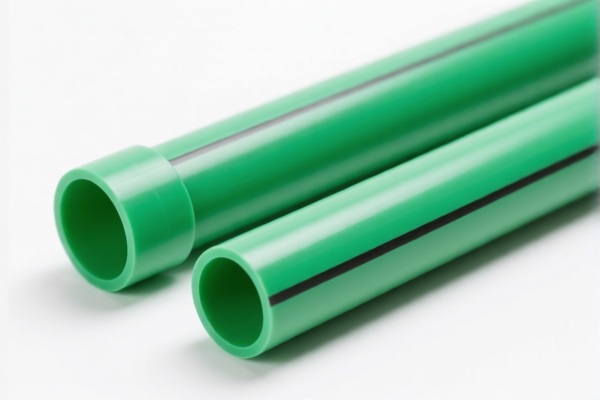

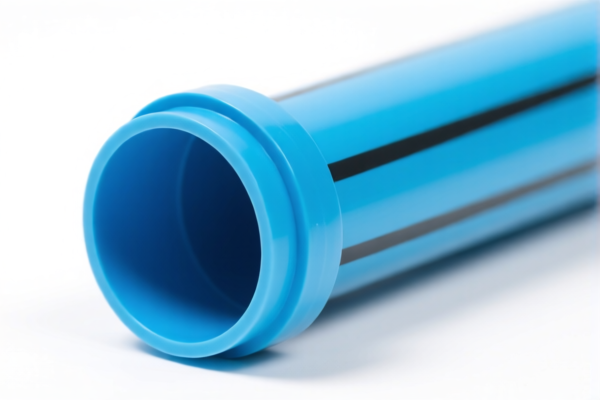
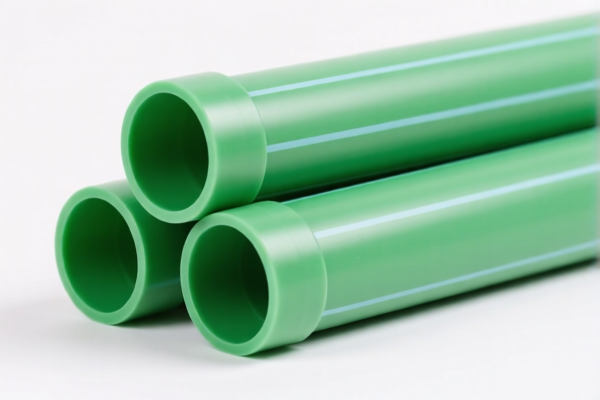
AI Analysis
🏗️ PVC Plastic Construction Pipes: The Ultimate Classification & Tariff Guide
🌐 HS Code Reference & Customs Clearance Guide | 2026 Latest Tariff Analysis | Professional Compliance Strategy
📌 1. Product Definition & Classification: What Exactly is a "PVC Construction Pipe"?
PVC (Polyvinyl Chloride) pipes are rigid or semi-rigid plastic tubes primarily used in plumbing, drainage, and conduit systems. However, under international trade law (specifically the Harmonized System), not all PVC pipes are created equal. The classification hinges on material specificity and intended use.
The Critical Distinction:
* Specific Polymer Classification (3917 vs 3926): If the pipe is made specifically of polymerized chlorides (like PVC), it falls under Chapter 39.17. If it is a generic "plastic" pipe that doesn't fit specific polymer definitions or is considered a "general accessory," it may fall under Chapter 39.26 (General Articles of Plastic).
* End-Use Classification (3916): If the pipe is specifically designed as a "building material" structural component, it may fall under Chapter 39.16.
⚠️ Key Warning:
- "PVC" Specificity: If the material is explicitly "Polyvinyl Chloride" or "Chlorinated Polymer," it triggers higher scrutiny under 3917.
- Generic "Plastic": Using generic terms like "Plastic Pipe" might lead to classification under 3926 or 3916, but risks海关 (Customs) re-classification if the specific polymer is identified.
- "Construction" Label: The term "Construction" alone does not guarantee classification under 3916; it must meet specific structural definitions.
📦 2. HS Code Classification Details (2026 Latest Tariff Authoritative Match)
Based on the provided dataset, here is the precise mapping for PVC Construction Pipes. Note the significant tariff differences based on the specific HS Code selected.
| HS Code | Product Description (From Data) | Total Tax Rate | Key Tax Components |
|---|---|---|---|
3917.23.00.00 |
PVC Pipe, Material: Vinyl Chloride Polymer, Form: Tube/Piping | 38.1% | Base: 3.1% + Add'l: 25.0% + 122 Clause: 10% |
3917.32.00.10 |
PVC Pipe, Material: Polyvinyl Chloride, Form: Tube | 38.1% | Base: 3.1% + Add'l: 25.0% + 122 Clause: 10% |
3926.90.99.87 |
PVC Pipe, Material: Plastic, Form: Tube, Other Plastic Articles (Fallback) | 22.8% | Base: 5.3% + Add'l: 7.5% + 122 Clause: 10% |
3926.90.99.89 |
PVC Pipe, Material: Plastic, Form: Tube, Other Plastic Articles (Fallback) | 22.8% | Base: 5.3% + Add'l: 7.5% + 122 Clause: 10% |
3917.29.00.90 |
Plastic Pipe for Construction, Material: Plastic, Form: Tube, Other Plastic Tubes | 38.1% | Base: 3.1% + Add'l: 25.0% + 122 Clause: 10% |
3916.20.00.10 |
Plastic Pipe for Construction, Material: Plastic, Use: Construction, Form: Tubular Structure | 40.8% | Base: 5.8% + Add'l: 25.0% + 122 Clause: 10% |
🔍 Critical Insight:
- Lowest Risk/Tax:3926.90.99.87/89(22.8%) offers the lowest total tax burden. However, this classification assumes the product is not specifically identified as a "Vinyl Chloride Polymer" tube but rather a general "Plastic" article.
- Highest Risk/Tax:3916.20.00.10(40.8%) is the most expensive due to a higher base rate (5.8%) combined with the standard additional tariffs.
- Standard PVC Classification:3917codes (23and32) carry the 38.1% rate. This is the most common classification for specific PVC pipes.
💰 3. 2026 Tariff Rate Breakdown (Detailed Policy Analysis)
✅ Applicable Country: United States (US)
✅ Origin: China (CN)
✅ Effective Date: Post-2025 Tariff Structure (Including Section 301 & IEEPA)
🎯 1. The "Standard PVC" Category: 3917.23.00.00 & 3917.32.00.10 & 3917.29.00.90
| Item | Content |
|---|---|
| Base Tariff | 3.1% |
| Section 301 Additional Tariff | +25.0% |
| Section 122 Tariff | +10.0% |
| Total Effective Rate | 38.1% |
| Tax Calculation | CIF Value × 38.1% |
| De Minimis Exemption | ❌ Not Eligible (Section 301/122 tariffs usually apply regardless of value) |
| Legal Basis Path | HTSUS:3917.23.00.00 → USITC:Footnote 9903.88.01 → Section 301 → Section 122 |
📌 Explanation:
- The 3.1% base rate is the standard MFN (Most Favored Nation) rate for plastic pipes.
- The 25% is the standard Section 301 tariff on Chinese goods.
- The 10% is the specific "122 Clause" tariff, often applied to steel, aluminum, or specific industrial inputs, but here explicitly listed for these PVC pipes.
- Total: 38.1%. This is a high-cost category. Misclassification to3926could save ~15.3%, but carries legal risk.
🎯 2. The "Fallback/General Plastic" Category: 3926.90.99.87 & 3926.90.99.89
| Item | Content |
|---|---|
| Base Tariff | 5.3% |
| Section 301 Additional Tariff | +7.5% |
| Section 122 Tariff | +10.0% |
| Total Effective Rate | 22.8% |
| Tax Calculation | CIF Value × 22.8% |
| De Minimis Exemption | ❌ Not Eligible |
| Legal Basis Path | HTSUS:3926.90.99.87 → USITC:Footnote 9903.88.01 → Section 301 (Reduced Rate) → Section 122 |
📌 Explanation:
- Why is the Section 301 rate only 7.5%? Some "general articles" (3926) may benefit from a reduced Additional Tariff rate compared to specific pipes (3917), depending on the specific USITC exemption lists.
- Total: 22.8%. This represents a significant cost saving (15.3 percentage points).
- Risk: You must prove the product does not fit the specific description of3917(e.g., it may be a composite material, or the "PVC" claim is inaccurate/misleading).
🎯 3. The "Construction Structural" Category: 3916.20.00.10
| Item | Content |
|---|---|
| Base Tariff | 5.8% |
| Section 301 Additional Tariff | +25.0% |
| Section 122 Tariff | +10.0% |
| Total Effective Rate | 40.8% |
| Tax Calculation | CIF Value × 40.8% |
| De Minimis Exemption | ❌ Not Eligible |
📌 Explanation:
- Why is this the highest? The base rate is higher (5.8%) because "tubular structures for construction" are often viewed as building materials rather than simple piping.
- Total: 40.8%. Avoid this classification unless the product is structurally distinct from standard pipes (e.g., large-diameter structural conduits).
🛠️ 4. Customs Clearance Operational Advice (Avoiding Pitfalls)
✅ 1. Documentation Checklist (Non-Negotiable)
| Document | Required? | Purpose |
|---|---|---|
| ✅ Product Specification Sheet | ✔️ | Must detail exact polymer type (e.g., "Unplasticized PVC" vs "PVC Blend"). Crucial for 3917 vs 3926. |
| ✅ Composition Analysis | ✔️ | Lab report confirming % of Chloride Polymers. If it’s <100% PVC, you might argue for 3926. |
| ✅ Product Photos | ✔️ | Show cross-section, markings (e.g., "ASTM D1785"), and end-use context. |
| ✅ Bill of Lading / Invoice | ✔️ | Description must match HS Code. Avoid vague terms like "PVC Pipe" if possible; use "Plastic Tubing" for 3926 strategy. |
| ✅ Country of Origin Certificate | ✔️ | Required for Section 301/122 tariff assessment. |
✅ 2. Classification Strategy & Declaration Tips
🔥 "Material is King, Use is Queen!"
| Scenario | Recommended HS Code | Declaration Strategy |
|---|---|---|
| Standard PVC Drain/Water Pipe | 3917.23.00.00 or 3917.32.00.10 |
Declare as "PVC Pipe, Polyvinyl Chloride, for Plumbing". Accept 38.1%. |
| Generic Plastic Pipe / Composite | 3926.90.99.87 |
Declare as "Plastic Tubing, General Use, Not Specifically PVC". Aim for 22.8%. Risk: Customs audit on material. |
| Large Structural Conduit | 3916.20.00.10 |
Declare as "Plastic Tubular Structure for Building". Accept 40.8% if structure is key. |
| Small Diameter Conduit (Electrical) | 3917.29.00.90 |
Declare as "Plastic Tube, Other". Standard 38.1%. |
⚠️ Critical Warning:
- Do NOT use3926for clear PVC pipes if you have invoices from suppliers stating "PVC" or "Polyvinyl Chloride." Customs will cross-reference and re-classify to3917, leading to underpayment penalties (38.1% - 22.8% = 15.3% back taxes + fines).
- Use3926only if the pipe is genuinely a mixed plastic, recycled plastic composite, or if the "PVC" claim is technically inaccurate.
✅ 3. Special Cases
| Case | Handling Advice |
|---|---|
| OEM Pipes | Provide OEM contracts. Ensure material specs match the declared HS Code. |
| Packaged Sets | If pipe + fittings are sold together, declare the primary component (the pipe). Do not split shipment to avoid higher tariffs on accessories. |
| Markings | Ensure pipes are marked with material type. If marked "PVC," it is nearly impossible to classify under 3926 without strong technical justification. |
🌍 5. Global Market Comparison (2026 Perspective)
| Market | Recommended HS Code | Estimated Tax (China Origin) | Notes |
|---|---|---|---|
| 🇺🇸 USA | 3917.23.00.00 / 3926.90.99.87 |
38.1% or 22.8% | Heavy Section 301/122 tariffs. |
| 🇨🇳 China | 3917.23.00.00 |
5.3% | Standard Import Tariff. No Section 301. |
| 🇪🇺 EU | 3917.21.00 |
4.5% | Standard EU Tariff. No Section 122 equivalent. |
| 🇬🇧 UK | 3917.21.00 |
4.5% | Post-Brexit tariff structure similar to EU. |
📌 Conclusion:
The US market is the most challenging due to the叠加 (stacking) of Base, Section 301, and Section 122 tariffs.
Cost Optimization Strategy:
1. Audit Material: Can you legally classify as3926? If yes, save 15.3%.
2. Supply Chain Diversification: Consider sourcing from Vietnam or Mexico if possible to avoid Section 301/122 (though 122 may still apply depending on final rules).
3. Advance Ruling: File for a US Customs Advance Ruling to lock in the HS Code and avoid post-import audits.
📌 6. Common Errors & Pitfalls (Lessons Learned)
❌ Error 1: Declaring PVC Pipe as 3926.90.99.87 when it is clearly PVC.
👉 Consequence: Customs reclassifies to 3917 → 15.3% underpayment penalty + Interest.
❌ Error 2: Using 3916.20.00.10 for small diameter plumbing pipes.
👉 Consequence: Higher base rate (5.8%) → Unnecessary tax increase.
❌ Error 3: Ignoring the "122 Clause".
👉 Consequence: The 10% tariff is often overlooked in generic quotes → Profit margin erosion.
✅ Correct Practice:
"PVC Pipe, Polyvinyl Chloride, ASTM D1785, for Water Supply" →
3917.23.00.00(38.1%)
"Plastic Tubing, Mixed Polymer, General Industrial Use" →3926.90.99.87(22.8%) (Only if technically accurate)
🎯 7. Conclusion: Professional Declaration, Cost Control
🎯 Key Takeaway:
🔹 "PVC is 38.1%, Generic Plastic is 22.8%, Structure is 40.8%."
🔹 "Check your material composition first. If it's PVC, you're paying 38.1% unless you qualify for3926."📌 Action Item:
1. Verify the exact material composition of your pipes.
2. If it is PVC, prepare for 38.1% duty.
3. If it is a composite, consult a customs broker to support3926classification for 22.8%.
4. Always include Section 122 (10%) in your landed cost calculations.
📣 Final Advice:
🚀 Pre-clearance is key. Misclassification of PVC pipes can lead to significant financial losses due to the high additive tariffs.
💼 Every percentage point counts. Saving 15.3% on high-volume pipe shipments can be the difference between profit and loss.
✨ Smart Classification, Smarter Profits!
💼 Your Supply Chain, Optimized for Compliance and Cost!
Customer Reviews
About HS Code Classification
The Harmonized System (HS) is an internationally standardized nomenclature developed by the World Customs Organization (WCO) to classify traded products. Over 200 countries use the HS system as the basis for customs tariffs, trade statistics, and import/export regulations.
Each HS code follows a hierarchical structure:
- Chapter (2 digits) — Broad category of goods (e.g., Chapter 84: Machinery and Mechanical Appliances)
- Heading (4 digits) — More specific grouping within the chapter
- Subheading (6 digits) — Internationally standardized breakdown, used by all WCO member countries
- National subdivisions (8-10 digits) — Country-specific extensions for further classification, such as US HTSUS 10-digit codes
Correct HS code classification is essential for smooth customs clearance, accurate duty payment, and compliance with trade regulations. Misclassification can lead to customs delays, overpayment of duties, or penalties.
When importing from CN to US, the applicable tariff rates may include:
- Most-Favored-Nation (MFN) rate — The standard duty rate applied to WTO members
- General rate — Applied to countries without trade agreements
- Trade remedy duties — Additional tariffs such as Section 301 (anti-dumping), Section 232 (national security), or countervailing duties
The information provided on this page is for reference purposes only. For official classification, please consult with your local customs authority or a licensed customs broker.