PVC Plastic Engraving Board
CN → US| HS Code | Tariff Rate | Origin | Destination | Doc |
|---|---|---|---|---|
| 3921905050 | 39.8% | CN | US | Official Doc |
| 3921190090 | 41.5% | CN | US | Official Doc |
| 3926909989 | 22.8% | CN | US | Official Doc |
| 3926909910 | 22.8% | CN | US | Official Doc |
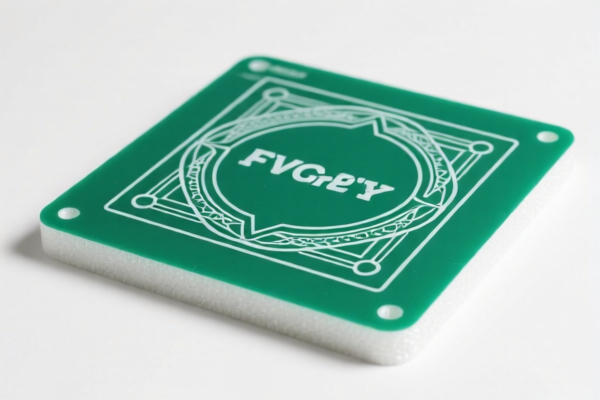
Product Images


AI Analysis
🔲 PVC Plastic Engraving Board (Plastic Engraving Plates)
🌐 HS Code Reference & Clearance Guide | 2026 Latest Tariff Analysis | Professional Clearance Strategy
📌 I. Product Definition & Classification: Do You Really Understand “PVC Plastic Engraving Board”?
The PVC Plastic Engraving Board is a specialized industrial material used for laser cutting, CNC routing, screen printing, and sign-making. It is primarily composed of polyvinyl chloride (PVC) resin, modified with stabilizers, lubricants, and fillers to enhance rigidity, surface smoothness, and engraving performance.
In international trade, its classification depends heavily on its physical form, intended use, and specific characteristics:
1. Plastic Sheets/Plates (Chapter 39): If the product is primarily identified by its form (a flat plate/sheet) and material (plastic), it generally falls under Chapter 39 (Plastics and Articles Thereof). 2. Other Plastic Articles (Chapter 39/90): If it has specific functional features that don’t fit standard sheet definitions, it might fall under broader "Other plastic articles" categories.
⚠️ Key Distinction Point:
- If it is a standard flat plate used for engraving/cutting → Chapter 39 (Plastic Plates/Sheets)
- If it is considered a generic "other plastic article" due to specific additives or non-standard form → Chapter 39 Subheading 90 (Other articles of plastics)
- Do not classify as wood or metal engraving materials, even if used for similar purposes.
📦 II. HS Code Classification Details (2026 Latest Tariff Authority Comparison)
Based on the provided data, there are four potential HS Codes for the "PVC Plastic Engraving Board." The choice depends on how customs authorities interpret the specific product attributes.
| HS Code | Product Description | Application Scenario | Tax Rate (Total) |
|---|---|---|---|
| 3921.90.50.50 | Plastic engraving board, PVC material, plate form, classified as "other plastic products." | Standard PVC plates for signage, industrial labeling. | 39.8% |
| 3921.19.00.90 | Plastic engraving board, classified as "plastic plates/sheets," other category. | Broad classification for plastic sheets not elsewhere specified. | 41.5% |
| 3926.90.99.89 | Plastic engraving board, classified as "other unlisted plastic articles." | Generic classification for plastic items with no specific plate-like duty. | 22.8% |
| 3926.90.99.10 | Plastic engraving board, plastic plate form, classified as "other plastic articles." | Specific sub-category for plastic plates under "other articles." | 22.8% |
🔍 Critical Observation:
- Codes 3926.90.99.89 and 3926.90.99.10 offer the lowest total tax burden (22.8%).
- Code 3921.19.00.90 carries the highest total tax burden (41.5%).
- The difference between the cheapest and most expensive classification is 18.7%, which significantly impacts profitability.
💰 III. 2026 Latest Tariff Rate Breakdown (Including Surcharges & Policy Add-ons)
✅ Applicable Country: United States (US)
✅ Country of Origin: China (CN)
✅ Effective Date: Post-2025 tariffs (Section 301 & 122 Clauses)
🎯 1. 3921.90.50.50 – Plastic Engraving Board (Plate Form)
| Item | Detail |
|---|---|
| Base Duty Rate | 4.8% (Ad Valorem) |
| Section 301 Surcharge | +25.0% (Added Tariff for Chinese Origin) |
| Section 122 Clause Tariff | +10.0% (Special Additional Duty) |
| Total Effective Rate | 39.8% |
| Tax Calculation | CIF Value × 39.8% |
| De Minimis Exemption | ❌ Not Eligible (Section 301 and 122 tariffs apply regardless of value) |
| Legal Basis Path | HTSUS:3921.90.50.50 → USITC:Footnote 301 → Section 122 Authority |
📌 Explanation:
- The 25% Section 301 tariff is applied to most plastic articles from China.
- The 10% Section 122 tariff is a special additional duty applied to certain imported goods, including specific plastic products, under recent trade enforcement actions.
- Total 39.8% is a high-cost item for US importers.
🎯 2. 3921.19.00.90 – Plastic Plates/Sheets (Other Category)
| Item | Detail |
|---|---|
| Base Duty Rate | 6.5% (Ad Valorem) |
| Section 301 Surcharge | +25.0% |
| Section 122 Clause Tariff | +10.0% |
| Total Effective Rate | 41.5% |
| Tax Calculation | CIF Value × 41.5% |
| De Minimis Exemption | ❌ Not Eligible |
| Legal Basis Path | HTSUS:3921.19.00.90 → USITC:Footnote 301 → Section 122 Authority |
📌 Warning:
- This is the most expensive classification due to the higher base duty (6.5% vs 4.8%).
- Importers should avoid this classification unless product characteristics strictly demand it.
🎯 3. 3926.90.99.89 – Other Plastic Articles (Unlisted)
| Item | Detail |
|---|---|
| Base Duty Rate | 5.3% (Ad Valorem) |
| Section 301 Surcharge | +7.5% (Note: Lower Section 301 rate applied here?) |
| Section 122 Clause Tariff | +10.0% |
| Total Effective Rate | 22.8% |
| Tax Calculation | CIF Value × 22.8% |
| De Minimis Exemption | ❌ Not Eligible |
| Legal Basis Path | HTSUS:3926.90.99.89 → USITC:Footnote 301 (Reduced Rate) → Section 122 Authority |
📌 Advantage:
- This code benefits from a lower Section 301 surcharge (7.5% instead of 25%).
- This is a significant cost-saving opportunity if the product can be legally justified under "other plastic articles" rather than "plates/sheets."
🎯 4. 3926.90.99.10 – Other Plastic Articles (Plastic Plate Form)
| Item | Detail |
|---|---|
| Base Duty Rate | 5.3% (Ad Valorem) |
| Section 301 Surcharge | +7.5% |
| Section 122 Clause Tariff | +10.0% |
| Total Effective Rate | 22.8% |
| Tax Calculation | CIF Value × 22.8% |
| De Minimis Exemption | ❌ Not Eligible |
| Legal Basis Path | HTSUS:3926.90.99.10 → USITC:Footnote 301 (Reduced Rate) → Section 122 Authority |
📌 Advantage:
- Identical tax treatment to3926.90.99.89.
- Suggests that even if classified as a "plate," if it falls under the "other plastic articles" umbrella (3926), it may qualify for the lower 7.5% Section 301 rate instead of 25%.
- This is the recommended classification for cost optimization, provided product description supports "other plastic article" status.
🛠️ IV. Clearance Practical Advice (Battle-Tested Pitfall Guide)
✅ 1. Required Documentation Checklist (No Missing Items)
| Document | Must Provide | Description |
|---|---|---|
| ✅ Product Specification Sheet | ✔️ | Must include material composition (PVC), density, thickness, width, length, and intended use (engraving). |
| ✅ Product Photos | ✔️ | Clear images of the board, showing surface texture, edges, and any packaging labels. |
| ✅ Commercial Invoice | ✔️ | Must clearly state: "PVC Plastic Engraving Board," Model No., Quantity, Unit Price, Total Value. |
| ✅ Packing List | ✔️ | Detail weight, dimensions, and packaging type. |
| ✅ Certificate of Origin (CO) | ✔️ | Proves Chinese origin for tariff calculation. |
| ✅ Material Safety Data Sheet (MSDS) | ✔️ | Required for chemical/plastic products. |
✅ 2. Declaration Strategy (Key Mnemonics)
🔥 “Characterize as ‘Other Article’ to Save 17%! ‘Plate’ Triggers 25%!”
| Scenario | Correct Declaration | Wrong Practice |
|---|---|---|
| Standard PVC Board | 3926.90.99.10 or 3926.90.99.89 |
Misclassifying as 3921.19.00.90 → 41.5% Tax |
| Generic Plastic Sheet | 3921.90.50.50 |
Over-declaring as "specialized plate" → 39.8% Tax |
| Custom-Sized Engraving Material | 3926.90.99.10 |
Ignoring Section 122 applicability → Unexpected Fees |
✅ 3. Special Case Handling
| Situation | Handling Advice |
|---|---|
| OEM Custom Sizes | Provide cut lists and standard roll/board dimensions to justify "other plastic article" status. |
| Pre-Printed Boards | If printed with designs, still classified under 3926, but declare "printed plastic board" in invoice. |
| Mixed Shipments | If mixed with non-plastic parts, do not split unless structurally separate. Declare main product. |
| Section 122 Query | Be prepared to answer why Section 122 applies. It applies to certain plastic articles from China. |
🌍 V. Global Market Clearance Comparison (2026 Latest)
| Country/Region | Recommended HS Code | Total Tax Rate | Certification Requirements | Notes |
|---|---|---|---|---|
| 🇺🇸 USA | 3926.90.99.10 |
22.8% | None specific | Lowest US duty option. |
| 🇨🇳 China | 3926.90.99.10 |
~5-6% | CCC (if applicable) | Lower base duty. |
| 🇪🇺 EU | 3926.90.99 |
~6.5% | REACH Registration | No Section 301/122. |
| 🇦🇺 Australia | 3926.90.99 |
~5% | None | Competitive market. |
| 🇯🇵 Japan | 3926.90.99 |
~6% | PSE (if electrical, not applicable) | Standard duty. |
📌 Conclusion:
- USA is the most complex market due to Section 301 and 122 tariffs.
- Choosing3926.90.99.10over3921.19.00.90saves 18.7% in duty.
- EU, Australia, and Japan do not have these punitive surcharges, making PVC engraving boards more competitive.
📌 VI. Common Mistakes & Pitfall Guide (Lessons Learned)
❌ Mistake 1: Classifying as 3921.19.00.90 (Plastic Plates)
👉 Consequence: Pays 41.5% tax instead of 22.8%. Overpayment of 18.7%!
❌ Mistake 2: Ignoring Section 122 Clause
👉 Consequence: Even with correct HS Code, if Section 122 is ignored, additional 10% may be added or questioned.
❌ Mistake 3: Vague Product Description ("Plastic Sheet")
👉 Consequence: Customs may reclassify to higher-duty codes or demand additional documentation.
❌ Mistake 4: Assuming De Minimis Applies
👉 Consequence: Section 301 and 122 tariffs do not apply to de minimis shipments. All goods are taxed.
✅ Correct Practice:
“PVC Plastic Engraving Board, Unprinted, 2mm Thickness, 4x8 ft, for CNC/Laser Cutting, Model XYZ”
🎯 VII. Conclusion: Professional Declaration, Save Costs, Ensure Compliance!
🎯 Remember Mnemonics:
🔹 “‘Other Article’ Beats ‘Plate’ in Duty, 22.8% vs 41.5%!”
🔹 “Section 122 Adds 10%, Check All Chinese Plastic Imports!”
📌 Pro Tip:
- If your PVC engraving board is originated from Vietnam, Malaysia, or Thailand, you may be eligible for lower or zero Section 301 tariffs.
- Recommendation: Apply for an Advance Ruling from US Customs and Border Protection (CBP) to confirm the HS Code and duty rate before shipment. This avoids post-import audits and penalties.
📣 Immediate Action:
📞 Contact a licensed customs broker + Provide product specs + Request HS Code Advance Ruling
🚀 Let your PVC engraving boards clear smoothly, reduce costs, and maximize profit!
✨ Professional Clearance Starts with Accurate Classification!
💼 Every Cent of Duty is Worth Calculating Precisely!
Customer Reviews
About HS Code Classification
The Harmonized System (HS) is an internationally standardized nomenclature developed by the World Customs Organization (WCO) to classify traded products. Over 200 countries use the HS system as the basis for customs tariffs, trade statistics, and import/export regulations.
Each HS code follows a hierarchical structure:
- Chapter (2 digits) — Broad category of goods (e.g., Chapter 84: Machinery and Mechanical Appliances)
- Heading (4 digits) — More specific grouping within the chapter
- Subheading (6 digits) — Internationally standardized breakdown, used by all WCO member countries
- National subdivisions (8-10 digits) — Country-specific extensions for further classification, such as US HTSUS 10-digit codes
Correct HS code classification is essential for smooth customs clearance, accurate duty payment, and compliance with trade regulations. Misclassification can lead to customs delays, overpayment of duties, or penalties.
When importing from CN to US, the applicable tariff rates may include:
- Most-Favored-Nation (MFN) rate — The standard duty rate applied to WTO members
- General rate — Applied to countries without trade agreements
- Trade remedy duties — Additional tariffs such as Section 301 (anti-dumping), Section 232 (national security), or countervailing duties
The information provided on this page is for reference purposes only. For official classification, please consult with your local customs authority or a licensed customs broker.