PVC Plastic Irrigation Hose
CN → US| HS Code | Tariff Rate | Origin | Destination | Doc |
|---|---|---|---|---|
| 3917320010 | 38.1% | CN | US | Official Doc |
| 3917390020 | 38.1% | CN | US | Official Doc |
| 5909002000 | 38.3% | CN | US | Official Doc |
Product Images
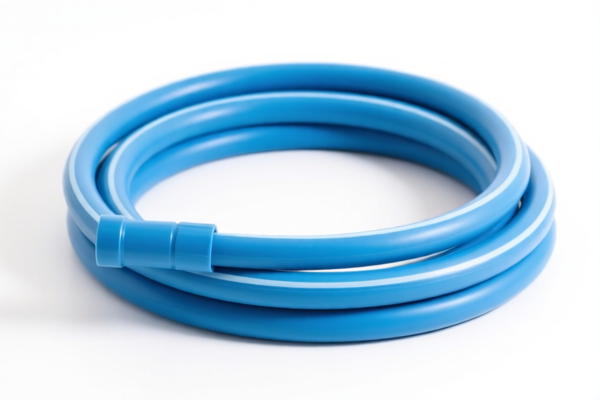

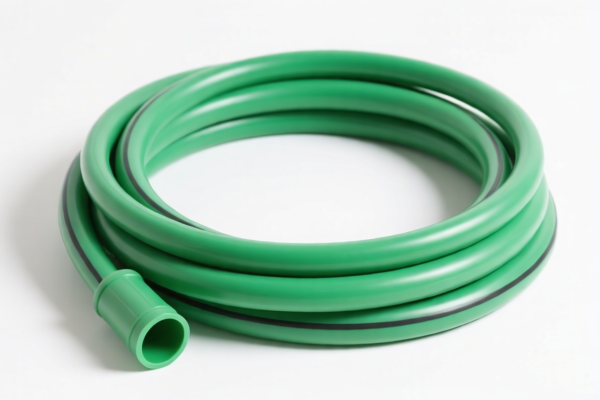
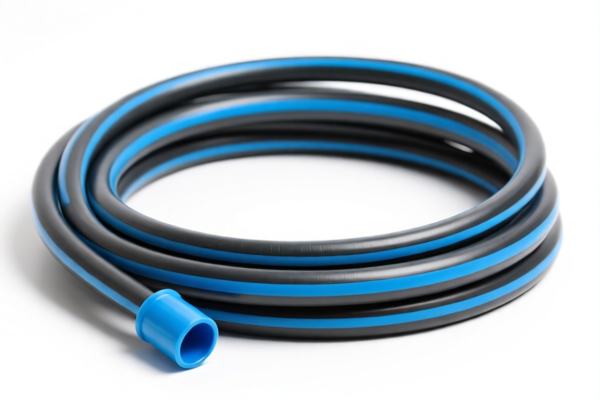
AI Analysis
🌿 PVC Plastic Irrigation Hose
🌐 HS Code Reference & Customs Clearance Guide | 2026 Latest Tariff Analysis | Professional Clearance Strategy
📌 I. Product Definition & Classification: Do You Really Understand "Irrigation Hose"?
PVC Plastic Irrigation Hose is a critical component in modern agriculture, landscaping, and industrial water management. In international trade, specifically regarding imports into markets subject to additional duties (like the US under recent trade policies), it is categorized based on material composition and physical form.
⚠️ Key Classification Logic:
- Material: Polyvinyl Chloride (PVC) / Plastic.
- Form: Flexible Hose/Tubing.
- Function: Fluid conveyance (Irrigation).
- Regulatory Context: Under current US trade frameworks (2025-2026), PVC hoses from China face significant additional tariffs due to Section 301 and IEEPA measures.
📦 II. HS Code Classification Details (2026 Authoritative Reference)
Based on the provided data, there are three potential HS Code classifications depending on the specific structural characteristics and regulatory interpretations. While they appear similar, the tax details vary slightly.
| HS Code | Product Description | Summary & Classification Logic | Total Tax Rate | Tax Detail Breakdown |
|---|---|---|---|---|
| 3917.32.00.10 | PVC Low-Pressure Hose | Material: PVC. Form: Hose. Fits under "Other tubes, pipes and hoses of plastics." | 38.1% | Base: 3.1% Section 301: 25.0% Section 122: 10.0% |
| 3917.39.00.20 | PVC Low-Pressure Hose | Material: PVC. Form: Hose. Fully complies with material and form limits. | 38.1% | Base: 3.1% Section 301: 25.0% Section 122: 10.0% |
| 5909.00.20.00 | PVC Plastic Hose (Textile Class) | Material: Plastic (Textile-like classification). Fits under "Other textile hoses and similar tubing." | 38.3% | Base: 3.3% Section 301: 25.0% Section 122: 10.0% |
🔍 Critical Distinction:
- Codes3917.32.00.10and3917.39.00.20belong to Chapter 39 (Plastics) and are the most standard classifications for pure PVC hoses.
- Code5909.00.20.00belongs to Chapter 59 (Textiles/Impregnated Textiles). This is used if the hose has a specific textile reinforcement or is classified under a broader "textile-like" tubing definition.
- Note: All three classifications attract the same high additional tariffs (Section 301 + Section 122), resulting in a total effective rate of ~38%.
💰 III. 2026 Latest Tariff Rate Detailed Explanation
✅ Applicable Country: United States (US)
✅ Origin: China (CN) (Assumed based on the "Section 122" and "301" context in the source data)
✅ Effective Time: Current trade regulations (Post-2025 adjustments)
🎯 1. HS Codes 3917.32.00.10 & 3917.39.00.20 —— PVC Hoses (Plastics Chapter)
| Item | Content |
|---|---|
| Base Tariff | 3.1% (Ad valorem) |
| Section 301 Additional Duty | +25.0% (Trade Policy Act, Section 301) |
| Section 122 Additional Duty | +10.0% (Trade Act, Section 122) |
| Total Tax Rate | 38.1% |
| Calculation Method | CIF Value × 38.1% |
| De Minimis Exemption | ❌ Not Applicable |
| Legal Basis Path | USITC: 3917.32/39.00 → Section 301: Footnote 9903.88.01 → Section 122: 19 USC 1677j |
📌 Explanation:
- The 3.1% is the standard Most Favored Nation (MFN) duty for plastic pipes/hoses.
- The 25% is the standard "Trade War" tariff imposed on Chinese manufactured goods under Section 301.
- The 10% is a specific additional levy (Section 122) often applied to certain Chinese imports during specific trade enforcement periods.
- Total 38.1% is a significant cost factor that must be factored into your pricing strategy.
🎯 2. HS Code 5909.00.20.00 —— PVC Hose (Textile/Other Category)
| Item | Content |
|---|---|
| Base Tariff | 3.3% (Ad valorem) |
| Section 301 Additional Duty | +25.0% |
| Section 122 Additional Duty | +10.0% |
| Total Tax Rate | 38.3% |
| Calculation Method | CIF Value × 38.3% |
| De Minimis Exemption | ❌ Not Applicable |
| Legal Basis Path | USITC: 5909.00.20.00 → Section 301 → Section 122 |
📌 Note:
- The base rate is slightly higher (3.3% vs 3.1%) due to the different chapter classification.
- The additional duties remain the same.
- Use this code only if the product specifically meets the "textile-like" or "reinforced" definition under Chapter 59.
🛠️ IV. Customs Clearance Practical Advice (Field Guide)
✅ 1. Preparation Checklist (Non-Negotiable)
| Document | Mandatory? | Explanation |
|---|---|---|
| ✅ Product Specification Sheet | ✔️ | Must specify: Material (PVC), Inner/Outer Diameter, Pressure Rating (Low Pressure), Temperature Range. |
| ✅ Product Photos | ✔️ | Clear images of the hose, ends, and any markings/labels showing material type. |
| ✅ Commercial Invoice | ✔️ | Must clearly state: "PVC Irrigation Hose," HS Code, Country of Origin (China), and CIF Value. |
| ✅ Certificate of Origin (CO) | ✔️ | Essential for verifying origin to apply the correct additional duties. |
| ✅ Packaging List | ✔️ | Detail dimensions and weights per carton. |
| ✅ Material Safety Data Sheet (MSDS) | ✔️ | Sometimes requested to confirm PVC composition and chemical stability. |
✅ 2. Declaration Tips (Key Phrases to Use)
🔥 "Be Precise, Avoid Ambiguity!"
| Scenario | Correct Declaration | Incorrect Declaration |
|---|---|---|
| Standard PVC Hose | "PVC Plastic Hose for Irrigation, Low Pressure" | "Water Pipe" (Too vague, may trigger misclassification) |
| Reinforced Hose | "PVC Hose with Textile Reinforcement" | "Industrial Hose" (May be misclassified as rubber or metal) |
| Bulk Hose | "PVC Hose, Cut to Length" | "Plastic Sheets" (Wrong chapter) |
📌 Recommendation:
- Use the exact summary provided in the HS Code data: "PVC Low-Pressure Hose, Material: Polyvinyl Chloride, Form: Hose."
- Avoid terms like "Garden Hose" if it might be confused with rubber hoses (Chapter 40), which have different duty rates. Stick to "PVC" to ensure classification under Chapter 39.
✅ 3. Special Situations
| Situation | Handling Advice |
|---|---|
| Mixed Materials | If the hose has a metal core or rubber lining, do not use Chapter 39. Re-evaluate under Chapter 40 (Rubber) or Chapter 73/74 (Metals), but note that PVC dominance usually keeps it in Ch. 39. |
| Re-Exports | If transiting through a third country, ensure the Certificate of Origin clearly states China. Transshipment does not exempt you from Section 301/122 duties. |
| Small Shipments | Even for small B2C shipments, the 38.1% tariff applies. Do not assume de minimis ($800) applies if the shipment value exceeds thresholds or if specific exclusions don't apply. |
🌍 V. Global Market Comparison (2026 Latest)
| Country/Region | Recommended HS Code | Tariff (China Origin) | Certification Requirements | Notes |
|---|---|---|---|---|
| 🇺🇸 United States | 3917.32.00.10 / 3917.39.00.20 |
38.1% | None specific, but compliance with local safety standards recommended. | High Tariff Zone: Section 301 + Section 122 apply. |
| 🇨🇳 China | 3917.32.00.10 |
5.0% - 8.0% (Varies) | CCC (if applicable for specific uses) | Lower duties for domestic trade or exports to non-US markets. |
| 🇪🇺 EU | 3917.23.00 / 3917.29.00 |
2.5% - 4.5% | REACH, RoHS | No Section 301/122 duties. Much more competitive. |
| 🇲🇽 Mexico | 3917.23.00 |
0% - 5% (If USMCA eligible) | NOM Certifications | Check USMCA eligibility for potential zero tariff. |
| 🇻🇳 Vietnam | 3917.23.00 |
0% - 5% | TCVN Standards | Alternative sourcing hub with lower trade barriers. |
📌 Conclusion:
- The US market is the most expensive for PVC hoses due to叠加 (stacked) additional duties.
- For cost-sensitive projects, consider supply chain diversification to Vietnam or Mexico if USMCA/FTAA rules apply.
- If shipping to the US, budget for a 38.1% tax impact on the CIF value.
📌 VI. Common Mistakes & Pitfalls (Lessons Learned)
❌ Mistake 1: Declaring as "Rubber Hose" (Chapter 40)
👉 Consequence: Misclassification penalty. PVC is plastic (Ch. 39), not rubber. Even if flexible, material determines the chapter.
👉 Result: Seizure, fines, or forced re-classification with back-tariffs.
❌ Mistake 2: Ignoring Section 122 & 301 Duties
👉 Consequence: Underpayment of taxes.
👉 Result: Customs audit, penalties, and delayed clearance. The total rate is 38.1%, not just the base 3.1%.
❌ Mistake 3: Using Generic Terms "Hose" or "Tubing"
👉 Consequence: Customs officer may guess the classification.
👉 Result: Delays while providing additional proof of material (PVC). Always specify "PVC" and "Low Pressure."
❌ Mistake 4: Assuming De Minimis Exemption for B2C
👉 Consequence: If the shipment is from a high-tariff country (China) and exceeds the $800 threshold, or if the product is specifically excluded, the 38.1% applies.
👉 Result: Unexpected high duties for consumers or small businesses.
✅ Correct Practice:
"PVC Irrigation Hose, Low Pressure, 100% Polyvinyl Chloride, Imported from China. HS Code: 3917.32.00.10. Total Duty: 38.1%."
🎯 VII. Conclusion: Professional Declaration Saves Money!
🎯 Remember These Mantras:
🔹 "PVC is Plastic, Not Rubber – Chapter 39 is Key!"
🔹 "US Imports from China: 3.1% Base + 25% (301) + 10% (122) = 38.1%!"
🔹 "Declare Accurately, Avoid Delays, and Budget for Tariffs!"
📌 Pro Tip:
If you are shipping to the US, consider pre-clearance services or Advance Rulings to confirm the exact HS Code (3917.32.00.10 vs 3917.39.00.20) based on your specific hose design. This prevents last-minute surprises at customs.
📣 Take Action Now:
📞 Contact a licensed customs broker.
📄 Provide detailed specs (PVC, Low Pressure, Dimensions).
📈 Calculate landed cost including the 38.1% tax.🚀 Ensure smooth clearance, avoid penalties, and maximize your profit margins!
✨ Professional Customs Clearance Starts with Accurate Classification!
💼 Every dollar saved on correct declaration is pure profit!
Customer Reviews
About HS Code Classification
The Harmonized System (HS) is an internationally standardized nomenclature developed by the World Customs Organization (WCO) to classify traded products. Over 200 countries use the HS system as the basis for customs tariffs, trade statistics, and import/export regulations.
Each HS code follows a hierarchical structure:
- Chapter (2 digits) — Broad category of goods (e.g., Chapter 84: Machinery and Mechanical Appliances)
- Heading (4 digits) — More specific grouping within the chapter
- Subheading (6 digits) — Internationally standardized breakdown, used by all WCO member countries
- National subdivisions (8-10 digits) — Country-specific extensions for further classification, such as US HTSUS 10-digit codes
Correct HS code classification is essential for smooth customs clearance, accurate duty payment, and compliance with trade regulations. Misclassification can lead to customs delays, overpayment of duties, or penalties.
When importing from CN to US, the applicable tariff rates may include:
- Most-Favored-Nation (MFN) rate — The standard duty rate applied to WTO members
- General rate — Applied to countries without trade agreements
- Trade remedy duties — Additional tariffs such as Section 301 (anti-dumping), Section 232 (national security), or countervailing duties
The information provided on this page is for reference purposes only. For official classification, please consult with your local customs authority or a licensed customs broker.