PVC Plastic Irrigation Hoses
CN → US| HS Code | Tariff Rate | Origin | Destination | Doc |
|---|---|---|---|---|
| 3917320010 | 38.1% | CN | US | Official Doc |
| 3917230000 | 38.1% | CN | US | Official Doc |
| 3926909987 | 22.8% | CN | US | Official Doc |
| 3926909989 | 22.8% | CN | US | Official Doc |
| 3917320010 | 38.1% | CN | US | Official Doc |
Product Images
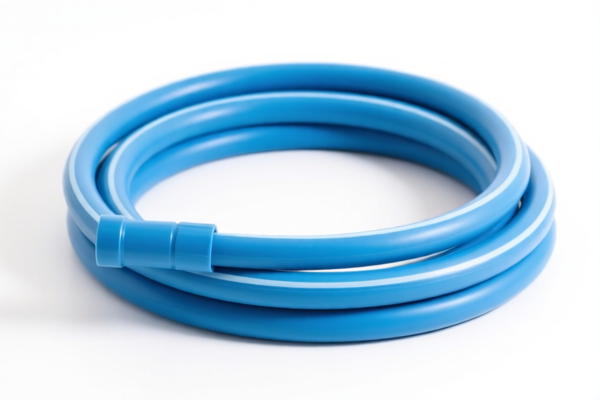

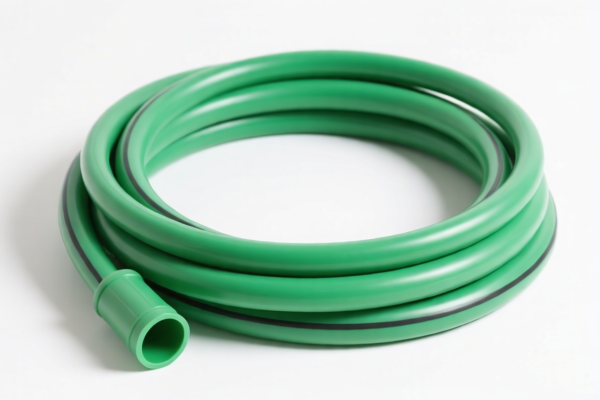
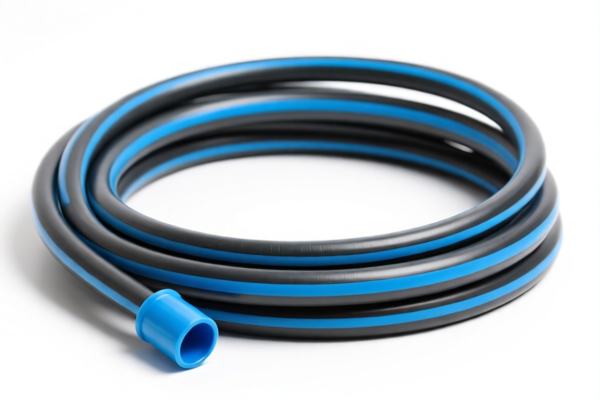
AI Analysis
🚿 PVC Plastic Irrigation Hoses (Polyvinyl Chloride)
🌐 HS Code Classification & Customs Clearance Guide | 2026 Latest Tariff Analysis | Professional Compliance Strategy
📌 I. Product Definition & Classification: Understanding "PVC Irrigation Hoses"
PVC Plastic Irrigation Hoses are essential components in modern agriculture, landscaping, and industrial fluid transport systems. In international trade, they are primarily classified based on their material (Polyvinyl Chloride/PVC), form (tubular), and specific chemical composition.
Key Distinction: * Rigid/Pressure Pipes: Often classified under Chapter 39, Section 3917 (Plastic pipes and hoses). * Flexible Hoses: May fall under general "Other plastic articles" (Chapter 39, Section 3926) if not strictly defined as pipes/hoses in 3917, depending on specific national tariff nomenclature interpretations.
⚠️ Critical Classification Point:
- If the product is explicitly defined as a "pipe or hose" made of polymers of vinyl chloride → It typically falls under 3917.32.
- If the customs authority classifies it as a "general plastic article" without a specific pipe/hose subheading fit → It may fall under the "catch-all" category 3926.90.99.
📦 II. HS Code Classification Details (Based on Provided Data)
The following HS Codes are derived directly from the provided dataset for PVC Plastic Irrigation Hoses. Note that duplicates in the source data indicate multiple potential classification paths or identical tax treatments for similar descriptions.
| HS Code | Product Description | Application Scenario | Tax Rate |
|---|---|---|---|
3917.32.00.10 |
PVC Pipe, Material: Polyvinyl Chloride, Form: Tube, Meets classification requirements. | Standard PVC irrigation pipes/hoses, rigid or semi-rigid. | 38.1% |
3917.23.00.00 |
PVC Pipe, Material: Vinyl Chloride Polymer, Form: Tube, Matches classification. | General PVC polymer tubes, including irrigation hoses. | 38.1% |
3917.32.00.10 |
PVC Plastic Irrigation Hose, Material: Polyvinyl Chloride, Form: Tube, Meets classification requirements. | Specific Match: Explicitly named "Irrigation Hose". | 38.1% |
3926.90.99.87 |
PVC Pipe, Plastic Material, Form: Tube, Classified under "Other Plastic Articles" catch-all. | Alternative classification if not deemed a standard "pipe/hose". | 22.8% |
3926.90.99.89 |
PVC Pipe, Plastic Material, Form: Tube, Meets definition of "Other Plastic Articles". | Alternative classification, slightly different sub-code for catch-all. | 22.8% |
🔍 Key Insight:
- Primary Classification (3917 Series): Carries a higher total tariff of 38.1% due to specific trade measures (Section 301/122). - Alternative Classification (3926 Series): Carries a lower total tariff of 22.8%, but may be subject to customs scrutiny if the product is clearly a "pipe/hose." - Warning: Misclassification between 3917 and 3926 can lead to significant duty differences (15.3% gap) and potential customs penalties.
💰 III. 2026 Tariff Rate Breakdown (Including Additional Duties & Policy Surcharges)
✅ Applicable Country: United States (US)
✅ Origin: China (CN)
✅ Effective Date: Based on current trade policies (Section 301 & 122 tariffs active)
🎯 1. 3917.32.00.10 & 3917.23.00.00 — PVC Pipes & Hoses (Polymer of Vinyl Chloride)
| Item | Content |
|---|---|
| Base Duty Rate | 3.1% (Ad Valorem) |
| Section 301 Additional Duty | +25.0% |
| Section 122 Duty | +10.0% |
| Total Effective Duty Rate | 38.1% |
| Tax Calculation | CIF Value × 38.1% |
| De Minimis Exemption? | ❌ No (High-value commercial shipments do not qualify) |
| Legal Basis Path | HTS: 3917.32.00.10 → Section 301: Footnote 9903.88.01 → Section 122: IEEPA Authority |
📌 Explanation:
- The 38.1% rate is a cumulative burden: Base (3.1%) + Trade War Tariff (25.0%) + Section 122 Tariff (10%).
- This classification is strict for products explicitly identified as "pipes" or "hoses" made of PVC.
- Cost Impact: For a $10,000 shipment, duties amount to $3,810.
🎯 2. 3926.90.99.87 & 3926.90.99.89 — Other Plastic Articles (Catch-All)
| Item | Content |
|---|---|
| Base Duty Rate | 5.3% (Ad Valorem) |
| Section 301 Additional Duty | +7.5% |
| Section 122 Duty | +10.0% |
| Total Effective Duty Rate | 22.8% |
| Tax Calculation | CIF Value × 22.8% |
| De Minimis Exemption? | ❌ No (Depends on value, but usually denied for bulk commercial) |
| Legal Basis Path | HTS: 3926.90.99.87 → Section 301: Footnote 9903.88.01 (different subset) → Section 122 |
📌 Explanation:
- The 22.8% rate is significantly lower (15.3% less) than the 3917 classification.
- Risk: Using this code for a clear "PVC Irrigation Hose" may trigger a customs audit if the inspector determines it fits the 3917 definition.
- Cost Impact: For a $10,000 shipment, duties amount to $2,280.
🛠️ IV. Customs Clearance Operational Advice (Practical Pitfall Avoidance)
✅ 1. Documentation Checklist (Non-Negotiable)
| Document | Mandatory? | Description |
|---|---|---|
| ✅ Product Specification Sheet | ✔️ | Must detail: Material (100% PVC or blend), Wall Thickness, Diameter, Pressure Rating. |
| ✅ Commercial Invoice | ✔️ | Must clearly state: "PVC Plastic Irrigation Hose" OR "PVC Pipe," not vague terms like "Plastic Tubing." |
| ✅ Packing List | ✔️ | Item weight, dimensions, and quantity per package. |
| ✅ Bill of Lading/Air Waybill | ✔️ | Standard shipping document. |
| ✅ Country of Origin Certificate | ✔️ | To confirm China origin and apply correct additional tariffs. |
| ✅ Photo of Product & Label | ✔️ | Clear image showing the product, any markings, and packaging. |
✅ 2. Classification Strategy (Key Mnemonics)
🔥 "Know Your Form: Hose vs. Pipe vs. Other"
| Scenario | Recommended HS Code | Risk Level |
|---|---|---|
| Rigid PVC Pipe for irrigation | 3917.32.00.10 |
Low (Standard) |
| Flexible PVC Hose for irrigation | 3917.32.00.10 or 3926.90.99.87 |
⚠️ Medium (Debatable) |
| General Plastic Tubing (non-irrigation specific) | 3926.90.99.87 |
Low (If not strictly a hose) |
| Mixed Packaging (Pipe + Hose + Fittings) | Primary Item Determines HS | High (Requires careful breakdown) |
📌 Critical Tip:
- If your product is explicitly marketed as an "Irrigation Hose," customs officials are likely to scrutinize 3917.32.00.10.
- To use the lower 22.8% rate (3926), you must demonstrate that the product does not fit the strict definition of a "pipe or hose" under 3917 (e.g., it is a flexible tube for non-pressure, non-agricultural use). Misuse is risky.
✅ 3. Special Circumstances & Mitigation
| Situation | Handling Advice |
|---|---|
| OEM/Private Label | Provide a letter from the manufacturer confirming material composition. |
| Mixed Materials | If the hose has a reinforced core (e.g., fiberglass), declare accurately. Pure PVC fits 3917. |
| Small Samples | For low-value samples (<$800), de minimis may apply, but highly dependent on current CBP enforcement. Do not rely on this for bulk. |
| Pre-Ruling | Strongly Recommended: Apply for an Advanced Ruling (Pre-Decision) from CBP to confirm whether your specific hose qualifies for 3926 or must be 3917. |
🌍 V. Global Market Comparison (2026 Update)
| Market | Recommended HS Code | Duty Rate | Certification Requirement | Notes |
|---|---|---|---|---|
| 🇺🇸 USA | 3917.32.00.10 |
38.1% | None specific | Highest duty due to Section 301/122. |
| 🇺🇸 USA | 3926.90.99.87 |
22.8% | None specific | Lower rate, but high audit risk. |
| 🇨🇳 China | 3917.32.00.10 |
~5-10% | CCC (if applicable) | Domestic trade rates differ. |
| 🇪🇺 EU | 3917.21.00 / 3917.33.00 |
0-4.5% | REACH, RoHS | No Section 301 tariffs. |
| 🇬🇧 UK | 3917.21.00 / 3917.33.00 |
0-4.5% | UKCA, REACH | Post-Brexit rules apply. |
📌 Conclusion:
- USA is the most expensive market for PVC irrigation hoses due to layered tariffs.
- EU/UK offer significantly lower duty rates (0-4.5%) but stricter chemical compliance (REACH).
📌 VI. Common Errors & Pitfalls (Lessons Learned)
❌ Error 1: Classifying "Irrigation Hose" as 3926 to save 15.3%
👉 Consequence: Customs audit, duty reassessment, fines, and shipment delays.
👉 Fix: Only use 3926 if the product is not primarily a pipe/hose (e.g., a flexible plastic sleeve for cable protection).
❌ Error 2: Vague Description "Plastic Tube"
👉 Consequence: CBP may classify as highest duty rate or request additional info, causing delays.
👉 Fix: Use precise terms: "PVC Irrigation Hose, 1/2 inch, 100 ft reel."
❌ Error 3: Ignoring Section 122 Tariff
👉 Consequence: Underpayment by 10%.
👉 Fix: Always include the +10% in cost calculations for China-origin goods.
🎯 VII. Conclusion: Professional Classification for Cost Efficiency
🎯 Key Takeaway:
🔹 "PVC Irrigation Hose = 3917.32.00.10 (38.1%) is the safest bet."
🔹 "Using 3926 (22.8%) is a strategic gamble with high audit risk."
📌 Pro Tip:
If you are importing large volumes, consider:
1. Advance Ruling: Get a binding opinion from CBP on your specific product.
2. Supply Chain Diversification: Source from countries not subject to Section 301/122 tariffs (e.g., Vietnam, Mexico) if possible.
3. HS Code Optimization: Work with a licensed customs broker to evaluate if any components can be classified separately (though often impractical for finished goods).
📣 Immediate Action:
📞 Consult a licensed customs broker.
📄 Prepare detailed product specs.
📋 Apply for CBP Advance Ruling if volume is significant.🚀 Avoid Surprises: Classify Correctly, Pay Correctly, Clear Quickly!
✨ Professional Customs Compliance Starts with Accurate Classification!
💼 Your Profit Margin Depends on Your Duty Rate!
Customer Reviews
About HS Code Classification
The Harmonized System (HS) is an internationally standardized nomenclature developed by the World Customs Organization (WCO) to classify traded products. Over 200 countries use the HS system as the basis for customs tariffs, trade statistics, and import/export regulations.
Each HS code follows a hierarchical structure:
- Chapter (2 digits) — Broad category of goods (e.g., Chapter 84: Machinery and Mechanical Appliances)
- Heading (4 digits) — More specific grouping within the chapter
- Subheading (6 digits) — Internationally standardized breakdown, used by all WCO member countries
- National subdivisions (8-10 digits) — Country-specific extensions for further classification, such as US HTSUS 10-digit codes
Correct HS code classification is essential for smooth customs clearance, accurate duty payment, and compliance with trade regulations. Misclassification can lead to customs delays, overpayment of duties, or penalties.
When importing from CN to US, the applicable tariff rates may include:
- Most-Favored-Nation (MFN) rate — The standard duty rate applied to WTO members
- General rate — Applied to countries without trade agreements
- Trade remedy duties — Additional tariffs such as Section 301 (anti-dumping), Section 232 (national security), or countervailing duties
The information provided on this page is for reference purposes only. For official classification, please consult with your local customs authority or a licensed customs broker.