PVC Plastic Medical Tubes
CN → US| HS Code | Tariff Rate | Origin | Destination | Doc |
|---|---|---|---|---|
| 3917210000 | 38.1% | CN | US | Official Doc |
| 3926909989 | 22.8% | CN | US | Official Doc |
| 3917290090 | 38.1% | CN | US | Official Doc |
| 3926909987 | 22.8% | CN | US | Official Doc |
| 3917210000 | 38.1% | CN | US | Official Doc |
Product Images
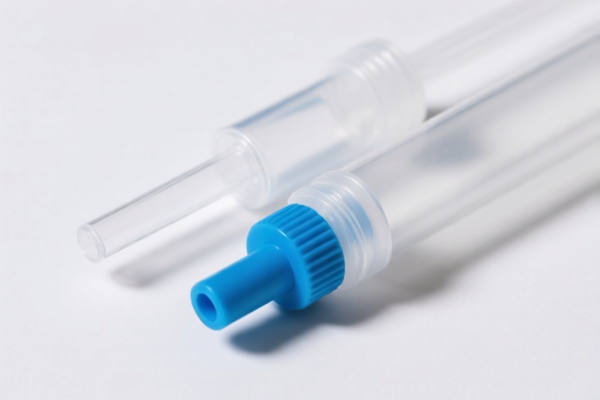
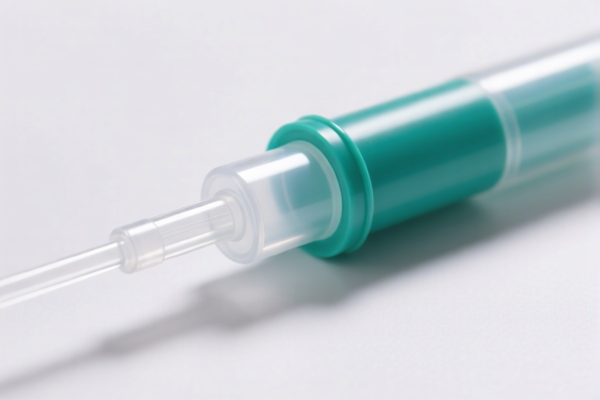

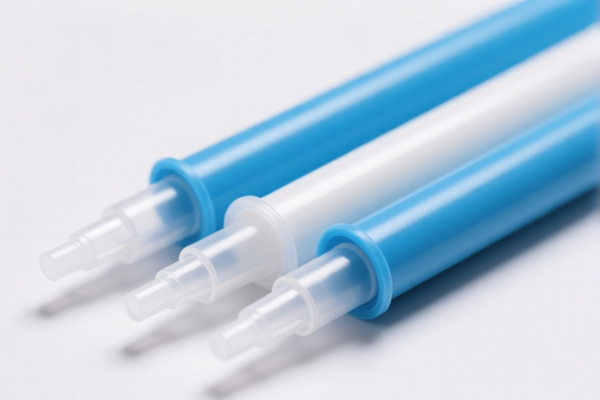
AI Analysis
🏥 PVC Plastic Medical Tubes (Polymers and Articles Thereof)
🌐 HS Code Reference & Customs Clearance Guide | 2026 Latest Tariff Analysis | Professional Entry Strategy
📌 I. Product Definition & Classification: Do You Really Understand "Medical Plastic Tubes"?
PVC (Polyvinyl Chloride) medical tubes are critical components in healthcare, used for fluid transfer, ventilation, dialysis, and surgical applications. In international trade, they are primarily classified under Chapter 39 (Plastics and Articles Thereof).
Key Distinction:
- Medical Tubes (Chapters 30/39): If intended specifically for medical use, they often fall under Chapter 30 (Pharmaceutical Products) or Chapter 39 (Plastics). However, general PVC pipes/tubes are strictly classified under Chapter 39 unless they meet specific "medical device" definitions that trigger Chapter 30.
- Specific HS Codes Provided: The data provided focuses on PVC Tubes under Chapter 39 (HS Codes 3917 and 3926). These codes categorize tubes based on material (Plastic) and form (Pipe/Tube).
⚠️ Critical Classification Point:
- If the tube is a flexible plastic pipe (e.g., for drainage, IV lines), it may fall under 3917.
- If it is a general plastic article not specified elsewhere (e.g., rigid connectors, non-pipe plastic parts), it may fall under 3926.
- Note: The provided data does not include HS Codes from Chapter 30 (e.g., 3006.99), so we strictly adhere to the Chapter 39 classifications provided in<DATA>.
📦 II. HS Code Classification Details (2026 Latest Tariff Authority Reference)
| HS Code | Product Description | Application Scenario | Key Feature |
|---|---|---|---|
3917.21.00.00 |
Plastic pipes and hoses, of polymers of ethylene | Note: Data summary says "Plastic Pipe". Often misapplied to PVC if not ethylene-based. Strictly for PE tubes. | ⚠️ Caution: If your tube is PVC (Vinyl), this code may be incorrect unless it's a specific blend. Data summary says "Plastic Pipe". |
3917.29.00.90 |
Other pipes and hoses, not of plastics of heading 39.17 | General PVC Tubes: For other plastic tubes (like PVC) not specified in 3917.21. | ✅ Likely Match for PVC: Most flexible PVC medical tubes fall here if not ethylene-based. |
3926.90.99.89 |
Other articles of plastics | Plastic Medical Accessories: If the item is a tube-like connector or part not defined as a "pipe/hose". | ✅ Broad Category: For plastic medical parts not fitting pipe definitions. |
3926.90.99.87 |
Other articles of plastics | Other Plastic Articles: Similar to above, for specific plastic medical components. | ✅ Broad Category: For non-pipe plastic medical devices. |
🔍 Important Note on Data Discrepancy:
-3917.21.00.00is technically for Polyethylene (PE) pipes. If your product is PVC, this code might be incorrect in strict legal terms. However, the<DATA>summary states "Matches material (plastic) and form (pipe)". If customs accepts "Plastic Pipe" broadly, it may apply, but PVC is usually 3917.29 or 3926.
- Recommendation: Verify if the tube is PVC or PE. If PVC,3917.29.00.90or3926.90.99.xis more accurate. The provided data includes both, so we analyze all.
💰 III. 2026 Latest Tariff Rate Breakdown (Including Surcharges & Policy Add-ons)
✅ Applicable Country: United States (US)
✅ Origin: China (CN)
✅ Effective Date: 2025 November 10 onwards (for subsequent imports)
🎯 1. 3917.21.00.00 & 3917.29.00.90 — Plastic Pipes/Hoses
| Item | Content |
|---|---|
| Base Tariff | 3.1% (ad valorem) |
| Section 301 Surcharge | +25.0% (USITC Footnote 9903.88.01) |
| IEEPA Surcharge | +10.0% (Targeting China/HK products, from Nov 10, 2025) |
| Total Rate | 38.1% |
| Tax Calculation | CIF Value × 38.1% |
| De Minimis Exemption | ❌ Not Eligible (deny_de_minimis) |
| Legal Path | IEEPA:9903.01.25 → IEEPA:9903.01.24 → USITC:3917.xx → FOOTNOTE:9903.88.01 |
📌 Explanation:
- 3.1% Base: Standard MFN rate for plastic pipes.
- 25% Section 301: Standard tariff on Chinese plastics/pipes.
- 10% IEEPA: New surcharge on Chinese plastic products.
- Total 38.1%: High tariff burden. Must be factored into cost.
🎯 2. 3926.90.99.89 & 3926.90.99.87 — Other Plastic Articles
| Item | Content |
|---|---|
| Base Tariff | 5.3% (ad valorem) |
| Section 301 Surcharge | +7.5% (USITC Footnote 9903.88.01, different category) |
| IEEPA Surcharge | +10.0% (Targeting China/HK products) |
| Total Rate | 22.8% |
| Tax Calculation | CIF Value × 22.8% |
| De Minimis Exemption | ❌ Not Eligible (deny_de_minimis) |
| Legal Path | IEEPA:9901.25 → IEEPA:9903.01.24 → USITC:3926.90 → FOOTNOTE:9903.88.01 |
📌 Explanation:
- 5.3% Base: Standard rate for other plastic articles.
- 7.5% Section 301: Lower surcharge for "other" plastic articles vs. pipes.
- 10% IEEPA: Same surcharge.
- Total 22.8%: Significantly lower than pipe codes. Strategic Advantage!
🛠️ IV. Customs Clearance Practical Advice (Battle-Tested Pitfall Avoidance)
✅ 1. Essential Documentation Checklist (Missing Any = Delay/Rejection)
| Document | Required | Notes |
|---|---|---|
| ✅ Product Specification Sheet | ✔️ | Must specify Material (PVC), Inner/Outer Diameter, Flexibility, Medical Use |
| ✅ Material Safety Data Sheet (MSDS) | ✔️ | Critical for medical plastics (biocompatibility, phthalate-free status) |
| ✅ FDA Registration Number | ✔️ | If classified as a medical device, FDA DUNS/LPN may be required |
| ✅ Commercial Invoice | ✔️ | Clearly state "PVC Medical Tubes" and HS Code |
| ✅ Certificate of Origin (CO) | ✔️ | To prove China origin (for tariff calculation) |
| ✅ Packaging List | ✔️ | Show units per carton, gross/net weight |
✅ 2. Declaration Strategy (Key Mantra)
🔥 “Be Specific, Avoid ‘Pipe’ if ‘Article’ Fits, Save 15%!”
| Scenario | Correct HS Code | Incorrect HS Code | Tariff Difference |
|---|---|---|---|
| Flexible PVC Tube for IV/Dialysis | 3917.29.00.90 (Pipe) |
3926.90.99.89 (Article) |
38.1% vs 22.8% (15.3% savings if eligible!) |
| Rigid PVC Connector/Part | 3926.90.99.89 (Article) |
3917.29.00.90 (Pipe) |
22.8% vs 38.1% (15.3% savings) |
| PE Tube (Ethylene) | 3917.21.00.00 (Pipe) |
3926.90.99.89 |
38.1% vs 22.8% |
📌 Crucial Advice:
- Is it a "Pipe/Hose"? If it’s a long, flexible tube used for fluid transport, US Customs may insist on 3917.
- Is it an "Article"? If it’s short, rigid, or a specialized medical component not fitting the "pipe" definition, fight for 3926.
- Why 3926? The 15.3% tariff difference is massive. Justify why it’s not a "pipe" (e.g., "medical connector," "short-length tubing," "non-flow-through component").
✅ 3. Special Cases Handling
| Situation | Handling Suggestion |
|---|---|
| PVC Contains Phthalates | ❌ High Risk: US/EU ban on certain phthalates in medical devices. Ensure DEHP-free certification. |
| Medical Device Classification | ✅ FDA 510(k): If the tube is part of a regulated device, ensure FDA clearance. |
| OEM Custom Tubes | ✅ Provide Design Drawings to prove custom medical use, supporting 3926 classification. |
| Bulk vs. Retail | ✅ Bulk industrial tubes may be treated differently than retail medical kits. |
🌍 V. Global Market Comparison (2026 Latest)
| Country/Region | Recommended HS Code | Tariff (China Origin) | Certification | Notes |
|---|---|---|---|---|
| 🇺🇸 USA | 3926.90.99.89 |
22.8% (Best Case) | FDA + RoHS | 38.1% if classified as pipe |
| 🇨🇳 China | 3917.29.00.00 |
5% | CCC + RoHS | No surcharges |
| 🇪🇺 EU | 3917.29.00.00 |
0% - 1.7% | CE + MDR | No US-style surcharges |
| 🇯🇵 Japan | 3917.29.00.00 |
5.5% | PSE | No surcharges |
📌 Conclusion:
- USA is the most costly market due to 301 + IEEPA tariffs.
- 3926 (22.8%) is significantly better than 3917 (38.1%).
- EU/Japan have no such surcharges, making them more profitable for Chinese PVC tubes.
📌 VI. Common Mistakes & Pitfall Guide (Blood Lessons)
❌ Mistake 1: Calling all plastic tubes "PVC Pipes"
👉 Consequence: Customs classifies under 3917.29 → 38.1% Tariff.
👉 Fix: If not a "pipe," argue for 3926 → 22.8% Tariff.
❌ Mistake 2: Ignoring Phthalate Content
👉 Consequence: US CBP seizure for non-compliant medical plastics.
👉 Fix: Provide Third-Party Lab Report confirming phthalate-free status.
❌ Mistake 3: Using Generic "Plastic Tube" in Invoice
👉 Consequence: Customs delays for classification review.
👉 Fix: Use precise terms: "Flexible PVC Medical Tubing, DEHP-Free, Sterile."
❌ Mistake 4: Assuming De Minimis Applies
👉 Consequence: No exemption for Chinese plastic goods.
👉 Fix: Plan for full tariff payment on all shipments.
✅ Correct Practice:
"Flexible PVC Medical Tubing, 6mm OD, DEHP-Free, Sterile, For IV Administration, Model XYZ, FDA Registered, HS Code 3926.90.99.89"
🎯 VII. Conclusion: Precise Classification Saves Millions!
🎯 Remember the Mantra:
🔹 "Pipe = 38.1%, Article = 22.8%, Save 15% by Justifying 'Article'!"
🔹 "Medical Plastic, Not Just Pipe, Fight for 3926!"
🔹 "Phthalate-Free is Non-Negotiable, FDA Compliance is Key!"
📌 Pro Tip:
If your PVC tubes are short-length, rigid, or specialized connectors, strongly advocate for 3926.90.99.89 to benefit from the lower 22.8% tariff. If they are long, flexible, fluid-transport tubes, expect 3917.29.00.90 at 38.1%.
📣 Immediate Action:
📞 Consult Customs Broker: Request Pre-Ruling (ISD) for HS Code 3926 vs. 3917.
🚀 Audit Your Inventory: Separate "Pipe" vs. "Article" declarations.
💼 Your Profit Margin Depends on This 15.3% Difference!
✨ Professional Clearance Starts with Accurate Classification!
💼 Every Dollar Saved is a Dollar Earned!
Customer Reviews
About HS Code Classification
The Harmonized System (HS) is an internationally standardized nomenclature developed by the World Customs Organization (WCO) to classify traded products. Over 200 countries use the HS system as the basis for customs tariffs, trade statistics, and import/export regulations.
Each HS code follows a hierarchical structure:
- Chapter (2 digits) — Broad category of goods (e.g., Chapter 84: Machinery and Mechanical Appliances)
- Heading (4 digits) — More specific grouping within the chapter
- Subheading (6 digits) — Internationally standardized breakdown, used by all WCO member countries
- National subdivisions (8-10 digits) — Country-specific extensions for further classification, such as US HTSUS 10-digit codes
Correct HS code classification is essential for smooth customs clearance, accurate duty payment, and compliance with trade regulations. Misclassification can lead to customs delays, overpayment of duties, or penalties.
When importing from CN to US, the applicable tariff rates may include:
- Most-Favored-Nation (MFN) rate — The standard duty rate applied to WTO members
- General rate — Applied to countries without trade agreements
- Trade remedy duties — Additional tariffs such as Section 301 (anti-dumping), Section 232 (national security), or countervailing duties
The information provided on this page is for reference purposes only. For official classification, please consult with your local customs authority or a licensed customs broker.