PVC Plastic Parts
CN → US| HS Code | Tariff Rate | Origin | Destination | Doc |
|---|---|---|---|---|
| 3926909987 | 22.8% | CN | US | Official Doc |
| 3917400020 | 40.3% | CN | US | Official Doc |
| 3917400060 | 40.3% | CN | US | Official Doc |
| 3926909989 | 22.8% | CN | US | Official Doc |
| 3923900080 | 38.0% | CN | US | Official Doc |
Product Images



AI Analysis
🏗️ PVC Plastic Parts (PVC Tubes & Fittings)
🌐 HS Code Reference & Customs Clearance Guide | 2026 Latest Tariff Analysis | Professional Clearance Strategy
📌 I. Product Definition & Classification: Do You Really Understand "PVC Plastic Parts"?
PVC plastic parts, primarily referring to PVC pipe fittings and accessories, are essential components in plumbing, electrical conduit, and industrial fluid transport systems. In international trade, these parts are often misclassified due to the ambiguity between "pipe materials," "pipe accessories," and "general plastic products."
The core distinction lies in the functional description and structural form:
- Pipe Fittings (3917 Chapter): Connectors, elbows, tees, and couplings specifically designed to connect pipes or conduits. These fall under the heading for "Plastic pipes, tubes, and hoses."
- General Plastic Accessories (3926 Chapter): If the item is an accessory for machinery or a general plastic item that doesn't strictly fit the "pipe conduit" definition, it may be classified here.
- Packaging/Transport Items (3923 Chapter): Rarely applicable unless the "parts" are actually containers or boxes made of PVC.
⚠️ Key Distinction Point:
- If the product is an elbow, tee, reducer, or connector used to join PVC pipes/conduits → It is a Pipe Fitting (3917).
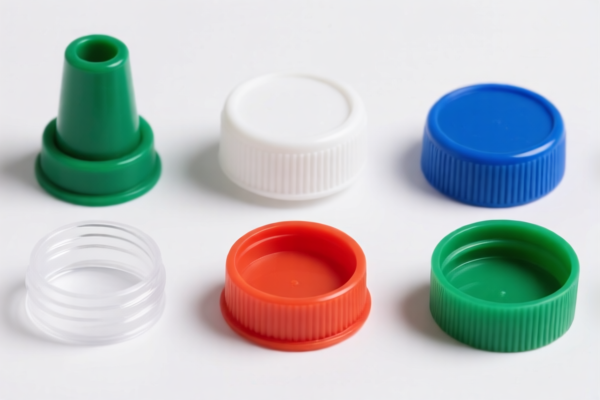
- If the product is a general plastic component (e.g., a cap, a non-pipe specific bracket) → It may be classified as Other Plastic Articles (3926).
- Crucial Note: The US imposes heavy additional tariffs (Section 301/IEEPA) on Chinese-origin PVC goods, making accurate HS Code selection critical for cost control.
📦 II. HS Code Classification Details (2026 Latest Tariff Authority Comparison)
| HS Code | Product Description | Application Scenario | Tax Rate Total |
|---|---|---|---|
3917.40.00.20 |
PVC Pipe Fittings, specific subtype | Standard PVC pipes/conduits and their fittings | 40.3% |
3917.40.00.60 |
PVC Pipe Fittings, other subtype | Pipe accessories matching "pipe accessory" definition | 40.3% |
3926.90.99.87 |
PVC Pipe Accessories (General) | Accessories for pipes/conduits, but classified under "Other Plastic Articles" | 22.8% |
3926.90.99.89 |
Other PVC Plastic Articles | General PVC plastic accessories, fallback category | 22.8% |
3923.90.00.80 |
PVC Plastic Packaging/Transport Items | Plastic articles for packaging or transport (rare for fittings) | 38.0% |
🔍 Critical Reminder:
- HS 3917.40 is the most precise classification for pipe fittings (elbows, tees, unions). However, it attracts the highest tariff (40.3%).
- HS 3926.90 is a "catch-all" for other plastic articles. Some importers attempt to use this for accessories to achieve a lower tariff (22.8%), but this carries a high risk of customs audit if the item is clearly a pipe fitting.
- HS 3923.90 is generally incorrect for pipe fittings unless the item is a packaging component. Using this for actual fittings is a high-risk misclassification.
💰 III. 2026 Latest Tariff Rate Breakdown (Including Additional Taxes)
✅ Applicable Country: United States (US)
✅ Origin: China (CN)
✅ Effective Date: From November 10, 2025 (and subsequent imports)
🎯 1. 3917.40.00.20 & 3917.40.00.60 —— PVC Pipe Fittings (Exact Match)
| Item | Content |
|---|---|
| Basic Tariff | 5.3% (ad valorem) |
| Section 301 Additional Tariff | +25.0% (US Trade Law Section 301) |
| IEEPA Additional Tariff | +10.0% (For China/HK products, effective Nov 10, 2025) |
| Total Tariff | 40.3% |
| Tax Calculation | CIF Value × 40.3% |
| De Minimis Exemption | ❌ Not Eligible (deny_de_minimis) |
| Legal Basis Path | USITC:3917.40.00.20/60 → SECTION301:9903.01.25 → IEEPA:9903.01.24 |
📌 Explanation:
- These codes are the most accurate for PVC elbows, tees, and connectors.
- The 40.3% rate is driven by the 25% Section 301 tariff and 10% IEEPA tariff on top of the 5.3% base rate.
- Cost Impact: High. Importers must factor in this significant cost for standard PVC plumbing/electrical fittings.
🎯 2. 3926.90.99.87 & 3926.90.99.89 —— Other Plastic Articles (Accessories)
| Item | Content |
|---|---|
| Basic Tariff | 5.3% (ad valorem) |
| Section 301 Additional Tariff | +7.5% (Specific footnote for some plastic articles) |
| IEEPA Additional Tariff | +10.0% (For China/HK products) |
| Total Tariff | 22.8% |
| Tax Calculation | CIF Value × 22.8% |
| De Minimis Exemption | ❌ Not Eligible (deny_de_minimis) |
| Legal Basis Path | USITC:3926.90.99.87/89 → SECTION301:9903.01.24 → IEEPA:9903.01.24 |
📌 Explanation:
- This classification applies if the items are not strictly defined as pipe fittings but rather as general plastic accessories or parts for machinery.
- The 22.8% rate is significantly lower than 40.3%, offering potential savings.
- Risk: Customs may challenge this classification if the product is visibly a pipe fitting. Misclassification can lead to penalties, back taxes, and delays.
- Strategy: Only use this if the product can be technically justified as a "general plastic part" rather than a "pipe conduit accessory."
🎯 3. 3923.90.00.80 —— PVC Packaging/Transport Items (High Risk if Misused)
| Item | Content |
|---|---|
| Basic Tariff | 3.0% (ad valorem) |
| Section 301 Additional Tariff | +25.0% |
| IEEPA Additional Tariff | +10.0% |
| Total Tariff | 38.0% |
| Tax Calculation | CIF Value × 38.0% |
| De Minimis Exemption | ❌ Not Eligible |
📌 Warning:
- This code is for boxes, cases, and packaging made of plastic.
- Do not use this for pipe fittings. Using3923for fittings is a clear misclassification and will likely result in customs seizure or heavy fines.
- The 38.0% rate is still higher than the 22.8% option, so there is no benefit to misclassifying fittings here.
🛠️ IV. Customs Clearance Practical Advice (Battle-Tested Pitfall Avoidance)
✅ 1. Required Documentation Checklist (Non-Negotiable)
| Document | Mandatory | Description |
|---|---|---|
| ✅ Product Specifications | ✔️ | Material (PVC-U, PVC-C, etc.), Size, Pressure Rating, Standard (ASTM/BS) |
| ✅ Product Photos | ✔️ | Clear images of the item, showing connections and any branding/model numbers |
| ✅ Commercial Invoice | ✔️ | Must clearly describe the item as "PVC Pipe Fitting" or "Plastic Accessory" with HS Code |
| ✅ Packing List | ✔️ | Detailing quantity, weight, and packaging type |
| ✅ Certificate of Origin | ✔️ | Required for tariff determination and potential preferential treatment (if applicable) |
| ✅ Test Reports | ✔️ | ASTM D1785, D2466, etc., proving compliance with US standards for plumbing/electrical |
✅ 2. Declaration Strategies (Key Tips)
🔥 “Be Specific, Justify Clearly, Avoid Ambiguity!”
| Scenario | Correct Declaration | Incorrect Approach |
|---|---|---|
| Standard PVC Elbows/Teers | "PVC Pipe Fitting, ASTM D1785, 2-inch, Schedule 40" → 3917.40.00.20/60 | Vague "Plastic Part" → Risk of 3926 (Audit risk) |
| Non-Conduit Plastic Brackets | "PVC Mounting Bracket, General Use" → 3926.90.99.87/89 | "Pipe Fitting" → Higher Tax |
| PVC Boxes/Containers | "PVC Storage Container" → 3923.90.00.80 | "Fitting" → Misclassification |
📌 Note:
- If you declare as 3926 to save tax, be prepared to provide engineering drawings or usage statements proving the item is not a pipe conduit accessory.
- For 3917, ensure the description explicitly mentions "Pipe Fitting" or "Conduit Accessory."
✅ 3. Special Situation Handling
| Situation | Handling Suggestion |
|---|---|
| Mixed Container | If a container has both pipe fittings (3917) and general plastic parts (3926), separate the declarations. Do not mix them. |
| OEM Custom Parts | Provide customer design specs to justify the specific HS code. |
| High Value Shipments | Consider Advance Ruling (Pre-Decision) from US CBP to lock in the HS code and tariff rate before shipment. |
| Supply Chain Diversification | If tariffs are too high, consider sourcing from Vietnam, Thailand, or Mexico to potentially avoid US Section 301/IEEPA tariffs (verify Rules of Origin). |
🌍 V. Global Market Comparison (2026 Latest)
| Country/Region | Recommended HS Code | Tariff (CN Origin) | Certification | Notes |
|---|---|---|---|---|
| 🇺🇸 USA | 3917.40.00.20 |
40.3% | ASTM, NSF (if potable) | High tariff, strict enforcement |
| 🇺🇸 USA | 3926.90.99.87 |
22.8% | ASTM | Lower risk, lower tax (if justified) |
| 🇨🇳 China | 3917.40.00.00 |
~5-10% | CCC (if applicable) | Domestic trade, no US tariffs |
| 🇪🇺 EU | 3917.23.00 |
0-6% | CE, REACH | No Section 301 tariffs |
| 🇦🇺 Australia | 3917.23.00 |
5% | SAA | Standard import duties |
📌 Conclusion:
- The USA is the most challenging market for PVC plastic parts from China due to the 40.3% effective tariff on pipe fittings.
- Strategic Recommendation:
1. Justify 3926 classification if the product is not a direct pipe connector.
2. Use Advance Rulings to mitigate audit risks.
3. Consider supply chain shifts to non-China origins for high-volume PVC fittings.
📌 VI. Common Errors & Pitfall Avoidance (Lessons Learned)
❌ Error 1: Declaring "PVC Pipe Fittings" as "Plastic Parts" to get the 22.8% rate.
👉 Consequence: Customs audit, penalty, back taxes of 17.5% difference + legal fees.
✅ Fix: Only use 3926 if the item is not a pipe/conduit connector.
❌ Error 2: Using HS Code 3923 for PVC boxes.
👉 Consequence: Misclassification, 38.0% tax instead of potential lower rates for packaging, plus audit risk.
✅ Fix: Use 3923 only for actual packaging/transport articles.
❌ Error 3: Ignoring IEEPA 10% tariff.
👉 Consequence: Underestimating landed cost by 10%, leading to profit loss.
✅ Fix: Always include IEEPA 10% in cost calculations for China-origin goods.
🎯 VII. Conclusion: Precision in Classification Saves Money!
🎯 Key Takeaways:
🔹 "Pipe Fitting = 3917 (40.3%) | General Accessory = 3926 (22.8%)"
🔹 "Justification is Key: Can you prove it's not a pipe connector?"
🔹 "Never ignore the 10% IEEPA tariff on China-origin PVC."
📌 Pro Tip:
If your business volume is significant, apply for a US CBP Advance Ruling. The small fee for a ruling can save thousands in potential duties and legal costs by securing the correct HS code before you ship.
📣 Immediate Action:
📞 Review your product specs: Is it a pipe connector? If yes, expect 40.3%.
📄 Prepare justification: If you claim 3926, have engineering drawings ready.
🚀 Consult a Customs Broker: Get a professional opinion on your specific PVC parts.
✨ Clear Classification, Clear Customs, Clear Profits!
💼 Don't let tariff confusion eat your margins!
Customer Reviews
About HS Code Classification
The Harmonized System (HS) is an internationally standardized nomenclature developed by the World Customs Organization (WCO) to classify traded products. Over 200 countries use the HS system as the basis for customs tariffs, trade statistics, and import/export regulations.
Each HS code follows a hierarchical structure:
- Chapter (2 digits) — Broad category of goods (e.g., Chapter 84: Machinery and Mechanical Appliances)
- Heading (4 digits) — More specific grouping within the chapter
- Subheading (6 digits) — Internationally standardized breakdown, used by all WCO member countries
- National subdivisions (8-10 digits) — Country-specific extensions for further classification, such as US HTSUS 10-digit codes
Correct HS code classification is essential for smooth customs clearance, accurate duty payment, and compliance with trade regulations. Misclassification can lead to customs delays, overpayment of duties, or penalties.
When importing from CN to US, the applicable tariff rates may include:
- Most-Favored-Nation (MFN) rate — The standard duty rate applied to WTO members
- General rate — Applied to countries without trade agreements
- Trade remedy duties — Additional tariffs such as Section 301 (anti-dumping), Section 232 (national security), or countervailing duties
The information provided on this page is for reference purposes only. For official classification, please consult with your local customs authority or a licensed customs broker.