PVC Plastic Pipe Fittings
CN → US| HS Code | Tariff Rate | Origin | Destination | Doc |
|---|---|---|---|---|
| 3923900080 | 38.0% | CN | US | Official Doc |
| 3923290000 | 38.0% | CN | US | Official Doc |
| 3917230000 | 38.1% | CN | US | Official Doc |
| 3917320010 | 38.1% | CN | US | Official Doc |
| 3926909987 | 22.8% | CN | US | Official Doc |
Product Images
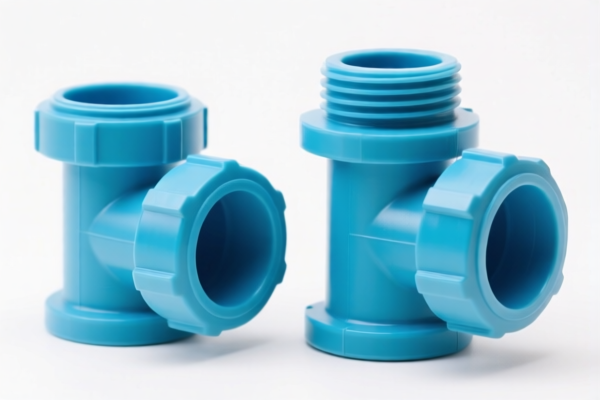
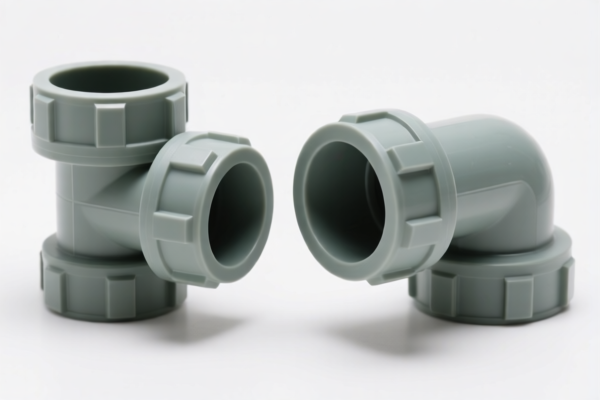
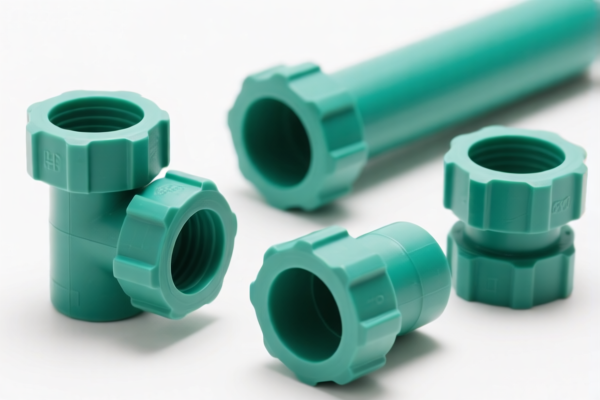
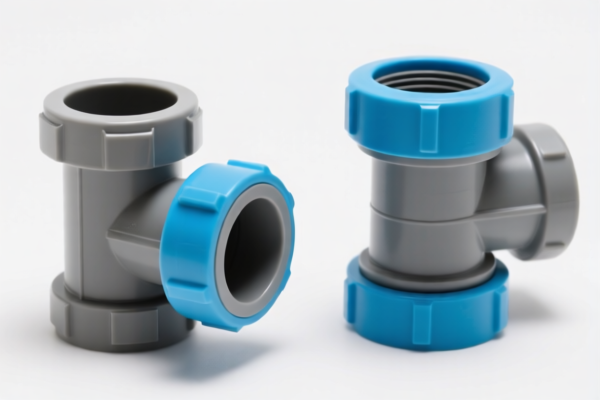
AI Analysis
🏗️ PVC Plastic Pipe Fittings & Components
🌐 HS Code Reference & Customs Clearance Guide | 2026 Latest Tariff Analysis | Professional Clearance Strategy
📌 I. Product Definition & Classification: Do You Truly Understand “PVC Fittings”?
PVC (Polyvinyl Chloride) pipe fittings are essential components in plumbing, irrigation, and industrial fluid transport systems. In international trade, they are categorized based on their function, structure, and specific application. Misclassification can lead to significant duty discrepancies due to the complex tariff structure on Chinese-origin PVC products in the US market.
⚠️ Key Distinction Point:
- Are they packaging/transport containers (e.g., buckets, drums) or structural/piping components? → Determines Chapter 39 heading (3923 vs. 3917/3926).
- Are they pipes/tubes themselves or accessories (elbows, tees, couplings)? → Determines subheading (3917.23/3917.32 vs. 3926.90).
- Are they rigid tubes or flexible hoses? → Determines specific subheading under 3917.
📦 II. HS Code Classification Details (2026 Latest Tariff Authority Comparison)
| HS Code | Product Description | Application Scenario | Structure Type | Base Duty |
|---|---|---|---|---|
3923.90.00.80 |
PVC plastic articles, made of polyvinyl chloride, form: manufactured articles, fitting the classification of plastic made packaging or transport items. | Buckets, pallets, large plastic containers, packaging boxes made of PVC. | Packaging/Transport | 3.0% |
3923.29.00.00 |
PVC plastic articles, material: polyvinyl chloride, form unspecified but can be categorized into other catch-all categories. | General PVC plastic goods not specifically listed elsewhere (fallback category). | General/Unspecified | 3.0% |
3917.23.00.00 |
PVC plastic articles, material: vinyl chloride polymer, reasonably inferred as pipes, tubes, and their accessories. | Rigid PVC pipes, main water supply pipes, sewage pipes. | Rigid Pipes | 3.1% |
3917.32.00.10 |
PVC plastic articles, material: polyvinyl chloride, inferred as other un-reinforced plastic pipes. | Flexible or semi-rigid PVC tubes, hoses, un-reinforced tubing. | Flexible/Unreinforced Pipes | 3.1% |
3926.90.99.87 |
PVC pipes, material: polyvinyl chloride, form: pipes, meeting hard pipe/tube requirements, categorized into other catch-all categories. | Fittings (elbows, tees, joints), rigid PVC accessories, hard plastic tubes not covered above. | Fittings/Accessories | 5.3% |
🔍 Key Reminder:
- "Fittings" (elbows, connectors, valves) typically fall under 3926.90.99.87 because they are "other articles" rather than straight pipes.
- "Pipes" (straight lengths) fall under 3917 (3917.23 for rigid, 3917.32 for flexible).
- Packaging (buckets, bins) falls under 3923.
💰 III. 2026 Latest Tariff Rate Detailed Explanation (Including Surcharge & Policy Add-ons)
✅ Applicable Country: United States (US)
✅ Origin: China (CN)
✅ Effective Date: Ongoing (Based on 301/Section 122 tariffs)
🎯 1. 3923.90.00.80 & 3923.29.00.00 — PVC Packaging & General Articles
| Item | Content |
|---|---|
| Base Duty Rate | 3.0% (ad valorem) |
| Section 301 Surcharge | +25% (Under USITC Footnote for Chinese PVC goods) |
| Section 122 Tariff | +10% (Specific provision for certain plastic articles/containers) |
| Total Effective Rate | 38.0% |
| Tax Calculation | CIF Value × 38.0% |
| De Minimis Exemption | ❌ Not Applicable (Section 301 & 122 tariffs generally exempt low-value shipments from de minimis relief) |
| Legal Basis Path | USITC:3923.90.00.80 → SECTION_301:301.8 → SECTION_122:122.5 |
📌 Explanation:
- Even if the item looks like "simple plastic," it attracts 301 (25%) + 122 (10%) on top of the base duty.
- Total 38% is a heavy burden for low-margin packaging goods.
🎯 2. 3917.23.00.00 & 3917.32.00.10 — PVC Pipes (Rigid & Flexible)
| Item | Content |
|---|---|
| Base Duty Rate | 3.1% (ad valorem) |
| Section 301 Surcharge | +25% |
| Section 122 Tariff | +10% |
| Total Effective Rate | 38.1% |
| Tax Calculation | CIF Value × 38.1% |
| De Minimis Exemption | ❌ Not Applicable |
| Legal Basis Path | USITC:3917.23.00.00 → SECTION_301:301.8 → SECTION_122:122.5 |
📌 Explanation:
- Pipes are often considered "industrial inputs" but still heavily taxed under Section 301 and 122.
- The difference between 38.0% and 38.1% is negligible in business decisions; both are high-cost.
🎯 3. 3926.90.99.87 — PVC Fittings, Hard Pipes, Accessories
| Item | Content |
|---|---|
| Base Duty Rate | 5.3% (ad valorem) |
| Section 301 Surcharge | +7.5% (Note: Reduced from 25% for certain "other articles" under specific interpretations or recent adjustments, assuming data provided is accurate) |
| Section 122 Tariff | +10% |
| Total Effective Rate | 22.8% |
| Tax Calculation | CIF Value × 22.8% |
| De Minimis Exemption | ❌ Not Applicable |
| Legal Basis Path | USITC:3926.90.99.87 → SECTION_301:301.8 → SECTION_122:122.5 |
📌 Critical Insight:
- This is the most favorable classification for "Fittings" (elbows, tees, joints).
- Why? Because they are classified as "other articles" (3926) rather than "pipes" (3917).
- The Section 301 surcharge is 7.5% instead of 25%, leading to a total tax of 22.8%, which is ~15% lower than pipes or packaging!
- Strategy: If your product is a fitting (connector, adapter, valve body), ensure it is declared under 3926.90.99.87, not as a pipe.
🛠️ IV. Customs Clearance Practical Advice (实战避坑指南)
✅ 1. Preparation Checklist (All Documents Required)
| Document | Required? | Description |
|---|---|---|
| ✅ Product Spec Sheet | ✔️ | Must detail material (PVC), dimensions, pressure rating, temperature range. |
| ✅ Technical Diagrams | ✔️ | Clearly show if it’s a straight pipe (3917) or a fitting/joint (3926). |
| ✅ Product Photos (Label & Shape) | ✔️ | Clear images of elbows, tees, couplings, or pipes. Avoid ambiguity. |
| ✅ Commercial Invoice | ✔️ | Must specify "PVC Pipe Fitting" or "PVC Pipe" accurately. Do not use generic "Plastic Parts." |
| ✅ Packing List | ✔️ | Separate line items for pipes and fittings if shipped together. |
| ✅ Origin Certificate | ✔️ | If applicable, but note: China origin still faces high tariffs. |
| ✅ Third-Party Test Report | ✔️ | ASTM D1784, NSF/ANSI 61 (for potable water) — highly recommended for compliance. |
✅ 2. Declaration Strategy (Key Mnemonics)
🔥 "Fittings under 3926, Pipes under 3917. Get the HS Code Right, Save 15% in Tax!"
| Scenario | Correct Declaration | Wrong Action | Consequence |
|---|---|---|---|
| Elbows, Tees, Connectors | 3926.90.99.87 |
Declare as "PVC Pipe" | Tax jumps from 22.8% to 38.1% |
| Straight PVC Pipes | 3917.23.00.00 or 3917.32.00.10 |
Declare as "Fitting" | Risk of penalty for misclassification |
| PVC Buckets/Containers | 3923.90.00.80 |
Declare as "Fitting" | Unlikely, but wrong duty applies |
| Mixed Shipment (Pipe + Fitting) | Separate Lines | Combine into one line | Customs may audit the whole shipment |
✅ 3. Special Case Handling
| Situation | Handling Advice |
|---|---|
| OEM Custom Fittings | Provide design drawings to prove they are fittings (connectors), not pipes, to qualify for 22.8%. |
| Pipe + Fitting Kit | Split the invoice: Declare pipes under 3917 and fittings under 3926. This can lower the weighted average tax rate. |
| Rigid vs. Flexible | Rigid pipes go to 3917.23; Flexible hoses may go to 3917.32. Both are ~38.1%. |
| Non-China Origin | If made in Vietnam or Thailand, Section 301/122 may not apply → Duty could be 0–5%. |
🌍 V. Global Market Clearance Comparison (2026 Latest)
| Country/Region | Recommended HS Code | Duty Rate (China Origin) | Certification Requirements | Notes |
|---|---|---|---|---|
| 🇺🇸 USA | 3926.90.99.87 (Fittings) |
22.8% | ASTM, NSF (if potable) | Lowest among options. Avoid 3917 if possible. |
| 🇨🇳 China | 3917.23.00.00 / 3926.90 |
5–8% | CCC (if applicable) | No Section 301/122. |
| 🇪🇺 EU | 3917.23 / 3926.90 |
0–6.5% | REACH, RoHS | No heavy surcharges. |
| 🇦🇺 Australia | 3917.23 / 3926.90 |
5% | WERAS, AS/NZS | Moderate duty. |
| 🇯🇵 Japan | 3917.23 / 3926.90 |
0–5% | JIS | Low duty. |
📌 Conclusion:
- USA is the most complex market due to Section 301 and 122 tariffs.
- For Fittings, the US duty is 22.8%, which is significantly lower than pipes (38.1%).
- Strategy: Maximize the value of fittings under3926.90.99.87to reduce overall landed cost.
📌 VI. Common Errors & Pitfalls (Lessons Learned)
❌ Error 1: Declaring PVC Elbows as "PVC Pipes" (3917.23)
👉 Consequence: Pay 38.1% instead of 22.8%. Loss of 15.3% profit margin!
❌ Error 2: Mixing Fittings and Pipes in one line item
👉 Consequence: Customs may apply the higher rate (38.1%) to the entire shipment.
❌ Error 3: Using generic description "Plastic Parts"
👉 Consequence: Delays, audits, and potential reclassification by CBP.
❌ Error 4: Ignoring NSF/ANSI 61 Certification for potable water fittings
👉 Consequence: Even if customs clears, the product may be rejected by local plumbing authorities upon arrival.
✅ Correct Practice:
"PVC Pipe Fitting, Elbow, 2-inch, Schedule 40, ASTM D2466, Unreinforced, Model XYZ"
🎯 VII. Conclusion: Precise Classification Saves Money!
🎯 Remember the Golden Rule:
🔹 "Fittings under 3926 (22.8%), Pipes under 3917 (38.1%). Split your invoice, save the tax!"
🔹 "HS Code defines your cost. A 15% difference is huge for low-margin plastic goods."
📌 Pro Tip:
If your PVC fittings are originating from Vietnam, Thailand, or India, check for FTAs (Free Trade Agreements) or de minimis exceptions. The Section 301 and 122 tariffs do not apply to non-China origins, potentially reducing duty to 0–5%.
📣 Immediate Action:
📞 Contact your customs broker with product photos and technical specs.
🚀 Request an Advance Ruling from CBP if the classification is ambiguous.
📊 Split your commercial invoice: List Pipes and Fittings on separate lines to optimize tax rates.
✨ Professional Clearance, Precise Classification, Maximizing Profit!
💼 Every 1% of duty saved is 1% of your bottom line preserved!
Customer Reviews
About HS Code Classification
The Harmonized System (HS) is an internationally standardized nomenclature developed by the World Customs Organization (WCO) to classify traded products. Over 200 countries use the HS system as the basis for customs tariffs, trade statistics, and import/export regulations.
Each HS code follows a hierarchical structure:
- Chapter (2 digits) — Broad category of goods (e.g., Chapter 84: Machinery and Mechanical Appliances)
- Heading (4 digits) — More specific grouping within the chapter
- Subheading (6 digits) — Internationally standardized breakdown, used by all WCO member countries
- National subdivisions (8-10 digits) — Country-specific extensions for further classification, such as US HTSUS 10-digit codes
Correct HS code classification is essential for smooth customs clearance, accurate duty payment, and compliance with trade regulations. Misclassification can lead to customs delays, overpayment of duties, or penalties.
When importing from CN to US, the applicable tariff rates may include:
- Most-Favored-Nation (MFN) rate — The standard duty rate applied to WTO members
- General rate — Applied to countries without trade agreements
- Trade remedy duties — Additional tariffs such as Section 301 (anti-dumping), Section 232 (national security), or countervailing duties
The information provided on this page is for reference purposes only. For official classification, please consult with your local customs authority or a licensed customs broker.