PVC Plastic Profiles
CN → US| HS Code | Tariff Rate | Origin | Destination | Doc |
|---|---|---|---|---|
| 3925900000 | 40.3% | CN | US | Official Doc |
| 3916200020 | 40.8% | CN | US | Official Doc |
| 3916200091 | 40.8% | CN | US | Official Doc |
| 3926909989 | 22.8% | CN | US | Official Doc |
| 3925200091 | 22.8% | CN | US | Official Doc |
Product Images
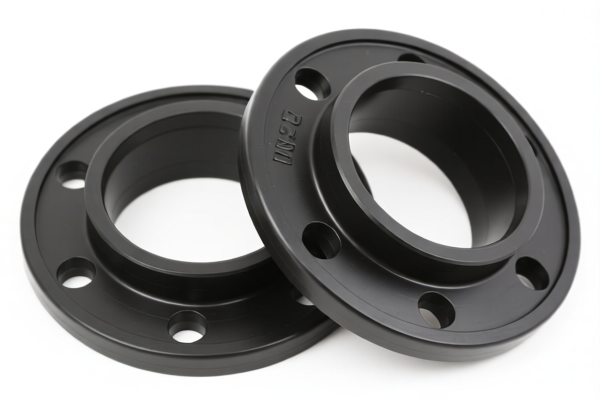
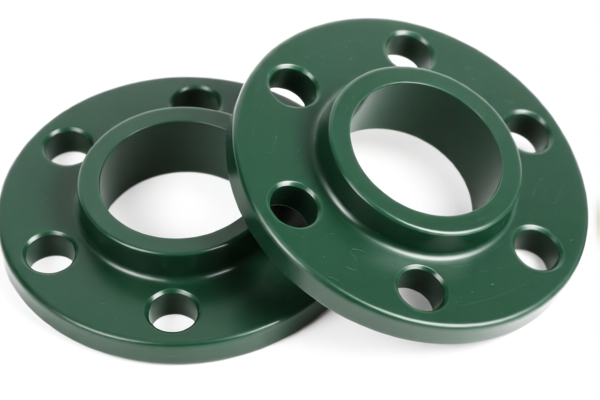
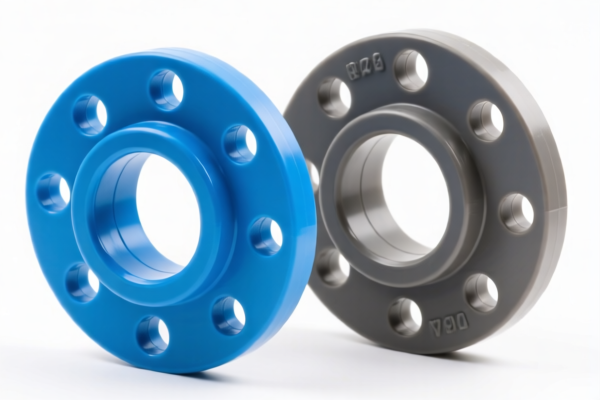
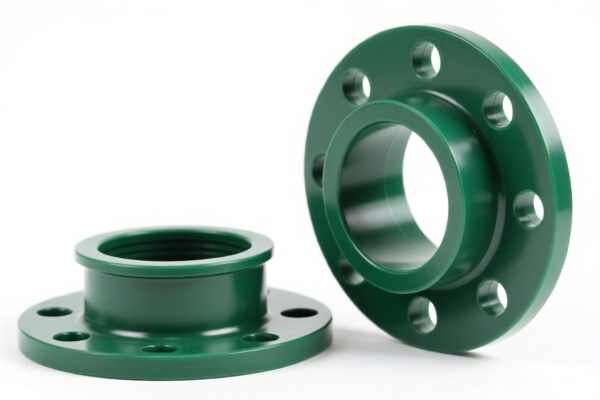
AI Analysis
🏗️ PVC Plastic Profiles (PVC Industrial Profiles)
🌐 HS Code Reference & Customs Clearance Guide | 2026 Latest Tariff Breakdown | Pro-Level Import Strategy
📌 One, Product Definition & Classification: What Exactly Is a "PVC Plastic Profile"?
PVC plastic profiles are rigid, shaped components made from polyvinyl chloride (PVC) or chlorinated vinyl polymers, widely used in construction, industrial framing, and infrastructure. They are not simple tubes or sheets — they are engineered structural elements with precise cross-sections, often used as:
- Window and door frames
- Building facades & curtain walls
- Structural supports in industrial sheds
- Guttering, fencing, and railings
- HVAC ducting and conduit systems
⚠️ Key Classification Rule:
- If the profile is designed for building construction (e.g., window frames, door sills) → HS Code 3925.20.00.91 or 3925.90.00.00
- If the profile is made from chlorinated vinyl polymer (i.e., PVC resin) and used as industrial structural components → HS Code 3916.20.00.20 or 3916.20.00.91
- If the profile is not specifically for building use (e.g., pipes, conduits, non-structural parts) → HS Code 3926.90.99.87 or 3926.90.99.89
📦 Two, HS Code Classification Details (2026 Latest Tariff Authority Table)
| HS Code | Product Description | Material | Use Case | Structural Design? |
|---|---|---|---|---|
3925.90.00.00 |
PVC industrial profiles, plastic material, used as building components | Plastic (PVC) | Structural framing, wall panels, curtain wall systems | ✅ Yes |
3916.20.00.20 |
PVC industrial profiles, chlorinated vinyl polymer, plastic profiles | Chlorinated vinyl polymer | Industrial framing, factory sheds, non-residential structures | ✅ Yes |
3916.20.00.91 |
PVC industrial profiles, chlorinated vinyl polymer, other types of profiles | Chlorinated vinyl polymer | Custom industrial profiles, non-standard shapes | ✅ Yes |
3926.90.99.89 |
PVC industrial profiles, plastic material, other plastic products | Plastic (PVC) | General-purpose plastic items, non-structural | ❌ No (not for building) |
3925.20.00.91 |
PVC industrial profiles, plastic material, window/door frames | Plastic (PVC) | Windows, doors, glazing systems | ✅ Yes |
3926.90.99.87 |
PVC industrial profiles, plastic material, other plastic products (e.g., rigid pipes/tubes) | Plastic (PVC) | Pipes, conduits, ducts, non-structural components | ❌ No |
🔍 Critical Insight:
- "Building components" = high-value structural parts → higher tariffs
- "Other plastic products" = non-structural, generic shapes → lower tariffs
- Material type matters: "Chlorinated vinyl polymer" triggers higher base tariff than general "plastic"
💰 Three, 2026 Latest Tariff Breakdown (With Detailed Duty Clauses)
✅ Applicable Country: United States (US)
✅ Origin: China (CN)
✅ Effective Date: November 10, 2025 (inclusive of future imports)
🎯 1. 3925.90.00.00 — PVC Industrial Profiles, Plastic, Building Components
| Item | Detail |
|---|---|
| Base Tariff | 5.3% (ad valorem) |
| Section 301 Tariff (USITC) | +25.0% (from U.S. Trade Act Section 301) |
| Section 122 Tariff (IEEPA) | +10.0% (under International Emergency Economic Powers Act) |
| Total Effective Tariff | 40.3% |
| Tax Calculation | CIF Value × 40.3% |
| De Minimis Exemption? | ❌ No (denied under U.S. law) |
| Legal Basis Path | IEEPA:9903.01.25 → IEEPA:9903.01.24 → USITC:3925.90.00.00 → FOOTNOTE:9903.88.01 |
📌 Explanation:
- Section 301 (25%) applies to all Chinese-origin goods under U.S. trade retaliation for unfair practices.
- IEEPA (10%) is a national emergency tariff targeting China under the International Emergency Economic Powers Act.
- Combined total = 40.3% — extremely high, especially for bulk construction materials.
🎯 2. 3916.20.00.20 — PVC Industrial Profiles, Chlorinated Vinyl Polymer, Plastic Profiles
| Item | Detail |
|---|---|
| Base Tariff | 5.8% |
| Section 301 Tariff (USITC) | +25.0% |
| Section 122 Tariff (IEEPA) | +10.0% |
| Total Effective Tariff | 40.8% |
| Tax Calculation | CIF Value × 40.8% |
| De Minimis Exemption? | ❌ No |
| Legal Basis Path | IEEPA:9901.25 → IEEPA:9903.01.24 → USITC:3916.20.00.20 → FOOTNOTE:9903.88.01 |
📌 Note:
- Slightly higher base tariff (5.8%) due to "chlorinated vinyl polymer" classification → more sensitive material.
- Same附加 tariffs as above → 40.8% total.
🎯 3. 3916.20.00.91 — PVC Industrial Profiles, Chlorinated Vinyl Polymer, Other Types
| Item | Detail |
|---|---|
| Base Tariff | 5.8% |
| Section 301 Tariff (USITC) | +25.0% |
| Section 122 Tariff (IEEPA) | +10.0% |
| Total Effective Tariff | 40.8% |
| Tax Calculation | CIF Value × 40.8% |
| De Minimis Exemption? | ❌ No |
| Legal Basis Path | Same as above |
📌 Important:
- “Other types” includes non-standard, custom, or irregular profiles — often used in industrial equipment.
- Still subject to full 40.8% — no exceptions.
🎯 4. 3926.90.99.89 — PVC Industrial Profiles, Plastic, Other Plastic Products
| Item | Detail |
|---|---|
| Base Tariff | 5.3% |
| Section 301 Tariff (USITC) | +7.5% (reduced rate for non-building-use items) |
| Section 122 Tariff (IEEPA) | +10.0% |
| Total Effective Tariff | 22.8% |
| Tax Calculation | CIF Value × 22.8% |
| De Minimis Exemption? | ❌ No |
| Legal Basis Path | IEEPA:9903.01.25 → IEEPA:9903.01.24 → USITC:3926.90.99.89 → FOOTNOTE:9903.88.01 |
📌 Why Lower?
- Not classified as building components → excluded from higher 301 rate (25%) → only 7.5% applies.
- Still subject to IEEPA 10% → total 22.8%.
🎯 5. 3925.20.00.91 — PVC Industrial Profiles, Plastic, Window/Door Frames
| Item | Detail |
|---|---|
| Base Tariff | 5.3% |
| Section 301 Tariff (USITC) | +7.5% |
| Section 122 Tariff (IEEPA) | +10.0% |
| Total Effective Tariff | 22.8% |
| Tax Calculation | CIF Value × 22.8% |
| De Minimis Exemption? | ❌ No |
| Legal Basis Path | Same as above |
📌 Key Insight:
- Window/door frames are not treated as "building components" under the same 25% 301 rate → only 7.5% applies.
- Still high due to IEEPA 10% → 22.8% total.
🎯 6. 3926.90.99.87 — PVC Industrial Profiles, Plastic, Other Plastic Products (e.g., Rigid Pipes/Tubes)
| Item | Detail |
|---|---|
| Base Tariff | 5.3% |
| Section 301 Tariff (USITC) | +7.5% |
| Section 122 Tariff (IEEPA) | +10.0% |
| Total Effective Tariff | 22.8% |
| Tax Calculation | CIF Value × 22.8% |
| De Minimis Exemption? | ❌ No |
| Legal Basis Path | Same as above |
📌 Note:
- Applies to rigid pipes, conduits, ducts — not structural framing → lower 301 rate.
- 22.8% total — still significant, but much lower than 40.3%.
🛠️ Four, Customs Clearance Best Practices (Real-World Pro Tips)
✅ 1. Required Documentation (Must-Have List)
| Document | Mandatory? | Purpose |
|---|---|---|
| ✅ Product Specification Sheet | ✔️ | Cross-section, dimensions, material grade, application |
| ✅ Engineering Drawings / CAD Files | ✔️ | Prove structural design vs. generic plastic product |
| ✅ Product Photos (with labels) | ✔️ | Show profile shape, branding, markings |
| ✅ Third-Party Test Report | ✔️ | ASTM, ISO, UL, or RoHS compliance |
| ✅ Commercial Invoice | ✔️ | Must clearly state "PVC Profile for Industrial Use" |
| ✅ Certificate of Origin (CO) | ✔️ | Critical for tariff eligibility |
| ✅ Packing List | ✔️ | Distinguish between structural vs. non-structural items |
✅ 2. Smart申报 Strategies (Avoid Costly Mistakes)
🔥 "Shape Defines Tariff — Not Name!"
| Scenario | Correct HS Code | Wrong Code | Risk |
|---|---|---|---|
| Window frame made of PVC | 3925.20.00.91 |
3926.90.99.89 |
Pay 40.3% instead of 22.8% |
| Industrial shed frame (custom shape) | 3916.20.00.20 |
3926.90.99.87 |
Pay 40.8% instead of 22.8% |
| PVC pipe for electrical conduit | 3926.90.99.87 |
3925.90.00.00 |
Pay 40.3% instead of 22.8% |
| General plastic profile (no structure) | 3926.90.99.89 |
3916.20.00.91 |
Pay 40.8% instead of 22.8% |
📌 Golden Rule:
- If it’s structural, building-related, or engineered → use 3925.xxxx or 3916.20.00.xx → 40.3%–40.8%
- If it’s generic, non-structural, or used as conduit/piping → use 3926.90.99.87/89 → 22.8%
✅ 3. Special Cases & Mitigation
| Situation | Recommended Action |
|---|---|
| Custom-designed profile for industrial use | Provide CAD drawings + application note → prove "industrial" use |
| Mixed shipment (structural + non-structural) | Split by HS Code — declare separately to avoid misclassification |
| PVC profiles for export to Canada/Mexico | Consider USMCA rules — lower or zero tariffs if origin rules met |
| PVC profiles from Vietnam/Malaysia | May qualify for IEEPA exemption — 0% tariff if origin is non-China |
| Pre-arrival HS Code Ruling Request | ✅ Highly Recommended — avoid delays and penalties |
🌍 Five, Global Market Comparison (2026)
| Country/Region | Recommended HS Code | Tariff Rate | Certification | Notes |
|---|---|---|---|---|
| 🇺🇸 USA | 3925.90.00.00 |
40.3% (China) | None (but must comply) | Highest tariff |
| 🇨🇳 China | 3925.20.00.91 |
5% | CCC | No extra duties |
| 🇪🇺 EU | 3925.20.00.91 |
0% (if CE) | CE, REACH | No 301/IEEPA |
| 🇦🇺 Australia | 3926.90.99.87 |
5% | RCM | No 301/IEEPA |
| 🇯🇵 Japan | 3925.20.00.91 |
0% | PSE | No extra tariffs |
📌 Conclusion:
- USA is the most aggressive — 40.3%–40.8% for structural profiles
- China, EU, Australia, Japan have much lower or zero tariffs
- Consider shifting origin (e.g., Vietnam, Thailand) to avoid 40%+ tariffs
📌 Six, Common Mistakes & How to Avoid Them (Pro Tips)
❌ Mistake 1: Calling a window frame "plastic pipe" to reduce tariff
👉 Result: Customs will reclassify → 40.3% + penalties + delays
❌ Mistake 2: Not providing engineering drawings
👉 Result: Customs cannot verify structural use → assumed as non-structural → 22.8%, but may still be challenged
❌ Mistake 3: Mixing structural and non-structural profiles in one shipment
👉 Result: All items may be classified as higher-risk → 40.3%+
❌ Mistake 4: Using "PVC Profile" as generic name without context
👉 Result: Misclassification risk → wrong HS Code, higher tax
✅ Correct Way to Describe:
"PVC Window Frame Profile, 27mm x 120mm, Chlorinated Vinyl Polymer, Designed for Residential Building Use, Model XYZ, ASTM D1234 Certified"
🎯 Seven, Final Verdict: Precision Wins
🎯 Remember the Mantra:
🔹 "Shape Defines Tariff — Not Name!"
🔹 "Structural = 40.3% | Generic = 22.8% | Misclassify = Penalty!"🚨 Warning:
- 40.3%–40.8% tariffs are real — not theoretical
- No de minimis exemption — even small shipments pay full rate
- Customs will audit — document everything
📌 Pro Tip:
✅ Apply for an Advance Ruling (Pre-Clearance) from U.S. Customs before shipment
✅ Use a licensed customs broker with experience in PVC profiles
✅ Consider shifting production to Vietnam, Mexico, or Thailand to avoid 301/IEEPA tariffs
📣 Act Now!
📞 Contact a specialized customs broker + Submit product files + Request HS Code pre-ruling
🚀 Save thousands, avoid delays, and ship with confidence!
✨ Smart Importing Starts with Smart Classification!
💼 Your profit margin depends on the right HS Code.
Customer Reviews
About HS Code Classification
The Harmonized System (HS) is an internationally standardized nomenclature developed by the World Customs Organization (WCO) to classify traded products. Over 200 countries use the HS system as the basis for customs tariffs, trade statistics, and import/export regulations.
Each HS code follows a hierarchical structure:
- Chapter (2 digits) — Broad category of goods (e.g., Chapter 84: Machinery and Mechanical Appliances)
- Heading (4 digits) — More specific grouping within the chapter
- Subheading (6 digits) — Internationally standardized breakdown, used by all WCO member countries
- National subdivisions (8-10 digits) — Country-specific extensions for further classification, such as US HTSUS 10-digit codes
Correct HS code classification is essential for smooth customs clearance, accurate duty payment, and compliance with trade regulations. Misclassification can lead to customs delays, overpayment of duties, or penalties.
When importing from CN to US, the applicable tariff rates may include:
- Most-Favored-Nation (MFN) rate — The standard duty rate applied to WTO members
- General rate — Applied to countries without trade agreements
- Trade remedy duties — Additional tariffs such as Section 301 (anti-dumping), Section 232 (national security), or countervailing duties
The information provided on this page is for reference purposes only. For official classification, please consult with your local customs authority or a licensed customs broker.