PVC Plastic Sheet
CN → US| HS Code | Tariff Rate | Origin | Destination | Doc |
|---|---|---|---|---|
| 3923900080 | 38.0% | CN | US | Official Doc |
| 3921125000 | 41.5% | CN | US | Official Doc |
| 3921121950 | 40.3% | CN | US | Official Doc |
| 3923290000 | 38.0% | CN | US | Official Doc |
| 3917230000 | 38.1% | CN | US | Official Doc |
Product Images

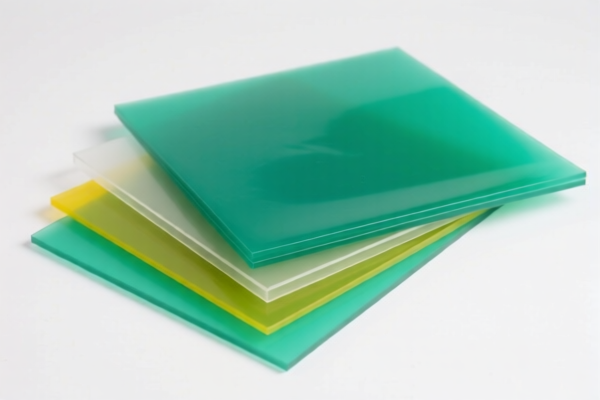
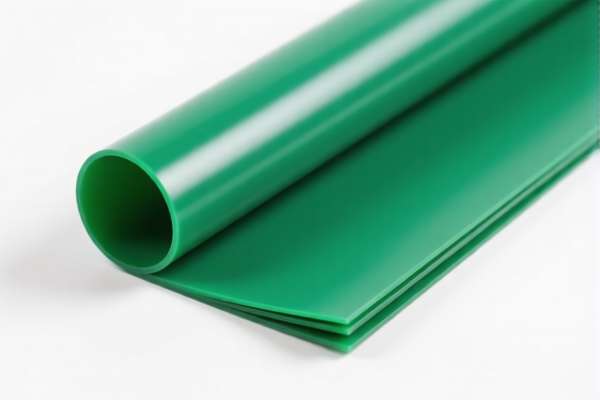
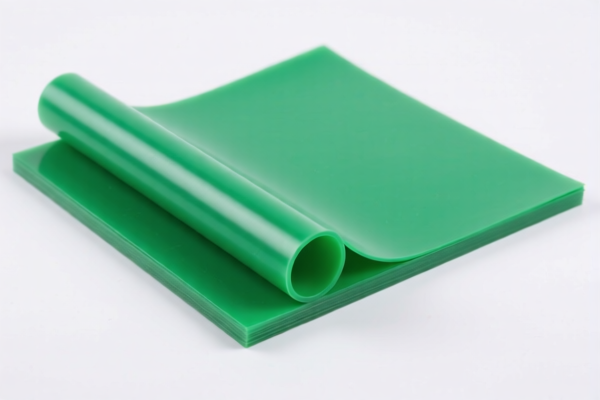
AI Analysis
🛡️ PVC Plastic Sheet: The Ultimate HS Code Guide & Tariff Breakdown
🌐 HS Code Classification & Customs Clearance Strategy | 2026 Latest Tariff Analysis | Professional Entry Strategy
📌 Part 1: What Exactly is "PVC Plastic Sheet"?
PVC (Polyvinyl Chloride) Plastic Sheets are ubiquitous industrial materials used in construction, signage, packaging, and piping. However, in international trade, "PVC Sheet" is not a single product. It is a broad category that splits into different HS Codes based on form (sheet vs. pipe), application (packaging vs. structural), and material composition.
⚠️ Critical Distinction Point:
- Is it a flat plate/sheet used for construction or lining? → Look at Chapters 3921.
- Is it a packaging item (bags, boxes, laminates)? → Look at Chapter 3923.
- Does it include pipes/hoses? → Look at Chapter 3917.
📦 Part 2: HS Code Classification Matrix (Based on Provided Data)
According to the specific data provided in <DATA>, here are the 5 potential HS Codes for PVC Plastic Sheets, along with their justification and tax rates.
| HS Code | Product Description & Justification | Total Tax Rate | Tax Breakdown |
|---|---|---|---|
| 3923.90.00.80 | PVC Plastic Plate/Packaging Item Material: PVC. Fits the category of plastic packaging or transport articles. |
38.0% | Base: 3.0% Section 301: 25.0% Section 122: 10.0% |
| 3921.12.50.00 | PVC Polymer Sheets/Plates Material: Polyvinyl Chloride polymer. Form: Sheet/Plate. Fits the classification for sheets of vinyl polymers. |
41.5% | Base: 6.5% Section 301: 25.0% Section 122: 10.0% |
| 3921.12.19.50 | PVC Polymer Plates (Other) Material: Vinyl polymer. Form: Board/Plate. Classified under the "Other" catch-all rule for PVC plates. |
40.3% | Base: 5.3% Section 301: 25.0% Section 122: 10.0% |
| 3923.29.00.00 | Other PVC Plastic Articles Material: PVC. Form: Unclear/General. Fits the "Other" catch-all category for plastic articles, no material conflict. |
38.0% | Base: 3.0% Section 301: 25.0% Section 122: 10.0% |
| 3917.23.00.00 | PVC Pipes, Hoses & Tubing Material: PVC. Form: Infered as pipes/hoses/attachments when specific shape is not described. |
38.1% | Base: 3.1% Section 301: 25.0% Section 122: 10.0% |
🔍 Key Insight:
The tax rates vary between 38.0% and 41.5%. The difference lies entirely in the Base Tariff (3.0% - 6.5%), as the Section 301 (25%) and Section 122 (10%) surcharges are constant for Chinese-origin goods in this context.
- Cheapest:3923.90.00.80&3923.29.00.00(38.0%)
- Most Expensive:3921.12.50.00(41.5%)
💰 Part 3: Detailed Tax Policy Analysis (2026)
✅ Applicable Country: United States (US)
✅ Origin: China (CN)
✅ Effective Date: Post-November 2025 (Current Policy)
🎯 1. The "3-Tier" Tax Structure Explained
For all HS codes listed above, the total tax is a sum of three distinct components:
| Component | Rate | Legal Basis | Explanation |
|---|---|---|---|
| Base Tariff | 3.0% – 6.5% | HTSUS General Rate | The standard Most Favored Nation (MFN) duty. Varies by specific sub-heading. |
| Section 301 Tariff | +25.0% | 19 CFR § 1221 | Imposed on Chinese goods under the "Section 301 Investigatory Actions." Applies to most plastic products. |
| Section 122 Tariff | +10.0% | IEEPA / Section 122 | Additional surcharge targeting specific Chinese imports. |
| TOTAL | 38.0% – 41.5% | Sum of Above | This is the final landed cost multiplier. |
📌 Important Note:
- There is no de minimis exemption for these goods if they fall under these specific HS codes with high tariffs.
- No Free Trade Agreement (FTA) benefits apply (China is not part of US FTA network).
🛠️ Part 4: Customs Clearance Strategy & Pitfalls
✅ 1. Documentation Checklist (Must-Haves)
| Document | Requirement | Purpose |
|---|---|---|
| Product Spec Sheet | Must specify: PVC Type (e.g., Rigid/Flexible), Thickness, Width, Application | Determines if it’s a "Sheet" (3921) or "Packaging" (3923). |
| Commercial Invoice | Clearly state "PVC Plastic Sheet" or "PVC Film" – avoid vague terms like "Plastic Part." | Prevents海关 (Customs) from misclassifying as "Other Plastic Articles" (3926) which may have different duties. |
| Photo of Product | Show cross-section, surface texture, and dimensions. | Proves it is a Sheet/Plate (3921) and not a Pipe (3917) or Bag (3923). |
| Certificate of Origin | Essential for proving CN origin to apply the correct Section 301/122 rates. | If origin is misdeclared, you may face penalties or higher tariffs. |
✅ 2. Classification Tips (How to Save Money)
| Scenario | Recommended HS Code | Tax Rate | Why? |
|---|---|---|---|
| Rigid PVC Board for Construction/Signage | 3921.12.50.00 |
41.5% | Correctly identifies it as a polymer sheet. Highest tax, but safest for structural use. |
| PVC Packaging Films/Bags | 3923.90.00.80 |
38.0% | If your "sheet" is actually a flexible film or packaging material, use 3923. Lower tax! |
| Unidentified Plastic Item | 3923.29.00.00 |
38.0% | If the form is ambiguous, this "other" category is often used. Lower base tax (3.0%). |
| PVC Pipes/Hoses | 3917.23.00.00 |
38.1% | If the product is tubular, DO NOT classify as sheet. Misclassification leads to seizure. |
🔥 Golden Rule:
"Shape Dictates Code!"
- Flat & Rigid →3921
- Flexible/Packaging →3923
- Tubular →3917
✅ 3. Common Mistakes & Penalties
❌ Mistake 1: Classifying rigid PVC building panels as 3923 (Packaging).
👉 Risk: Customs will reclassify to 3921 and charge the difference (e.g., 3.5% more) + penalties.
❌ Mistake 2: Ignoring the Section 122 (10%) surcharge.
👉 Risk: Underpayment of duties. The 10% is automatic for these categories from China.
❌ Mistake 3: Calling pipes "Sheets" to avoid the 3917 code.
👉 Risk: High audit rate. Pipes have a specific code. Misdeclaration is a red flag for customs brokers.
🌍 Part 5: Global Market Comparison
| Region | HS Code Reference | Base Duty | Section 301/122? | Total Est. Tax |
|---|---|---|---|---|
| 🇺🇸 USA | 3921.12.50.00 | 6.5% | Yes (+35%) | 41.5% |
| 🇨🇳 China | 3921.12.50.00 | 0-6% | No | ~0-6% |
| 🇪🇺 EU | 3921.12.00 | 6.5% | No | 6.5% |
| 🇯🇵 Japan | 3921.12.00 | 5-6% | No | ~5-6% |
📌 Conclusion:
The US market is extremely costly for PVC products from China due to the 35% total surcharge.
- Strategy: If possible, source PVC sheets from Vietnam, Mexico, or Thailand to avoid Section 301/122 tariffs (verify rules of origin strictly).
- Optimization: If the product is flexible packaging, use3923.90.00.80to save 3.5% compared to rigid sheets (3921).
📌 Part 6: Final Clearance Advice
- Verify Material: Ensure the "PVC" is indeed Polyvinyl Chloride. If it contains additives (>40% rubber/plastic), it may change classification.
- Describe Precisely: In your invoice, write: "Rigid PVC Plastic Sheet, 2mm thickness, for industrial lining, Made in China."
- Check Section 122: Confirm if the specific HS code is still subject to Section 122. Policies can shift.
- Consult a Broker: With a 41.5% tax rate, a small error in classification can cost thousands. Use a licensed US Customs Broker.
🎯 Conclusion: Precision Saves Profits
🎯 Key Takeaway:
🔹 "Rigid Sheet = 3921 (41.5%) | Packaging = 3923 (38.0%) | Pipe = 3917 (38.1%)"
🔹 Always add 35% (301+122) to the base tax for China-origin goods.
🔹 Flexibility (Packaging) saves money vs. Rigidity (Construction).
📌 Pro Tip:
If your PVC sheet is used solely for packaging, insist on classifying it under 3923 to save 3.5% in duties. If it is used for construction, accept 3921 but ensure the material spec is perfect to avoid delays.
✨ Clear Compliance, Clear Savings!
💼 Don’t let tariffs eat your margin. Classify correctly!
Customer Reviews
About HS Code Classification
The Harmonized System (HS) is an internationally standardized nomenclature developed by the World Customs Organization (WCO) to classify traded products. Over 200 countries use the HS system as the basis for customs tariffs, trade statistics, and import/export regulations.
Each HS code follows a hierarchical structure:
- Chapter (2 digits) — Broad category of goods (e.g., Chapter 84: Machinery and Mechanical Appliances)
- Heading (4 digits) — More specific grouping within the chapter
- Subheading (6 digits) — Internationally standardized breakdown, used by all WCO member countries
- National subdivisions (8-10 digits) — Country-specific extensions for further classification, such as US HTSUS 10-digit codes
Correct HS code classification is essential for smooth customs clearance, accurate duty payment, and compliance with trade regulations. Misclassification can lead to customs delays, overpayment of duties, or penalties.
When importing from CN to US, the applicable tariff rates may include:
- Most-Favored-Nation (MFN) rate — The standard duty rate applied to WTO members
- General rate — Applied to countries without trade agreements
- Trade remedy duties — Additional tariffs such as Section 301 (anti-dumping), Section 232 (national security), or countervailing duties
The information provided on this page is for reference purposes only. For official classification, please consult with your local customs authority or a licensed customs broker.