PVC Plastic Sheet Engraving Material
CN → US| HS Code | Tariff Rate | Origin | Destination | Doc |
|---|---|---|---|---|
| 3921190090 | 41.5% | CN | US | Official Doc |
| 3926909910 | 22.8% | CN | US | Official Doc |
| 3926909989 | 22.8% | CN | US | Official Doc |
| 3921905050 | 39.8% | CN | US | Official Doc |
Product Images
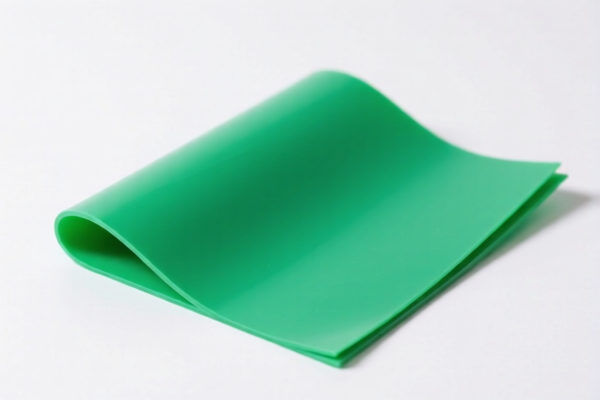
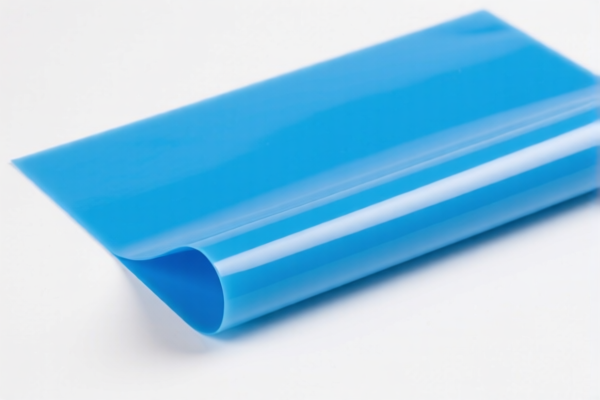
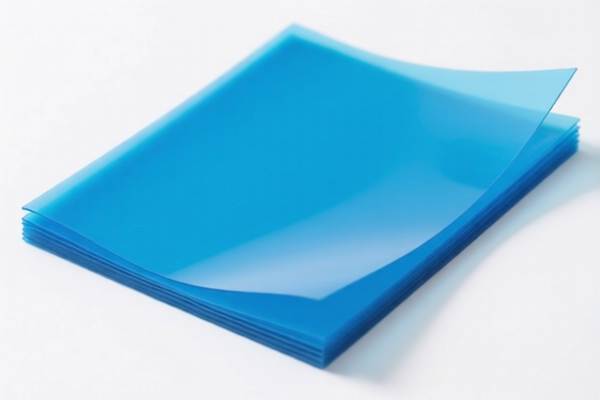
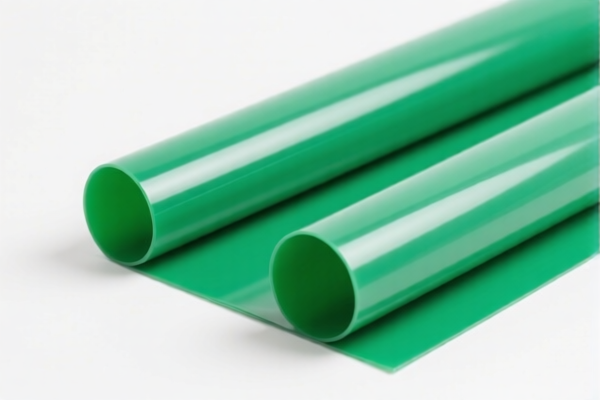
AI Analysis
🖌️ PVC Plastic Sheet Engraving Material (Plastic Engraving Boards)
🌐 HS Code Reference & Customs Clearance Guide | 2026 Latest Tariff Analysis | Professional Level Clearance Strategy
📌 I. Product Definition & Classification: Do You Really Know "PVC Engraving Sheets"?
PVC (Polyvinyl Chloride) plastic sheets are widely used in signage, advertising displays, industrial masking, and model making. In international trade, the classification depends heavily on whether the sheet is considered a "basic plate/sheet" (Chapter 39, Heading 3921) or a "finished/other plastic article" (Chapter 39, Heading 3926).
Key Distinction: * 3921 Category: Raw or semi-finished plastic plates, sheets, film, foil, and strip (even if cut to size, provided they don't take the character of a finished article). * 3926 Category: Other articles of plastics and articles of other materials of headings 3901–3914 (often used as a "catch-all" for items not specifically listed elsewhere).
⚠️ Critical Warning:
- If the PVC sheet is simply cut to size or surface-processed (e.g., anti-glare, slight texturing) but remains a sheet → Likely 3921.
- If the PVC sheet is finished into a specific product (e.g., pre-printed signs, complex molded parts) → Likely 3926.
- Engraving Material: Usually treated as a raw material for further processing. However, duty rates vary significantly based on the specific subheading chosen by customs officers.
📦 II. HS Code Classification Details (2026 Latest Tariff Authority Comparison)
| HS Code | Product Description | Applicable Scenario | Duty Structure |
|---|---|---|---|
3921.19.00.90 |
Plastic plates, sheets, film, foil, and strip (Other) | PVC engraving board classified under "Plastic Plates/Sheets" | High Risk (High Duty) |
3926.90.99.10 |
Other articles of plastic (Other) | Classified as a general plastic article | Lower Duty |
3926.90.99.89 |
Other articles of plastic (Other, Excluded) | Another catch-all for unspecified plastic items | Lower Duty |
3921.90.50.50 |
Other plates, sheets, etc. (Other) | Alternative "Other" classification for plastic sheets | High Risk (High Duty) |
🔍 Focus Point:
- The biggest risk lies in Heading 3921 (3921.19.00.90and3921.90.50.50). These codes attract a 25% Section 301 Add-on Tariff in the US, pushing the total tax burden extremely high.
- Heading 3926 (3926.90.99.10and3926.90.99.89) typically attracts a 7.5% Section 301 Add-on Tariff, resulting in a much more favorable total tax rate.
- Classification Strategy: Arguing for 3926 is often cheaper for end-users, but arguing for 3921 is technically accurate if the item is strictly a "sheet/plate" without further manufacturing. Customs discretion is key.
💰 III. 2026 Latest Tariff Rate Breakdown (Including Add-ons & Policy Surcharges)
✅ Applicable Country: United States (US)
✅ Origin: China (CN)
✅ Effective Date: 2025-11-10 (Including subsequent imports)
🎯 1. 3921.19.00.90 —— Plastic Plates/Sheets (The "High Duty" Trap)
| Item | Detail |
|---|---|
| Basic Tariff | 6.5% |
| Section 301 Add-on Tariff | +25.0% (Due to USITC Footnote related to Chinese PVC products) |
| Section 122 Tariff | +10.0% (Specific trade remedy/tariff clause) |
| Total Tax Rate | 41.5% |
| Tax Calculation | CIF Value × 41.5% |
| De Minimis Exemption | ❌ Not Eligible (deny_de_minimis) |
| Legal Basis Path | IEEPA:9903.01.25 → USITC:3921.19.00.90 → FOOTNOTE:9903.88.01 |
📌 Explanation:
- The 25% Section 301 tariff is the primary driver. This code is heavily scrutinized.
- The 10% Section 122 tariff adds another layer of cost.
- Total 41.5% makes this code extremely expensive for importers.
🎯 2. 3926.90.99.10 & 3926.90.99.89 —— Other Plastic Articles (The "Preferred" Options)
| Item | Detail |
|---|---|
| Basic Tariff | 5.3% |
| Section 301 Add-on Tariff | +7.5% (Lower bracket for certain plastic articles) |
| Section 122 Tariff | +10.0% |
| Total Tax Rate | 22.8% |
| Tax Calculation | CIF Value × 22.8% |
| De Minimis Exemption | ❌ Not Eligible (deny_de_minimis) |
| Legal Basis Path | IEEPA:9901.25 → USITC:3926.90.99.10/.89 → FOOTNOTE:9903.88.01 |
📌 Note:
- These two codes (...10and...89) share the same tax structure.
- Total 22.8% is significantly lower than the 41.5% for 3921 codes.
- If your PVC sheet can be argued as a "finished plastic article" (even if just cut to size for engraving), 3926 is financially superior.
- However, if customs deems it a raw "sheet," they may revert to 3921.
🎯 3. 3921.90.50.50 —— Other Plates/Sheets (The "Middle Ground" Trap)
| Item | Detail |
|---|---|
| Basic Tariff | 4.8% |
| Section 301 Add-on Tariff | +25.0% |
| Section 122 Tariff | +10.0% |
| Total Tax Rate | 39.8% |
| Tax Calculation | CIF Value × 39.8% |
| De Minimis Exemption | ❌ Not Eligible (deny_de_minimis) |
| Legal Basis Path | IEEPA:9903.01.25 → USITC:3921.90.50.50 → FOOTNOTE:9903.88.01 |
📌 Note:
- Similar to3921.19.00.90, this code attracts the 25% Section 301 tariff.
- Total 39.8% is still very high. Avoid this code if possible unless specifically required by the exporter's invoice.
🛠️ IV. Customs Clearance Practical Advice (Battle-Tested Pitfall Avoidance Guide)
✅ 1. Required Documentation Checklist (Non-negotiable)
| Document | Mandatory? | Description |
|---|---|---|
| ✅ Product Specification Sheet | ✔️ | Must specify: Material (PVC), Thickness, Color, Dimensions, Surface Treatment. |
| ✅ Commercial Invoice | ✔️ | Clear description: "PVC Plastic Sheet for Engraving," NOT "Finished Signage" unless it is. |
| ✅ Packing List | ✔️ | Itemized weight, dimensions, and packaging type. |
| ✅ Certificate of Origin (CO) | ✔️ | To prove CN origin and apply correct tariff brackets. |
| ✅ Photographs of Goods | ✔️ | Show rolls, cut sheets, and any markings. |
| ✅ Third-Party Test Report | ✔️ | RoHS, REACH compliance (often required for plastic imports). |
✅ 2. Declaration Strategy (Key Mnemonic)
🔥 "Material First, Finish Second; Sheet vs. Article Matters!"
| Scenario | Correct Declaration Approach | Wrong Approach |
|---|---|---|
| Raw PVC Sheet (Roll/Cut) | Declare as 3921.19.00.90 or 3921.90.50.50 (High Duty) |
Misdeclare as 3926 to save tax → Audits/Penalties |
| PVC Board with Pre-Printed Graphics | Declare as 3926.90.99.10/.89 (Lower Duty) |
Declare as 3921 (Raw sheet) → Under-declaring Value/Category |
| PVC Sheet for Engraving (Blank) | Strategy: Try to argue for 3926 if the product is ready-to-use for signage makers. |
Blindly using 3921 → Paying 41.5% unnecessarily |
| Mixed Container (Sheets + Finished Signs) | Split Declaration: Sheets under 3921/3926, Signs under 3926. | Mixed HS Code on one line → Customs Hold |
✅ 3. Special Case Handling
| Situation | Handling Advice |
|---|---|
| OEM Custom Size | Provide purchase order showing size customization. If it's just a cut sheet, it's still 3921. |
| PVC + Acrylic Mix | Declare separately! Do not mix. Acrylic may have different HS codes/duties. |
| Import for Personal Use | Still subject to duties. No de minimis exemption for PVC sheets from China. |
| Dispute on 3921 vs 3926 | Submit a Pre-Route Ruling (Pre-Ruling) application to CBP before shipment to lock in the HS Code. |
🌍 V. Global Market Comparison (2026 Latest)
| Country/Region | Recommended HS Code | Tariff Rate | Certification Requirements | Notes |
|---|---|---|---|---|
| 🇺🇸 USA | 3921.19.00.90 / 3926.90.99.10 |
22.8% - 41.5% | RoHS, CPSC (if toys) | High Tariff Risk. Pre-ruling recommended. |
| 🇨🇳 China | 3921.19.00.00 |
5-6% | CCC (if applicable) | No extra add-on tariffs. |
| 🇪🇺 EU | 3921.19.00 |
6.5% | REACH, RoHS | No Section 301 equivalent. Lower cost. |
| 🇬🇧 UK | 3921.19.00 |
6.5% | UKCA, REACH | Post-Brexit rules apply. |
| 🇯🇵 Japan | 3921.19.00 |
6-8% | JIS Standards | Moderate duty. |
📌 Conclusion:
- USA is the most expensive market for PVC engraving sheets due to Section 301 and 122 tariffs.
- EU and Japan offer significantly lower duty rates.
- China Domestic: Low duty, no anti-dumping surcharges.
📌 VI. Common Mistakes & Pitfall Guide (Lessons from Tears)
❌ Mistake 1: Declaring "PVC Engraving Board" as 3926 when it is clearly a raw sheet.
👉 Consequence: Customs audit → Back taxes + Penalties + 41.5% reassessment.
❌ Mistake 2: Using 3921.19.00.90 without checking for Section 122 applicability.
👉 Consequence: Unexpected 10% surcharge → Profit margin wiped out.
❌ Mistake 3: Combining PVC sheets with other materials in one HS Code.
👉 Consequence: Rejection of entry → Delays + Storage fees.
❌ Mistake 4: Ignoring the "122 Clause" in US imports.
👉 Consequence: The 10% add-on is automatic if applicable. Misunderstanding leads to budget errors.
✅ Correct Practice:
"PVC Sheet, 1mm, White, Cut to 100x100cm, For Engraving, No Printing, HS Code 3921.19.00.90 (or 3926.90.99.10 with Pre-Ruling)."
🎯 VII. Conclusion: Professional Declaration Saves Money!
🎯 Remember the Mnemonic:
🔹 "Raw Sheet = 3921 (High Duty), Finished Article = 3926 (Lower Duty)"
🔹 "Section 301 is 25%, Section 122 is 10%, Total 41.5% is Painful!"
🔹 "Get a Pre-Ruling, Don't Guess, Save the Margin!"
📌 Pro Tip:
If you import large volumes of PVC engraving sheets into the US, apply for a Section 301 Exclusion if your product qualifies. This can reduce the 25% add-on tariff. Also, consider supply chain diversification (e.g., sourcing from Vietnam or Malaysia) to avoid Chinese origin tariffs entirely.
📣 Immediate Action:
📞 Consult a licensed customs broker
📄 Request a CBP Pre-Ruling for your specific PVC sheet product
🚀 Clear Customs Smoothly, Keep Your Margins High!
✨ Professional Clearance Starts with Accurate Classification!
💼 Every cent of tax saved is pure profit!
Customer Reviews
About HS Code Classification
The Harmonized System (HS) is an internationally standardized nomenclature developed by the World Customs Organization (WCO) to classify traded products. Over 200 countries use the HS system as the basis for customs tariffs, trade statistics, and import/export regulations.
Each HS code follows a hierarchical structure:
- Chapter (2 digits) — Broad category of goods (e.g., Chapter 84: Machinery and Mechanical Appliances)
- Heading (4 digits) — More specific grouping within the chapter
- Subheading (6 digits) — Internationally standardized breakdown, used by all WCO member countries
- National subdivisions (8-10 digits) — Country-specific extensions for further classification, such as US HTSUS 10-digit codes
Correct HS code classification is essential for smooth customs clearance, accurate duty payment, and compliance with trade regulations. Misclassification can lead to customs delays, overpayment of duties, or penalties.
When importing from CN to US, the applicable tariff rates may include:
- Most-Favored-Nation (MFN) rate — The standard duty rate applied to WTO members
- General rate — Applied to countries without trade agreements
- Trade remedy duties — Additional tariffs such as Section 301 (anti-dumping), Section 232 (national security), or countervailing duties
The information provided on this page is for reference purposes only. For official classification, please consult with your local customs authority or a licensed customs broker.