PVC Plastic Sheet Film Lamination Sheet
CN → US| HS Code | Tariff Rate | Origin | Destination | Doc |
|---|---|---|---|---|
| 3926909989 | 22.8% | CN | US | Official Doc |
| 3926904800 | 13.4% | CN | US | Official Doc |
| 3921121100 | 39.2% | CN | US | Official Doc |
| 3921121500 | 41.5% | CN | US | Official Doc |
| 3920435000 | 39.2% | CN | US | Official Doc |
| 3920490000 | 40.8% | CN | US | Official Doc |
Product Images

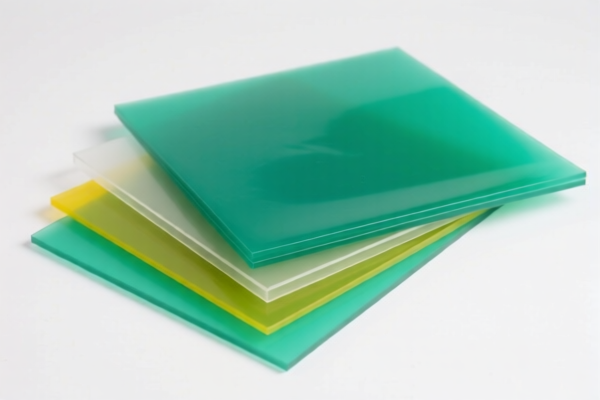
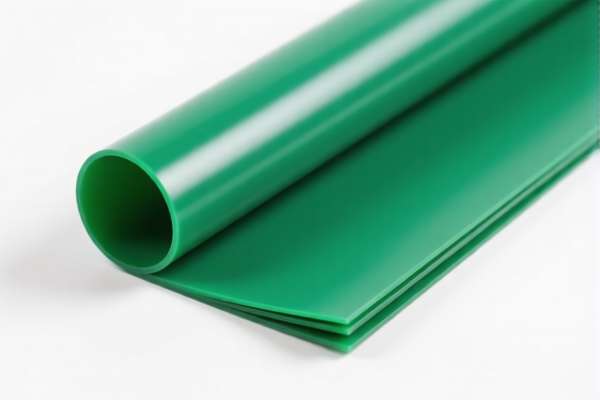
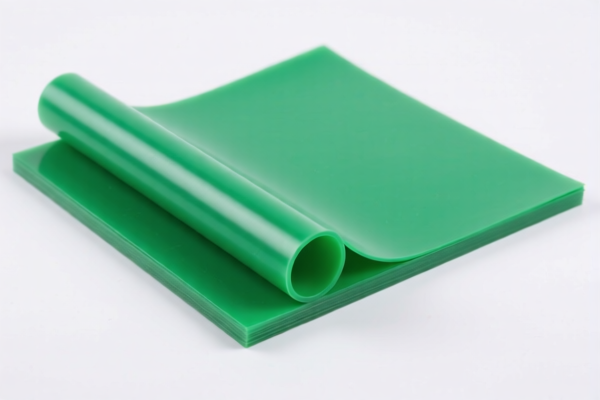
AI Analysis
📦 PVC Plastic Sheet/Film/Lamination Sheet (Polyvinyl Chloride)
🌐 HS Code Reference & Customs Clearance Guide | 2026 Latest Tariff Analysis | Professional Clearance Strategy
📌 I. Product Definition & Classification: Do You Really Understand "PVC Plastic Sheets"?
PVC (Polyvinyl Chloride) plastic sheets, films, and laminated products are ubiquitous in packaging, construction, advertising, and consumer goods. In international trade, they are strictly differentiated based on physical structure (cellular vs. non-cellular), composition (pure plastic vs. combined with textiles), and chemical composition (plasticizer content). Misclassification can lead to severe tax disparities (0% vs. 29.2%) or even customs detention.
⚠️ Key Distinction Points:
- Cellular (Foam/PVC Foam Board): Contains gas bubbles, lightweight. → Headings 3921.12.xx
- Non-Cellular (Solid PVC): Dense, hard, or flexible sheets. → Headings 3920.43.xx / 3920.49.xx
- Combined with Textiles: PVC coated on fabric. → Headings 3921.12.11/15
- Plasticizer Content (>6%): Crucial for flexible PVC sheets. → Heading 3920.43
📊 II. HS Code Classification Details (2026 Latest Tariff Authority Comparison)
| HS Code | Product Description | Application Scenario | Cellular? | Textile Combined? | Plasticizer >6%? |
|---|---|---|---|---|---|
3921.12.11.00 |
Cellular PVC sheets/film combined with textiles; Man-made fibers predominate (>70% by weight of plastics) | Textile-based PVC laminates, synthetic leather, high-end packaging | ✅ Yes | ✅ Yes (Man-made fibers >70%) | N/A |
3921.12.15.00 |
Cellular PVC sheets/film combined with textiles; Other textile combinations | Generic PVC-coated fabrics, tarpaulins, simple PVC textiles | ✅ Yes | ✅ Yes (Other mix) | N/A |
3920.43.50.00 |
Non-cellular PVC sheets/film; Not reinforced/laminated; Contains ≥6% plasticizers | Flexible PVC films, soft sheets, shrink wrap, medical tubing materials | ❌ No | ❌ No | ✅ Yes |
3920.49.00.00 |
Non-cellular PVC sheets/film; Not reinforced/laminated; Other (No high plasticizers) | Rigid PVC sheets, hard plates, industrial profiles, low-plasticizer films | ❌ No | ❌ No | ❌ No (<6% or none) |
3926.90.99.89 |
Other plastic articles; Other | PVC photo frames, PVC decorative trim, finished PVC parts (not sheets) | N/A | N/A | N/A |
3926.90.48.00 |
Other plastic articles; Photo albums | PVC-covered photo albums, plastic binding covers | N/A | N/A | N/A |
🔍 Key Reminder:
- Cellular vs. Non-Cellular: If the material has a foamed structure (like foam board), it belongs to 3921.12. If it is dense/solid, it belongs to 3920.
- Textile Lamination: If the PVC is bonded to fabric, it must go to 3921.12, not 3920.
- Plasticizer Threshold: For non-cellular PVC, if plasticizers are ≥6%, it goes to 3920.43.50. If <6%, it goes to 3920.49.
💰 III. 2026 Latest Tariff Rate Breakdown (Including Additional Taxes & Policy Surcharges)
✅ Applicable Country: United States (US)
✅ Country of Origin: China (CN)
✅ Effective Date: November 10, 2025 (for subsequent imports)
🎯 1. 3921.12.11.00 —— Cellular PVC + Textile (Man-made Fibers Predominant)
| Item | Content |
|---|---|
| Base Tariff | 4.2% (ad valorem) |
| Section 301 Surcharge | +25.0% (USITC Footnote) |
| Total Rate | 29.2% |
| Tax Calculation | CIF Value × 29.2% |
| De Minimis Exemption? | ❌ No (High-value industrial/consumer goods) |
| Legal Path | USITC:3921.12.11.00 → Section 301: 4.2% + 25% |
📌 Explanation:
- This code applies to PVC foam laminates where man-made fibers make up the bulk of the textile component.
- The 29.2% total rate is significant. Importers must verify if the textile component truly meets the ">70% man-made fiber by weight of plastics" criterion to avoid penalties.
🎯 2. 3921.12.15.00 —— Cellular PVC + Textile (Other)
| Item | Content |
|---|---|
| Base Tariff | 0.0% |
| Section 301 Surcharge | 0.0% |
| Total Rate | 0.0% |
| Tax Calculation | CIF Value × 0.0% |
| De Minimis Exemption? | N/A (Already 0%) |
| Legal Path | USITC:3921.12.15.00 |
📌 Crucial Insight:
- Zero Tariff! This is a high-risk zero-tariff code.
- It applies to cellular PVC+textile products that do not meet the specific criteria of3921.12.11.00(e.g., natural fibers predominate, or fiber ratio is <70%).
- Warning: Misclassifying a3921.12.11.00product as15.00to save 29.2% is a major audit target. Evidence of fiber composition is mandatory.
🎯 3. 3920.43.50.00 —— Non-Cellular PVC, Plasticizers ≥6%
| Item | Content |
|---|---|
| Base Tariff | 4.2% |
| Section 301 Surcharge | +25.0% |
| Total Rate | 29.2% |
| Tax Calculation | CIF Value × 29.2% |
| De Minimis Exemption? | ❌ No |
| Legal Path | USITC:3920.43.50.00 → Section 301: 4.2% + 25% |
📌 Explanation:
- Applies to flexible PVC sheets/films with high plasticizer content (≥6%).
- Common in shrink films, flexible packaging, and soft PVC flooring materials.
- Same high tax burden as cellular PVC+textile.
🎯 4. 3920.49.00.00 —— Non-Cellular PVC, Other (Low Plasticizers)
| Item | Content |
|---|---|
| Base Tariff | 0.0% |
| Section 301 Surcharge | 0.0% |
| Total Rate | 0.0% |
| Tax Calculation | CIF Value × 0.0% |
| De Minimis Exemption? | N/A |
| Legal Path | USITC:3920.49.00.00 |
📌 Crucial Insight:
- Zero Tariff!
- Applies to rigid PVC sheets or low-plasticizer films (<6%).
- Many rigid PVC pipes, profiles, and hard plates fall here. Ensure the plasticizer content is truly <6% via lab tests if challenged.
🎯 5. & 6. 3926.90.99.89 & 3926.90.48.00 —— Finished Plastic Articles (Not Sheets)
| HS Code | Total Rate | Note |
|---|---|---|
3926.90.99.89 |
12.8% | Base 5.3% + 7.5% Surtax. For other plastic articles (e.g., PVC trim, parts). |
3926.90.48.00 |
3.4% | Base 3.4% + 0% Surtax. Specifically for Photo Albums. |
📌 Explanation:
- If the product is a finished article (like a photo album) and not a raw sheet/film, it may fall under 3926.
- Photo Albums enjoy a lower rate (3.4%) due to specific HS provisions. Do not classify a PVC-covered album as a "sheet" if it is clearly a finished good.
🛠️ IV. Customs Clearance Practical Advice (实战避坑指南)
✅ 1. Documentation Checklist (Mandatory)
| Document | Required | Description |
|---|---|---|
| ✅ Product Spec Sheet | ✔️ | Must specify: Cellular/Non-cellular, Plasticizer %, Textile composition (if laminated). |
| ✅ Lab Test Report | ✔️ | Critical for 3920.43 vs 3920.49. Must prove plasticizer content (%). |
| ✅ Composition Statement | ✔️ | For 3921.12, must prove fiber type (Man-made vs. Natural) and weight ratio. |
| ✅ Commercial Invoice | ✔️ | Clearly describe as "PVC Sheet/Film/Laminate", not just "Plastic Product". |
| ✅ HS Code Pre-ruling | ✔️ | Recommended for high-volume imports to lock in 0% vs. 29.2% status. |
| ✅ Photos | ✔️ | Cross-section photos to show cellular structure (bubbles) vs. solid. |
✅ 2. Declaration Tips (Key Mnemonic)
🔥 "Cellular Check Foam, Solid Check Plastic; Textile Ratio Dictates; 6% Plasticizer is the Line!"
| Scenario | Correct HS Code | Risk if Wrong |
|---|---|---|
| PVC Foam Board + Fabric (Man-made fiber >70%) | 3921.12.11.00 (29.2%) |
Misdeclare as 15.00 → 29.2% underpayment + penalties |
| PVC Foam Board + Fabric (Other mix) | 3921.12.15.00 (0.0%) |
Over-declare as 11.00 → Pay unnecessary 29.2% |
| Flexible PVC Film (Plasticizer ≥6%) | 3920.43.50.00 (29.2%) |
Misdeclare as 49.00 → 29.2% underpayment |
| Rigid PVC Sheet (Plasticizer <6%) | 3920.49.00.00 (0.0%) |
Over-declare as 43.50 → Pay unnecessary 29.2% |
| PVC Photo Album | 3926.90.48.00 (3.4%) |
Declare as "Sheet" → Misclassification |
✅ 3. Special Cases Handling
| Situation | Handling Advice |
|---|---|
| PVC Laminated on Cotton | Likely falls under 3921.12.15.00 (0.0%) because cotton is natural, not man-made. |
| PVC Foam on Polyester | If polyester >70% by weight of plastics, it is 3921.12.11.00 (29.2%). |
| Multi-layer PVC | If one layer is cellular and another is solid, classify based on essential character (usually the main bulk). |
| PVC Strips/Film Rolls | Still sheets/films. Ensure thickness and width don't push it into "Articles" (3926). |
🌍 V. Global Market Comparison (2026 Latest)
| Country/Region | Recommended HS Code | Tariff (China Origin) | Certification | Note |
|---|---|---|---|---|
| 🇺🇸 USA | 3921.12.11.00 / 3920.43.50.00 |
29.2% | ASTM, CPSIA (if consumer) | High tariffs; check 0% codes carefully |
| 🇺🇸 USA | 3921.12.15.00 / 3920.49.00.00 |
0.0% | ASTM, CPSIA | Zero tariff; evidence of composition is key |
| 🇪🇺 EU | 3921 / 3920 | ~6.5% | REACH, RoHS | No 301 surcharge; stable rates |
| 🇨🇳 China | 3921 / 3920 | ~6-10% | CCC (if applicable) | Import tax + VAT |
| 🇬🇧 UK | 3921 / 3920 | ~6.5% | UKCA | Post-Brexit rules |
📌 Conclusion:
- US Imports are highly sensitive to classification. The difference between 0% and 29.2% is huge.
- Evidence is King: You must have lab reports proving plasticizer content and textile fiber ratios to justify 0% rates.
- Avoid "Generic" Descriptions: Do not just write "PVC Sheet". Specify "Cellular, Non-Cellular, Plasticized, Textile-Laminated".
📌 VI. Common Mistakes & Pitfalls (Blood-Tested Lessons)
❌ Mistake 1: Declaring all PVC films as 3920.49.00.00 (0%)
👉 Consequence: If plasticizers are ≥6%, you face 29.2% back-payment + fines.
✅ Fix: Test plasticizer content. If ≥6%, use 3920.43.50.00.
❌ Mistake 2: Declaring all PVC+Textile laminates as 3921.12.15.00 (0%)
👉 Consequence: If man-made fibers >70%, you face 29.2% back-payment.
✅ Fix: Verify fiber composition. If man-made >70%, use 3921.12.11.00.
❌ Mistake 3: Calling a "PVC Photo Album" a "Plastic Sheet"
👉 Consequence: Wrong classification. Should be 3926.90.48.00 (3.4%).
✅ Fix: Classify as finished article if it's a book/album.
✅ Correct Declaration Example:
"Cellular PVC Sheet Laminated on Polyester Fabric, Polyester Weight 80%, Model XYZ"
🎯 VII. Conclusion: Precision Classification Saves Money!
🎯 Remember the Mnemonic:
🔹 "Cellular + Man-Made >70% = 29.2%; Cell+Other=0%; Solid+Plastic ≥6%=29.2%; Solid+Low=0%."
🔹 "Test Plasticizer, Test Fiber, or Pay the Price!"
📌 Pro Tip:
- For high-volume imports, apply for an Advance Ruling from US Customs to confirm your 0% eligibility.
- Keep third-party lab reports on file for every shipment to defend against audits.
- DHL/FedEx/UPS often self-classify; provide them with explicit instructions and lab reports to prevent errors.
📣 Take Action Now:
📞 Consult a licensed customs broker
📋 Prepare composition statements and lab tests
🚀 Clear your PVC shipments smoothly, legally, and cost-effectively!
✨ Professional Clearance Starts with Precise Classification!
💼 Every 1% of tax saved is pure profit!
Customer Reviews
About HS Code Classification
The Harmonized System (HS) is an internationally standardized nomenclature developed by the World Customs Organization (WCO) to classify traded products. Over 200 countries use the HS system as the basis for customs tariffs, trade statistics, and import/export regulations.
Each HS code follows a hierarchical structure:
- Chapter (2 digits) — Broad category of goods (e.g., Chapter 84: Machinery and Mechanical Appliances)
- Heading (4 digits) — More specific grouping within the chapter
- Subheading (6 digits) — Internationally standardized breakdown, used by all WCO member countries
- National subdivisions (8-10 digits) — Country-specific extensions for further classification, such as US HTSUS 10-digit codes
Correct HS code classification is essential for smooth customs clearance, accurate duty payment, and compliance with trade regulations. Misclassification can lead to customs delays, overpayment of duties, or penalties.
When importing from CN to US, the applicable tariff rates may include:
- Most-Favored-Nation (MFN) rate — The standard duty rate applied to WTO members
- General rate — Applied to countries without trade agreements
- Trade remedy duties — Additional tariffs such as Section 301 (anti-dumping), Section 232 (national security), or countervailing duties
The information provided on this page is for reference purposes only. For official classification, please consult with your local customs authority or a licensed customs broker.