PVC Plastic Sheets
CN → US| HS Code | Tariff Rate | Origin | Destination | Doc |
|---|---|---|---|---|
| 3923900080 | 38.0% | CN | US | Official Doc |
| 3921125000 | 41.5% | CN | US | Official Doc |
| 3921121950 | 40.3% | CN | US | Official Doc |
| 3923290000 | 38.0% | CN | US | Official Doc |
| 3917230000 | 38.1% | CN | US | Official Doc |
Product Images

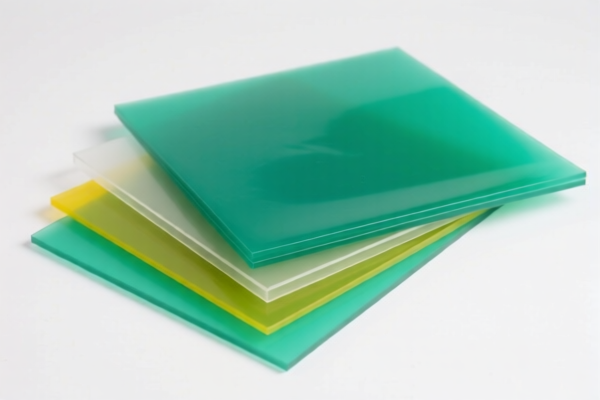
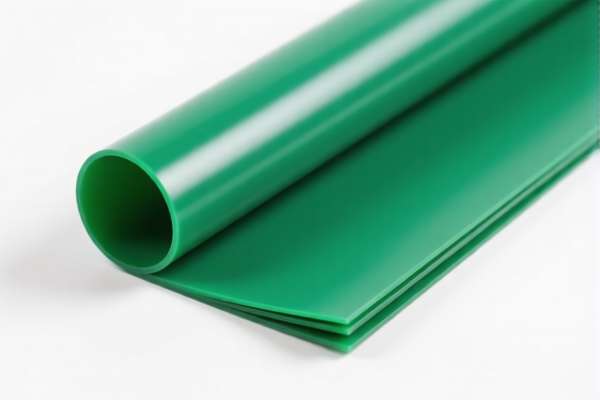
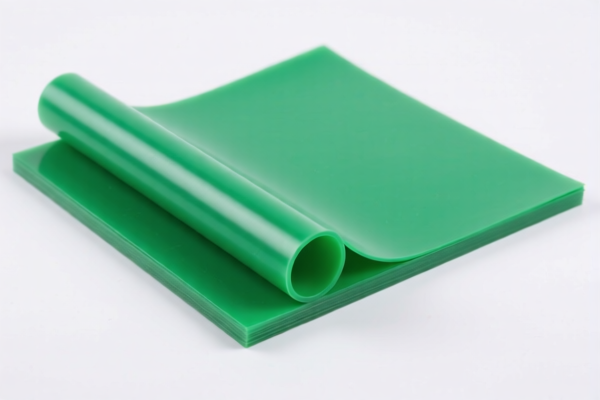
AI Analysis
🧪 PVC Plastic Sheets (Polyvinyl Chloride)
🌐 HS Code Reference & Customs Clearance Guide | 2026 Latest Tariff Analysis | Professional Clearance Strategy
📌 I. Product Definition & Classification: Do You Really Understand "PVC Sheets"?
PVC Plastic Sheets are versatile thermoplastic materials widely used in construction, signage, packaging, and industrial applications. In international trade, the classification depends heavily on the form (sheet/plate vs. packaged goods) and the specific polymer structure.
⚠️ Key Classification Distinction:
- Raw/Milled Sheets: PVC plates or sheets intended for further processing (cutting, shaping) → Classified under Chapter 39 (Plastics and Articles Thereof).
- Finished Packaging: If the PVC is formed into bags, pouches, or specific packaging containers → Classified under Heading 3923.
- Pipes/Fittings: If the PVC is tubular → Classified under Heading 3917.🔍 Critical Note:
Misclassification between "Plates/Sheets" (3921) and "Packaging Goods" (3923) or "Pipes" (3917) can lead to significant duty discrepancies and customs delays.
📦 II. HS Code Classification Details (2026 Latest Tariff Authority Comparison)
Based on the provided data, here are the four potential HS codes for PVC Plastic Sheets and their corresponding tax implications.
| HS Code | Product Description | Summary | Total Tax Rate |
|---|---|---|---|
3923.90.00.80 |
PVC Plastic Board as Packaging Goods | Classified as packaging supplies made of plastic, material is PVC. | 38.0% |
3921.12.50.00 |
Vinyl Chloride Polymer Plates/Sheets | Classified as vinyl chloride polymer plates/sheets, material and form match. | 41.5% |
3921.12.19.50 |
Undesignated Structure Vinyl Chloride Sheets | Classified as unspecified structure vinyl chloride polymer sheets, fits residual category. | 40.3% |
3923.29.00.00 |
Other PVC Plastic Packaging Goods | Classified as other plastic packaging goods, material is PVC with no conflict. | 38.0% |
📌 Observation:
- Highest Risk:3921.12.50.00carries the highest total tax rate (41.5%).
- Lowest Rate:3923.90.00.80and3923.29.00.00share the lowest total tax rate (38.0%).
- Structural Gap:3921.12.19.50acts as a "catch-all" for sheets that don't fit other specific descriptors, carrying a moderate rate of 40.3%.
💰 III. 2026 Latest Tariff Rate Breakdown (Including Surcharges & Policy Add-ons)
✅ Applicable Country: United States (US)
✅ Origin: China (CN)
✅ Effective Time: Current enforcement period
The total tax rate is composed of three distinct components:
🎯 1. 3923.90.00.80 & 3923.29.00.00 – Packaging Category (Lowest Rate: 38.0%)
| Item | Content |
|---|---|
| Base Tariff | 3.0% (Ad Valorem) |
| Section 301 Surcharge | +25.0% (USITC Footnote) |
| Section 122 Tariff | +10.0% (Specific Policy Add-on) |
| Total Tax Rate | 38.0% |
| Tax Calculation | CIF Value × 38.0% |
| De Minimis Exemption | ❌ Not Applicable (Section 301 and Section 122 tariffs generally negate de minimis benefits for China-origin goods) |
| Legal Basis Path | USITC:3923.90.00.80 → FOOTNOTE:301 + SECTION:122 |
📌 Explanation:
- These codes are classified under Packaging Goods. If your PVC sheets are intended for use as packaging material (e.g., shrink wrap, protective covers, flexible packaging), this classification may be appropriate and offers the lowest duty burden.
- Section 301 (25%) is the standard reciprocal tariff on Chinese plastics.
- Section 122 (10%) is an additional statutory surcharge applied to specific import categories.
🎯 2. 3921.12.19.50 – Undesignated Sheets Category (Medium Rate: 40.3%)
| Item | Content |
|---|---|
| Base Tariff | 5.3% (Ad Valorem) |
| Section 301 Surcharge | +25.0% |
| Section 122 Tariff | +10.0% |
| Total Tax Rate | 40.3% |
| Tax Calculation | CIF Value × 40.3% |
| De Minimis Exemption | ❌ Not Applicable |
| Legal Basis Path | USITC:3921.12.19.50 → FOOTNOTE:301 + SECTION:122 |
📌 Explanation:
- This is a residual category ("Other") for vinyl chloride polymer sheets that do not fit more specific subheadings.
- While the base tariff is slightly higher than the packaging category, the total rate is still lower than the primary plate/sheet category (3921.12.50.00).
- Use this only if the sheet does not meet the specific structural criteria of3921.12.50.00.
🎯 3. 3921.12.50.00 – Vinyl Chloride Polymer Plates/Sheets (Highest Rate: 41.5%)
| Item | Content |
|---|---|
| Base Tariff | 6.5% (Ad Valorem) |
| Section 301 Surcharge | +25.0% |
| Section 122 Tariff | +10.0% |
| Total Tax Rate | 41.5% |
| Tax Calculation | CIF Value × 41.5% |
| De Minimis Exemption | ❌ Not Applicable |
| Legal Basis Path | USITC:3921.12.50.00 → FOOTNOTE:301 + SECTION:122 |
📌 Explanation:
- This is the standard classification for rigid PVC plates and sheets.
- It carries the highest base tariff (6.5%) among all options, resulting in the highest total duty (41.5%).
- Risk: Misclassifying packaging or flexible PVC as rigid "plates/shets" here will result in the maximum penalty.
🛠️ IV. Customs Clearance Practical Advice (Field Avoidance Guide)
✅ 1. Required Documentation Checklist
| Document | Must Provide | Purpose |
|---|---|---|
| ✅ Product Specification Sheet | ✔️ | Must detail thickness, width, density, and rigid vs. flexible nature. |
| ✅ HS Code Justification Memo | ✔️ | Explain why it fits 3921 (Sheets) vs. 3923 (Packaging). |
| ✅ Commercial Invoice | ✔️ | Clearly state "PVC Plastic Sheets" and material composition (100% PVC). |
| ✅ Packing List | ✔️ | Show dimensions and weight to support "sheet" classification (not bulky packaging). |
| ✅ Photos of Product | ✔️ | Show cross-section, texture, and application context. |
✅ 2. Declaration Strategy (Key Mantra)
🔥 "Form Dictates Code, Flexibility Matters, Don't Pack It Wrong!"
| Scenario | Correct Declaration | Wrong Declaration | Consequence |
|---|---|---|---|
| Rigid PVC Sheets (Construction/Industrial) | 3921.12.50.00 |
3923.90.00.80 |
Overpayment of duty (41.5% vs 38.0%). |
| Flexible PVC Packaging/Sheets | 3923.90.00.80 |
3921.12.50.00 |
Underpayment of duty → Penalties & Back Taxes! |
| PVC Pipes | 3917.23.00.00 (38.1%) |
3921.12.50.00 |
Classification Error → Delayed Clearance. |
| Undesignated/Complex PVC Structures | 3921.12.19.50 |
3921.12.50.00 |
Potential misclassification if structure doesn't match "plate/sheet" definition. |
📌 Strategic Tip:
- If the PVC product is intended for use as packaging (e.g., shrink films, protective covers), aggressively argue for3923.90.00.80to save 3.5% in duties (41.5% → 38.0%).
- If the PVC is rigid and structural (e.g., sign boards, wall panels), you must use3921, but choose between3921.12.50.00(41.5%) and3921.12.19.50(40.3%) based on structural specificity.
✅ 3. Special Considerations
| Situation | Handling Advice |
|---|---|
| Mixed Containers | If mixing PVC sheets with other plastics, ensure all items fall under the same HS code group to avoid split examinations. |
| Laminated PVC | If the sheet has metal or fabric layers, it may no longer be "PVC Sheet" but a composite. Consult 3921 vs. 6306 (Tents/Sails) or 6810 (Articles of Stone). |
| Section 122 Impact | Remember that Section 122 (10%) applies regardless of the base code. This is a non-negotiable surcharge for most Chinese-origin plastic imports. |
🌍 V. Global Market Comparison (2026 Latest)
| Country/Region | Recommended HS Code | Approx. Duty | Notes |
|---|---|---|---|
| 🇺🇸 USA | 3921.12.50.00 / 3923.90.00.80 |
38.0% - 41.5% | Includes 301 Tariff + Section 122. |
| 🇨🇳 China | 3921.12.50.00 |
~6.5% | Lower base duty, no Section 301. |
| 🇪🇺 EU | 3921.12.00 |
~6.5% | No Section 301 or Section 122 equivalent. |
| 🇬🇧 UK | 3921.12.00 |
~6.5% | Post-Brexit tariff aligned with EU. |
📌 Conclusion:
The US market is significantly more expensive due to the Section 301 (25%) and Section 122 (10%) surcharges.
- Strategy: If your PVC sheet can be legally classified as packaging (3923), you save 3.5% in total duties.
- Warning: Do not force a "packaging" classification for rigid structural sheets; the risk of customs seizure outweighs the small savings.
📌 VI. Common Errors & Pitfalls (Lessons Learned)
❌ Error 1: Declaring rigid PVC signboards as packaging materials (3923).
👉 Consequence: Customs will reclassify to 3921.12.50.00 (41.5%) + Penalties for false declaration.
❌ Error 2: Declaring flexible PVC shrink wrap as plates/shets (3921).
👉 Consequence: Overpayment of 3.5% duty (38.0% vs 41.5%). You can file a post-importation correction to recover the difference.
❌ Error 3: Ignoring Section 122.
👉 Consequence: Assuming only Section 301 applies. The 10% Section 122 is mandatory for many plastic imports, increasing the effective tax burden significantly.
❌ Error 4: Using vague descriptions like "Plastic Film."
👉 Consequence: Customs ambiguity leads to manual examination and delays. Be specific: "Rigid PVC Sheets, 5mm Thickness" or "Flexible PVC Packaging Film."
✅ Correct Practice:
"PVC Plastic Sheets, Rigid, 1mm Thickness, Unprinted, for Signage Application, Model XYZ, Section 301 & 122 Applicable."
🎯 VII. Conclusion: Precision Saves Money!
🎯 Remember the Mantra:
🔹 "Packaging? Go 3923 (38%). Rigid Sheet? Go 3921 (41.5%). Flexible/Unspecified? Try 3921.12.19.50 (40.3%)."
🔹 "Don't fight Section 122 (10%) – it's always there. Focus on saving the 3.5% base tariff difference!"
📌 Pro Tip:
- If your PVC sheets are exported to non-US markets (EU, Asia), you avoid the 35% surcharge (301+122), reducing costs significantly.
- For US imports, conduct a pre-classification ruling if you are close to the boundary between "Sheet" and "Packaging."
📣 Immediate Action:
📞 Consult with a licensed customs broker to review your product structure (rigid vs. flexible).
🚀 Declare accurately, pay only what is due, and avoid costly penalties!
✨ Professional Clearance, Starts with Precise Classification!
💼 Your Bottom Line Depends on the Decimal Point!
Customer Reviews
About HS Code Classification
The Harmonized System (HS) is an internationally standardized nomenclature developed by the World Customs Organization (WCO) to classify traded products. Over 200 countries use the HS system as the basis for customs tariffs, trade statistics, and import/export regulations.
Each HS code follows a hierarchical structure:
- Chapter (2 digits) — Broad category of goods (e.g., Chapter 84: Machinery and Mechanical Appliances)
- Heading (4 digits) — More specific grouping within the chapter
- Subheading (6 digits) — Internationally standardized breakdown, used by all WCO member countries
- National subdivisions (8-10 digits) — Country-specific extensions for further classification, such as US HTSUS 10-digit codes
Correct HS code classification is essential for smooth customs clearance, accurate duty payment, and compliance with trade regulations. Misclassification can lead to customs delays, overpayment of duties, or penalties.
When importing from CN to US, the applicable tariff rates may include:
- Most-Favored-Nation (MFN) rate — The standard duty rate applied to WTO members
- General rate — Applied to countries without trade agreements
- Trade remedy duties — Additional tariffs such as Section 301 (anti-dumping), Section 232 (national security), or countervailing duties
The information provided on this page is for reference purposes only. For official classification, please consult with your local customs authority or a licensed customs broker.