PVC Plastic Strip Board
CN → US| HS Code | Tariff Rate | Origin | Destination | Doc |
|---|---|---|---|---|
| 3921125000 | 41.5% | CN | US | Official Doc |
| 3919102055 | 40.8% | CN | US | Official Doc |
| 3919905060 | 40.8% | CN | US | Official Doc |
| 3921121950 | 40.3% | CN | US | Official Doc |
| 3923900080 | 38.0% | CN | US | Official Doc |
Product Images
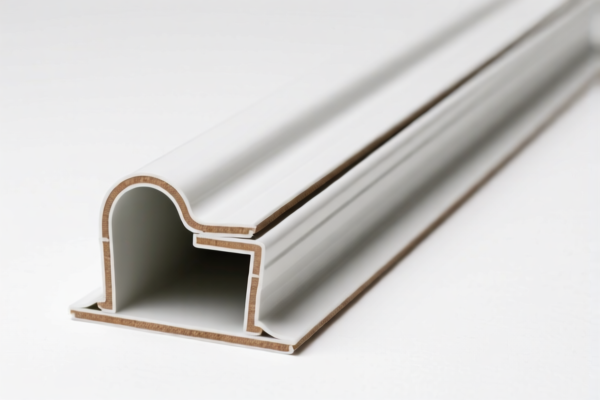
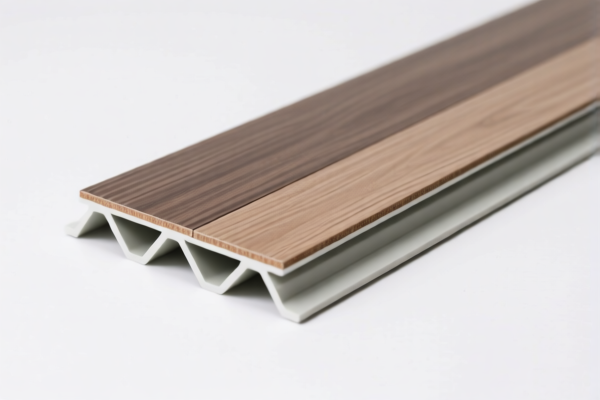
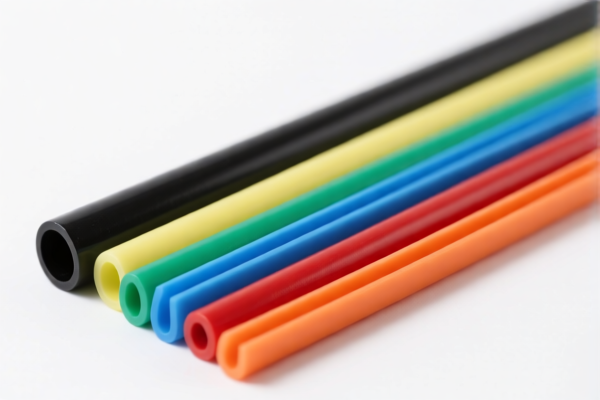

AI Analysis
🧱 PVC Plastic Strip Board: The Ultimate HS Code & Tariff Guide (2026 Edition)
🌐 HS Code Classification & Customs Clearance Guide | 2026 Latest Tariff Analysis | Strategic Import Strategy
📌 Part 1: Product Definition & Classification – Do You Really Understand "PVC Strip/Board"?
PVC (Polyvinyl Chloride) plastic products are ubiquitous in construction, advertising, packaging, and industrial applications. However, "PVC Strip Board" is a broad term that covers multiple distinct product forms. In international trade, precise classification depends on material composition, physical form (strip, sheet, board), function (adhesive, structural, packaging), and processing status.
Key Distinctions: * PVC Adhesive Strips (Self-Adhesive): Often classified under heading 3919. These are rolls or strips used for bonding, sealing, or decoration. * PVC Rigid Boards/Sheets: Classified under heading 3921. These are non-adhesive, rigid forms used for signage, construction, or packaging. * PVC Packaging Boards: Specifically designed for packaging applications, classified under heading 3923.
⚠️ Critical Classification Point:
- If the product is self-adhesive and in strip/flat shape → 3919.xxxx
- If the product is a rigid board/sheet (non-adhesive) for signs/boards → 3921.12.xx
- If the product is specifically for packaging → 3923.90.xx
- Misclassification Risk: Declaring a rigid PVC board as an adhesive strip (or vice versa) can lead to significant duty discrepancies and customs delays.
📦 Part 2: HS Code Classification Details (2026 Latest Tariff Alignment)
Based on the provided data, here are the exact HS Codes applicable to "PVC Plastic Strip Board" variants, along with their specific descriptions and tax implications.
| HS Code | Product Description & Summary | Applicable Scenario | Key Characteristics |
|---|---|---|---|
3921.12.50.00 |
PVC Advertising Strip/Board: Made of vinyl polymers (PVC), in strip or board form. Classified under "Other articles of vinyl polymers". | Signage, promotional displays, rigid advertising boards. | ✅ Non-adhesive, rigid, specific to advertising/boards. |
3919.10.20.55 |
PVC Self-Adhesive Flat Strip: Plastic material, flat strip shape. Classified under "Other self-adhesive plates, sheets, film, foil, tape, strip...". | Sealing tapes, decorative adhesive strips, double-sided PVC tapes. | ✅ Self-adhesive, flat, flexible strip. |
3919.90.50.60 |
PVC Self-Adhesive Strip (Other): Plastic material, strip shape. Classified under "Other self-adhesive plates, sheets, film, foil, tape, strip...". | General purpose adhesive PVC strips, non-flat or specialized adhesive strips. | ✅ Self-adhesive, general category. |
3921.12.19.50 |
PVC Strip (Other): Made of vinyl polymers, in strip form. Classified under "Other strips of vinyl polymers". | Rigid PVC strips for construction, trim, or industrial edging. | ✅ Non-adhesive, rigid strip, general use. |
3923.90.00.80 |
PVC Packaging Board: Plastic material, for packaging purposes. Classified under "Other packings, of plastics". | Protective packaging, plastic trays, rigid packaging boards. | ✅ Dedicated to packaging, not structural/advertising. |
🔍 Important Note:
- 3919 vs. 3921: The primary distinction is adhesiveness. 3919 covers self-adhesive products. 3921 covers other plates, sheets, film, foil, and strip (non-adhesive).
- 3923 vs. 3921: 3923 is strictly for packaging. If the PVC board is used to contain or protect goods, it goes to 3923. If it is a product itself (like a sign), it goes to 3921.
💰 Part 3: 2026 Tariff Rate Breakdown (Including Additional Duties & Policy Surcharges)
✅ Applicable Country: United States (US)
✅ Country of Origin: China (CN)
✅ Effective Date: November 10, 2025 (and subsequent imports)
🎯 1. 3921.12.50.00 —— PVC Advertising Strip/Board (Vinyl Polymer)
| Item | Detail |
|---|---|
| Base Tariff | 6.5% |
| Section 301 Additional Tariff | +25.0% |
| Section 122 Tariff | +10.0% |
| Total Tariff Rate | 41.5% |
| Tax Calculation | CIF Value × 41.5% |
| De Minimis Exemption | ❌ Not Eligible (deny_de_minimis) |
| Legal Basis Path | Base: 6.5% → Section 301: +25% → Section 122: +10% → Total: 41.5% |
📌 Explanation:
- Base (6.5%): Standard Most Favored Nation (MFN) rate for PVC articles.
- Section 301 (25%): Trump-era trade war tariff, still active for many Chinese plastic products.
- Section 122 (10%): Additional tariff under specific trade provisions (likely related to national security or specific bilateral agreements).
- Total 41.5% is a high-cost entry barrier. Accurate classification is crucial to avoid overpaying if an alternative HS code applies.
🎯 2. 3919.10.20.55 & 3919.90.50.60 —— PVC Self-Adhesive Strips
| Item | Detail |
|---|---|
| Base Tariff | 5.8% |
| Section 301 Additional Tariff | +25.0% |
| Section 122 Tariff | +10.0% |
| Total Tariff Rate | 40.8% |
| Tax Calculation | CIF Value × 40.8% |
| De Minimis Exemption | ❌ Not Eligible |
| Legal Basis Path | Base: 5.8% → Section 301: +25% → Section 122: +10% → Total: 40.8% |
📌 Explanation:
- Slightly lower base rate (5.8%) than advertising boards (6.5%), but the additional tariffs are identical.
- Total 40.8% applies to both sub-headings 3919.10.20.55 and 3919.90.50.60.
- These are commonly used in DIY, construction, and industrial assembly. Ensure the product is truly self-adhesive to qualify for this category.
🎯 3. 3921.12.19.50 —— PVC Strip (Other, Non-Adhesive)
| Item | Detail |
|---|---|
| Base Tariff | 5.3% |
| Section 301 Additional Tariff | +25.0% |
| Section 122 Tariff | +10.0% |
| Total Tariff Rate | 40.3% |
| Tax Calculation | CIF Value × 40.3% |
| De Minimis Exemption | ❌ Not Eligible |
| Legal Basis Path | Base: 5.3% → Section 301: +25% → Section 122: +10% → Total: 40.3% |
📌 Explanation:
- Lowest base rate (5.3%) among the PVC strip categories.
- Total 40.3% makes this the most cost-effective option for non-adhesive rigid PVC strips.
- Use this for construction edging, trim, or industrial strips that are not self-adhesive.
🎯 4. 3923.90.00.80 —— PVC Packaging Board
| Item | Detail |
|---|---|
| Base Tariff | 3.0% |
| Section 301 Additional Tariff | +25.0% |
| Section 122 Tariff | +10.0% |
| Total Tariff Rate | 38.0% |
| Tax Calculation | CIF Value × 38.0% |
| De Minimis Exemption | ❌ Not Eligible |
| Legal Basis Path | Base: 3.0% → Section 301: +25% → Section 122: +10% → Total: 38.0% |
📌 Explanation:
- Lowest total tariff (38.0%) of all categories.
- Only applies if the PVC board is exclusively for packaging.
- If the board is used as a structural component or advertising sign, do not use this code, as it will be flagged for misclassification.
🛠️ Part 4: Customs Clearance Practical Advice (Avoiding Pitfalls)
✅ 1. Required Documentation Checklist
| Document | Required? | Purpose |
|---|---|---|
| ✅ Product Specification Sheet | ✔️ | Defines material (PVC), form (strip/board), and use (adhesive/packaging/signage). |
| ✅ Commercial Invoice | ✔️ | Must clearly state: "PVC Strip/Board", HS Code, and Country of Origin (China). |
| ✅ Packing List | ✔️ | Shows quantity, weight, and dimensions. |
| ✅ Product Photos | ✔️ | Crucial: Must show if the product is self-adhesive (tape backing) or rigid (solid board). |
| ✅ Material Safety Data Sheet (MSDS) | ✔️ | For PVC products, to confirm chemical composition and safety. |
| ✅ Certificate of Origin (CO) | ✔️ | Proves Chinese origin, subject to additional tariffs. |
✅ 2. Declaration Tips (Key Mnemonics)
🔥 "Adhesive to 3919, Rigid to 3921, Pack to 3923. Don't mix, don't lie!"
| Scenario | Correct HS Code | Incorrect Code | Consequence |
|---|---|---|---|
| Self-Adhesive Tape/Strip | 3919.10.20.55 or 3919.90.50.60 |
3921.12.xx |
Underpaying base duty (5.8% vs 6.5% or 5.3%) → Penalty & Back Tax |
| Rigid Advertising Board | 3921.12.50.00 |
3919.10.xx |
Overpaying/Underpaying depending on scenario → Customs Examination |
| Rigid Construction Strip | 3921.12.19.50 |
3919.90.xx |
Misclassification → Delay & Seizure |
| PVC Packaging Tray/Board | 3923.90.00.80 |
3921.12.50.00 |
Using higher duty code unnecessarily → Overpayment |
✅ 3. Special Considerations
| Issue | Advice |
|---|---|
| "Strip Board" Ambiguity | If the product is a strip that is also a board (e.g., thick foam board), clarify its primary function. Is it for advertising (3921.12.50.00) or packaging (3923.90.00.80)? |
| Adhesive Type | If the PVC strip has a pressure-sensitive adhesive, it must go to 3919. If it has no adhesive, it goes to 3921. |
| Section 122 Tariff | This 10% surcharge is significant. Ensure all documentation is flawless to avoid delays, as these tariffs are strictly enforced. |
| De Minimis (Section 321) | Not Applicable: All these HS codes are subject to deny_de_minimis, meaning even small shipments are subject to full duties and formal entry requirements. |
🌍 Part 5: Global Market Comparison (2026)
| Market | Recommended HS Code | Total Duty (China Origin) | Key Requirements |
|---|---|---|---|
| 🇺🇸 USA | 3921.12.50.00 / 3919.10.20.55 / etc. |
38.0% – 41.5% | Form Entry, Section 301 & 122 duties apply. |
| 🇨🇳 China | 3921.12.50.00 / 3919.10.20.55 |
5.3% – 6.5% | No additional Section 301/122 duties. |
| 🇪🇺 EU | 3921.12.50.00 / 3919.10.20.55 |
6.5% – 6.7% | No Section 301/122. VAT applies. |
| 🇦🇺 Australia | 3921.12.50.00 / 3919.10.20.55 |
5.0% – 5.5% | No Section 301/122. GST applies. |
📌 Conclusion:
- The USA is the highest-cost market due to Section 301 and Section 122 tariffs.
- EU and Australia are significantly cheaper for PVC plastic products.
- China-origin goods face a 38-41.5% duty burden in the US, which must be factored into pricing strategies.
📌 Part 6: Common Mistakes & Pitfalls (Lessons Learned)
❌ Mistake 1: Declaring self-adhesive PVC tape as "PVC Strip" under 3921
👉 Result: Customs flags it as misclassification. Penalty + Back Taxes.
✅ Fix: Always declare self-adhesive products under 3919.
❌ Mistake 2: Using 3923 (Packaging) for non-packaging PVC boards
👉 Result: Customs rejects the declaration. Goods held at port.
✅ Fix: Only use 3923 if the product is designed solely for packaging.
❌ Mistake 3: Ignoring Section 122 Tariff
👉 Result: Underpayment of duties by 10%.
✅ Fix: Ensure all PVC plastic imports from China include the 10% Section 122 tariff in cost calculations.
❌ Mistake 4: Assuming De Minimis Applies
👉 Result: Small shipments (under $800) still face full duties and formal entry.
✅ Fix: Prepare for full formal entry regardless of shipment value.
🎯 Part 7: Conclusion – Precision Saves Money!
🎯 Remember the Golden Rules:
🔹 "Adhesive = 3919, Rigid = 3921, Pack = 3923."
🔹 "Total Duty = Base + 301 (25%) + 122 (10%)."
🔹 "De Minimis = No. Form Entry = Yes."
📌 Pro Tip:
If your PVC products are originating from Vietnam, Thailand, or Mexico, you may be eligible for lower or zero Section 301/122 tariffs. Consider supply chain diversification to reduce costs.
Request an Advance Ruling from US Customs (CBP) to confirm the correct HS Code for your specific product configuration.
📣 Action Item:
📞 Contact a licensed customs broker.
📸 Provide clear photos of the product (adhesive side, material thickness).
📄 Apply for HS Code Pre-Ruling to ensure accurate classification and avoid unexpected costs.
✨ Professional Customs Clearance Starts with Accurate Classification!
💼 Every cent saved on duties is pure profit!
Customer Reviews
About HS Code Classification
The Harmonized System (HS) is an internationally standardized nomenclature developed by the World Customs Organization (WCO) to classify traded products. Over 200 countries use the HS system as the basis for customs tariffs, trade statistics, and import/export regulations.
Each HS code follows a hierarchical structure:
- Chapter (2 digits) — Broad category of goods (e.g., Chapter 84: Machinery and Mechanical Appliances)
- Heading (4 digits) — More specific grouping within the chapter
- Subheading (6 digits) — Internationally standardized breakdown, used by all WCO member countries
- National subdivisions (8-10 digits) — Country-specific extensions for further classification, such as US HTSUS 10-digit codes
Correct HS code classification is essential for smooth customs clearance, accurate duty payment, and compliance with trade regulations. Misclassification can lead to customs delays, overpayment of duties, or penalties.
When importing from CN to US, the applicable tariff rates may include:
- Most-Favored-Nation (MFN) rate — The standard duty rate applied to WTO members
- General rate — Applied to countries without trade agreements
- Trade remedy duties — Additional tariffs such as Section 301 (anti-dumping), Section 232 (national security), or countervailing duties
The information provided on this page is for reference purposes only. For official classification, please consult with your local customs authority or a licensed customs broker.