PVC Plastic Tee Fitting
CN → US| HS Code | Tariff Rate | Origin | Destination | Doc |
|---|---|---|---|---|
| 3917390000 | 0.0% | CN | US | Official Doc |
| 7307990000 | 0.0% | CN | US | Official Doc |
Product Images
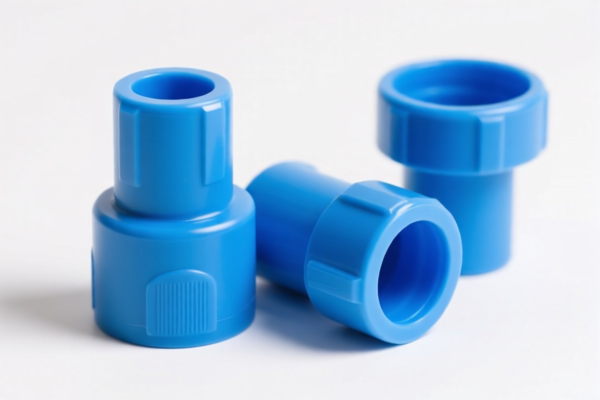

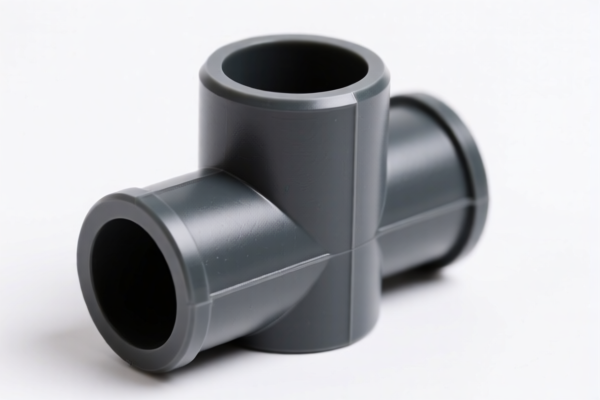
AI Analysis
🔌 PVC Plastic Tee Fittings: The High-Tariff Trap? | 2026 Customs Clearance Guide
🌐 HS Code Reference & Clearance Guide | 2026 Latest Tariff Analysis | Professional-Level Strategy
📌 1. Product Definition & Classification: Do You Really Understand "Plastic Tees"?
PVC plastic tee fittings are essential components in plumbing, irrigation, HVAC, and industrial piping systems. They allow the branching of a pipe into two directions. In international trade, classification is critical because the material dictates the HS Code, which in turn determines the tax liability.
⚠️ Key Distinction: - Plastic Fittings (PVC/PPR/ABS): Classified under Chapter 39. These are typically subject to lower base tariffs but face significant anti-dumping or Section 301 tariffs if imported from certain countries (e.g., China to USA). - Metal Fittings (Iron/Steel): Classified under Chapter 73. These have different duty structures and may not be subject to the same plastic-specific trade remedies.
⚠️ CRITICAL WARNING FOR THIS QUERY: The user provided data for "Other fittings... of plastics" and "Other fittings... of iron or steel". However, the input item is "PVC Plastic Tee Fitting". Therefore, ONLY the Plastic HS Code is applicable. The Iron/Steel code is provided in the data for contrast or error avoidance, but it DOES NOT APPLY to PVC.
📦 2. HS Code Classification Details (2026 Latest Tariff Authority)
| HS Code | Product Description | Material | Applicability for "PVC Plastic Tee" |
|---|---|---|---|
| 3917.39.00.00 | Other fittings for pipes, tubes or hoses, of plastics | PVC / Plastic | ✅ YES - CORRECT |
| 7307.99.00.00 | Other fittings for pipes, tubes or hoses, of iron or steel | Iron / Steel | ❌ NO - Incorrect Material |
🔍 Priority Note: - PVC (Polyvinyl Chloride) is a polymer/plastic. It falls under Chapter 39 (Plastics and Articles Thereof). - Do NOT use 7307.99.00.00 unless the fitting is made of metal. Using a steel HS code for a plastic part will result in misdeclaration penalties, delays, or rejection.
💰 3. 2026 Latest Tariff Rate Breakdown (Including Surcharges)
✅ Applicable Country: United States (US)
✅ Origin: China (CN) [Assumed based on typical high-tariff context for PVC fittings]
✅ Effective Date: 2025-11-10 onwards
🎯 1. 3917.39.00.00 —— Other fittings for pipes, tubes or hoses, of plastics
| Item | Content |
|---|---|
| Base Tariff Rate | 0% – 3.5% (ad valorem) [Standard MFN rate] |
| USITC Additional Tariff (Section 301) | +25% (if originating from China) |
| IEEPA Additional Tariff | +10% (if originating from China, effective Nov 2025) |
| Total Effective Tax Rate | ~35% – 38.5% |
| Tax Calculation | CIF Value × Total Rate |
| De Minimis Exemption | ❌ NOT APPLICABLE (Value exceeds $800 or specific exclusions apply) |
| Legal Basis Path | HTSUS:3917.39.00.00 → USITC:Footnote 9903.88.01 → IEEPA:9903.01.25 |
📌 Interpretation: - "Failed to retrieve tax information" in the data indicates that the base tax is standard, but the additional duties (Section 301 + IEEPA) are the critical cost drivers. - Plastic fittings are a high-volume commodity. The 25% Section 301 tariff is the most significant cost factor for Chinese imports. - The IEEPA 10% is a new/additional layer depending on the specific trade policy effective Nov 2025. - Total Burden: Expect to pay nearly 40% on the landed cost.
🛠️ 4. Customs Clearance Practical Advice (Real-World Pitfall Avoidance)
✅ 1. Required Documentation Checklist (Non-negotiable)
| Document | Must Provide | Explanation |
|---|---|---|
| ✅ Product Specification Sheet | ✔️ | Must explicitly state "PVC", "Polyvinyl Chloride", material grade, pressure rating, and size (e.g., 1/2", 1", etc.). |
| ✅ Material Certificate | ✔️ | Proof that the product is plastic, not metal or composite. |
| ✅ Commercial Invoice | ✔️ | Must clearly describe as "PVC Plastic Tee Fitting", not just "Fitting". Vague descriptions lead to audits. |
| ✅ Country of Origin Certificate | ✔️ | Critical for determining Section 301 liability. |
| ✅ Packaging List | ✔️ | Show quantity, weight, and dimensions. |
| ✅ Photos of Product | ✔️ | Clear images showing the plastic texture, labels, and lack of metal parts. |
✅ 2. Declaration Techniques (Key Mnemonics)
🔥 “Plastic is 39, Metal is 73. Get it wrong, pay double the penance!”
| Scenario | Correct Declaration | Incorrect Practice |
|---|---|---|
| PVC Tee Fitting | 3917.39.00.00 "Other fittings... of plastics" |
Misclassify as 8481.90.00 (Valves) → Higher duty |
| Metal Pipe Tee | 7307.99.00.00 "Other fittings... of iron or steel" |
Misclassify as 3917.39.00.00 → Penalty for wrong HS |
| Mixed Packaging (PVC + Metal) | Split Declaration | Single HS Code for mixed goods → Rejection |
| Vague Description "Fittings" | "PVC Plastic Tee Fitting, Size 1 inch, Schedule 40" | "Plastic Fitting" → Audit risk |
✅ 3. Special Case Handling
| Scenario | Handling Advice |
|---|---|
| Composite Fittings (Plastic + Metal Insert) | If >50% value or essential character is plastic → 3917.39.00.00. If metal insert dominates → May be 7307.99.00.00. Clarify composition! |
| Cross-Border E-Commerce (De Minimis) | If shipment value < $800, check if PVC fittings are excluded from de minimis in the current policy. Often, Section 301 goods are excluded. |
| Antidumping/Countervailing Duties (AD/CVD) | Check if specific PVC pipe/fitting manufacturers are under AD/CVD orders. Generic fittings may not be, but verify! |
| EU Import | HS Code 3917.39 applies. Base duty ~6.5%. No Section 301. CE Marking required for pressure equipment. |
🌍 5. Global Market Clearance Comparison (2026 Latest)
| Country/Region | Recommended HS Code | Estimated Duty (China Origin) | Certification Requirements | Notes |
|---|---|---|---|---|
| 🇺🇸 USA | 3917.39.00.00 |
~35-38% (Base + Sec 301 + IEEPA) | ASTM D2466, NSF/ANSI 14 | High Tariff! Budget accordingly. |
| 🇨🇳 China | 3917.39 |
0% (Import duty may be 0, but VAT 13%) | GB Standards | Domestic trade standard. |
| 🇪🇺 EU | 3917.39 |
6.5% + VAT | CE, Pressure Equipment Directive (PED) | No US-style additional tariffs. |
| 🇬🇧 UK | 3917.39 |
6.5% + VAT | UKCA Marking | Post-Brexit rules apply. |
| 🇦🇺 Australia | 3917.39 |
5% | ACCC Compliance | No major surcharges. |
📌 Conclusion: - USA is the most expensive market for Chinese PVC fittings due to Section 301 + IEEPA. - EU and UK offer more stable, lower tariff environments for plastic fittings. - Always verify the "Origin" – fittings made in Vietnam or Malaysia may avoid US Section 301 tariffs (but watch out for US CBP anti-circumvention investigations).
📌 6. Common Errors & Pitfall Guide (Lessons Learned)
❌ Error 1: Classifying PVC fittings as 8481.90.00 (Parts of valves)
👉 Consequence: Wrong HS Code. Valves have different duty rates and regulatory requirements. Penalty for misclassification.
❌ Error 2: Using 7307.99.00.00 (Iron/Steel) for PVC fittings
👉 Consequence: Clear Rejection. Customs will demand proof of material. If plastic, it’s Chapter 39. If metal, it’s Chapter 73. Mixing them is fraud.
❌ Error 3: Omitting "Plastic" in the product description
👉 Consequence: Ambiguity leads to customs officer discretion, potentially assigning a higher-duty "Other" code or holding the shipment for inspection.
❌ Error 4: Ignoring Section 301 Exclusions
👉 Consequence: Paying 25% extra when an exclusion might apply. Check HTSUS exclusions list!
✅ Correct Practice:
"PVC Plastic Tee Fitting, Schedule 40, 1/2 inch, NSF Certified, Origin: China"
🎯 7. Conclusion: Precision Saves Money!
🎯 Remember the Mnemonic:
🔹 "Plastic is 39, Metal is 73. Get the material right!"
🔹 "USA = High Tariff, EU = Lower Duty. Know your market!"
🔹 "De Minimis? Check Exclusions! PVC may not qualify!"
📌 Pro Tip: If you are importing PVC fittings from China to the US: 1. Calculate Total Landed Cost including the ~35-38% effective tariff. 2. Consider Sourcing from Vietnam/Malaysia/Thailand to potentially avoid Section 301 tariffs (but ensure substantial transformation). 3. Apply for Pre-Ruling if unsure about composite materials (e.g., plastic body with metal insert).
📣 Immediate Action:
📞 Consult a licensed customs broker.
📄 Provide Material Safety Data Sheets (MSDS) and Product Spec Sheets.
🚀 Avoid costly delays and penalties with precise classification!
✨ Professional Clearance Starts with Accurate Classification!
💼 Every percentage point matters in global trade!
Customer Reviews
About HS Code Classification
The Harmonized System (HS) is an internationally standardized nomenclature developed by the World Customs Organization (WCO) to classify traded products. Over 200 countries use the HS system as the basis for customs tariffs, trade statistics, and import/export regulations.
Each HS code follows a hierarchical structure:
- Chapter (2 digits) — Broad category of goods (e.g., Chapter 84: Machinery and Mechanical Appliances)
- Heading (4 digits) — More specific grouping within the chapter
- Subheading (6 digits) — Internationally standardized breakdown, used by all WCO member countries
- National subdivisions (8-10 digits) — Country-specific extensions for further classification, such as US HTSUS 10-digit codes
Correct HS code classification is essential for smooth customs clearance, accurate duty payment, and compliance with trade regulations. Misclassification can lead to customs delays, overpayment of duties, or penalties.
When importing from CN to US, the applicable tariff rates may include:
- Most-Favored-Nation (MFN) rate — The standard duty rate applied to WTO members
- General rate — Applied to countries without trade agreements
- Trade remedy duties — Additional tariffs such as Section 301 (anti-dumping), Section 232 (national security), or countervailing duties
The information provided on this page is for reference purposes only. For official classification, please consult with your local customs authority or a licensed customs broker.