PVC Plasticized Conductive Sheet
CN → US| HS Code | Tariff Rate | Origin | Destination | Doc |
|---|---|---|---|---|
| 9033003000 | 35.0% | CN | US | Official Doc |
| 9033009000 | 39.4% | CN | US | Official Doc |
| 8547200000 | 35.0% | CN | US | Official Doc |
| 8547900010 | 89.6% | CN | US | Official Doc |
| 3921121950 | 40.3% | CN | US | Official Doc |
| 3921125000 | 41.5% | CN | US | Official Doc |
Product Images
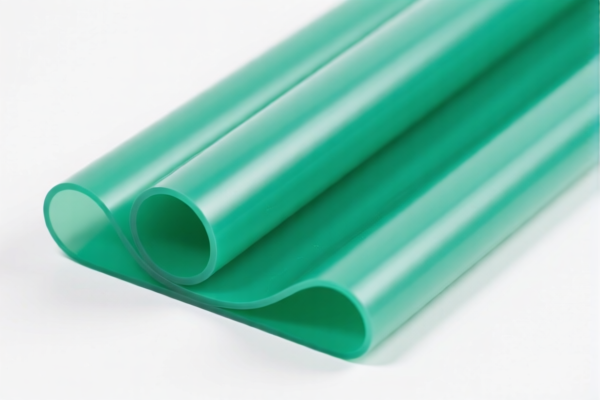
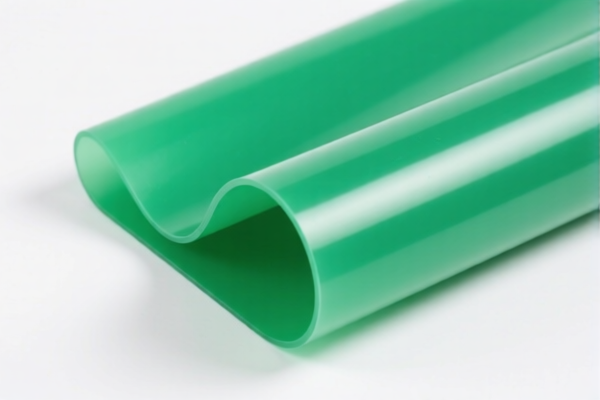
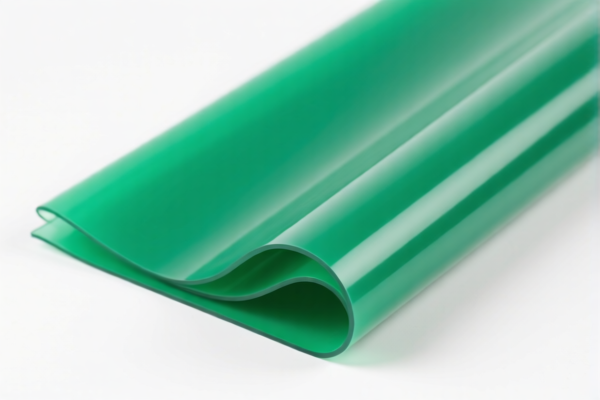
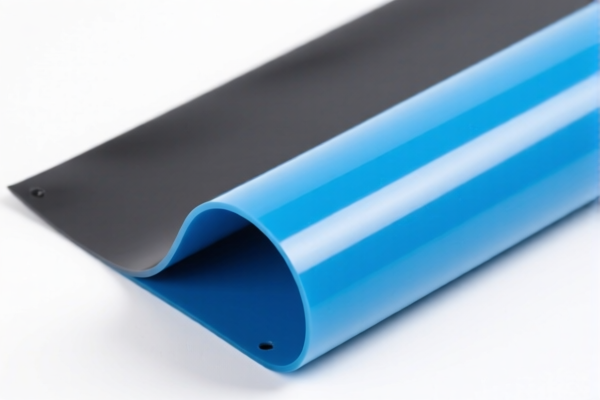
AI Analysis
⚡ PVC Plasticized Conductive Sheet: The "Stealth" Tariff Trap!
🌐 HS Code Reference & Customs Clearance Guide | 2026 Latest Tariff Analysis | Strategic Clearance Strategy for Plastics & Electrical Parts
📌 Part 1: Product Definition & Classification – What exactly is a "Conductive PVC Sheet"?
PVC Plasticized Conductive Sheet (often used for ESD flooring, anti-static mats, or conductive liners) is a composite material. It is not a simple plastic plate. Its classification depends entirely on structure and composition.
In international trade, this product falls into two very different categories based on its physical form: 1. Cellular PVC Sheets: If the material has a foamed structure (often used for insulation or lightweight lining). 2. Non-Cellular/Flexible Fittings: If it is used as an insulating or protective fitting for electrical equipment (e.g., conduit liners, insulating gaskets).
⚠️ Critical Distinction Point:
- If the sheet is foamed/cellular and made of Polyvinyl Chloride (PVC) → It belongs to HS 3921.12 (Cellular PVC).
- If the sheet is used as an insulating fitting or joint for electrical conduit (even if lined with plastic) → It belongs to HS 8547 (Insulating fittings).
- ⚠️ Misclassification Risk: Calling it "conductive" does not automatically move it to electrical chapters (85). If it is primarily a plastic sheet, it stays in Chapter 39. If it is a fitting, it goes to Chapter 85.
📦 Part 2: HS Code Classification Details (2026 Latest Tariff Authority Comparison)
| HS Code | Product Description | Applicable Scenario | Key Feature |
|---|---|---|---|
3921.12.19.50 |
Cellular PVC sheets, combined with textile materials (Other) | Anti-static mats with fabric backing, foamed PVC with textile layer | ✅ Foamed + Textile Composite |
3921.12.50.00 |
Other cellular PVC sheets (not combined with textiles) | Pure foamed PVC sheets, ESD foam liners | ✅ Foamed, No Textile |
8547.20.00.00 |
Insulating fittings of plastics (for electrical equipment) | Plastic-lined conduit tubing, insulating joints for electrical machines | ✅ Fitting/Component |
8547.90.00.10 |
Other insulating fittings (Steel/Aluminum/Copper lined) | Metallic base fittings lined with insulating plastic | ✅ Metal Base + Plastic Liner |
🔍 Key Reminder:
- "Conductive" vs. "Insulating": While the product is "conductive," customs often classify PVC sheets under Chapter 39 unless they are explicitly defined as fittings for electrical apparatus (Chapter 85).
- If the sheet is part of a larger electrical assembly (like a conduit joint), use 8547. If it is a standalone sheet/plate, use 3921.
- Do not classify a simple sheet as "Parts of Machines" (9033) unless it is a specific accessory like a touch screen digitizer (which this is not).
💰 Part 3: 2026 Latest Tariff Rate Breakdown (Including Surcharges & Policy Add-ons)
✅ Applicable Country: USA (US)
✅ Origin: China (CN)
✅ Effective Date: Post-November 2025 (Current Trade War Context)
🎯 1. 3921.12.19.50 – Cellular PVC, Combined with Textile (Other)
| Item | Content |
|---|---|
| Base Tariff | 5.3% (Ad Valorem) |
| Section 301 Surcharge | +25.0% (China-specific) |
| Total Tariff | 30.3% |
| Tax Calculation | CIF Value × 30.3% |
| De Minimis Exemption | ❌ Not Eligible (Section 301 applies to all values) |
| Legal Basis | USITC:3921.12.19.50 → Footnote 9903.06.01 (Plastics) |
📌 Explanation:
- Cellular PVC products are heavily scrutinized. The 5.3% base rate is moderate, but the 25% Section 301 surcharge is fixed for Chinese-origin goods.
- Total Cost Impact: High. A $10,000 shipment incurs $3,030 in duties alone.
🎯 2. 3921.12.50.00 – Other Cellular PVC (No Textile)
| Item | Content |
|---|---|
| Base Tariff | 6.5% (Ad Valorem) |
| Section 301 Surcharge | +25.0% (China-specific) |
| Total Tariff | 31.5% |
| Tax Calculation | CIF Value × 31.5% |
| De Minimis Exemption | ❌ Not Eligible |
| Legal Basis | USITC:3921.12.50.00 → Footnote 9903.06.01 (Plastics) |
📌 Note:
- Even without textiles, the surcharge remains 25%.
- The base rate is slightly higher (6.5% vs 5.3%) for non-textile cellular PVC.
🎯 3. 8547.20.00.00 – Insulating Fittings of Plastics (Electrical)
| Item | Content |
|---|---|
| Base Tariff | 0.0% (Ad Valorem) |
| Section 301 Surcharge | +25.0% (China-specific) |
| Total Tariff | 25.0% |
| Tax Calculation | CIF Value × 25.0% |
| De Minimis Exemption | ❌ Not Eligible |
| Legal Basis | USITC:8547.20.00.00 → Footnote 9903.99.00 (Electrical Parts) |
📌 Explanation:
- Lower Base Rate: If your product qualifies as an "insulating fitting" (e.g., a plastic-lined conduit joint), the base duty is 0%.
- Surcharge Still Applies: Despite the 0% base, the 25% Section 301 surcharge still applies to Chinese goods.
- Total Cost Impact: Moderate. A $10,000 shipment incurs $2,500 in duties.
🎯 4. 8547.90.00.10 – Other Insulating Fittings (Metal Lined)
| Item | Content |
|---|---|
| Base Tariff | 0.0% |
| Surcharge | +50.0% (Special Rate for Steel/Aluminum/Copper Products from China) |
| Total Tariff | 50.0% |
| Tax Calculation | CIF Value × 50.0% |
| De Minimis Exemption | ❌ Not Eligible |
| Legal Basis | USITC:8547.90.00.10 → Footnote 9903.88.02 (Metal Lined) |
📌 Warning:
- This code applies only if the product is a fitting made of base metal (steel, aluminum, copper) that is lined with insulating material.
- Do not use this for pure plastic sheets.
- 50% Total Tariff is extremely high. Avoid misclassification here unless your product is literally a metal pipe with a plastic inner coating.
🛠️ Part 4: Customs Clearance Operational Advice (Practical Pitfall Avoidance Guide)
✅ 1. Required Documentation Checklist (None Can Be Missed)
| Document | Mandatory? | Explanation |
|---|---|---|
| ✅ Product Specification Sheet | ✔️ | Must detail: Material (PVC), Structure (Cellular/Non-cellular), Additives (Conductive Carbon?), Layer Composition. |
| ✅ Composition Diagram | ✔️ | Show if there is a textile layer. Critical for distinguishing between 3921.12.19.50 and 3921.12.50.00. |
| ✅ Product Photos (Clear) | ✔️ | Show cross-section if cellular. Show labels if used as electrical fittings. |
| ✅ Commercial Invoice | ✔️ | Must clearly state "PVC Conductive Sheet" or "Insulating Fitting," not vague terms like "Plastic Roll." |
| ✅ Country of Origin Certificate | ✔️ | Essential for determining Section 301 applicability. |
| ✅ Bill of Lading | ✔️ | Ensure packaging matches description (e.g., "Rolls of PVC" vs. "Fittings"). |
✅ 2. Declaration Strategy (Key Mantra)
🔥 "Structure Defines Code, Origin Dictates Surcharge!"
| Scenario | Correct Declaration | Wrong Declaration | Consequence |
|---|---|---|---|
| Foamed PVC with Fabric Backing | 3921.12.19.50 |
"PVC Sheet" (Vague) | Possible 31.5% or higher if misclassified as non-textile |
| Pure Foamed PVC Sheet | 3921.12.50.00 |
"Conductive Mat" | May be flagged for chemical analysis; stick to structural description |
| Plastic-lined Conduit Joint | 8547.20.00.00 |
"PVC Pipe Fitting" | If it's a fitting, 25% is better than 30.3%! |
| Metal Pipe with Plastic Liner | 8547.90.00.10 |
"Plastic Hose" | 50% Tariff! Only use if genuinely metal-based. |
✅ 3. Special Situation Handling
| Situation | Handling Advice |
|---|---|
| OEM Custom Colors/Conductivity | Provide lab test reports proving conductivity (ohm/sq) to avoid classification as standard PVC. |
| Rolls vs. Cut Sheets | Ensure invoice matches physical shipment. If rolls, declare as "sheets/film." If cut, declare as "plates." |
| Mixed Containers | If container has both cellular and non-cellular PVC, split HS Codes. Mixing leads to audits and penalties. |
| Intended Use: ESD Flooring | Declare as 3921.12 (Plastic Sheet), not "Flooring" (which may have different codes). Focus on material composition. |
🌍 Part 5: Global Market Comparison (2026 Latest)
| Country/Region | Recommended HS Code | Tariff Rate | Certification | Remarks |
|---|---|---|---|---|
| 🇺🇸 USA | 3921.12.19.50 or 3921.12.50.00 |
30.3% - 31.5% | None Specific | Section 301 applies! |
| 🇨🇳 China | 3921.12.50.00 |
5.0% | RoHS (Optional) | Low entry barrier |
| 🇪🇺 EU | 3921.12.00.00 |
0% (Most FTA) | REACH + RoHS | High regulatory compliance cost |
| 🇬🇧 UK | 3921.12.00.00 |
0% (Post-Brexit FTA) | UKCA | Check if FTA applies |
| 🇯🇵 Japan | 3921.12.00.00 |
0% | JIS | No surcharge |
📌 Conclusion:
- USA is the most expensive market due to the 25% Section 301 surcharge.
- EU/UK/Japan have 0% base tariffs but strict chemical compliance (REACH/JIS).
- Profit Margin Alert: For US imports, the 30%+ duty can wipe out margins. Consider supply chain diversification (e.g., Vietnam/Thailand PVC) if possible.
📌 Part 6: Common Errors & Pitfall Guide (Lessons Learned)
❌ Error 1: Declaring "Conductive PVC" as "Electrical Parts" (Chapter 85) without it being a fitting.
👉 Consequence: Customs rejects, demands correct Chapter 39 code, delays clearance by 2 weeks.
❌ Error 2: Ignoring the "Textile Composite" aspect.
👉 Consequence: If the sheet has a fabric backing, declaring it as 3921.12.50.00 (No Textile) can lead to an audited re-classification and potential penalties.
❌ Error 3: Assuming "Plastic" means "Insulating."
👉 Consequence: If the product is conductive, it may still be classified as plastic, but the description must reflect conductivity to avoid fraud claims. However, conductivity does not change the HS code for sheets (still 3921).
❌ Error 4: Mixing Cellular and Non-Cellular PVC in one invoice.
👉 Consequence: Customs will split the shipment, assess different rates, and possibly impose fines for inaccurate declaration.
✅ Correct Practice:
"PVC Conductive Foam Sheet, 2mm Thick, Carbon-Black Added, 100% PVC, No Textile Backing, Roll Form"
→ Use3921.12.50.00"PVC Conductive Mat with Cotton Backing"
→ Use3921.12.19.50
🎯 Part 7: Conclusion – Precision Saves Money!
🎯 Remember the Mantra:
🔹 "Cellular PVC: Check for Textile (5.3% or 6.5% + 25%)."
🔹 "Fitting? Use 8547 (0% + 25%)."
🔹 "Metal Liner? 50% Tariff Avoid!"
🔹 "USA Imports: Budget for 30% Duty!"
📌 Pro Tip:
If your product is not cellular and not a fitting, check 3921.10 (Non-cellular PVC) which may have different rates, but ensure it doesn't match the cellular descriptions above. For conductive sheets, always provide conductivity test reports to justify the product nature, even if it doesn't change the HS code.
📣 Immediate Action:
📞 Verify material composition (Foam? Textile? Metal?) → Select HS Code → Calculate 30.3% (US Cost) → Plan Budget.
🚀 Accurate Classification = Smooth Customs = Profit Protection!
✨ Professional Clearance Starts with Correct Classification!
💼 Every Percent of Tariff is a Percent of Profit Lost!
Customer Reviews
About HS Code Classification
The Harmonized System (HS) is an internationally standardized nomenclature developed by the World Customs Organization (WCO) to classify traded products. Over 200 countries use the HS system as the basis for customs tariffs, trade statistics, and import/export regulations.
Each HS code follows a hierarchical structure:
- Chapter (2 digits) — Broad category of goods (e.g., Chapter 84: Machinery and Mechanical Appliances)
- Heading (4 digits) — More specific grouping within the chapter
- Subheading (6 digits) — Internationally standardized breakdown, used by all WCO member countries
- National subdivisions (8-10 digits) — Country-specific extensions for further classification, such as US HTSUS 10-digit codes
Correct HS code classification is essential for smooth customs clearance, accurate duty payment, and compliance with trade regulations. Misclassification can lead to customs delays, overpayment of duties, or penalties.
When importing from CN to US, the applicable tariff rates may include:
- Most-Favored-Nation (MFN) rate — The standard duty rate applied to WTO members
- General rate — Applied to countries without trade agreements
- Trade remedy duties — Additional tariffs such as Section 301 (anti-dumping), Section 232 (national security), or countervailing duties
The information provided on this page is for reference purposes only. For official classification, please consult with your local customs authority or a licensed customs broker.