PVC Plasticized Flame Retardant Film Material
CN → US| HS Code | Tariff Rate | Origin | Destination | Doc |
|---|---|---|---|---|
| 3904220000 | 41.5% | CN | US | Official Doc |
| 3904210000 | 41.5% | CN | US | Official Doc |
| 3926909987 | 22.8% | CN | US | Official Doc |
| 3926305000 | 22.8% | CN | US | Official Doc |
| 3904220000 | 41.5% | CN | US | Official Doc |
Product Images
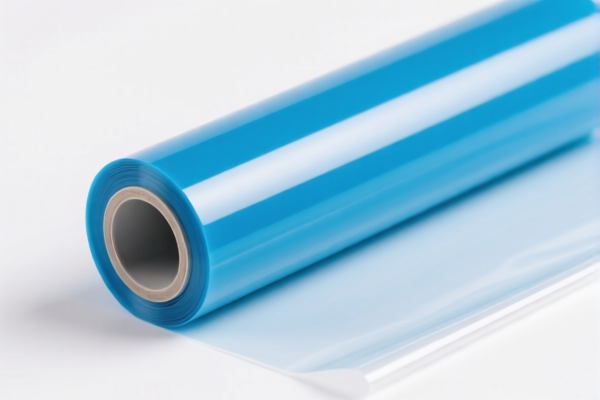
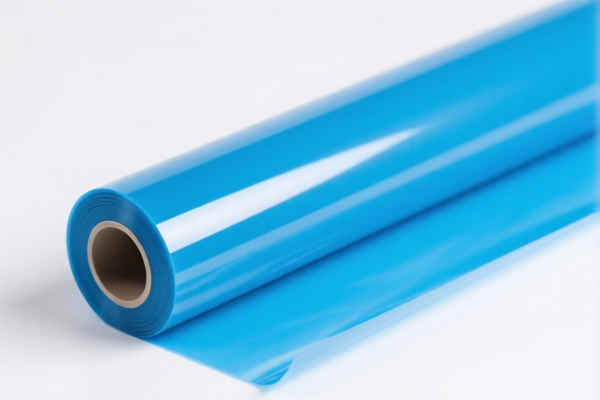
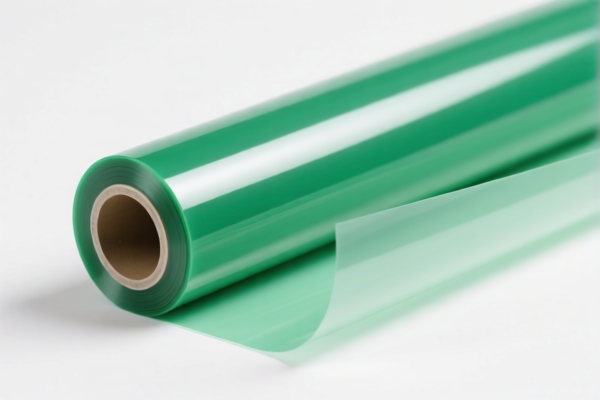
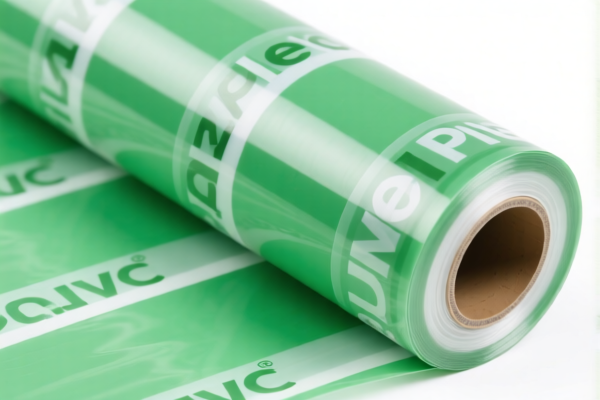
AI Analysis
🧪 PVC Plasticized Flame Retardant Film Material
🌐 HS Code Reference & Customs Clearance Guide | 2026 Latest Tariff Analysis | Professional-Level Clearance Strategy
📌 I. Product Definition & Classification: What Exactly Is This?
PVC (Polyvinyl Chloride) plasticized flame retardant film materials are versatile plastic products widely used in packaging, electrical insulation, construction, and consumer goods. In international trade, they are strictly categorized based on their physical state (raw material vs. processed product) and functional properties.
Key Distinction:
- Raw/Primary Form (Resin/Compound): PVC powder, pellets, or unprocessed compounds before final shaping. → Heading 3904
- Processed Articles (Profiles/Extrusions): PVC products that have been extruded, molded, or formed into specific shapes (like profiles or films ready for cutting). → Heading 3926
⚠️ Critical Differentiator:
- If the product is "primary form" (pellets, powder, raw compound) → Classify under 3904.22.00.00 or 3904.21.00.00.
- If the product is a "processed article" (profiles, extruded shapes, specific film rolls that are considered finished articles in some contexts) → Classify under 3926.90.99.87 or 3926.30.50.00.
- Note: While "film" often implies a sheet, customs often classifies rigid or semi-rigid PVC profiles/extrusions under 3926. If the "film" is flexible and cut to size, it may still fall under 3926 as an "other article." However, based on the provided data, we focus on the explicit HS codes listed.
📦 II. HS Code Classification Details (2026 Latest Tariff Authority Reference)
| HS Code | Product Description | Application Scenario | State | Contains Flame Retardant? |
|---|---|---|---|---|
3904.22.00.00 |
PVC plasticized resin, primary form, halogenated (flame retardant) | Raw PVC compound pellets, powders for manufacturing | Primary Form | ✅ Yes (Halogenated) |
3904.21.00.00 |
PVC plasticized resin, primary form, other (non-halogenated or unspecified) | Raw PVC pellets, generic plasticized PVC compounds | Primary Form | ✅ Yes (Generic "Plasticized") |
3926.90.99.87 |
Other articles of plastics and articles of other materials | PVC profiles, cut films, molded parts, finished articles | Processed Article | ✅ Yes |
3926.30.50.00 |
Other articles of plastic | PVC profiles, extruded shapes, industrial components | Processed Article | ✅ Yes |
3904.22.00.00 |
PVC plasticized resin, primary form, halogenated | Duplicate for emphasis | Primary Form | ✅ Yes |
🔍 Key Reminder:
- Primary Forms (3904): These are raw materials used by manufacturers to make other products.
- Processed Articles (3926): These are finished or semi-finished goods ready for use or further minimal processing.
- Flame Retardancy: While the description mentions "flame retardant," the HS Code structure primarily looks at the material (PVC) and form (Primary vs. Article). The "halogenated" vs. "other" distinction in 3904.21/22 may relate to the type of plasticizer or additive, but the tax rate is uniform in the provided data.
💰 III. 2026 Latest Tariff Rate Breakdown (Including Additional Duties & Policy Surcharges)
✅ Applicable Country: USA (US)
✅ Country of Origin: China (CN)
✅ Effective Date: From November 10, 2025 (including subsequent imports)
🎯 1. 3904.22.00.00 & 3904.21.00.00 —— PVC Plasticized Resin (Primary Form)
| Item | Detail |
|---|---|
| Base Tariff | 6.5% (ad valorem) |
| Section 301 Surcharge | +25.0% (USITC Footnote for Chinese Goods) |
| IEEPA Surcharge | +10.0% (Section 122 Tariff for Chinese Goods, effective Nov 2025) |
| Total Effective Rate | 41.5% |
| Tax Calculation | CIF Value × 41.5% |
| De Minimis Eligibility | ❌ No (deny_de_minimis) |
| Legal Basis Path | IEEPA:122 → USITC:3904.22.00.00 → FOOTNOTE:Section301 |
📌 Explanation:
- "Base Tariff 6.5%": The standard Most Favored Nation (MFN) rate for PVC resins.
- "Section 301 Surcharge 25%": Imposed on Chinese goods under Trade Act of 1974, Section 301.
- "IEEPA Surcharge 10%": The newly added "Section 122 Tariff" targeting Chinese imports, effective from late 2025.
- Total 41.5%: This is a high tariff burden. Importers must account for this in pricing strategies.
🎯 2. 3926.90.99.87 & 3926.30.50.00 —— PVC Processed Articles (Profiles/Articles)
| Item | Detail |
|---|---|
| Base Tariff | 5.3% (ad valorem) |
| Section 301 Surcharge | +7.5% (USITC Footnote for Chinese Goods) |
| IEEPA Surcharge | +10.0% (Section 122 Tariff for Chinese Goods, effective Nov 2025) |
| Total Effective Rate | 22.8% |
| Tax Calculation | CIF Value × 22.8% |
| De Minimis Eligibility | ❌ No (deny_de_minimis) |
| Legal Basis Path | IEEPA:122 → USITC:3926.90.99.87 → FOOTNOTE:Section301 |
📌 Explanation:
- "Base Tariff 5.3%": Lower base rate for finished plastic articles compared to raw resin.
- "Section 301 Surcharge 7.5%": Lower than the 25% on primary forms, reflecting different risk assessments or trade policy nuances for certain processed goods.
- "IEEPA Surcharge 10%": Uniform 10% surcharge on Chinese goods under Section 122.
- Total 22.8%: Significantly lower than the 41.5% on raw resins.
- Strategic Note: If possible, classifying as a "processed article" (3926) rather than "raw resin" (3904) can save 18.7% in total tariffs. However, this must be strictly justified by the physical state of the goods.
🛠️ IV. Customs Clearance Practical Advice (Real-World Pitfall Avoidance Guide)
✅ 1. Required Documentation Checklist (None Can Be Missing)
| Document | Mandatory | Explanation |
|---|---|---|
| ✅ Product Specification Sheet | ✔️ | Must clearly state: PVC composition, plasticizer type, flame retardant additives, physical state (pellet/film/profile). |
| ✅ Material Safety Data Sheet (MSDS/SDS) | ✔️ | Proves flame retardant content and chemical composition. |
| ✅ Product Photos (Including Label) | ✔️ | Must show shape: Is it a pellet? A roll of film? A rigid profile? |
| ✅ Commercial Invoice | ✔️ | Must describe item as "PVC Flame Retardant Film/Profile" and specify HS Code. |
| ✅ Packing List | ✔️ | Details net/gross weight, dimensions. Crucial for determining "processed" vs. "raw." |
| ✅ Certificate of Origin (CO) | ✔️ | Must indicate China origin to confirm applicability of Section 301 and IEEPA tariffs. |
| ✅ Declaration of Non-Doubling | ✔️ | Confirm goods are not subject to anti-dumping duties (check specific PVC cases). |
✅ 2. Declaration Tactics (Key Mnemonics)
🔥 "State Determines Code, Code Determines Cost!"
| Scenario | Correct Declaration | Wrong Practice |
|---|---|---|
| Raw PVC Pellets/Powder | 3904.22.00.00 or 3904.21.00.00 |
Misdeclare as "Plastic Sheet" → 22.8% instead of 41.5%? Risk of Audit! |
| Finished PVC Profiles/Extrusions | 3926.90.99.87 or 3926.30.50.00 |
Misdeclare as "Resin" → 41.5% tariff unnecessarily |
| Flexible PVC Film Rolls | 3926.90.99.87 (if considered article) |
Misdeclare as "Resin" → 41.5% tariff unnecessarily |
| Mixed Shipments | Separate lines for raw vs. processed | Mixed declaration → Customs may reclassify entire shipment to highest rate |
✅ 3. Special Case Handling
| Scenario | Handling Advice |
|---|---|
| OEM Custom Films | Provide customer design specs to prove "processed article" status. |
| Flame Retardant Claims | Ensure MSDS matches description. Mislabeling can lead to safety recalls. |
| Small Sample Shipments | Still subject to 41.5% or 22.8% – no de minimis exemption for China-origin PVC. |
| Transshipment | Do not ship through third countries to hide Chinese origin – CBP tracks origin strictly. |
🌍 V. Global Market Customs Comparison (2026 Latest)
| Country/Region | Recommended HS Code | Tariff Rate | Certification Requirements | Notes |
|---|---|---|---|---|
| 🇺🇸 USA | 3904.22.00.00 or 3926.90.99.87 |
41.5% (Raw) / 22.8% (Article) | None specific for PVC, but MSDS required | High Tariffs |
| 🇨🇳 China | 3904.22.00.00 or 3926.90.99.87 |
5-6% | None for import | Low Base Tariff |
| 🇪🇺 EU | 3904.30 or 3926.90 |
6.5% | REACH Compliance Required | No Section 301 |
| 🇯🇵 Japan | 3904.21 or 3926.90 |
5-6% | JIS Standards | Moderate Tariff |
📌 Conclusion:
- USA imposes the highest combined tariffs (41.5% or 22.8%) due to Section 301 and IEEPA.
- EU and Japan have no additional punitive tariffs, but require strict chemical compliance (REACH in EU).
- Cost Optimization: If possible, design products as "processed articles" (3926) to benefit from the lower 22.8% rate, but ensure they meet the legal definition of an "article" and not a "raw material."
📌 VI. Common Errors & Pitfall Avoidance Guide (Lessons Learned the Hard Way)
❌ Error 1: Declaring "PVC Film" as "Raw Resin" (3904) to avoid processing checks.
👉 Consequence: Customs may reclassify based on physical evidence, but if caught, you face under-declaration penalties and potential fraud allegations. If the film is a finished product, it should be 3926, saving you 18.7%. Don't gamble.
❌ Error 2: Failing to declare "Flame Retardant" additives.
👉 Consequence: May trigger additional safety reviews under OSHA or CPSC regulations, causing customs delays.
❌ Error 3: Ignoring the IEEPA 10% Surcharge.
👉 Consequence: Your tariff calculation will be off by 10% on every shipment. Total tax is not just 25% or 6.5%!
❌ Error 4: Assuming "De Minimis" (Section 321) applies.
👉 Consequence: PVC from China is explicitly excluded from de minimis treatment. Even small samples must be formally declared and taxed.
✅ Correct Approach:
"PVC Flame Retardant Extruded Profile, Plasticized, Halogenated, For Industrial Use, Model XYZ, MSDS Attached"
🎯 VII. Conclusion: Precision in Classification Saves Money!
🎯 Remember the Mnemonic:
🔹 "Raw Pellets = 41.5%, Finished Profiles = 22.8%!"
🔹 "State is Key, Section 122 Adds 10%, Don't Forget It!"
🔹 "No De Minimis for China PVC, Declare Every Shipment!"
📌 Pro Tip:
If your PVC film is manufactured in Vietnam, Thailand, or Malaysia, you may be eligible for IEEPA Exemptions or lower Section 301 rates.
Recommend applying for a Pre-Ruling (CBP Ruling Letter) for complex PVC products to get legal certainty on classification.
📣 Immediate Action:
📞 Consult a licensed customs broker + Provide Product Photos + Apply for CBP Pre-Ruling
🚀 Let your PVC products clear smoothly, reduce costs, and boost profits!
✨ Professional Customs Clearance Starts with Accurate Classification!
💼 Every Dollar Saved on Tariffs is a Dollar Earned!
Customer Reviews
About HS Code Classification
The Harmonized System (HS) is an internationally standardized nomenclature developed by the World Customs Organization (WCO) to classify traded products. Over 200 countries use the HS system as the basis for customs tariffs, trade statistics, and import/export regulations.
Each HS code follows a hierarchical structure:
- Chapter (2 digits) — Broad category of goods (e.g., Chapter 84: Machinery and Mechanical Appliances)
- Heading (4 digits) — More specific grouping within the chapter
- Subheading (6 digits) — Internationally standardized breakdown, used by all WCO member countries
- National subdivisions (8-10 digits) — Country-specific extensions for further classification, such as US HTSUS 10-digit codes
Correct HS code classification is essential for smooth customs clearance, accurate duty payment, and compliance with trade regulations. Misclassification can lead to customs delays, overpayment of duties, or penalties.
When importing from CN to US, the applicable tariff rates may include:
- Most-Favored-Nation (MFN) rate — The standard duty rate applied to WTO members
- General rate — Applied to countries without trade agreements
- Trade remedy duties — Additional tariffs such as Section 301 (anti-dumping), Section 232 (national security), or countervailing duties
The information provided on this page is for reference purposes only. For official classification, please consult with your local customs authority or a licensed customs broker.