PVC Plasticized Sheet Conductive Material
CN → US| HS Code | Tariff Rate | Origin | Destination | Doc |
|---|---|---|---|---|
| 3921121950 | 40.3% | CN | US | Official Doc |
| 3921125000 | 41.5% | CN | US | Official Doc |
| 3915300000 | 35.0% | CN | US | Official Doc |
| 3915900090 | 35.0% | CN | US | Official Doc |
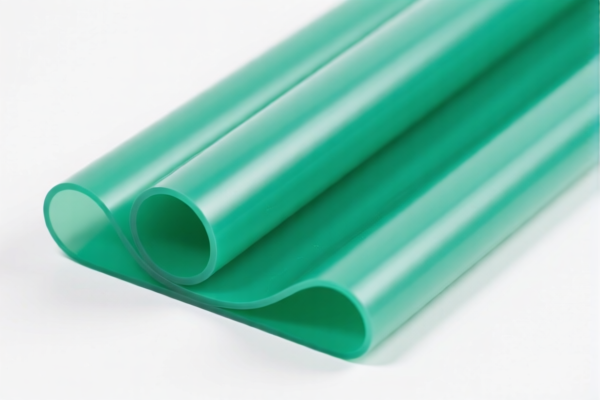
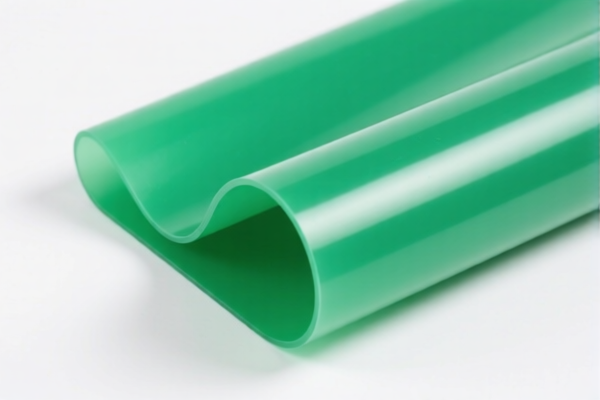
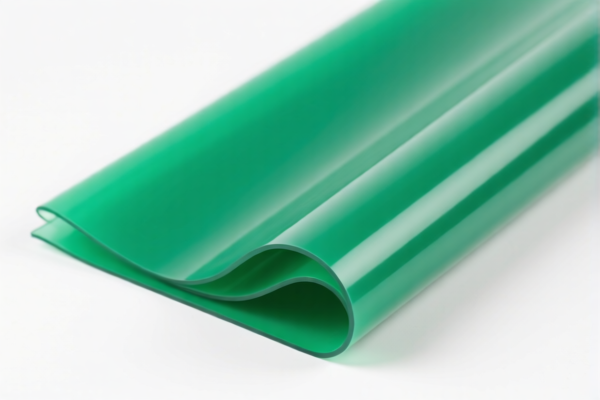
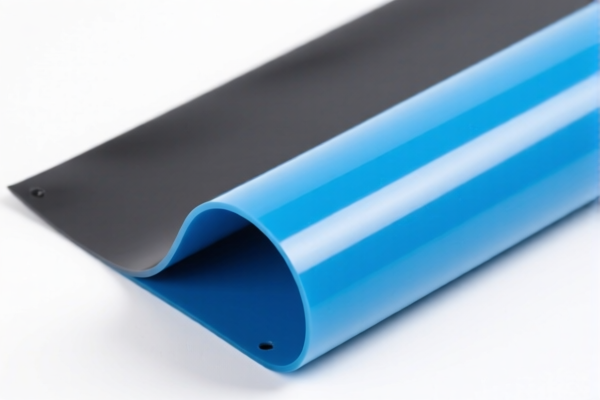
Product Images
AI Analysis
🧪 PVC Plasticized Conductive Sheets & Strips (Vinyl Chloride Polymers)
🌐 HS Code Reference & Customs Clearance Guide | 2026 Latest Tariff Analysis | Professional Compliance Strategy
📌 I. Product Definition & Classification: What is "PVC Plasticized Conductive Material"?
"Conductive PVC sheets" are specialized industrial materials made from polymers of vinyl chloride (PVC) that have been plasticized (softened with additives) to increase flexibility. The "conductive" property implies the addition of carbon black, metal fibers, or other conductive fillers to dissipate static electricity or prevent charge accumulation.
In international trade, these are not classified as electrical machinery or electronic components (Chapter 85), but as plastics articles (Chapter 39). However, the physical form (sheet vs. waste) and structure (cellular vs. solid) dictate the HS Code and, consequently, the tax burden.
⚠️ Critical Distinction:
- If the product is a finished sheet/film/strip ready for use (cutting, laminating, static protection) → It falls under 3921.
- If the product is recycled scrap, trimmings, or off-cuts → It falls under 3915.
- "Cellular" means foamed or expanded PVC (lightweight, porous); "Non-cellular" means solid, dense PVC.
- "Combined with textile materials" refers to PVC sheets laminated or bonded with fabric backing (common in conductive flooring or heavy-duty static mats).
📦 II. HS Code Classification Details (2026 Latest Tariff Authority Match)
Based on the provided data, here are the exact HS Codes and descriptions for PVC plasticized conductive materials:
| HS Code | Product Description | Applicable Scenario | Tax Detail |
|---|---|---|---|
3921.12.19.50 |
Other plates, sheets, film, foil and strip, of plastics: Cellular: Of polymers of vinyl chloride: Combined with textile materials: Other Other | Conductive PVC foam mats/laminates with fabric backing (non-standard combined forms) | 30.3% (Base: 5.3% + Additional: 25.0%) |
3921.12.50.00 |
Other plates, sheets, film, foil and strip, of plastics: Cellular: Of polymers of vinyl chloride: Other | Solid or non-cellular PVC sheets/rolls; Non-cellular conductive PVC films/strip (Most common for conductive workbenches/static mats) | 31.5% (Base: 6.5% + Additional: 25.0%) |
3915.30.00.00 |
Waste, parings and scrap, of plastics: Of polymers of vinyl chloride | PVC off-cuts, trimmings, recycling pellets from manufacturing conductive sheets | 25.0% (Base: 0.0% + Additional: 25.0%) |
3915.90.00.90 |
Waste, parings and scrap, of plastics: Of other plastics Other | Not applicable to PVC (Used only if misidentified as non-PVC plastic waste) | 25.0% (Base: 0.0% + Additional: 25.0%) |
🔍 Key Clarification:
-3921.12.50.00is the most likely classification for standard solid/non-cellular conductive PVC sheets or films.
-3921.12.19.50applies if the sheet is cellular (foamed) AND combined with textiles (e.g., PVC foam with fabric laminate).
- "Cellular" is a critical descriptor. If the PVC is solid/dense (not foamed), it does not fit under "Cellular" subheadings. However, the provided data lists3921.12.50.00under "Cellular... Other," which may be a data quirk or specific national tariff structure. Check local tariff notes: In many systems, solid PVC falls under3920or3921non-cellular. Per the provided data, we must use3921.12.50.00for non-textile, non-cellular (or "other" cellular) PVC sheets.
- Do NOT confuse "Conductive" with "Electrical." Conductive plastics are still plastics unless they are circuits/wiring (Chapter 85).
💰 III. 2026 Latest Tariff Rate Detailed Breakdown (With Surcharges)
✅ Applicable Country: United States (US)
✅ Origin: China (CN)
✅ Effective Date: 2025/2026 (Subject to Section 301 & IEEPA measures)
🎯 1. 3921.12.50.00 – PVC Plates, Sheets, Film, Foil, Strip (Other)
| Item | Detail |
|---|---|
| Base Tariff | 6.5% (Ad Valorem) |
| Section 301 Additional Tariff | +25.0% (Specific to China-origin plastics in this category) |
| Total Tax Rate | 31.5% |
| Tax Calculation | CIF Value × 31.5% |
| De Minimis Exemption | ❌ Not Eligible (Value > $800; high tariffs block de minimis) |
| Legal Reference | HTSUS 3921.12.50.00 + USITC Footnote 9903.88.01 (Section 301) |
📌 Explanation:
- This is the standard classification for solid/conductive PVC sheets that are not foamed-laminates.
- The 25% additional tariff is applied under Section 301 of the Trade Act of 1974 due to China-origin status.
- Total cost impact: ~31.5% on CIF value. This is a moderate-high tariff for plastic products.
🎯 2. 3921.12.19.50 – Cellular PVC + Textile Material (Other)
| Item | Detail |
|---|---|
| Base Tariff | 5.3% (Ad Valorem) |
| Section 301 Additional Tariff | +25.0% |
| Total Tax Rate | 30.3% |
| Tax Calculation | CIF Value × 30.3% |
| De Minimis Exemption | ❌ Not Eligible |
| Legal Reference | HTSUS 3921.12.19.50 + USITC Footnote 9903.88.01 |
📌 Explanation:
- Applies if the conductive sheet is foamed (cellular) and laminated with fabric.
- Slightly lower base tariff (5.3% vs 6.5%) but still subject to the full 25% surcharge.
- Total: 30.3%.
🎯 3. 3915.30.00.00 – PVC Waste/Scrap
| Item | Detail |
|---|---|
| Base Tariff | 0.0% |
| Section 301 Additional Tariff | +25.0% |
| Total Tax Rate | 25.0% |
| Tax Calculation | CIF Value × 25.0% |
| De Minimis Exemption | ❌ Not Eligible |
| Legal Reference | HTSUS 3915.30.00.00 |
📌 Explanation:
- Only for recyclable scrap, not finished goods.
- Lower total rate (25%) but only applies to waste. Misclassifying goods as waste to avoid tariffs is illegal and leads to severe penalties.
🛠️ IV. Customs Clearance Practical Advice (Real-World Pitfall Avoidance)
✅ 1. Documentation Checklist (Must-Have)
| Document | Required? | Notes |
|---|---|---|
| Product Specification Sheet | ✔️ | Must state: "Polyvinyl Chloride (PVC)," "Plasticized," "Conductive/Static Dissipative," "Cellular/Non-Cellular." |
| Composition Analysis | ✔️ | Confirm no other plasticizers that might reclassify the product. |
| Conductivity Test Report | ✔️ | Prove "conductive" nature (e.g., surface resistance < 10^6 ohms) if required by buyer, though HS is based on material, not function. |
| Commercial Invoice | ✔️ | Clearly describe as: "PVC Plasticized Conductive Sheet, Non-Cellular" or "PVC Foam with Fabric Lamination." Avoid vague terms like "Plastic Material." |
| Certificate of Origin (CO) | ✔️ | Essential for proving China origin (triggers 25% surcharge). |
| Packing List | ✔️ | Distinguish between finished rolls/sheets and scrap rolls. |
✅ 2. Declaration Tips (Key Phrases)
🔥 "Be Specific: Cellularity & Composition Are Key!"
| Scenario | Correct Declaration | Incorrect Declaration |
|---|---|---|
| Solid Conductive PVC Sheet | "PVC Plates, Sheets, Film, Foil and Strip, Cellular: Of Polymers of Vinyl Chloride: Other" | "Plastic Sheet," "Conductive Mat" |
| Foamed PVC + Fabric | "PVC Plates... Combined with Textile Materials" | "Laminated Fabric" |
| PVC Off-cuts/Scraps | "Waste, Parings and Scrap of Plastics: Of Polymers of Vinyl Chloride" | "Used PVC Rolls" |
⚠️ Warning:
- Do NOT use "Conductive" in the HS Code description – it’s not part of the tariff header. The function doesn’t change the HS Code for plastics.
- Misclassification Risk: If you declare as3921.12.50.00but the product is actually non-PVC (e.g., PE or PP), you face fraud charges. If you declare as scrap (3915) but it’s new goods, you face customs seizures.
✅ 3. Special Cases
| Situation | Handling Advice |
|---|---|
| Multi-layer Sheets | If PVC is only a layer, check if the primary character is PVC. If yes, 3921 still applies. |
| Export to Non-US Markets | Tariffs vary (e.g., EU: 0-4%, UK: 0-4%). This analysis is US-only. |
| Pre-Cutting vs. Rolls | Both are 3921. Cutting does not change classification. |
| Static-Dissipative vs. Conductive | Both are PVC plastics. No HS difference. Only test specs differ. |
🌍 V. Global Market Comparison (2026)
| Country/Region | Recommended HS Code | Estimated Duty (China Origin) | Key Certification |
|---|---|---|---|
| 🇺🇸 USA | 3921.12.50.00 |
31.5% | None specific, but commercial standards apply |
| 🇨🇳 China | 3921.10.10 or similar |
6-8% | RoHS, REACH (if exporting back) |
| 🇪🇺 EU | 3921.12.00 |
0-4% | REACH, RoHS, REACH SVHC declaration |
| 🇬🇧 UK | 3921.12.00 |
0-4% | UKCA, REACH |
| 🇯🇵 Japan | 3921.12.00 |
3-6% | RoHS, JIS standards |
📌 Conclusion:
- USA has the highest effective duty (31.5%) due to Section 301.
- EU/UK/Japan have significantly lower duties (0-6%) for similar products.
- Supply Chain Strategy: If targeting the US, consider Duty Drawback or Exclusion Applications (if available), or explore transshipment (high risk, not recommended) or local sourcing if possible.
📌 VI. Common Errors & Pitfalls (Lessons Learned)
❌ Error 1: Declaring conductive PVC sheets as "Electronic Components" (Chapter 85)
👉 Consequence: Wrong HS Code, delayed clearance, penalty. PVC sheets are plastics, not circuits.
❌ Error 2: Misclassifying new sheets as "Scrap" (3915) to save 5-6% in base duty
👉 Consequence: Customs seizure, fraud investigation, 25% surcharge still applies, plus fines.
❌ Error 3: Ignoring "Cellular" vs. "Non-Cellular" distinction
👉 Consequence: Wrong subheading (3921.12.19.50 vs 3921.12.50.00), leading to 25% base tariff error and potential audits.
❌ Error 4: Assuming "Plasticized" changes the classification
👉 Consequence: No change. Plasticized PVC is still PVC. Base tariff remains the same.
✅ Correct Approach:
"PVC Plasticized Conductive Sheet, Solid, 0.5mm Thick, Surface Resistance 10^4 Ohms/sq"
HS Code:3921.12.50.00
Duty: 31.5%
🎯 VII. Conclusion: Precision in Classification Saves Money!
🎯 Remember:
🔹 "PVC is PVC, whether solid or foamed."
🔹 "Conductive is a function, not a material class for plastics."
🔹 "USA + PVC = 31.5% Duty, plan accordingly!"
🔹 "Scrap is scrap, never disguise new goods as waste."
📌 Pro Tip:
If you are importing large volumes, consider applying for a Section 301 Exclusion if your specific PVC sheet is not available in the US and is essential for national security or specific industrial use (check USTR website for current exclusions).
For EU/UK, ensure REACH compliance documentation is ready, as non-compliance can block entry even if duty is low.
📣 Immediate Action:
📞 Consult a licensed customs broker with your product specs (cellular/non-cellular, textile combo?).
🚀 Declare accurately, pay the 31.5% if to the US, or route through lower-duty markets if strategic.
✨ Professional customs clearance starts with precise classification!
💼 Your profit margin depends on getting the HS Code right!
Customer Reviews
About HS Code Classification
The Harmonized System (HS) is an internationally standardized nomenclature developed by the World Customs Organization (WCO) to classify traded products. Over 200 countries use the HS system as the basis for customs tariffs, trade statistics, and import/export regulations.
Each HS code follows a hierarchical structure:
- Chapter (2 digits) — Broad category of goods (e.g., Chapter 84: Machinery and Mechanical Appliances)
- Heading (4 digits) — More specific grouping within the chapter
- Subheading (6 digits) — Internationally standardized breakdown, used by all WCO member countries
- National subdivisions (8-10 digits) — Country-specific extensions for further classification, such as US HTSUS 10-digit codes
Correct HS code classification is essential for smooth customs clearance, accurate duty payment, and compliance with trade regulations. Misclassification can lead to customs delays, overpayment of duties, or penalties.
When importing from CN to US, the applicable tariff rates may include:
- Most-Favored-Nation (MFN) rate — The standard duty rate applied to WTO members
- General rate — Applied to countries without trade agreements
- Trade remedy duties — Additional tariffs such as Section 301 (anti-dumping), Section 232 (national security), or countervailing duties
The information provided on this page is for reference purposes only. For official classification, please consult with your local customs authority or a licensed customs broker.