PVC Plasticizer Protective Film
CN → US| HS Code | Tariff Rate | Origin | Destination | Doc |
|---|---|---|---|---|
| 3919905040 | 40.8% | CN | US | Official Doc |
| 3919905060 | 40.8% | CN | US | Official Doc |
| 3920490000 | 40.8% | CN | US | Official Doc |
| 3920435000 | 39.2% | CN | US | Official Doc |
| 3921125000 | 41.5% | CN | US | Official Doc |
Product Images
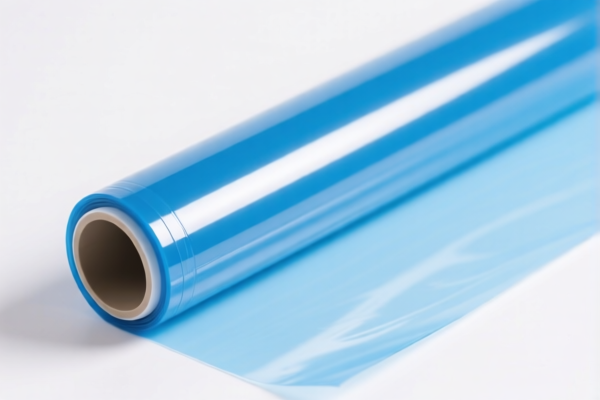
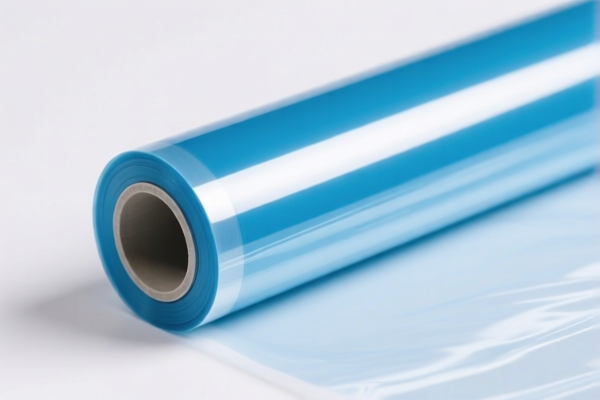
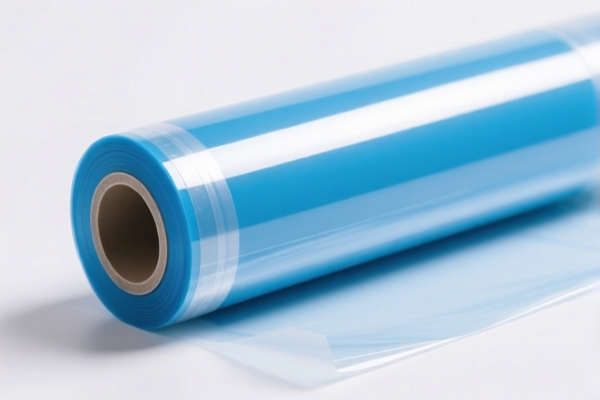
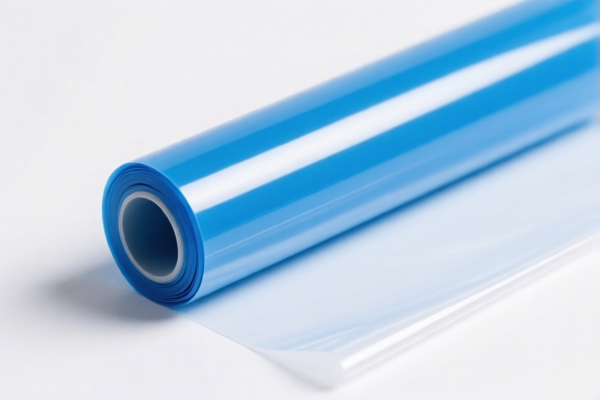
AI Analysis
🛡️ PVC Plasticizer Protective Film (PVC Adhesive Membrane/Foil)
🌐 HS Code Reference & Customs Clearance Guide | 2026 Latest Tariff Analysis | Professional Clearance Strategy for US Imports
📌 I. Product Definition & Classification: What Exactly Is "PVC Protective Film"?
PVC Plasticizer Protective Film is a critical consumable in industrial manufacturing, construction, and interior decoration. It is essentially a thin plastic sheet made from Polyvinyl Chloride (PVC) combined with plasticizers to ensure flexibility. In international trade, its classification hinges on three key factors: 1. Material: 100% PVC (Polyvinyl Chloride) polymer. 2. Form: Roll, sheet, or foil (film-like). 3. Function/Feature: Self-adhesive (pressure-sensitive), decorative, or protective coating.
⚠️ Key Classification Distinction:
- If the product is a raw polymer film without adhesive → Likely 3920.49 or 3920.43.
- If the product is a self-adhesive roll (sticky backing) → Likely 3919.90.
- If the product is a rigid/cellular core structure → Likely 3921.12.
- If the product is used for specific decorative coverings not covered elsewhere → May fall under 3920.43 depending on thickness/structure.
📦 II. HS Code Classification Details (2026 Latest Tariff Authority Reference)
| HS Code | Product Description | Application Scenario | Adhesive/Structure Feature |
|---|---|---|---|
3919.90.50.40 |
Self-adhesive PVC membranes/foils, other (PVC material, film form) | General protective films, sticky backing rolls | ✅ Self-adhesive (Primary feature) |
3919.90.50.60 |
Self-adhesive PVC plates, sheets, film, foil, other (for decoration/covering) | Decorative vinyl wraps, architectural cladding films | ✅ Self-adhesive + Decorative use |
3920.49.00.00 |
Other plates, sheets, film, foil and strip, of polymers of vinyl chloride (PVC) | Non-adhesive PVC protective sheets, industrial liners | ❌ Non-adhesive (Raw film/plate) |
3920.43.50.00 |
Other plates, sheets, film, foil and strip, of polymers of vinyl chloride, not cellular | Specific PVC polymers, standard non-cellular films | ❌ Non-adhesive (Standard polymer film) |
3921.12.50.00 |
Plates, sheets, film, foil and strip, of cellular polymers of vinyl chloride (PVC honeycomb/panel) | Insulated panels, cellular PVC cores, foam-like structures | ✅ Cellular/Honeycomb structure |
🔍 Critical Reminder:
- "Plasticizer" does not change the HS Code; it is a component of PVC.
- "Protective Film" is a functional term. Customs looks at the physical structure.
- If it has a glue backing, it MUST go under 3919 (Self-adhesive).
- If it is just a sticky plastic sheet without a distinct "adhesive layer" structure (e.g., pressure-sensitive), it might still be 3919, but if it's a plain PVC sheet used as protection, it goes to 3920.
- 3921.12 is only for cellular (foamy/honeycomb) PVC, not standard solid films.
💰 III. 2026 Latest Tariff Rate Breakdown (Including Additional Taxes, Policy Surcharges)
✅ Applicable Country: United States (US)
✅ Country of Origin: China (CN)
✅ Effective Date: From November 10, 2025 onwards (including subsequent imports)
🎯 1. 3919.90.50.40 —— Self-Adhesive PVC Membranes/Foils (General)
| Item | Content |
|---|---|
| Base Tariff | 5.8% (ad valorem) |
| Section 301 Additional Tariff | +25% |
| Section 122 Tariff | +10% |
| Total Effective Rate | 40.8% |
| Tax Calculation | CIF Value × 40.8% |
| De Minimis Exemption | ❌ Not Eligible (deny_de_minimis) |
| Legal Basis Path | USITC:3919.90.50.40 → Section 301: +25% → Section 122: +10% |
📌 Explanation:
- This code captures self-adhesive PVC films.
- The 40.8% rate is extremely high. It combines the base duty, the punitive Section 301 tariff (often cited as 25% in the data), and the Section 122 tariff (10%).
- Note: The provided data lists "40.8%" explicitly. This is a combined burden. Do not add them manually; the 40.8% is the final effective rate for this specific code under current policies.
🎯 2. 3919.90.50.60 —— Self-Adhesive PVC for Decoration/Covering
| Item | Content |
|---|---|
| Base Tariff | 5.8% |
| Section 301 Additional Tariff | +25% |
| Section 122 Tariff | +10% |
| Total Effective Rate | 40.8% |
| Tax Calculation | CIF Value × 40.8% |
| De Minimis Exemption | ❌ Not Eligible |
| Legal Basis Path | USITC:3919.90.50.60 → Section 301: +25% → Section 122: +10% |
📌 Note:
- Even if used for decorative purposes (e.g., furniture wrapping), if it’s self-adhesive PVC, it falls here.
- Same tariff rate as 3919.90.50.40.
- No tax advantage for "decorative" label in this specific subheading under current US-China trade rules.
🎯 3. 3920.49.00.00 —— Other PVC Polymers (Film/Sheet, Non-Cellular, Non-Adhesive)
| Item | Content |
|---|---|
| Base Tariff | 5.8% |
| Section 301 Additional Tariff | +25% |
| Section 122 Tariff | +10% |
| Total Effective Rate | 40.8% |
| Tax Calculation | CIF Value × 40.8% |
| De Minimis Exemption | ❌ Not Eligible |
| Legal Basis Path | USITC:3920.49.00.00 → Section 301: +25% → Section 122: +10% |
📌 Note:
- This code is for non-self-adhesive PVC films.
- If you misdeclare a self-adhesive film as "non-adhesive," Customs may reclassify and penalize, but the rate remains the same (40.8%).
- However, the legal description must match the physical product.
🎯 4. 3920.43.50.00 —— Other PVC Polymers (Specific Classification)
| Item | Content |
|---|---|
| Base Tariff | 4.2% |
| Section 301 Additional Tariff | +25% |
| Section 122 Tariff | +10% |
| Total Effective Rate | 39.2% |
| Tax Calculation | CIF Value × 39.2% |
| De Minimis Exemption | ❌ Not Eligible |
| Legal Basis Path | USITC:3920.43.50.00 → Section 301: +25% → Section 122: +10% |
📌 Note:
- This is the only code with a lower total rate (39.2%).
- It applies to specific PVC polymer films that may not fall under the broader "other" categories.
- Caution: This code often requires specific documentation proving the polymer type or lack of certain additives. Misclassification here can lead to significant penalties.
🎯 5. 3921.12.50.00 —— Cellular PVC (Honeycomb/Panel Structure)
| Item | Content |
|---|---|
| Base Tariff | 6.5% |
| Section 301 Additional Tariff | +25% |
| Section 122 Tariff | +10% |
| Total Effective Rate | 41.5% |
| Tax Calculation | CIF Value × 41.5% |
| De Minimis Exemption | ❌ Not Eligible |
| Legal Basis Path | USITC:3921.12.50.00 → Section 301: +25% → Section 122: +10% |
📌 Note:
- This code is ONLY for cellular (foamed/honeycomb) PVC.
- If your "protective film" is a solid sheet, do not use this code.
- It has the highest base tariff (6.5%) leading to the highest total rate (41.5%).
- Suitable only if the product is a rigid cellular panel, not a flexible film.
🛠️ IV. Customs Clearance Practical Advice (Battle-Hardened Pitfall Avoidance Guide)
✅ 1. Required Documentation Checklist (Non-Negotiable)
| Document | Must Provide | Explanation |
|---|---|---|
| ✅ Product Specification Sheet | ✔️ | Material: 100% PVC; Thickness; Width; Adhesive Type (if any) |
| ✅ Product Photos | ✔️ | Clear images of roll end, adhesive side, and any labeling |
| ✅ Certificate of Origin (CO) | ✔️ | Essential for origin verification; China origin triggers high tariffs |
| ✅ Commercial Invoice | ✔️ | Must state "PVC Plasticizer Protective Film" accurately |
| ✅ Packing List | ✔️ | Weight and dimensions for CIF calculation |
| ✅ Third-Party Test Report | ✔️ | Confirms PVC composition and plasticizer content (e.g., RoHS compliance) |
| ✅ Adhesive Proof (if applicable) | ✔️ | If claiming 3919, provide evidence of self-adhesive nature |
✅ 2. Declaration Strategy (Key Mantras)
🔥 "Adhesive = 3919, No Adhesive = 3920, Cellular = 3921. Accuracy Saves Money!"
| Scenario | Correct Declaration | Incorrect Action |
|---|---|---|
| Self-adhesive PVC roll | 3919.90.50.40 or 3919.90.50.60 |
Declare as "Plastic Sheet" → Risk of reclassification |
| Non-adhesive PVC sheet | 3920.49.00.00 or 3920.43.50.00 |
Declare as "Adhesive Film" → Wrong code, same rate, but audit risk |
| Cellular PVC Panel | 3921.12.50.00 |
Declare as "Film" → Higher tariff (41.5% vs 40.8%) |
| Mixed Packaging (Film + Roll Core) | Declare as Film | Split declaration → Components may be taxed differently |
📌 Strategic Tip:
- 3920.43.50.00 offers the lowest rate (39.2%). If your product fits the legal description (specific PVC polymer film), prioritize this code.
- However, if it is clearly self-adhesive, you must use 3919 codes, even though the rate is 40.8%. Misclassification is a greater risk than paying a slightly higher rate.
✅ 3. Special Case Handling
| Case | Handling Advice |
|---|---|
| OEM Custom Films | Provide customer PO + technical specs. Clearly state "PVC Plasticizer Protected Film" to avoid ambiguity. |
| Multi-Layer Films | If one layer is adhesive, the entire product usually falls under 3919. |
| Exports from China to US | Expect 40.8% - 41.5% total duty. Factor this into your pricing model. |
| De Minimis (Section 321) | ❌ Not Available. All imports are subject to full duty. No $800 exemption. |
🌍 V. Global Market Clearance Comparison (2026 Latest)
| Country/Region | Recommended HS Code | Tariff Rate (China Origin) | Certification | Notes |
|---|---|---|---|---|
| 🇺🇸 USA | 3919.90.50.40 / 3920.49.00.00 |
39.2% - 41.5% (High) | None Specific | Section 301 + 122 Apply. Very high cost. |
| 🇨🇳 China | 3919.90.50.40 |
~5% - 7% | CCC (if applicable) | No punitive tariffs. |
| 🇪🇺 EU | 3919.90.00.00 |
~0% - 6.5% | REACH | No Section 301 equivalent. |
| 🇬🇧 UK | 3919.90.00.00 |
~6.5% | UKCA | Post-Brexit tariffs apply. |
📌 Conclusion:
- USA is the most expensive market for PVC protective films due to Section 301 and 122 tariffs.
- EU and UK are significantly cheaper. Consider supply chain diversification if targeting US markets.
📌 VI. Common Errors & Pitfall Avoidance (Lessons Learned)
❌ Error 1: Declaring Self-Adhesive film as Non-Adhesive (3920) to avoid Section 301.
👉 Consequence: Customs inspection reveals adhesive → Rejection, fines, and retroactive duties + penalties.
❌ Error 2: Using 3921.12.50.00 for solid PVC films.
👉 Consequence: Higher tariff (41.5% vs 40.8%) and audit flags for incorrect structural description.
❌ Error 3: Ignoring Plasticizer Content in documentation.
👉 Consequence: If plasticizers are restricted (e.g., phthalates), the product may be banned or require special handling. Ensure RoHS/REACH compliance.
❌ Error 4: Assuming De Minimis ($800) applies.
👉 Consequence: All shipments are subject to duty. Do not use postal services for high-value shipments expecting tax-free entry.
✅ Correct Practice:
"PVC Protective Film, Self-Adhesive, 0.1mm Thickness, Width 1m, Roll, for Industrial Use, Model XYZ, RoHS Compliant"
🎯 VII. Conclusion: Precise Classification, Cost Control, Compliance!
🎯 Remember the Mantra:
🔹 "Adhesive = 3919, No Adhesive = 3920. 3920.43 is Cheapest (39.2%). 3921 is Most Expensive (41.5%). No De Minimis for USA!"
🔹 "PVC Film is High Duty. Plan your margin accordingly."
📌 Pro Tip:
If your PVC film is originated from Vietnam, Mexico, or Thailand, you may avoid Section 301 tariffs (rate drops to 0%-10% depending on the code).
Recommendation: Consider supply chain relocation or transshipment (if legal and compliant) to mitigate the 40%+ US tariff burden.
📣 Immediate Action:
📞 Consult a US Customs Broker + Provide Product Samples + Request Pre-Ruling (Adverse Ruling Protection)
🚀 Secure your supply chain, optimize your HS Code, and protect your profit margin!
✨ Professional Clearance Starts with Accurate Classification!
💼 Every Percent of Tariff Counts!
Customer Reviews
About HS Code Classification
The Harmonized System (HS) is an internationally standardized nomenclature developed by the World Customs Organization (WCO) to classify traded products. Over 200 countries use the HS system as the basis for customs tariffs, trade statistics, and import/export regulations.
Each HS code follows a hierarchical structure:
- Chapter (2 digits) — Broad category of goods (e.g., Chapter 84: Machinery and Mechanical Appliances)
- Heading (4 digits) — More specific grouping within the chapter
- Subheading (6 digits) — Internationally standardized breakdown, used by all WCO member countries
- National subdivisions (8-10 digits) — Country-specific extensions for further classification, such as US HTSUS 10-digit codes
Correct HS code classification is essential for smooth customs clearance, accurate duty payment, and compliance with trade regulations. Misclassification can lead to customs delays, overpayment of duties, or penalties.
When importing from CN to US, the applicable tariff rates may include:
- Most-Favored-Nation (MFN) rate — The standard duty rate applied to WTO members
- General rate — Applied to countries without trade agreements
- Trade remedy duties — Additional tariffs such as Section 301 (anti-dumping), Section 232 (national security), or countervailing duties
The information provided on this page is for reference purposes only. For official classification, please consult with your local customs authority or a licensed customs broker.