PVC Profiled Board
CN → US| HS Code | Tariff Rate | Origin | Destination | Doc |
|---|---|---|---|---|
| 3925200091 | 22.8% | CN | US | Official Doc |
| 3921125000 | 41.5% | CN | US | Official Doc |
| 3925900000 | 40.3% | CN | US | Official Doc |
| 3916200010 | 40.8% | CN | US | Official Doc |
| 3921121950 | 40.3% | CN | US | Official Doc |
Product Images
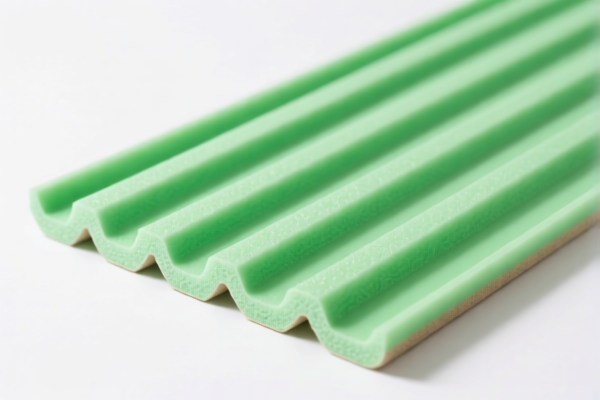
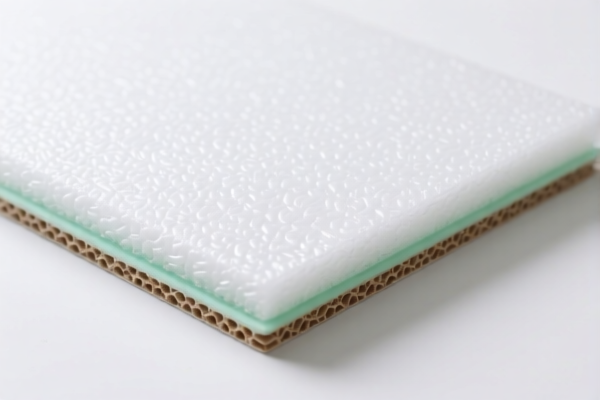
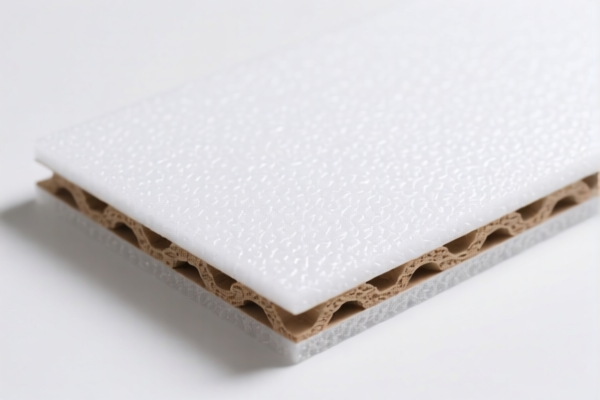

AI Analysis
🏗️ PVC Profiled Board (PVC Wall Panel Profiles)
🌐 HS Code Reference & Customs Clearance Guide | 2026 Tariff Analysis | Professional Clearance Strategy for PVC Construction Materials
📌 I. Product Definition & Classification: What is "PVC Profiled Board"?
PVC Profiled Board, commonly referred to as PVC Wall Panels or Profiled PVC Sheets, is a rigid construction material made primarily from Polyvinyl Chloride (PVC) resin. In international trade, the classification of this product depends heavily on its physical form (profiled vs. flat/rolled) and its intended application (building components vs. general plastic goods).
- Profiled Extrusions (Sections): Boards with specific cross-sectional shapes (e.g., grooves, tongues, ridges) designed for interlocking during installation. These are often classified under Chapter 3925 (Building fittings of plastic) or 3916/3921 depending on the specific structure.
- Sheets/Plates (Flat/Rolled): Flat PVC sheets, even if slightly textured, may fall under Chapter 3921 (Other plates, sheets, film, foil, and strip).
⚠️ Key Distinction Point:
- If the product is a structural building element (like siding, cladding, or wall covering) specifically designed for construction, it may qualify for 3925.
- If it is a general plastic sheet or extruded profile not specifically cited as a building fitting, it falls under 3921 or 3916.
- The shape (profiled) often triggers classification under 3925 if it meets the definition of "building fittings," otherwise it defaults to 3921.
📦 II. HS Code Classification Details (2026 Latest Tariff Comparison)
| HS Code | Product Description | Application Scenario | Tax Rate (Total) | Key Characteristics |
|---|---|---|---|---|
3925.20.00.91 |
PVC Wall Panel Profiles, Plastic Building Fittings | Interior/Exterior Wall Cladding, Siding | 22.8% | Lowest Tax. Classified specifically as "Building fittings." Requires proof of use in construction. |
3921.12.50.00 |
PVC Plate/Sheet/Strip, Other | General PVC Sheets, Non-structured Panels | 41.5% | Highest Tax. Classified as general plastic plates/sheets. No specific "building fitting" benefit. |
3925.90.00.00 |
Other Building Fittings of Plastic | General Plastic Construction Components | 40.3% | Mid-range tax. Broad category for building plastics not specifically listed under 3925.20. |
3916.20.00.10 |
PVC Profiles, Extruded (for Exterior Walls) | Exterior Cladding Profiles | 40.8% | Specific for "Exterior Wall" use. Classified under PVC articles of a kind used for building but not strictly "fittings." |
3921.12.19.50 |
Other Plastic Plates/Sheets | General Purpose PVC Sheets | 40.3% | Generic classification for PVC sheets/plates not meeting 3925 criteria. |
🔍 Critical Analysis:
-3925.20.00.91is the "Golden Ticket" with only 22.8% total tax, compared to 40-41% for others.
- To qualify for3925, you must prove the product is "of a kind used in building" (e.g., wall panels, doors, windows).
- If customs views your product as a "general plastic profile" rather than a "building fitting," you risk being assigned3921or3916, doubling your tax cost.
💰 III. 2026 Detailed Tariff Breakdown (US Market)
✅ Applicable Country: United States (US)
✅ Origin: China (CN)
✅ Effective Date: Post-2025/2026 Trade Regulations (Including Section 301 & IEEPA)
🎯 1. 3925.20.00.91 — PVC Wall Panel Profiles (Building Fittings)
✅ Recommended for Construction-Grade PVC Wall Panels
| Item | Detail |
|---|---|
| Base Tariff | 5.3% |
| Section 301 Tariff | 7.5% (Specific to this subheading) |
| Section 122 Tariff | 10% (Additional duty on steel/aluminum/plastics from China) |
| Total Tax Rate | 22.8% |
| Calculation | CIF Value × 22.8% |
| De Minimis Exemption | ❌ Not Eligible (Goods >$800 are subject to tariffs; small parcels may still be scrutinized) |
| Legal Path | USITC:3925.20.00.91 → Section 301: Footnote 3 → IEEPA: Section 122 |
📌 Explanation:
- This classification leverages the specific "Building Fitting" provision in Chapter 3925.
- The 22.8% rate is significantly lower than the 40%+ rates for other PVC classifications.
- Crucial: You must declare the product as "Wall Panel Profiles for Building Construction" and provide product datasheets showing its architectural application.
🎯 2. 3921.12.50.00 — PVC Plates, Sheets, Film, Foil, Strip (Other)
⚠️ High Risk Classification for General PVC Sheets
| Item | Detail |
|---|---|
| Base Tariff | 6.5% |
| Section 301 Tariff | 25.0% |
| Section 122 Tariff | 10% |
| Total Tax Rate | 41.5% |
| Calculation | CIF Value × 41.5% |
| De Minimis Exemption | ❌ Not Eligible |
| Legal Path | USITC:3921.12.50.00 → Section 301: Footnote 3 → IEEPA: Section 122 |
📌 Warning:
- If your product is classified here, you pay almost double the tax compared to3925.20.00.91.
- This applies if the product is seen as a "general plastic sheet" rather than a "built-in fitting."
🎯 3. 3925.90.00.00 — Other Building Fittings of Plastic
| Item | Detail |
|---|---|
| Base Tariff | 5.3% |
| Section 301 Tariff | 25.0% |
| Section 122 Tariff | 10% |
| Total Tax Rate | 40.3% |
| Calculation | CIF Value × 40.3% |
📌 Note:
- This is a "catch-all" for building plastics not specifically listed in 3925.20.
- Use only if3925.20.00.91is not applicable (e.g., if the product is not clearly a "wall panel profile").
🎯 4. 3916.20.00.10 — Profiles of PVC (For Exterior Walls)
| Item | Detail |
|---|---|
| Base Tariff | 5.8% |
| Section 301 Tariff | 25.0% |
| Section 122 Tariff | 10% |
| Total Tax Rate | 40.8% |
📌 Note:
- Specifically for "Profiles of PVC" used in exterior walls.
- Higher base tariff and Section 301 rate than3925.20.
🛠️ IV. Customs Clearance Practical Advice (Avoid Pitfalls)
✅ 1. Documentation Checklist (Mandatory)
| Document | Required? | Notes |
|---|---|---|
| ✅ Product Specification Sheet | ✔️ | Must clearly state: "PVC Wall Panel Profile," "For Building Construction," "Dimensions," "Cross-section Profile." |
| ✅ Photos of Product & Cross-Section | ✔️ | Show the profile shape. Must look like a wall panel (interlocking, grooved, etc.). |
| ✅ Application Statement | ✔️ | Declare: "Used for interior/exterior wall cladding in residential/commercial buildings." |
| ✅ Material Safety Data Sheet (MSDS) | ✔️ | For chemical composition (PVC resin). |
| ✅ Commercial Invoice | ✔️ | Item description must match HS code reasoning (e.g., "PVC Wall Cladding Profiles"). |
| ✅ Certificate of Origin (CO) | ✔️ | Required for Section 301 determination. |
✅ 2. Declaration Tips (Critical for Low Tax)
🔥 “Profile Shape + Building Use = 3925 (22.8%)”
| Scenario | Correct HS Code | Wrong HS Code | Tax Difference |
|---|---|---|---|
| PVC Wall Panel with Tongue & Groove | 3925.20.00.91 |
3921.12.50.00 |
Save 18.7% |
| Flat PVC Sheet (No Profile) | 3921.12.50.00 |
3925.20.00.91 |
No Savings (Cannot claim 3925) |
| PVC Profile for Non-Building Use (e.g., Cable Trunking) | 3925.90.00.00 |
3925.20.00.91 |
Higher Tax |
📌 Key Strategy:
- Emphasize the "Building Fitting" nature.
- Provide installation guides or architectural specifications if requested.
- Avoid generic terms like "Plastic Board" or "PVC Sheet" in the declaration. Use "PVC Wall Panel Profile for Construction."
✅ 3. Special Cases
| Case | Handling Advice |
|---|---|
| OEM Custom Profiles | Provide design drawings to prove specific building application. |
| Mixed Container | If shipping with other PVC products, clearly separate and label. Mixed declarations can lead to higher scrutiny. |
| Re-export from Third Country | If transshipped, ensure Certificate of Origin still shows China as the country of origin. |
🌍 V. Global Market Comparison (2026)
| Country/Region | Recommended HS Code | Total Tax Rate (China Origin) | Notes |
|---|---|---|---|
| 🇺🇸 USA | 3925.20.00.91 |
22.8% | Best option. Requires strong proof of building use. |
| 🇺🇸 USA | 3921.12.50.00 |
41.5% | Avoid if possible. Higher risk of audit. |
| 🇨🇳 China | 3925.20.00.91 |
0%~5% | Low import duty. No Section 301. |
| 🇪🇺 EU | 3925.90.00.00 |
~6.5% | No Section 301/122. Lower overall cost. |
| 🇨🇦 Canada | 3925.20.00.90 |
~5.3% | No Section 301. CETA benefits may apply. |
📌 Conclusion:
- USA: The difference between 22.8% and 41.5% is massive. Invest in proper documentation to secure3925.20.00.91.
- Non-US Markets: Generally lower tariffs, but still require accurate classification.
📌 VI. Common Mistakes & Pitfalls
❌ Mistake 1: Declaring as "PVC Sheet" or "Plastic Board"
👉 Result: Classified under 3921.12.50.00 → 41.5% Tax.
👉 Fix: Use "PVC Wall Panel Profile for Construction."
❌ Mistake 2: Providing only generic photos without cross-section views
👉 Result: Customs cannot verify "Profile" shape → Higher classification risk.
👉 Fix: Include clear cross-section diagrams showing interlocking features.
❌ Mistake 3: Ignoring Section 122 Tariff
👉 Result: Unexpected additional 10% duty.
👉 Fix: Always factor in Section 122 for PVC products from China.
✅ Correct Practice:
“PVC Wall Panel Profile, Interlocking, for Exterior Wall Cladding, Model X, 100% PVC, Made in China”
🎯 VII. Conclusion: Precision Classification Saves Costs!
🎯 Remember the Key:
🔹 "Profile + Building Use = 3925 (22.8%)"
🔹 "General Sheet = 3921 (41.5%)"
🔹 Save 18.7% by choosing the right HS Code!
📌 Pro Tip:
If your product is not a structural wall panel (e.g., it’s a decorative trim or non-structural profile), consider
3925.90.00.00(40.3%) or3916.20.00.10(40.8%). Do not force3925.20.00.91if the product doesn’t qualify.
📣 Immediate Action:
📞 Contact a Customs Broker to pre-classify your PVC Wall Panel Profiles.
📄 Prepare Product Datasheets highlighting "Building Construction Use."
🚀 Secure the 22.8% Tax Rate and maximize your profit margin!
✨ Professional Clearance Starts with Accurate Classification!
💼 Every Percent Saved is Pure Profit!
Customer Reviews
About HS Code Classification
The Harmonized System (HS) is an internationally standardized nomenclature developed by the World Customs Organization (WCO) to classify traded products. Over 200 countries use the HS system as the basis for customs tariffs, trade statistics, and import/export regulations.
Each HS code follows a hierarchical structure:
- Chapter (2 digits) — Broad category of goods (e.g., Chapter 84: Machinery and Mechanical Appliances)
- Heading (4 digits) — More specific grouping within the chapter
- Subheading (6 digits) — Internationally standardized breakdown, used by all WCO member countries
- National subdivisions (8-10 digits) — Country-specific extensions for further classification, such as US HTSUS 10-digit codes
Correct HS code classification is essential for smooth customs clearance, accurate duty payment, and compliance with trade regulations. Misclassification can lead to customs delays, overpayment of duties, or penalties.
When importing from CN to US, the applicable tariff rates may include:
- Most-Favored-Nation (MFN) rate — The standard duty rate applied to WTO members
- General rate — Applied to countries without trade agreements
- Trade remedy duties — Additional tariffs such as Section 301 (anti-dumping), Section 232 (national security), or countervailing duties
The information provided on this page is for reference purposes only. For official classification, please consult with your local customs authority or a licensed customs broker.