PVC Reinforced Canvas Tarp
CN → US| HS Code | Tariff Rate | Origin | Destination | Doc |
|---|---|---|---|---|
| 5911102000 | 38.8% | CN | US | Official Doc |
| 5903102010 | 35.0% | CN | US | Official Doc |
| 6306120000 | 18.8% | CN | US | Official Doc |
| 5911900080 | 38.8% | CN | US | Official Doc |
Product Images
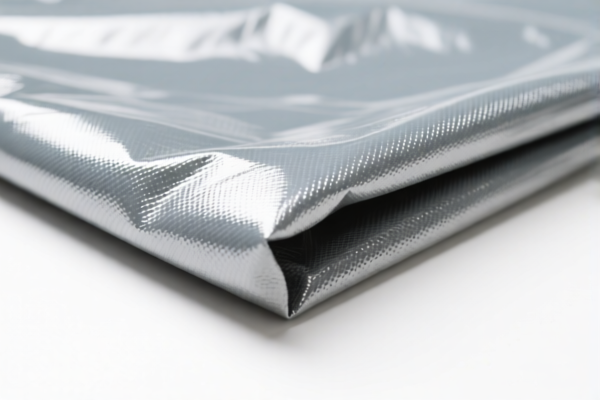
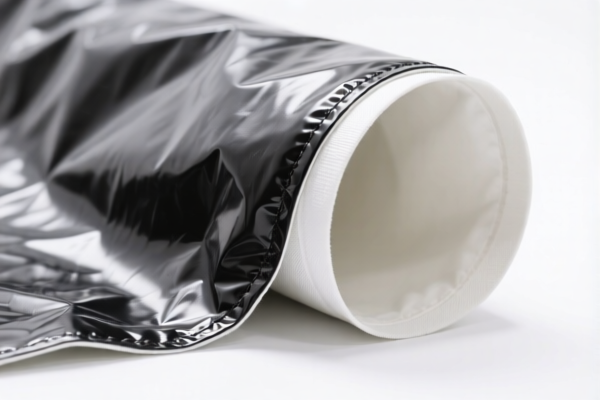
AI Analysis
🛡️ PVC Reinforced Canvas Tarp (Industrial Heavy-Duty Tarpaulin)
🌐 HS Code Reference & Customs Clearance Guide | 2026 Latest Tariff Analysis | Professional Clearance Strategy
📌 I. Product Definition & Classification: What Exactly is "PVC Reinforced Canvas"?
PVC Reinforced Canvas Tarp is a high-performance industrial textile material, widely used for truck covers, warehouse roofs, marine protection, and construction shielding. In international trade, its classification hinges on two critical factors: Material Composition (Textile vs. Plastic-coated) and End-Use (General Purpose vs. Technical).
Key Distinction Points: - General Purpose/Consumer Use: If the tarp is primarily for covering goods, tents, or general outdoor protection, it is typically classified as a made-up fabric article (Chapter 63). - Technical/Industrial Coated Fabric: If the fabric is heavily coated with PVC/rubber for specific chemical resistance, tensile strength, or industrial sealing, it may fall under Textile Products Impregnated/Covered with Rubber or Plastics (Chapter 59).
⚠️ Critical Classification Trigger:
- If it is a finished tarpaulin (sewn, hemmed, grommeted) for general use → 6306.12.00.00
- If it is a raw coated textile intended for further manufacturing (e.g., making inflatable boats, technical filters) → 5911.10.20.00 or 5903.10.20.10
📦 II. HS Code Classification Matrix (2026 Latest Tariff Authority Cross-Reference)
| HS Code | Product Description | Application Scenario | Key Characteristics |
|---|---|---|---|
6306.12.00.00 |
Tarpaulins, tents, and sunblinds; Of synthetic fibers | General industrial covers, truck tarps, outdoor storage | ✅ Finished Article; Synthetic fiber base; Waterproof coating |
5911.10.20.00 |
Textile fabrics, felt and felt-lined woven fabrics, impregnated, coated, covered or laminated with rubber, suitable for technical uses | Industrial filtration, heavy-duty technical sealing, specialized coating base | ✅ Technical Use; Rubber/Plastic coating; High technical spec |
5903.10.20.10 |
Textile fabrics impregnated, coated, covered or laminated with plastics; Of PVC | PVC-coated canvas base material for manufacturing | ✅ Material State; PVC plastic layer; Not yet made up into final tarp |
5911.90.00.80 |
Other technical textile products; Other | Niche technical textiles, non-standard coated fabrics | ✅ Catch-all; No specific technical use defined; Textile-based |
🔍 Important Note:
-6306.12.00.00is the most common and cost-effective classification for standard PVC canvas tarps. -59xxcodes are often triggered if the product is declared as "raw material" for further processing or has specific "technical" certifications (e.g., oil-resistant, acid-resistant for industrial machinery). - Misclassifying a finished tarp as a raw material (59xx) may lead to higher duties and stricter scrutiny on "technical use" documentation.
💰 III. 2026 Latest Tariff Rate Breakdown (Including Surtaxes & Policy Add-ons)
✅ Applicable Country: USA
✅ Country of Origin: China (CN)
✅ Effective Date: November 10, 2025 (and subsequent imports)
🎯 1. 6306.12.00.00 —— Tarpaulins of Synthetic Fibers (Recommended for Most Users)
| Item | Detail |
|---|---|
| Base Tariff | 8.8% (ad valorem) |
| USITC Surtax (Section 301) | 0% (Not subject to 25% surtax for this HS) |
| IEEPA Surtax (122 Clause) | +10% (Targeting China/HK products) |
| Total Effective Rate | 18.8% |
| Tax Calculation | CIF Value × 18.8% |
| De Minimis Eligibility | ❌ Not Eligible (deny_de_minimis applies to China-origin textiles) |
| Legal Path | IEEPA:9903.01.10 → USITC:6306.12.00.00 |
📌 Explanation:
- This is the most favorable rate among the provided options. - The 25% Section 301 tariff does not apply to Chapter 63 tarpaulins, significantly reducing the burden compared to other textile/plastic goods. - Only the 10% IEEPA surcharge is added to the base 8.8%.
🎯 2. 5911.10.20.00 —— Technical Textiles with Rubber/Plastic Coating
| Item | Detail |
|---|---|
| Base Tariff | 3.8% |
| USITC Surtax (Section 301) | +25% |
| IEEPA Surtax (122 Clause) | +10% |
| Total Effective Rate | 38.8% |
| Tax Calculation | CIF Value × 38.8% |
| De Minimis Eligibility | ❌ Not Eligible |
| Legal Path | IEEPA:9903.01.25 → IEEPA:9903.01.24 → USITC:5911.10.20.00 → FOOTNOTE:9903.88.01 |
📌 Caution:
- This rate is more than double that of6306.12.00.00. - Only use this if the product is strictly defined as "technical fabric for industrial machinery/filtration" and not a general-purpose tarp.
🎯 3. 5903.10.20.10 —— PVC-Coated Textile Fabric
| Item | Detail |
|---|---|
| Base Tariff | 0.0% |
| USITC Surtax (Section 301) | +25% |
| IEEPA Surtax (122 Clause) | +10% |
| Total Effective Rate | 35.0% |
| Tax Calculation | CIF Value × 35.0% |
| De Minimis Eligibility | ❌ Not Eligible |
| Legal Path | IEEPA:9901.25 → IEEPA:9903.01.24 → USITC:5903.10.20.10 → FOOTNOTE:9903.88.01 |
📌 Caution:
- Even with a 0% base rate, the 25% surtax makes it expensive. - Applies to unmade coated fabrics. If sold as a finished tarp, this code is incorrect and may trigger audits.
🎯 4. 5911.90.00.80 —— Other Technical Textile Products
| Item | Detail |
|---|---|
| Base Tariff | 3.8% |
| USITC Surtax (Section 301) | +25% |
| IEEPA Surtax (122 Clause) | +10% |
| Total Effective Rate | 38.8% |
| Tax Calculation | CIF Value × 38.8% |
| De Minimis Eligibility | ❌ Not Eligible |
| Legal Path | IEEPA:9903.01.25 → IEEPA:9903.01.24 → USITC:5911.90.00.80 → FOOTNOTE:9903.88.01 |
📌 Note:
- This is a "catch-all" for technical textiles. Using this for a standard tarp is risky and results in the highest possible tax rate (38.8%). - Only use if the product does not fit5911.10but still has a verifiable technical use.
🛠️ IV. Customs Clearance Practical Advice (Actionable Pitfall Avoidance)
✅ 1. Essential Documentation Checklist
| Document | Required | Description |
|---|---|---|
| ✅ Product Specification Sheet | ✔️ | Must detail: Base fabric (polyester/cotton), PVC thickness, reinforcement type (grid/yarn), weight/m² |
| ✅ Product Photos | ✔️ | Clear shots of the weave, coating side, grommets, and labels showing material composition |
| ✅ Commercial Invoice | ✔️ | Clearly state: "PVC Reinforced Canvas Tarpaulin" or "Coated Synthetic Fiber Tarp" |
| ✅ Certificate of Origin (CO) | ✔️ | If claiming origin benefits (though IEEPA still applies) |
| ✅ Packing List | ✔️ | Include net/gross weight and dimensions |
| ✅ Test Report (Optional but Recommended) | ✔️ | If claiming "technical use" for 59xx codes, provide proof of industrial application |
✅ 2. Declaration Strategy (Key Mantra)
🔥 "Finish vs. Raw, Use Defines Code, Synthetic Base, Tariff Can Be Coded Right!"
| Scenario | Recommended HS Code | Declaration Description | Risk if Misclassified |
|---|---|---|---|
| Standard Truck/Warehouse Tarp | 6306.12.00.00 |
"PVC Coated Polyester Tarpaulin, Finished, for Cargo Cover" | Low risk, 18.8% duty |
| Raw Coated Fabric Rolls | 5903.10.20.10 |
"PVC-Coated Polyester Fabric, Unmade, for Further Manufacturing" | Medium risk, 35% duty |
| Industrial Filter/Sealing Fabric | 5911.10.20.00 |
"Rubber-Coated Technical Textile for Industrial Filtration" | High risk, 38.8% duty |
| Niche Technical Textile | 5911.90.00.80 |
"Other Coated Technical Textile Product" | High risk, 38.8% duty |
📌 Pro Tip:
- Do NOT declare a finished tarp as "PVC Sheet" or "Plastic Film" (3921.xx) — it will be rejected or reclassified with penalties. - Do NOT declare a finished tarp as "Raw Fabric" (5903) unless you have a clear B2B contract for further manufacturing. Customs may inspect and find it "finished," leading to back taxes.
✅ 3. Special Circumstances Handling
| Situation | Handling Advice |
|---|---|
| Multi-Layer Reinforcement | Specify "Polyester Grid Reinforced" in the description to justify synthetic fiber classification under 6306.12 |
| Custom Colors/Prints | Ensure the description mentions "Printed/Dyed" if relevant, but keep the core material focus on "Synthetic Fiber Tarp" |
| OEM Orders | Provide the end-user agreement showing the tarp is for general covering, not technical filtration, to support 6306.12 |
| Mixed Shipments | If shipping with other items, ensure the tarp is not packed as "raw material" with industrial chemicals that might trigger "technical use" assumptions |
🌍 V. Global Market Clearance Comparison (2026 Latest)
| Country/Region | Recommended HS Code | Tariff Rate (China Origin) | Certification/Remarks |
|---|---|---|---|
| 🇺🇸 USA | 6306.12.00.00 |
18.8% | No Section 301 surtax; IEEPA 10% applies |
| 🇨🇳 China | 6306.12.00.00 |
5% - 10% | Standard textile import; No surtaxes |
| 🇪🇺 EU | 6306.12.00.00 |
0% - 4% | CE marking not required for general use; REACH compliance needed for chemicals |
| 🇬🇧 UK | 6306.12.00.00 |
0% - 4% | Post-Brexit rules; Check UK Global Tariff |
| 🇦🇺 Australia | 6306.12.00.00 |
5% | No major surtaxes |
📌 Conclusion:
- The USA market is the most complex due to IEEPA surtaxes, but6306.12.00.00remains the most cost-effective path compared to Chapter 59 codes. - European markets are significantly cheaper if the product can be declared as general-use tarps.
📌 VI. Common Errors & Pitfall Guide (Lessons Learned)
❌ Error 1: Declaring "PVC Tarp" as "Plastic Sheet" (3921.90)
👉 Consequence: Misclassification of textile product → Penalties + Back Duties
❌ Error 2: Declaring finished tarp as "Raw PVC-Coated Fabric" (5903.10)
👉 Consequence: Higher duty (35% vs 18.8%) + potential audit for "technical use" proof
❌ Error 3: Ignoring the IEEPA 10% surcharge in cost calculations
👉 Consequence: Profit margin erosion due to unexpected 10% tax on top of base duty
❌ Error 4: Using "Canvas" without specifying "Synthetic" or "Coated"
👉 Consequence: Customs may ask for clarification → Delays at Port
✅ Correct Practice:
"Heavy-Duty PVC Reinforced Polyester Canvas Tarpaulin, 600gsm, Waterproof, With Metal Grommets, For Truck/Cargo Covering"
🎯 VII. Conclusion: Professional Declaration, Save Time, Save Money!
🎯 Remember the Mantra:
🔹 "Finished Tarp, Code 63, Eight Point Eight Base Plus Ten IEEPA, Total Eighteen Eighty-Only!"
🔹 "Raw or Technical, Code 59, Thirty-Six to Thirty-Eight Percent Tax, Avoid If You Can!"
📌 Pro Tip:
If your tarp is originally manufactured in Vietnam, Thailand, or Indonesia, you may qualify for lower or zero IEEPA surtaxes. Always verify the Country of Origin on the manufacturing invoice, not just the shipping origin.
📣 Immediate Action:
📞 Contact a licensed customs broker + Provide product specs + Request HS Code Pre-Ruling if unsure
🚀 Ensure smooth clearance, avoid delays, and maximize your profit margin!
✨ Professional Customs Clearance Starts with Accurate Classification!
💼 Every percentage point of duty is a direct impact on your bottom line!
Customer Reviews
About HS Code Classification
The Harmonized System (HS) is an internationally standardized nomenclature developed by the World Customs Organization (WCO) to classify traded products. Over 200 countries use the HS system as the basis for customs tariffs, trade statistics, and import/export regulations.
Each HS code follows a hierarchical structure:
- Chapter (2 digits) — Broad category of goods (e.g., Chapter 84: Machinery and Mechanical Appliances)
- Heading (4 digits) — More specific grouping within the chapter
- Subheading (6 digits) — Internationally standardized breakdown, used by all WCO member countries
- National subdivisions (8-10 digits) — Country-specific extensions for further classification, such as US HTSUS 10-digit codes
Correct HS code classification is essential for smooth customs clearance, accurate duty payment, and compliance with trade regulations. Misclassification can lead to customs delays, overpayment of duties, or penalties.
When importing from CN to US, the applicable tariff rates may include:
- Most-Favored-Nation (MFN) rate — The standard duty rate applied to WTO members
- General rate — Applied to countries without trade agreements
- Trade remedy duties — Additional tariffs such as Section 301 (anti-dumping), Section 232 (national security), or countervailing duties
The information provided on this page is for reference purposes only. For official classification, please consult with your local customs authority or a licensed customs broker.