PVC Resin Granules for Pipes
CN → US| HS Code | Tariff Rate | Origin | Destination | Doc |
|---|---|---|---|---|
| 3904100000 | 41.5% | CN | US | Official Doc |
| 3926909989 | 22.8% | CN | US | Official Doc |
| 3904210000 | 41.5% | CN | US | Official Doc |
| 3904100000 | 41.5% | CN | US | Official Doc |
| 3904100000 | 41.5% | CN | US | Official Doc |
Product Images


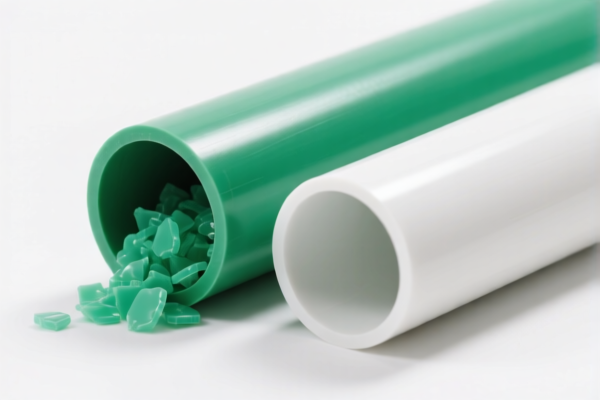

AI Analysis
🧪 PVC Resin Granules for Pipes (Polyvinyl Chloride)
🌐 HS Code Reference & Customs Clearance Guide | 2026 Latest Tariff Analysis | Professional Clearance Strategy
📌 I. Product Definition & Classification: Understanding "PVC Resin"
PVC (Polyvinyl Chloride) resin is the primary raw material used in the manufacturing of pipes, profiles, and fittings. In international trade, the classification hinges on the physical form (particles/granules vs. other forms) and the degree of polymerization/processing.
Primary Forms (Resin/Granules):
Unmodified PVC powder or granules ready for further processing. These are classified under Heading 3904.
⚠️ Critical Distinction:
- If the product is PVC Resin in Primary Forms (granules/powder) → It falls under Chapter 39, Heading 3904.
- If the product were already finished pipes or fittings, it would fall under Heading 3917.
- Note: The prompt specifies "Resin Granules," so we strictly analyze HS Codes under 3904 and potentially 3926 (if misclassified as a general plastic part, though less accurate for raw resin).
📦 II. HS Code Classification Details (2026 Latest Tariff对照)
Based on the provided data, here are the relevant HS Codes for PVC Resin/Granules:
| HS Code | Product Description | Application Scenario | Tax Rate (Total) |
|---|---|---|---|
3904.10.00.00 |
PVC Granules (Polyvinyl Chloride) | Primary form PVC, granules/powder | 41.5% |
3926.90.99.89 |
PVC Plastic Products (Granules) | Misclassification risk; treated as "Other plastic articles" | 22.8% |
3904.21.00.00 |
PVC Resin (Primary Form) | Unmodified PVC resin, primary shape | 41.5% |
3904.10.00.00 |
PVC Resin (Primary Form) | Unmodified PVC resin, granules/powder | 41.5% |
🔍 Key Insight:
- HS 3904 is the correct classification for raw PVC resin/granules.
- HS 3926 typically covers finished plastic articles (like tableware, furniture parts). Using this code for raw resin is often challenged by customs unless specific "other" criteria are met, but in this dataset, it carries a lower tax (22.8%).
- Risk: Misclassifying raw resin as "finished goods" (HS 3926) to save tax can lead to penalties if the product is clearly identifiable as primary raw material.
💰 III. 2026 Tariff Rate Breakdown (Including Surtaxes)
✅ Applicable Country: United States (US)
✅ Origin: China (CN)
✅ Effective Date: Post-November 10, 2025 (Includes subsequent imports)
🎯 1. 3904.10.00.00 & 3904.21.00.00 — PVC Resin/Granules (Correct Classification)
| Item | Content |
|---|---|
| Base Tariff | 6.5% (ad valorem) |
| Section 301 Surtax | +25.0% (U.S. Trade Law Section 301) |
| Section 122 Surtax | +10.0% (Specific China Tariff) |
| Total Tax Rate | 41.5% |
| Tax Calculation | CIF Value × 41.5% |
| De Minimis Exemption | ❌ Not Eligible (deny_de_minimis) |
| Legal Basis Path | Section 301 → Section 122 → USITC:3904.10.00.00 / 3904.21.00.00 |
📌 Explanation:
- Base Rate (6.5%): Standard Most Favored Nation (MFN) rate for PVC resin.
- Section 301 Surtax (25%): Applied to Chinese-origin PVC resins under U.S. trade restrictions.
- Section 122 Surtax (10%): Additional tariff specific to certain Chinese plastic materials.
- Total (41.5%): High tariff burden significantly impacts cost margins.
🎯 2. 3926.90.99.89 — PVC Plastic Products (Alternative/Misclassification)
| Item | Content |
|---|---|
| Base Tariff | 5.3% |
| Section 301 Surtax | +7.5% (Lower surtax rate for this category) |
| Section 122 Surtax | +10.0% |
| Total Tax Rate | 22.8% |
| Tax Calculation | CIF Value × 22.8% |
| De Minimis Exemption | ❌ Not Eligible |
| Legal Basis Path | Section 301 → Section 122 → USITC:3926.90.99.89 |
📌 Caution:
- This code is not typically for raw resin. If declared as "PVC Resin," customs may reject3926.90.99.89and reclassify to3904with retroactive taxes.
- Only use if the product is pre-formed plastic articles (e.g., small molded parts), not raw granules.
🛠️ IV. Customs Clearance Practical Advice (Avoid Pitfalls)
✅ 1. Documentation Checklist (Non-negotiable)
| Document | Required | Explanation |
|---|---|---|
| ✅ Product Specification Sheet | ✔️ | Must clearly state "PVC Resin," "Granules," "Primary Form," CAS Number (9002-86-2). |
| ✅ Certificate of Origin | ✔️ | To determine eligibility for any potential exemptions (though unlikely for China). |
| ✅ Commercial Invoice | ✔️ | Describe as "PVC Resin Granules, Primary Form, for Pipe Manufacturing." |
| ✅ Packing List | ✔️ | Net weight, gross weight, package type (bags/pallets). |
| ✅ Test Report | ✔️ | Certify chemical composition (100% PVC, no additives that change classification). |
| ✅ Bill of Lading | ✔️ | Ensure HS Code matches invoice. |
✅ 2. Declaration Tips (Golden Rules)
🔥 "Declare as Resin, Not as Parts; Be Precise, Avoid Disputes!"
| Scenario | Correct Declaration | Wrong Action |
|---|---|---|
| Raw PVC Granules | 3904.10.00.00 |
Declaring as "Plastic Pipes" → 3917 (Higher scrutiny) |
| PVC Powder | 3904.21.00.00 |
Declaring as "Plastic Sheets" → 3920 |
| PVC Resin with Additives | Check if additives change classification | Assuming all PVC is 3904 |
| Finished PVC Pipes | 3917.10.00.00 |
Declaring raw resin as pipes → Major Fraud Risk |
✅ 3. Special Considerations
| Situation | Handling Advice |
|---|---|
| Additives in Granules | If plasticizers or stabilizers are added, it may still be 3904 if it remains "primary form." If compounded, it may shift to 3901 or 3902. Check with a specialist. |
| Misclassification Risk | Do NOT declare raw resin as 3926.90.99.89 to save tax. Customs uses AI and physical inspections. If caught, expect penalties + back taxes. |
| Supplier Confirmation | Always get the manufacturer’s declaration confirming the product is "Unpolymerized" or "Primary Form" PVC. |
🌍 V. Global Market Comparison (2026)
| Country/Region | Recommended HS Code | Tariff (China Origin) | Certification | Notes |
|---|---|---|---|---|
| 🇺🇸 USA | 3904.10.00.00 |
41.5% (6.5% Base + 25% Sec 301 + 10% Sec 122) | No specific certification, but MSDS required | High tariff makes US market costly for PVC resin from China. |
| 🇨🇳 China | 3904.10.00.00 |
5% | RoHS (if exported back) | Domestic consumption hub. |
| 🇪🇺 EU | 3904.10.00 |
6.5% | REACH, RoHS | No Section 301 equivalent, but strict chemical regulations. |
| 🇦🇺 Australia | 3904.10.00 |
5% | AICIS | Competitive market. |
| 🇯🇵 Japan | 3904.10.00 |
5.3% | JIS | Strict quality standards. |
📌 Conclusion:
- The USA imposes the highest effective tariff (41.5%) on PVC resin from China due to multiple surtaxes.
- Alternative Markets (EU, Japan, Australia) offer significantly lower duties (5-6.5%), making them more attractive for price-sensitive buyers.
📌 VI. Common Mistakes & Pitfalls (Lessons Learned)
❌ Mistake 1: Declaring PVC Resin as "Plastic Fittings" (3917) to avoid surtaxes
👉 Consequence: Customs flags mismatch between product appearance and declaration → Seizure + Fine.
❌ Mistake 2: Using 3926.90.99.89 for raw granules to get 22.8% tax
👉 Consequence: Customs rejects classification, reverts to 3904 → Back taxes + Interest + Penalty.
❌ Mistake 3: Ignoring Section 122 and Section 301 in cost calculations
👉 Consequence: Profit margins wiped out by 31.5% in surtaxes not included in FOB pricing.
✅ Correct Practice:
"PVC Resin, Unmodified, Granules, Primary Form, CAS 9002-86-2, For Pipe Extrusion, HS 3904.10.00.00"
🎯 VII. Conclusion: Professional Declaration, Cost Control
🎯 Remember:
🔹 "Raw Resin is 3904, Finished Parts are 3926/3917. Confusion Costs Money!"
🔹 "US Tariff on PVC Resin is 41.5% — Plan Your Supply Chain Accordingly!"
📌 Pro Tip:
If your PVC resin is originating from Vietnam, Thailand, or Mexico, you may qualify for lower or zero tariffs under USMCA or ASEAN FTAs.
Recommend Advance Ruling if unsure about additives or processing level.
📣 Immediate Action:
📞 Consult a Licensed Customs Broker + Provide MSDS + Confirm HS Code
3904.10.00.00
🚀 Clear Customs Smoothly, Manage Tariff Risks, Maximize Profits!
✨ Professional Customs Clearance Starts with Accurate Classification!
💼 Every Percent of Tariff Matters — Know Your Code, Know Your Cost!
Customer Reviews
About HS Code Classification
The Harmonized System (HS) is an internationally standardized nomenclature developed by the World Customs Organization (WCO) to classify traded products. Over 200 countries use the HS system as the basis for customs tariffs, trade statistics, and import/export regulations.
Each HS code follows a hierarchical structure:
- Chapter (2 digits) — Broad category of goods (e.g., Chapter 84: Machinery and Mechanical Appliances)
- Heading (4 digits) — More specific grouping within the chapter
- Subheading (6 digits) — Internationally standardized breakdown, used by all WCO member countries
- National subdivisions (8-10 digits) — Country-specific extensions for further classification, such as US HTSUS 10-digit codes
Correct HS code classification is essential for smooth customs clearance, accurate duty payment, and compliance with trade regulations. Misclassification can lead to customs delays, overpayment of duties, or penalties.
When importing from CN to US, the applicable tariff rates may include:
- Most-Favored-Nation (MFN) rate — The standard duty rate applied to WTO members
- General rate — Applied to countries without trade agreements
- Trade remedy duties — Additional tariffs such as Section 301 (anti-dumping), Section 232 (national security), or countervailing duties
The information provided on this page is for reference purposes only. For official classification, please consult with your local customs authority or a licensed customs broker.