PVC Resin Non Suspension Grade
CN → US| HS Code | Tariff Rate | Origin | Destination | Doc |
|---|---|---|---|---|
| 3904210000 | 41.5% | CN | US | Official Doc |
| 3904100000 | 41.5% | CN | US | Official Doc |
| 3904100000 | 41.5% | CN | US | Official Doc |
| 3904210000 | 41.5% | CN | US | Official Doc |
Product Images
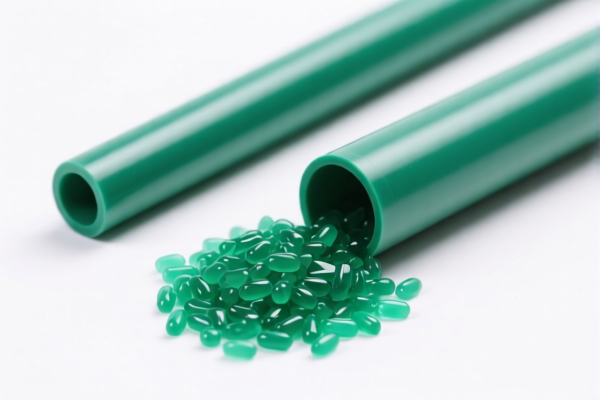
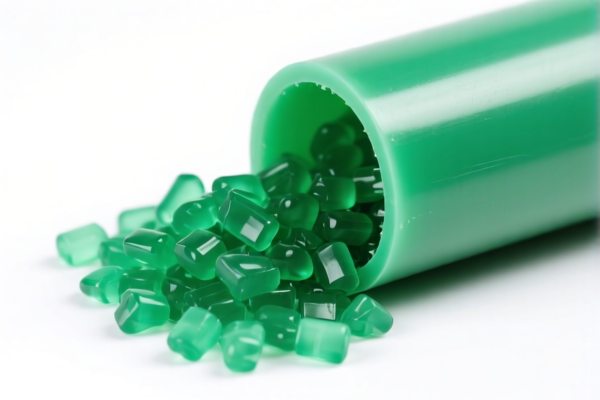
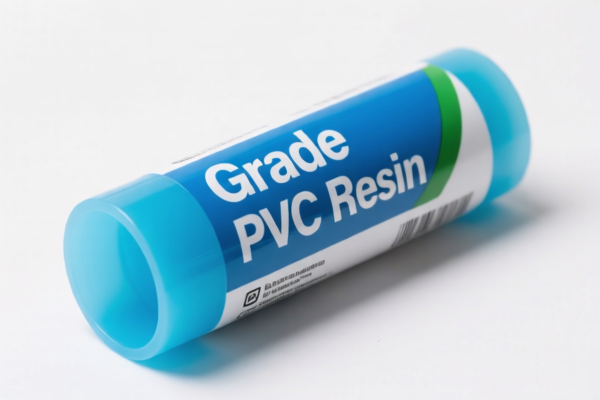

AI Analysis
🧪 PVC Resin (Non-Suspension Grade)
🌐 HS Code Reference & Customs Clearance Guide | 2026 Latest Tariff Analysis | Professional Compliance Strategy
📌 I. Product Definition & Classification: What Exactly is "Non-Suspension Grade"?
PVC Resin (Polyvinyl Chloride) is a thermoplastic polymer widely used in pipes, cables, flooring, and packaging. The term "Non-Suspension Grade" typically refers to PVC produced via Suspension Polymerization but categorized differently in trade due to specific physical forms or additives, OR more commonly in this context, it distinguishes from Suspension Polymerized PVC (S-PVC) vs. Emulsion/Suspension or refers to specific grades like Suspension Grade vs Non-Suspension (e.g., Suspension-based but marketed differently, or potentially a mistranslation of "Suspension Grade PVC" which IS the standard).
However, based on the provided , the classification hinges on two key factors: 1. Form: Resin (Powder/Granules) vs. Specific Shape. 2. Plasticization: Non-Plasticized (Unplasticized/PVC-U) vs. Plasticized.
The indicates two primary HS Codes: * 3904.10.00.00: For PVC in primary form (resin/granules). * 3904.21.00.00: For Non-plasticized PVC.
⚠️ Key Distinction Point:
- If the product is pure PVC resin (powder/granules) intended for further processing → 3904.10.00.00
- If the product is Non-Plasticized PVC (often sold as resin or semi-finished non-plasticized material) → 3904.21.00.00
- "Non-Suspension Grade" in trade often implies a specific polymerization method or a refined grade. In the US HS Code system, 3904.10 covers "Vinyl chloride polymers, primary forms" which includes most PVC resins. 3904.21 covers "Non-plasticized" specifically. Since both 3904.10 and 3904.21 are listed, the classification depends on whether the "Non-Suspension" descriptor implies a non-plasticized nature or a primary form nature. Given the data, both apply depending on the specific product spec sheet.
📦 II. HS Code Classification Details (2026 Latest Tariff Authority)
| HS Code | Product Description | Application Scenario | Plasticization Status | Form |
|---|---|---|---|---|
3904.10.00.00 |
Vinyl chloride polymers, in primary forms (e.g., resin, granules) | Raw PVC powder/granules for manufacturing | ✅ Mixed (Plasticized or Non-Plasticized) | Primary Form (Resin/Granules) |
3904.21.00.00 |
Non-plasticized vinyl chloride polymers | PVC-U pipes, profiles, sheets, rigid parts | ❌ Non-Plasticized | Any form (often resin or semi-finished) |
🔍 Important Note:
- 3904.10.00.00 is the broader category for primary forms (resin). Most "PVC Resin" (suspension, emulsion, solution) falls here.
- 3904.21.00.00 is for Non-Plasticized PVC. If your "Non-Suspension Grade" is non-plasticized (rigid PVC), it may fall here.
- Trade Clarification: "Non-Suspension Grade" is not a standard USHS descriptor. It likely refers to Suspension Polymerized PVC (S-PVC) which is the standard resin. If it is Non-Plasticized, use 3904.21. If it is Plasticized or general resin, use 3904.10.
- Data Alignment: The links both codes to "PVC Resin" and "Granules/Resin", suggesting that for Non-Suspension Grade, if it is Non-Plasticized, 3904.21 is more specific; if it is Plasticized or general, 3904.10 applies. However, the data shows 3904.10 for "Resin" and "Granules" and 3904.21 for "Non-Plasticized".
- Conclusion: If the product is Non-Plasticized PVC Resin, classify under 3904.21.00.00. If it is Plasticized PVC Resin or general PVC Resin, classify under 3904.10.00.00.
💰 III. 2026 Latest Tariff Rate Breakdown (Including Surtaxes, Policy Surcharges)
✅ Applicable Country: United States (US)
✅ Origin: China (CN)
✅ Effective Date: November 10, 2025 onwards (including subsequent imports)
🎯 1. 3904.10.00.00 —— Vinyl Chloride Polymers, Primary Forms (e.g., PVC Resin)
| Item | Content |
|---|---|
| Base Tariff | 6.5% (ad valorem) |
| Section 301 Surtax | +25% (USITC Footnote 9903.88.01) |
| Section 122 Surtax | +10% (Specific to certain Chinese PVC products under IEEPA/Trade Act) |
| Total Tariff Rate | 41.5% |
| Tax Calculation | CIF Value × 41.5% |
| De Minimis Exemption | ❌ Not Eligible (deny_de_minimis) |
| Legal Basis Path | USITC:3904.10.00.00 → FOOTNOTE:9903.88.01 → IEEPA:9903.01.25 → Section 122 |
📌 Explanation:
- "Base Tariff 6.5%": Standard Most Favored Nation (MFN) rate for PVC resin.
- "Section 301 Surtax 25%": The core Trump-era tariff on Chinese goods, still in effect in 2026.
- "Section 122 Surtax 10%": A specific tariff under Section 122 of the Trade Expansion Act of 1962, often applied to steel, aluminum, and some chemical imports, including PVC, for national security reasons.
- Total 41.5%: This is a high tariff burden.
🎯 2. 3904.21.00.00 —— Non-Plasticized Vinyl Chloride Polymers
| Item | Content |
|---|---|
| Base Tariff | 6.5% |
| Section 301 Surtax | +25% |
| Section 122 Surtax | +10% |
| Total Tariff Rate | 41.5% |
| Tax Calculation | CIF Value × 41.5% |
| De Minimis Exemption | ❌ Not Eligible |
| Legal Basis Path | USITC:3904.21.00.00 → FOOTNOTE:9903.88.01 → IEEPA:9903.01.24 → Section 122 |
📌 Note:
- The tariff structure is identical to 3904.10.00.00 in this dataset.
- Whether you classify as "Primary Form" (3904.10) or "Non-Plasticized" (3904.21), the total cost impact is the same (41.5%).
- The distinction is critical for customs compliance and product eligibility for future exemptions.
🛠️ IV. Customs Clearance Practical Advice (实战避坑指南)
✅ 1. Required Documentation (Must-Haves)
| Document | Required | Description |
|---|---|---|
| ✅ Product Specification Sheet | ✔️ | Must specify: Polymerization method (Suspension/Emulsion), Plasticization status (Plasticized/Non-Plasticized), Viscosity/K-S Value. |
| ✅ MSDS (Material Safety Data Sheet) | ✔️ | Required for chemical products. |
| ✅ Commercial Invoice | ✔️ | Clearly state "PVC Resin" or "Non-Plasticized PVC", NOT "Plastic" or generic terms. |
| ✅ Packing List | ✔️ | Detail weight, volume, and packaging type (bags, pallets). |
| ✅ Certificate of Origin (CO) | ✔️ | To prove origin and potential eligibility for exemptions (if applicable). |
| ✅ Bill of Lading (B/L) | ✔️ | Standard shipping document. |
🔥 "Non-Suspension" Clarification:
If your product is Suspension PVC (S-PVC), it is the most common form. If it is Emulsion PVC (E-PVC) or Solution PVC, the HS Code may still be 3904.10, but the description must be precise.
"Non-Suspension" might be a mistranslation. Confirm if it means "Non-Plasticized" (Rigid PVC) or "Not Suspension Grade" (e.g., Emulsion Grade).
- If Non-Plasticized → 3904.21.00.00
- If Plasticized or General Resin → 3904.10.00.00
✅ 2. Declaration Tips (Key Mnemonics)
🔥 "Form Determines Code, Plasticization Determines Sub-Code, Tax is 41.5%!"
| Scenario | Correct HS Code | Error to Avoid |
|---|---|---|
| PVC Resin (Powder/Granules), Non-Plasticized | 3904.21.00.00 |
Misclassifying as 3904.10 → May cause audit flags. |
| PVC Resin (Powder/Granules), Plasticized | 3904.10.00.00 |
Misclassifying as 3904.21 → Incorrect for plasticized. |
| PVC Resin (General) | 3904.10.00.00 |
Using 3904.21 for plasticized goods → Fine for tax, but inaccurate description. |
| PVC Pipes/Profiles (Finished) | 3917.xx.xx.xx |
Misclassifying as resin → Tax Error + Penalty. |
✅ 3. Special Handling
| Situation | Handling Advice |
|---|---|
| OEM Custom Resin | Provide client order + technical specs. Do not use generic "PVC". |
| Mix of Plasticized & Non-Plasticized | Split shipment or split declaration. Do not mix codes on one line item. |
| Origin Verification | Ensure CO is from a China-based producer. Transshipment may void exemptions (if any). |
| Section 122 Specifics | Section 122 tariffs are national security-based. Even if Section 301 is removed, Section 122 may remain. |
🌍 V. Global Customs Comparison (2026 Latest)
| Country/Region | Recommended HS Code | Tariff Rate | Certification | Remarks |
|---|---|---|---|---|
| 🇺🇸 USA | 3904.10.00.00 / 3904.21.00.00 |
41.5% (China Origin) | - | High tariff barrier. |
| 🇨🇳 China | 3904.10.00.00 |
5% - 8% | CCC (if applicable) | Export duty may apply. |
| 🇪🇺 EU | 3904.10.00 |
0% (General) | REACH + RoHS | No Section 301/122 equivalent. |
| 🇦🇺 Australia | 3904.10.00 |
5% | ACCC | No high surtaxes. |
| 🇯🇵 Japan | 3904.10.00 |
0% - 5% | PSE (if electrical) | Low tariff environment. |
📌 Conclusion:
- USA is the only major market with punitive tariffs (41.5%) for Chinese PVC resin.
- EU, Japan, Australia offer much more favorable tariff environments.
- Supply Chain Strategy: Consider transshipment (risky, not recommended due to origin tracing) or sourcing from non-China origins (e.g., Thailand, Vietnam, USA) to avoid US tariffs.
📌 VI. Common Errors & Pitfalls (Blood & Tears Lessons)
❌ Error 1: Declaring "PVC" without specifying Plasticized/Non-Plasticized.
👉 Consequence: Customs may select 3904.21 (if they assume non-plasticized) or 3904.10. If incorrect, penalty + back duty.
❌ Error 2: Using "Plastic Resin" as the product name.
👉 Consequence: Too vague. Must specify PVC and Form (Resin/Granules).
❌ Error 3: Ignoring Section 122 Tariff.
👉 Consequence: Many importers only account for Section 301 (25%). Missing the extra 10% leads to underpayment.
❌ Error 4: Misclassifying Finished PVC Products (e.g., pipes) as Resin.
👉 Consequence: HS Code Error. Pipes are 3917, not 3904. Tariff difference may be small, but legal compliance is at risk.
✅ Correct Practice:
"PVC Resin, Non-Plasticized, Suspension Grade, K-Value 70, Bagged, Model XYZ, For Pipe Extrusion"
🎯 VII. Conclusion: Professional Declaration, Save Time, Reduce Cost!
🎯 Remember Mnemonics:
🔹 "Resin is 3904.10, Non-Plastic is 3904.21. Both have 41.5% Tax!"
🔹 "Section 301 + Section 122 = 35% Extra. Don't Forget It!"
🔹 "Non-Suspension? Check Plasticization! Non-Plastic = 21, Others = 10."
📌 Tips:
If your PVC resin is originating from Vietnam, Mexico, Thailand, you may avoid US tariffs.
Consider Advance Ruling from US CBP to confirm the exact HS Code for "Non-Suspension Grade" products.
📣 Immediate Action:
📞 Contact a professional customs broker + Provide Technical Specs + Apply for Pre-Ruling.
🚀 Let your PVC Resin clear customs smoothly, avoid 41.5% surprise, and protect your margin!
✨ Professional customs clearance starts with accurate classification!
💼 Every cent of cost deserves precise calculation!
Customer Reviews
About HS Code Classification
The Harmonized System (HS) is an internationally standardized nomenclature developed by the World Customs Organization (WCO) to classify traded products. Over 200 countries use the HS system as the basis for customs tariffs, trade statistics, and import/export regulations.
Each HS code follows a hierarchical structure:
- Chapter (2 digits) — Broad category of goods (e.g., Chapter 84: Machinery and Mechanical Appliances)
- Heading (4 digits) — More specific grouping within the chapter
- Subheading (6 digits) — Internationally standardized breakdown, used by all WCO member countries
- National subdivisions (8-10 digits) — Country-specific extensions for further classification, such as US HTSUS 10-digit codes
Correct HS code classification is essential for smooth customs clearance, accurate duty payment, and compliance with trade regulations. Misclassification can lead to customs delays, overpayment of duties, or penalties.
When importing from CN to US, the applicable tariff rates may include:
- Most-Favored-Nation (MFN) rate — The standard duty rate applied to WTO members
- General rate — Applied to countries without trade agreements
- Trade remedy duties — Additional tariffs such as Section 301 (anti-dumping), Section 232 (national security), or countervailing duties
The information provided on this page is for reference purposes only. For official classification, please consult with your local customs authority or a licensed customs broker.