PVC Resin Packaging Grade
CN → US| HS Code | Tariff Rate | Origin | Destination | Doc |
|---|---|---|---|---|
| 3904210000 | 41.5% | CN | US | Official Doc |
| 3904220000 | 41.5% | CN | US | Official Doc |
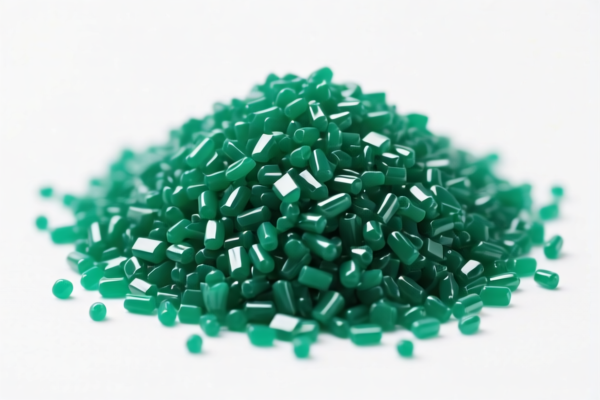
Product Images


AI Analysis
🏗️ PVC Resin: Packaging Grade (Polyvinyl Chloride Resin)
🌐 HS Code Reference & Customs Clearance Guide | 2026 Latest Tariff Analysis | Professional Entry Strategy
📌 I. Product Definition & Classification: What is "Packaging Grade PVC"?
Polyvinyl Chloride (PVC) Resin is a synthetic plastic polymer made from vinyl chloride monomers. In the context of international trade and customs classification, "Packaging Grade" PVC resin refers to PVC polymers intended primarily for use in manufacturing films, bags, shrink wraps, and other packaging materials.
Key characteristics include: * Form: Primary forms (powder, granules, or flakes). * Additives: The classification depends heavily on whether plasticizers have been added during the resin manufacturing process. * Nonplasticized (Unplasticized PVC - uPVC): Rigid forms, often used for pipes, profiles, but also specific rigid packaging applications. * Plasticized PVC: Flexible forms, essential for soft packaging, shrink films, and flexible bags.
⚠️ Key Distinction Point:
- If the resin is unmodified (no plasticizers added during polymerization) → It falls under 3904.21.00.00.
- If the resin is modified with plasticizers (designed for flexibility) → It falls under 3904.22.00.00.
📦 II. HS Code Classification Details (2026 Latest Tariff Authority)
Based on the provided data, PVC Resin is classified under Chapter 39 (Plastics and Articles Thereof). Specifically, it falls under Heading 3904 (Polymers of vinyl chloride or of other halogenated olefins, in primary forms).
| HS Code | Product Description | Application Context | Plasticized? |
|---|---|---|---|
3904.21.00.00 |
Other poly(vinyl chloride): Nonplasticized | Rigid packaging, uPVC profiles, bottles, sheets | ❌ No |
3904.22.00.00 |
Other poly(vinyl chloride): Plasticized | Flexible packaging, shrink films, bags, soft wraps | ✅ Yes |
🔍 Important Note:
- "Packaging Grade" is a commercial term, not a customs term. You must determine if the specific resin is plasticized or nonplasticized based on its technical data sheet (TDS).
- Most soft packaging (flexible films) requires Plasticized PVC (3904.22.00.00).
- Rigid packaging containers or rigid sheets may use Nonplasticized PVC (3904.21.00.00).
💰 III. 2026 Latest Tariff Rate Details (Including Additional Duties & Policy Surcharges)
✅ Applicable Country: United States (US)
✅ Country of Origin: China (CN)
✅ Effective Date: Current rates as per provided data
🎯 1. 3904.21.00.00 – Poly(vinyl chloride), Nonplasticized
| Item | Content |
|---|---|
| Base Tariff Rate | 0.0% (ad valorem) |
| Additional Tariff (Section 301 / Retaliatory) | 0.0% |
| Total Tax Rate | 0.0% |
| Tax Calculation | CIF Value × 0% = $0 |
| De Minimis Eligibility | ❌ N/A (Since tax is 0%, but still subject to entry requirements) |
| Legal Basis | HTSUS 3904.21.00.00 |
📌 Explanation:
- Base Tariff: PVC resin in primary forms generally has a low or zero base duty under HTSUS.
- Additional Tariffs: According to the provided data, there are no additional tariffs (such as Section 301 or IEEPA surcharges) currently applied to this specific HS code for Chinese-origin goods.
- Result: This makes PVC resin a tax-neutral import item in terms of federal duty, though other fees (MLD, HMF, harbor maintenance) may still apply.
🎯 2. 3904.22.00.00 – Poly(vinyl chloride), Plasticized
| Item | Content |
|---|---|
| Base Tariff Rate | 0.0% (ad valorem) |
| Additional Tariff (Section 301 / Retaliatory) | 0.0% |
| Total Tax Rate | 0.0% |
| Tax Calculation | CIF Value × 0% = $0 |
| De Minimis Eligibility | ❌ N/A |
| Legal Basis | HTSUS 3904.22.00.00 |
📌 Explanation:
- Similar to nonplasticized PVC, plasticized PVC resin also benefits from a 0% total tariff rate.
- Crucial for Importers: Even though the tariff is 0%, proper classification is still critical for statistical purposes, trade remedy investigations, and regulatory compliance (e.g., FDA for food-contact packaging).
🛠️ IV. Customs Clearance Practical Advice (Battle-Tested Pitfall Guide)
✅ 1. Required Documentation Checklist (Non-Negotiable)
| Document | Required | Explanation |
|---|---|---|
| ✅ Product Specification Sheet | ✔️ | Must clearly state "Nonplasticized" or "Plasticized". Include MFI (Melt Flow Index), viscosity, and additive content. |
| ✅ Technical Data Sheet (TDS) | ✔️ | Proves the product is in "primary form" (powder/granules) and not a pre-formed article. |
| ✅ Commercial Invoice | ✔️ | Clearly describe as "PVC Resin, Grade: Packaging, HS Code: 3904.21/22". Avoid vague terms like "Plastic Material". |
| ✅ Bill of Lading (B/L) | ✔️ | Ensure weight and package count match the invoice. |
| ✅ Certificate of Origin (CO) | ✔️ | To verify Chinese origin for potential trade policy checks. |
| ✅ FDA Compliance Statement | ✔️ | If intended for food packaging, provide documentation proving FDA compliance (21 CFR). |
✅ 2. Declaration Strategy (Key Mnemonics)
🔥 “Know the Plasticizer, Pick the Code, Zero Duty But High Scrutiny!”
| Scenario | Correct Declaration | Wrong Practice |
|---|---|---|
| Rigid PVC Packaging Resin | 3904.21.00.00 (Nonplasticized) |
Declaring as plasticized → May trigger higher regulatory scrutiny |
| Flexible Shrink Film Resin | 3904.22.00.00 (Plasticized) |
Declaring as nonplasticized → Risk of misclassification penalty |
| PVC Compounds (Pre-mixed) | ❌ Not 3904 | Must be classified under 3915 or 3916 if compounded with additives beyond standard stabilizers. |
| PVC Sheets/Pre-formed Articles | ❌ Not 3904 | Must be classified under 3920 or 3921 (Plates, Sheets, etc.). |
📌 Critical Warning:
- PVC Resin vs. PVC Compounds:
- Resin (3904): Pure polymer or with minimal stabilizers.
- Compound (3915/3920): Resin + significant amounts of plasticizers, fillers, colorants, etc.
- If you are importing "Packaging Grade PVC" that is already mixed with plasticizers and colorants for direct film blowing, it might NOT be 3904. It could be a compound (3915) or a pre-formed article. Verify with your supplier.
✅ 3. Special Cases & Compliance Notes
| Situation | Handling Advice |
|---|---|
| Food-Contact Packaging | PVC used for food packaging must comply with FDA 21 CFR. Provide a Declaration of Compliance (DoC). |
| Environmental Regulations | PVC contains chlorine. Ensure compliance with TSCA (Toxic Substances Control Act) in the US. |
| Anti-Dumping/Countervailing Duties (AD/CVD) | Currently, no AD/CVD applies to PVC resin from China under the provided data. However, always check for new petitions. |
| Environmental Taxes | While federal duty is 0%, some states may have environmental fees or plastic taxes. Check local regulations. |
🌍 V. Global Market Comparison (2026 Latest)
| Country/Region | Recommended HS Code | Tariff | Certification | Notes |
|---|---|---|---|---|
| 🇺🇸 USA | 3904.21.00.00 / 3904.22.00.00 |
0% | FDA (if food contact) | No additional tariffs |
| 🇨🇳 China | 3904.21 / 3904.22 |
0% | N/A | Import duty often 0% for raw materials |
| 🇪🇺 EU | 3904.21 / 3904.22 |
0% | REACH Compliance | Strict REACH registration required for chemicals |
| 🇬🇧 UK | 3904.21 / 3904.22 |
0% | UK REACH | Post-Brexit compliance |
| 🇦🇺 Australia | 3904.21 / 3904.22 |
5% | NICNAS / AICIS | Standard MFN rate |
📌 Conclusion:
- The US market offers a 0% tariff for PVC resin, making it highly competitive.
- The biggest hurdle is not tariff, but regulatory compliance (FDA, REACH, TSCA).
📌 VI. Common Mistakes & Pitfall Guide (Lessons Learned)
❌ Mistake 1: Declaring "PVC Resin" as "Plastic Pellets" under 3915 (Waste/Scrap)
👉 Consequence: Higher duty, potential seizure if not waste.
👉 Correct: Must be new polymer → 3904.
❌ Mistake 2: Confusing PVC Resin with PVC Compounds
👉 Consequence: Misclassification. If the product contains >5% additives beyond stabilizers, it may be a compound.
👉 Correct: Check if it’s a primary form (resin) or a compound.
❌ Mistake 3: Ignoring Food-Contact Regulations
👉 Consequence: Customs hold, FDA warning letter, product recall.
👉 Correct: Provide FDA compliance documentation if used for packaging.
✅ Correct Practice:
“Polyvinyl Chloride Resin, Nonplasticized, Primary Form, Grade: Packaging, Used for: Rigid Containers, Model: XYZ, FDA Compliant (if applicable)”
🎯 VII. Conclusion: Professional Declaration, Save Time, Reduce Risk!
🎯 Remember the Mantra:
🔹 “Primary Form? Go 3904. Plasticized? Check 3904.22. Nonplasticized? 3904.21. Zero Duty, But Verify Compliance!”
🔹 “Packaging Grade is Commercial, Not Customs. Know Your Plasticizer!”
📌 Pro Tip:
- If your PVC resin is intended for food packaging, ensure you have FDA 21 CFR compliance documents ready.
- If you are importing large volumes, consider applying for an Advance Ruling from CBP to confirm the HS code and duty rate.
- Even with 0% tariff, ensure your commercial invoice accurately describes the product to avoid delays during customs examination.
📣 Immediate Action:
📞 Consult with your customs broker + Provide TDS + Verify FDA Compliance
🚀 Let your PVC Resin enter the US market smoothly, tariff-free, and compliant!
✨ Professional Customs Clearance Starts with Accurate Classification!
💼 Your Cost Efficiency Depends on Precise Tariff Application!
Customer Reviews
About HS Code Classification
The Harmonized System (HS) is an internationally standardized nomenclature developed by the World Customs Organization (WCO) to classify traded products. Over 200 countries use the HS system as the basis for customs tariffs, trade statistics, and import/export regulations.
Each HS code follows a hierarchical structure:
- Chapter (2 digits) — Broad category of goods (e.g., Chapter 84: Machinery and Mechanical Appliances)
- Heading (4 digits) — More specific grouping within the chapter
- Subheading (6 digits) — Internationally standardized breakdown, used by all WCO member countries
- National subdivisions (8-10 digits) — Country-specific extensions for further classification, such as US HTSUS 10-digit codes
Correct HS code classification is essential for smooth customs clearance, accurate duty payment, and compliance with trade regulations. Misclassification can lead to customs delays, overpayment of duties, or penalties.
When importing from CN to US, the applicable tariff rates may include:
- Most-Favored-Nation (MFN) rate — The standard duty rate applied to WTO members
- General rate — Applied to countries without trade agreements
- Trade remedy duties — Additional tariffs such as Section 301 (anti-dumping), Section 232 (national security), or countervailing duties
The information provided on this page is for reference purposes only. For official classification, please consult with your local customs authority or a licensed customs broker.