PVC Resin for Cable and Wire Grade
CN → US| HS Code | Tariff Rate | Origin | Destination | Doc |
|---|---|---|---|---|
| 3904210000 | 41.5% | CN | US | Official Doc |
| 3904220000 | 41.5% | CN | US | Official Doc |
| 3904220000 | 41.5% | CN | US | Official Doc |
| 3904220000 | 41.5% | CN | US | Official Doc |
| 3904220000 | 41.5% | CN | US | Official Doc |
Product Images
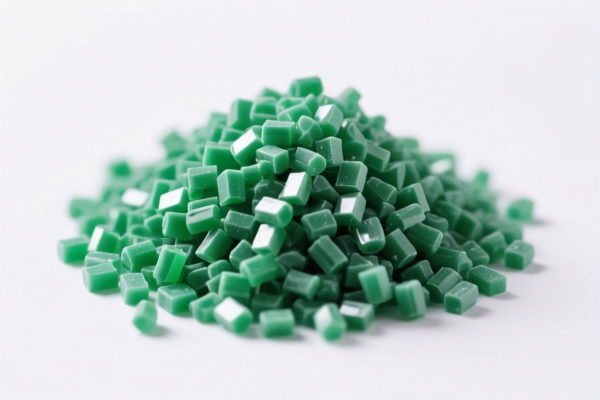
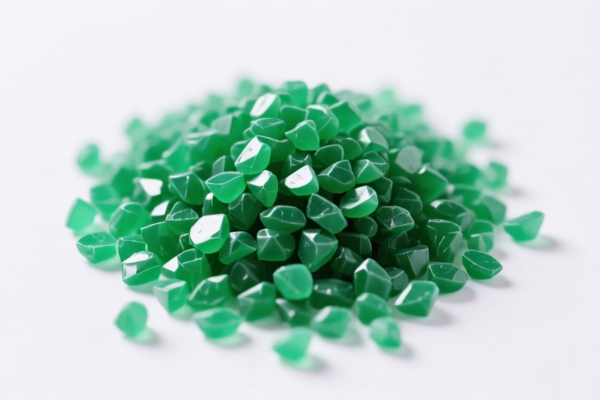
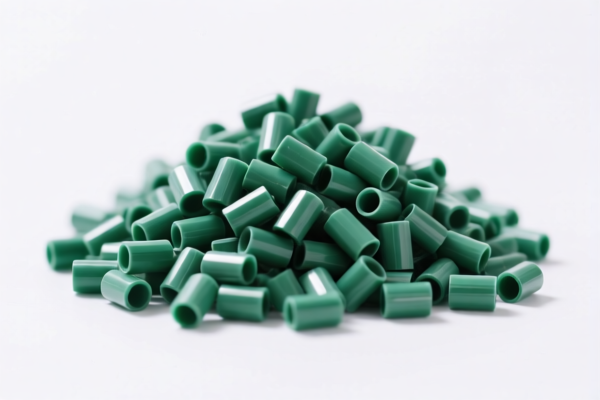
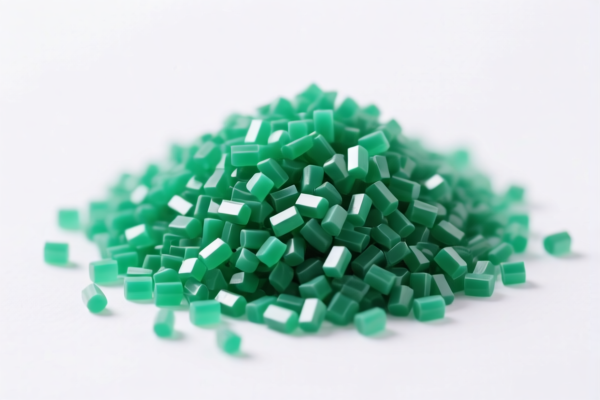
AI Analysis
🧪 PVC Resin for Cable & Wire Grade (Polyvinyl Chloride)
🌐 HS Code Reference & Customs Clearance Guide | 2026 Tariff Analysis for US Imports | Professional Compliance Strategy
📌 1. Product Definition: What is “PVC Resin”?
PVC Resin (Polyvinyl Chloride) is a primary polymer material widely used in the manufacturing of cables, wires, pipes, and profiles. In international trade, it is classified based on its physical form and chemical composition.
For cable and wire applications, PVC resin is typically supplied in primary forms (powder or granules) and must meet specific purity and polymerization standards. It is not a finished cable but a raw material used to compound PVC cable insulation and sheathing.
⚠️ Key Distinction:
- Primary Form (Resin/Granules/Powder): Classified under HS 3904.21 or 3904.22.
- Finished Cable/Sheathing: Classified under HS 8544 (Insulated wires/cables).
- Do Not Mix: Importing PVC resin as if it were cable will lead to misclassification, delays, and penalties.
📦 2. HS Code Classification Details (2026 Latest Tariff Schedule)
Based on the provided data, PVC Resin for Cable & Wire Grade falls under two primary HS Codes, depending on the specific polymer structure:
| HS Code | Product Description | Application Context | Key Characteristics |
|---|---|---|---|
3904.21.00.00 |
PVC Resin, primary form, intended for cable/wire manufacturing | Cable insulation, sheathing compounds | General-purpose PVC resin, primary form |
3904.22.00.00 |
PVC Resin, primary form, classified as chlorinated polymer | High-purity PVC, specialized cable grades | Matches the definition of vinyl polymers, primary form |
🔍 Critical Note:
- Both codes apply to primary form PVC resin (powder/granules).
- The difference between3904.21and3904.22often lies in the specific polymer type or chlorination level. For most standard cable-grade PVC, either code may apply depending on the exact technical data sheet (TDS).
- Both codes carry the same tariff structure as detailed below.
💰 3. 2026 Tariff Breakdown (Detailed Tax Explanation)
✅ Applicable Country: United States (US)
✅ Origin: China (CN) (Implied by the 122 Clause and Add-on Tariffs)
✅ Effective Date: 2025–2026 (Current Trade Policy)
🎯 Total Tariff Rate: 41.5%
(Applies to both 3904.21.00.00 and 3904.22.00.00)
The total tax burden is composed of three distinct layers:
| Tax Component | Rate | Legal Basis & Explanation |
|---|---|---|
| 1. Base Tariff (MFN) | 6.5% | Standard Most-Favored-Nation rate for PVC resins under HTSUS 3904.21/22. Applies to all WTO members. |
| 2. Section 301 Add-on Tariff | 25.0% | Imposed under US Trade Act Section 301 on Chinese goods. PVC resin is listed in List 4A (or equivalent), subject to this 25% surcharge. |
| 3. Section 122 Tariff | 10.0% | Imposed under IEEPA (International Emergency Economic Powers Act) as part of broader trade enforcement measures. Often applied to strategic materials, including certain polymers. |
| TOTAL | 41.5% | 6.5% + 25.0% + 10.0% |
📌 Explanation:
- The 25% Section 301 tariff is the most significant cost driver for Chinese-origin PVC.
- The 10% Section 122 tariff adds further pressure, making Chinese PVC resin highly costly compared to alternatives from Vietnam, India, or the EU.
- De Minimis Exemption: ❌ NOT APPLICABLE. Shipments under $800 (Section 321) are excluded from de minimis for goods subject to Section 301 and Section 122 tariffs. All shipments, regardless of value, are subject to these tariffs.
🛠️ 4. Customs Clearance Practical Advice
✅ 1. Required Documentation
| Document | Mandatory | Notes |
|---|---|---|
| Commercial Invoice | ✔️ | Must clearly state: “PVC Resin, Primary Form, PVC Grade for Cable/Wire Manufacturing” |
| Bill of Lading (B/L) | ✔️ | Ensure HS Code 3904.21.00.00 or 3904.22.00.00 is listed |
| Certificate of Origin | ✔️ | Required to prove origin (China). If non-Chinese origin, tariffs may differ |
| Technical Data Sheet (TDS) | ✔️ | Confirms polymer type, viscosity, and primary form. Critical for correct HS classification |
| Material Safety Data Sheet (MSDS) | ✔️ | Required for hazardous material compliance (PVC resin is generally non-hazardous but may contain stabilizers) |
| Customs Bond | ✔️ | Required for all commercial imports into the US |
✅ 2. Classification Strategy
🔥 “Form Matters: Powder/Granules = 3904, Not 3907 or 3901”
| Scenario | Correct HS Code | Incorrect HS Code | Consequence |
|---|---|---|---|
| PVC Resin (Powder/Granules) for Cable Compounding | 3904.21.00.00 or 3904.22.00.00 |
3907.10.00.00 (PVC in primary forms, but wrong subheading) |
Misclassification → Audit & Penalties |
| PVC Cables/Sheathing (Finished Product) | 8544.42.00.00 |
3904.21.00.00 |
Significant underpayment → Seizure |
| PVC Pipes/Tubes | 3917.21.00.00 |
3904.21.00.00 |
Wrong duty rate → Delay |
📌 Recommendation:
- Apply for an Advance Ruling (CBP Ruling Letter) before shipment. This locks in the HS classification and avoids disputes at the port.
- Clearly specify “Primary Form” in the description to distinguish from semi-finished or compound materials.
✅ 3. Cost-Saving & Risk Mitigation
| Strategy | Action | Benefit |
|---|---|---|
| Origin Diversification | Source PVC resin from Vietnam, India, or EU | Avoids 35% (25%+10%) add-on tariffs. MFN rate only (6.5%) |
| Volume Commitments | Negotiate CIF terms with suppliers | Suppliers may absorb some costs for large contracts |
| Pre-Import Screening | Verify supplier’s compliance with Section 301 exclusions | Some PVC grades may have had temporary exclusions (check current status) |
| Bonded Warehouse | Use a US bonded warehouse for storage | Defers duty payment until goods are released for consumption |
🌍 5. Global Market Comparison (2026)
| Country | HS Code | Base Tariff | Add-ons (China Origin) | Total Tax | Notes |
|---|---|---|---|---|---|
| 🇺🇸 USA | 3904.21.00.00 / 3904.22.00.00 |
6.5% | +25% (Sec 301) +10% (Sec 122) | 41.5% | High barrier for Chinese PVC |
| 🇨🇳 China | 3904.21.00.00 / 3904.22.00.00 |
0% | N/A | 0% | Domestic use |
| 🇪🇺 EU | 3904.21.00 / 3904.22.00 |
6.5% | None (if GSP not applicable) | 6.5% | Lower barrier than US |
| 🇻🇳 Vietnam | 3904.21.00 |
0–6.5% | Varies | Low | Emerging PVC manufacturing hub |
📌 Conclusion:
- USA remains the most expensive market for Chinese PVC resin due to layered tariffs.
- Consider supply chain relocation or sourcing from non-China origins to reduce costs by up to 35%.
📌 6. Common Mistakes & Pitfalls
❌ Mistake 1: Classifying PVC Resin as “Plastic Compounds” (HS 3907)
👉 Consequence: Wrong duty rate, potential audit. PVC Resin is a polymer, not a compound.
❌ Mistake 2: Ignoring Section 122 Tariff
👉 Consequence: Underpayment of 10%. CBP will assess back duties + interest.
❌ Mistake 3: Assuming De Minimis Applies
👉 Consequence: Package seizure. Section 301 and 122 goods are excluded from $800 exemption.
❌ Mistake 4: Using “Plastic Resin” without specifying “PVC”
👉 Consequence: Customs may misclassify, leading to delays. Always specify Polyvinyl Chloride.
✅ Correct Declaration Example:
“Polyvinyl Chloride (PVC) Resin, Primary Form, Powder, for Cable Insulation Manufacturing, HS 3904.21.00.00, Origin: China”
🎯 7. Final Recommendations
🎯 Remember:
🔹 “Form is King: Primary Form = 3904”
🔹 “China Origin = 41.5% Total Tax”
🔹 “No De Minimis: All Shipments Taxed”
📌 Pro Tip:
If you are importing >1000 MT annually, negotiate with suppliers for DDP (Delivered Duty Paid) terms or explore bonded manufacturing zones to defer duties.
📣 Next Steps:
📞 Contact a licensed customs broker for HS Code pre-confirmation.
📄 Request a CBP Advance Ruling for your specific PVC resin grade.
🌍 Evaluate alternative origins (Vietnam, India) to mitigate tariff risk.
✨ Smart Sourcing, Smarter Clearing!
💼 Every percentage point saved is pure profit!
Customer Reviews
About HS Code Classification
The Harmonized System (HS) is an internationally standardized nomenclature developed by the World Customs Organization (WCO) to classify traded products. Over 200 countries use the HS system as the basis for customs tariffs, trade statistics, and import/export regulations.
Each HS code follows a hierarchical structure:
- Chapter (2 digits) — Broad category of goods (e.g., Chapter 84: Machinery and Mechanical Appliances)
- Heading (4 digits) — More specific grouping within the chapter
- Subheading (6 digits) — Internationally standardized breakdown, used by all WCO member countries
- National subdivisions (8-10 digits) — Country-specific extensions for further classification, such as US HTSUS 10-digit codes
Correct HS code classification is essential for smooth customs clearance, accurate duty payment, and compliance with trade regulations. Misclassification can lead to customs delays, overpayment of duties, or penalties.
When importing from CN to US, the applicable tariff rates may include:
- Most-Favored-Nation (MFN) rate — The standard duty rate applied to WTO members
- General rate — Applied to countries without trade agreements
- Trade remedy duties — Additional tariffs such as Section 301 (anti-dumping), Section 232 (national security), or countervailing duties
The information provided on this page is for reference purposes only. For official classification, please consult with your local customs authority or a licensed customs broker.