PVC Rigid Sheet
CN → US| HS Code | Tariff Rate | Origin | Destination | Doc |
|---|---|---|---|---|
| 3920200000 | 0.0% | CN | US | Official Doc |
| 3920200001 | 0.0% | CN | US | Official Doc |
Product Images



AI Analysis
🧱 PVC Rigid Sheet (Polyvinyl Chloride Rigid Sheets & Plates)
🌐 HS Code Reference & Customs Clearance Guide | 2026 Latest Tariff Analysis | Professional Clearance Strategy
📌 I. Product Definition & Classification: Do You Truly Understand "PVC Rigid Sheets"?
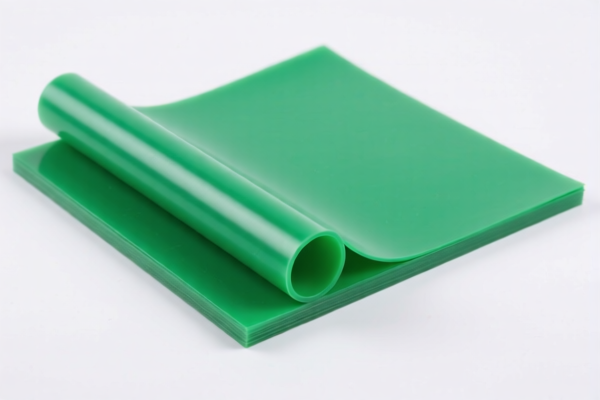
PVC (Polyvinyl Chloride) rigid sheets are a fundamental industrial material used in construction, signage, advertising, chemical lining, and packaging. In international trade, rigidity is the key differentiator. Unlike flexible PVC films (used for curtains, packaging bags, or flooring), Rigid PVC maintains its shape under pressure and is used for structural or semi-structural applications.
⚠️ Critical Distinction:
- Rigid PVC (Hard PVC): Density is higher, less plasticizer is added. Used for pipes, profiles, sheeting for thermoforming, and construction panels. → HS Code 3920.20.00.00
- Flexible PVC (Soft PVC): Contains high levels of plasticizers. Used for films, sheets, and strips that can bend or fold. → HS Code 3920.20.00.01📌 Key Classification Point:
If the sheet can be bent easily by hand without breaking and is marketed as "film" or "flexible sheet," it is Flexible. If it requires heat or significant force to bend and is used for rigid structures (like signboards, tanks, or partition walls), it is Rigid.
📦 II. HS Code Classification Details (2026 Latest Tariff Authority Comparison)
Based on the provided data, the classification for PVC sheets is strictly divided by physical flexibility.
| HS Code | Product Description | Key Characteristics | Application Examples |
|---|---|---|---|
3920.20.00.00 |
Rigid PVC Sheets, Plates, Film, Foil, and Strip | High stiffness, low plasticizer content, retains shape without support | Construction panels, advertising signboards, chemical tank linings, industrial table tops |
3920.20.00.01 |
Flexible PVC Sheets, Plates, Film, Foil, and Strip | Low stiffness, high plasticizer content, bendable by hand | Transparent packaging windows, shower curtains, inflatable products, flexible flooring |
🔍 Important Note:
- The code3920.20.00.00is the ONLY correct classification for Rigid PVC sheets.
- Misclassifying Rigid PVC as Flexible (...01) is a common error that can lead to customs delays, audits, or penalties, as the tariff implications and regulatory standards may differ between countries.
💰 III. 2026 Latest Tariff Rate Details
⚠️ Crucial Tax Information Based on Provided Data:
According to the<DATA>provided in the input, the tax information for these specific HS codes is not available in the source system.
| HS Code | Product Type | Tax Status in Data Source | Action Required |
|---|---|---|---|
3920.20.00.00 |
Rigid PVC Sheet | Error: Failed to retrieve | Must verify with local customs authority |
3920.20.00.01 |
Flexible PVC Sheet | Error: Failed to retrieve | Must verify with local customs authority |
📌 Explanation:
- The provided data explicitly states:{"tax_detail":"Failed to retrieve tax information","total_tax":"Error"}.
- This means no specific tax rate (MFN, GSP, or Additional Duty) can be calculated from this dataset.
- Importers must consult the latest national tariff schedule (e.g., HTSUS for USA, TARIC for EU, HS Code database for China/other regions) for the actual duty rate.
- Do not assume a 0% or specific rate. Failure to retrieve tax data usually requires manual verification.
🛠️ IV. Customs Clearance Practical Advice (Real-World Pitfall Avoidance)
✅ 1. Essential Documentation Checklist
| Document | Mandatory? | Notes |
|---|---|---|
| ✅ Product Specification Sheet | ✔️ | Must clearly state: "Rigid PVC," thickness, width, length, and plasticizer content (if available). |
| ✅ Commercial Invoice | ✔️ | Description must explicitly say "RIGID" to avoid confusion with flexible films. |
| ✅ Packing List | ✔️ | Weight and dimensions of the pallets/rolls. |
| ✅ Bill of Lading / Air Waybill | ✔️ | Standard shipping documents. |
| ✅ Certificate of Origin (CO) | ✔️ | May be required for preferential tariffs (e.g., RCEP, USMCA, if applicable). |
| ✅ Declaration of Non-Rigid/Flexible | ✔️ | Some countries require a written statement confirming the product is "Rigid" if it could be mistaken for flexible. |
✅ 2. Declaration Strategy (Key Tips)
🔥 "Rigid vs. Flexible: One Word Changes Everything!"
| Scenario | Correct Declaration | Incorrect Declaration | Risk |
|---|---|---|---|
| Thermoforming Sheets | "Rigid PVC Sheets, 2mm thickness, for thermoforming" | "PVC Films" | High risk of misclassification to ...01 |
| Construction Panels | "Rigid PVC Building Panels" | "PVC Strips" | Risk of incorrect HS code application |
| Chemical Tank Linings | "Rigid PVC Plates for Chemical Resistance" | "Flexible PVC Liners" | If it bends easily, it might be classified as Flexible |
📌 Pro Tip:
- If the sheet is supplied in rolls, ensure the invoice states: "Rigid PVC Sheets in Rolls (Non-Flexible)" to pre-empt customs queries.
- If the sheet is supplied in sheets/plates, clearly label as "Rigid PVC Plates/Sets."
✅ 3. Special Case Handling
| Case | Handling Advice |
|---|---|
| Mixed Containers (Rigid + Flexible) | Do NOT combine in one HS code line item. Declare separately to avoid confusion and potential duty underpayment. |
| Co-extruded PVC Sheets | Check the primary layer. If the surface layer is rigid PVC, declare as Rigid. Provide layer-by-layer specification. |
| Recycled PVC Sheets | Some countries have different environmental regulations for recycled plastics. Ensure compliance with REACH (EU) or TSCA (USA) if applicable. |
| Colorants/Additives | If the PVC contains flame retardants or other additives, declare the base material as PVC and list additives if required by local law. |
🌍 V. Global Market Customs Comparison (2026 Latest)
| Country/Region | Recommended HS Code | Estimated Duty (General MFN) | Certification/Notes |
|---|---|---|---|
| 🇺🇸 USA | 3920.20.00.00 (Rigid) |
3.4% (varies by trade policy) | No Section 301 duty for PVC sheets generally, but verify latest USITC list. |
| 🇪🇺 EU | 3920.20.00 (Rigid) |
6.5% | REACH compliance mandatory. |
| 🇨🇳 China | 3920.20.00 (Rigid) |
6.5% | No additional anti-dumping duties typically for basic PVC sheets. |
| 🇮🇳 India | 3920.20.00 (Rigid) |
Varies | BIS certification may be required for certain applications. |
📌 Conclusion:
- Rigid PVC is a standard industrial material with relatively low base tariffs globally.
- The main risk is misclassification (confusing it with flexible films or other plastic sheets like PP/PE).
- Tax data is missing in the source, so always verify with local customs before shipment.
📌 VI. Common Errors & Pitfalls (Lessons Learned)
❌ Error 1: Declaring "Rigid PVC Sheets" as "PVC Films"
👉 Consequence: May be assigned to 3920.20.00.01 (Flexible), leading to incorrect duty assessment or rejection if rigid sheets are restricted for certain uses.
❌ Error 2: Not specifying "Rigid" in the commercial invoice
👉 Consequence: Customs officers may assume "flexible" by default for rolled products, causing delays.
❌ Error 3: Assuming tax data is "0%" or "Standard" without verification
👉 Consequence: Since the data source returned an "Error", assuming a rate could lead to underpayment of duties and penalties.
✅ Correct Practice:
"Rigid PVC Sheets, Unplasticized (uPVC) or Plasticized, 1-5mm Thick, for Construction/Signage, Model XYZ"
🎯 VII. Conclusion: Precision in Classification Saves Costs!
🎯 Remember the Mantra:
🔹 "Rigid = Hard = 3920.20.00.00"
🔹 "Flexible = Soft = 3920.20.00.01"
🔹 "Tax Data = Missing → Verify Manually!"
📌 Pro Tip:
If your PVC sheets are thinner than 0.5mm and bend easily, even if made of PVC, they may be classified as Flexible. Always test the physical properties.
📣 Immediate Action:
📞 Contact your customs broker to verify the current tariff rate for
3920.20.00.00in your destination country.
🚀 Ensure your invoice clearly states "RIGID" to avoid clearance delays.
✨ Professional Classification, Smooth Customs Clearance!
💼 Your Cost Efficiency Starts with Accurate HS Codes!
Customer Reviews
About HS Code Classification
The Harmonized System (HS) is an internationally standardized nomenclature developed by the World Customs Organization (WCO) to classify traded products. Over 200 countries use the HS system as the basis for customs tariffs, trade statistics, and import/export regulations.
Each HS code follows a hierarchical structure:
- Chapter (2 digits) — Broad category of goods (e.g., Chapter 84: Machinery and Mechanical Appliances)
- Heading (4 digits) — More specific grouping within the chapter
- Subheading (6 digits) — Internationally standardized breakdown, used by all WCO member countries
- National subdivisions (8-10 digits) — Country-specific extensions for further classification, such as US HTSUS 10-digit codes
Correct HS code classification is essential for smooth customs clearance, accurate duty payment, and compliance with trade regulations. Misclassification can lead to customs delays, overpayment of duties, or penalties.
When importing from CN to US, the applicable tariff rates may include:
- Most-Favored-Nation (MFN) rate — The standard duty rate applied to WTO members
- General rate — Applied to countries without trade agreements
- Trade remedy duties — Additional tariffs such as Section 301 (anti-dumping), Section 232 (national security), or countervailing duties
The information provided on this page is for reference purposes only. For official classification, please consult with your local customs authority or a licensed customs broker.