PVC Rod
CN → US| HS Code | Tariff Rate | Origin | Destination | Doc |
|---|---|---|---|---|
| 3916200010 | 40.8% | CN | US | Official Doc |
| 3916200091 | 40.8% | CN | US | Official Doc |
| 8547200000 | 35.0% | CN | US | Official Doc |
| 8547900020 | 89.6% | CN | US | Official Doc |
Product Images
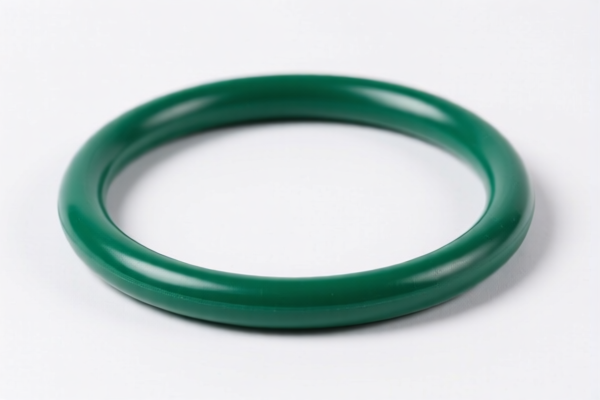
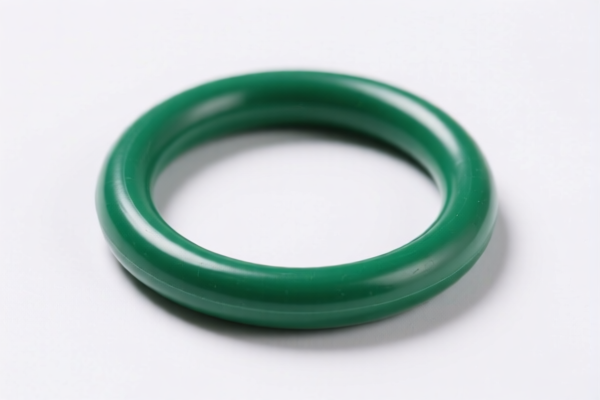
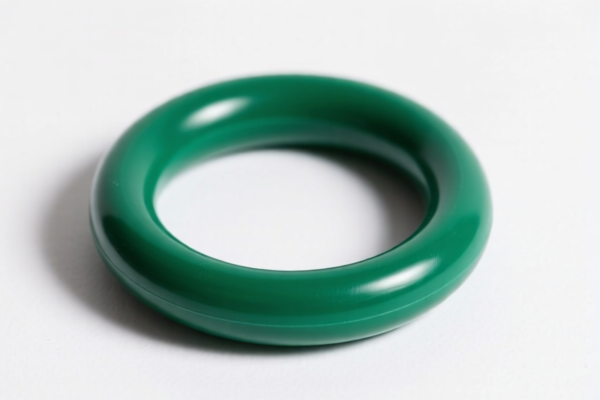
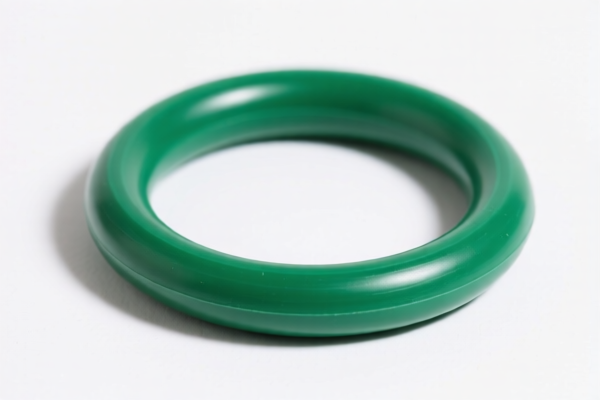
AI Analysis
🏗️ PVC Rods & Electrical Insulating Fittings: The Hidden Tariff Minefield
🌐 HS Code Reference & Customs Clearance Guide | 2026 Latest Tariff Analysis | Professional Strategy
📌 Part 1: Product Definition & Classification: Are You Selling a "Plastic Rod" or an "Electrical Part"?
The term "PVC Rod" is dangerously ambiguous in international trade. It bridges two distinct categories: Plastic Semi-Finished Goods and Electrical Insulating Accessories. Misclassification here leads to massive tariff differences and potential shipment delays.
In international trade, these products are split into two main categories:
1. Plastic Profile Shapes (Chemical Products):
Solid PVC rods, sticks, or monofilaments with a cross-sectional dimension exceeding 1mm. These are considered "semi-finished" plastic goods, often used for machining, construction (siding), or general industrial use.
2. Electrical Insulating Fittings (Electrical Equipment):
Fittings made wholly of insulating material (like PVC) for electrical machines or appliances. This includes threaded sockets, conduit joints, or specific insulators not covered by Heading 8546. If the primary function is electrical insulation or assembly via metal threads molded into the plastic, it falls here.
⚠️ Key Distinction Point:
- If the item is a raw rod/profile for machining or siding → Classify under 3916 (Plastics).
- If the item is a finished fitting/joint for electrical wiring or assembly → Classify under 8547 (Insulating Fittings).
📦 Part 2: HS Code Classification Details (2026 Latest Tariff Authority)
| HS Code | Product Description | Application Scenario | Primary Function |
|--------|--------------------------|----------|
| 3916.20.00.10 | Siding for house or building exterior (PVC Rods/Profiles) | Building construction, exterior cladding, architectural profiles | Structural/Decorative Plastic |
| 3916.20.00.91 | Other PVC Monofilament/Rods (Cross-section >1mm) | General industrial machining, handles, generic plastic rods | General Plastic Material |
| 8547.20.00.00 | Insulating Fittings of Plastics (Wholly of insulating material) | Electrical junction boxes, molded sockets, non-metallic insulating components | Electrical Insulation/Assembly |
| 8547.90.00.20 | Other: Conduit Tubing & Joints of Base Metal Lined with Insulating Material | Metal pipes with PVC lining, metallic conduit fittings | Electrical Conduit Protection |
🔍 Critical Reminder:
- "PVC Rods" intended for construction/siding go to 3916.20.00.10.
- "PVC Rods" intended for general industrial use/machining go to 3916.20.00.91.
- "PVC Fittings/Joints" for electrical use go to 8547.20.00.00.
- Do NOT misclassify electrical conduit joints as simple plastic rods. If it’s part of an electrical system, it’s 8547.
💰 Part 3: 2026 Latest Tariff Rate Breakdown (Including Surtaxes)
✅ Applicable Country: USA (US)
✅ Origin: China (CN)
✅ Effective Date: 2025/2026 (Post-2024 Tariff Adjustments)
🎯 1. 3916.20.00.10 —— PVC Siding/Profiles for Buildings
| Item | Details |
|---|---|
| Base Tariff Rate | 5.8% (Ad Valorem) |
| Additional Surtax (Section 301) | +25.0% |
| Total Tariff Rate | 30.8% |
| Tax Calculation | CIF Value × 30.8% |
| De Minimis Exemption? | ❌ No (High tariff threshold applies) |
| Legal Basis | HTSUS 3916.20.00.10 + Section 301 Footnotes |
📌 Explanation:
- The 5.8% is the standard MFN duty for PVC plastics.
- The 25% surtax is under the U.S. Trade Representative’s Section 301 actions against China.
- Total: 30.8%. This is a moderate-high tariff. Ensure your commercial invoice clearly states "PVC Siding for Exterior" to avoid being classified as "Other" plastics which might have different base rates.
🎯 2. 3916.20.00.91 —— Other PVC Rods/Monofilaments (Industrial Use)
| Item | Details |
|---|---|
| Base Tariff Rate | 5.8% (Ad Valorem) |
| Additional Surtax (Section 301) | +25.0% |
| Total Tariff Rate | 30.8% |
| Tax Calculation | CIF Value × 30.8% |
| De Minimis Exemption? | ❌ No |
| Legal Basis | HTSUS 3916.20.00.91 + Section 301 Footnotes |
📌 Explanation:
- Even if the rod is just for "general use" (e.g., for DIY or non-electrical machinery), it falls under the same plastic profile category.
- Total: 30.8%. Same as siding.
- Warning: If the rod is actually an electrical insulator (see below), using this code is smuggling/fraud. Customs will reclassify and apply the 8547 rates + penalties.
🎯 3. 8547.20.00.00 —— Insulating Fittings (Plastics)
| Item | Details |
|---|---|
| Base Tariff Rate | 0.0% (Ad Valorem) |
| Additional Surtax (Section 301) | +25.0% |
| Total Tariff Rate | 25.0% |
| Tax Calculation | CIF Value × 25.0% |
| De Minimis Exemption? | ❌ No |
| Legal Basis | HTSUS 8547.20.00.00 + Section 301 Footnotes |
📌 Explanation:
- The base duty is 0%, which is excellent.
- However, the 25% Section 301 surtax still applies.
- Total: 25.0%.
- Advantage: This is 5.8% lower than the plastic rod classification.
- Condition: The product MUST be an "insulating fitting" for electrical equipment. Minor metal components (like threaded sockets) are allowed if they were incorporated solely for assembly during molding.
🎯 4. 8547.90.00.20 —— Conduit Tubing & Joints (Base Metal Lined with Insulating Material)
| Item | Details |
|---|---|
| Base Tariff Rate | 4.6% (Ad Valorem) |
| Additional Surtax (Section 301) | +25.0% |
| Metal-Specific Surtax (Steel/Aluminum/Copper) | +50.0% |
| Total Tariff Rate | 79.6% |
| Tax Calculation | CIF Value × 79.6% |
| De Minimis Exemption? | ❌ No |
| Legal Basis | HTSUS 8547.90.00.20 + Section 301 + Metal Surtax |
📌 Explanation:
- This code applies to metal conduits (steel, aluminum, copper) lined with PVC/insulating material.
- Base: 4.6%.
- Section 301: +25%.
- Metal Surtax: +50% (Specific to steel/aluminum/copper products from China).
- Total: 79.6%.
- CRITICAL WARNING: This is an extremely high tariff. Do NOT use this code for pure plastic rods. If you are importing a PVC-lined metal pipe, you must declare the metal content accurately. Pure plastic rods should NEVER be declared here.
🛠️ Part 4: Customs Clearance Practical Advice (Real-World Pitfall Avoidance)
✅ 1. Preparation Checklist (Non-Negotiable)
| Document | Required? | Explanation |
|---|---|---|
| ✅ Product Photos | ✔️ | Must show clear view of cross-section (for 3916) or threading/assembly features (for 8547). |
| ✅ Technical Data Sheet | ✔️ | Specify material (PVC Type II, etc.), dimensions, and intended use. |
| ✅ Commercial Invoice | ✔️ | Description must match HS Code precisely. E.g., "PVC Conduit Fitting" vs. "PVC Rod for Machining". |
| ✅ Bill of Lading | ✔️ | Ensure weight and volume match invoice. |
| ✅ Certificate of Origin | ✔️ | Essential for verifying China origin and applying surtaxes. |
✅ 2. Declaration Strategy (Key Mnemonic)
🔥 "Plastic Rod? 30.8%. Electrical Fit? 25.0%. Metal Pipe? 79.6%!"
| Scenario | Correct HS Code | Common Mistake | Consequence |
|---|---|---|---|
| Pure PVC Rod (for drilling/cutting) | 3916.20.00.91 |
Declare as 8547 |
Risk of Penalty: If customs proves it’s not an electrical fitting, you face under-declaration penalties. |
| Pure PVC Rod (for building siding) | 3916.20.00.10 |
Declare as 3916.20.00.91 |
Minor Risk: Slight difference in base duty, but both are ~30.8%. Better to be specific. |
| PVC Fitting (electrical junction box part) | 8547.20.00.00 |
Declare as 3916 |
Lost Savings: You pay 30.8% instead of 25.0%. Overpay by 5.8%. |
| PVC-Lined Metal Conduit | 8547.90.00.20 |
Declare as 3916 |
Major Penalty: Smuggling allegation. 79.6% vs 30.8% is a huge discrepancy. |
✅ 3. Special Handling Tips
| Situation | Advice |
|---|---|
| Mixed Shipment (Rods + Electrical Fittings) | Do NOT pack together without clear separation. If mixed, customs may classify the entire shipment under the highest duty or the most complex code. Separate them in the manifest. |
| "Threaded" PVC Rods | If the thread is molded for electrical assembly, lean towards 8547.20.00.00. If the thread is for general mechanical assembly, use 3916. Provide proof (e.g., standard NPT threads = electrical/mechanical; custom metric threads = general). |
| PVC-Lined Metal Pipe | Ensure the metal content is declared. The 50% surtax is triggered by the metal component, not the PVC lining. |
🌍 Part 5: Global Market Comparison (2026 Update)
| Country/Region | Recommended HS Code | Tariff (China Origin) | Key Requirement |
|---|---|---|---|
| 🇺🇸 USA | 8547.20.00.00 (Fittings) |
25.0% | Section 301 Surtax applies |
| 🇺🇸 USA | 3916.20.00.91 (Rods) |
30.8% | Section 301 Surtax applies |
| 🇨🇳 China | 8547.20.00.00 |
Low (0-5%) | No surtax |
| 🇪🇺 EU | 8547.20.00 |
~0-3% | CE Marking may apply |
| 🇬🇧 UK | 8547.20.00 |
~0-5% | UKCA Marking may apply |
📌 Conclusion:
- USA is the most expensive market for these goods due to Section 301 and Metal Surtaxes.
- Electrical Fittings (8547) are cheaper than General Plastic Rods (3916) in the USA (25% vs 30.8%).
- Metal-lined conduits (8547.90.00.20) are prohibitively expensive (79.6%). Consider sourcing metal components from non-China origins if possible.
📌 Part 6: Common Errors & Pitfalls (Blood & Tears Lessons)
❌ Mistake 1: Declaring a PVC-Lined Metal Conduit as a "Plastic Pipe" (3916)
👉 Result: Customs audit detects metal. Back taxes + 79.6% rate applied + Penalties. Avoid!
❌ Mistake 2: Declaring a Generic PVC Rod as an Electrical Fitting (8547) to save 5.8%
👉 Result: Customs rejects because no electrical function is evident. Delayed shipment + re-classification fees. Not worth it.
❌ Mistake 3: Ignoring the 50% Metal Surtax on 8547.90.00.20
👉 Result: Budget for 25% tariff, but pay 79.6%. Margin destroyed.
✅ Correct Approach:
"PVC Insulating Fitting for Electrical Assembly, Model XYZ, No Metal Except Molded Threads" → 8547.20.00.00 (25%)
"PVC Profile Rod, 20mm Diameter, for CNC Machining" → 3916.20.00.91 (30.8%)
🎯 Part 7: Conclusion: Precision Saves Money!
🎯 Remember the Formula:
🔹 "Electrical Fitting = 25%. General Plastic Rod = 30.8%. Metal Conduit = 79.6%!"
🔹 "Function defines Code. Don't guess. Get an Advance Ruling if unsure."
📌 Pro Tip:
If your product is borderline (e.g., a plastic rod with a small metal insert), consider applying for a Binding Tariff Information (BTI) or Advance Ruling from US Customs (CBP) before shipment. This locks in the 25% rate for 8547.20.00.00 and avoids the 30.8% or 79.6% traps.
📣 Immediate Action:
📞 Contact your customs broker with product photos and intended use.
🚀 Clarify "Fitting" vs. "Rod" in your commercial invoice.
💼 Protect your margin by using the correct HS Code!
✨ Customs Clearance Starts with Accurate Classification!
💼 Your Cost Depends on the Code, Not Just the Weight!
Customer Reviews
About HS Code Classification
The Harmonized System (HS) is an internationally standardized nomenclature developed by the World Customs Organization (WCO) to classify traded products. Over 200 countries use the HS system as the basis for customs tariffs, trade statistics, and import/export regulations.
Each HS code follows a hierarchical structure:
- Chapter (2 digits) — Broad category of goods (e.g., Chapter 84: Machinery and Mechanical Appliances)
- Heading (4 digits) — More specific grouping within the chapter
- Subheading (6 digits) — Internationally standardized breakdown, used by all WCO member countries
- National subdivisions (8-10 digits) — Country-specific extensions for further classification, such as US HTSUS 10-digit codes
Correct HS code classification is essential for smooth customs clearance, accurate duty payment, and compliance with trade regulations. Misclassification can lead to customs delays, overpayment of duties, or penalties.
When importing from CN to US, the applicable tariff rates may include:
- Most-Favored-Nation (MFN) rate — The standard duty rate applied to WTO members
- General rate — Applied to countries without trade agreements
- Trade remedy duties — Additional tariffs such as Section 301 (anti-dumping), Section 232 (national security), or countervailing duties
The information provided on this page is for reference purposes only. For official classification, please consult with your local customs authority or a licensed customs broker.