PVC Scratch Protection Sheet
CN → US| HS Code | Tariff Rate | Origin | Destination | Doc |
|---|---|---|---|---|
| 3926909989 | 22.8% | CN | US | Official Doc |
| 3921905050 | 39.8% | CN | US | Official Doc |
| 3919905040 | 40.8% | CN | US | Official Doc |
| 3919905060 | 40.8% | CN | US | Official Doc |
| 3920992000 | 39.2% | CN | US | Official Doc |
Product Images

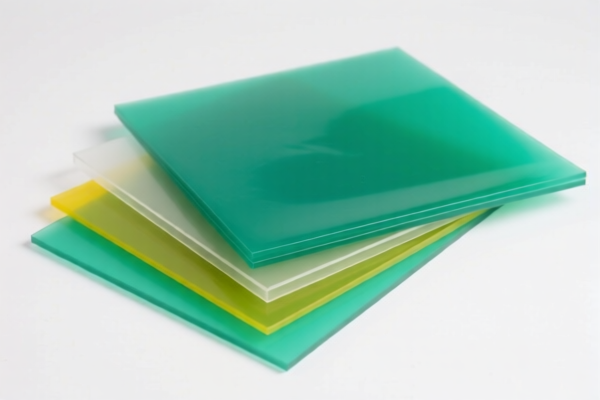
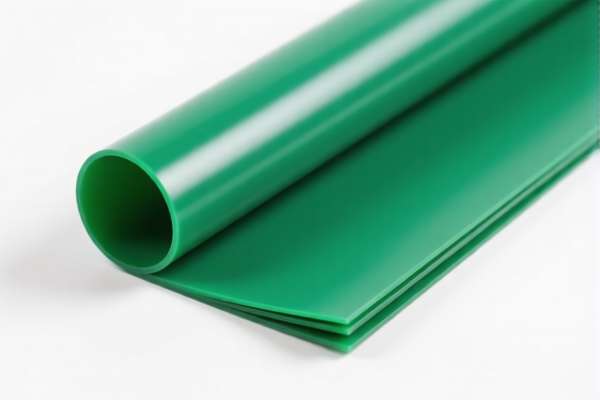
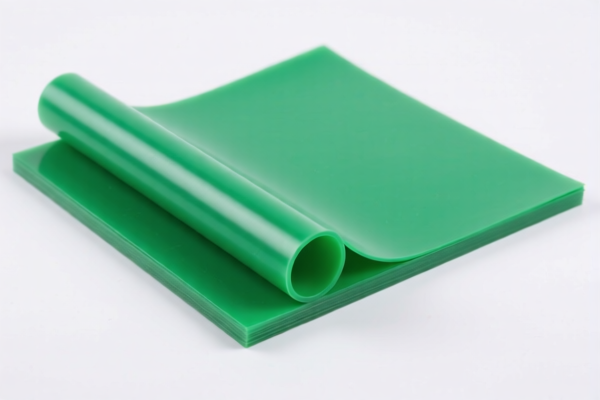
AI Analysis
🛡️ PVC & PET Scratch Protection Sheets: HS Code Classification & US Customs Strategy
🌐 HS Code Reference & Customs Clearance Guide | 2026 Latest Tariff Analysis | Professional Level Clearance Strategy
📌 I. Product Definition & Classification: Do You Truly Understand "Scratch Protection Sheets"?
In international trade, "Scratch Protection Sheets" are not a single, uniform product. Their classification depends entirely on Material Composition (PVC vs. PET), Physical Form (Rigid Sheet vs. Flexible Film), and Surface Treatment (Self-Adhesive vs. Non-Adhesive).
Misclassification here leads to severe tax discrepancies, ranging from 22.8% to 40.8%.
Key Distinctions:
* PVC Rigid/ Semi-Rigid Sheets: Often classified under general plastic plates/sheets (3926 or 3920), typically attracting lower base tariffs.
* PET Flexible Films: Classified under plastic films (3920 or 3919), generally attracting higher base tariffs due to their specific manufacturing processes.
* Self-Adhesive Property: If the film has an adhesive backing ready for application, it falls under 3919 (Self-adhesive plates, sheets...), which has a higher base duty than non-adhesive films (3920/3921).
⚠️ Critical Classification Point:
- If it is a PVC sheet (rigid/thick) → Likely3926.90.99.89(Articles of plastic, other).
- If it is a PET film (flexible/thin) and Non-adhesive → Likely3921.90.50.50or3920.99.20.00.
- If it is a PET film (flexible/thin) and Self-Adhesive → Likely3919.90.50.40or3919.90.50.60.
📦 II. HS Code Classification Details (2026 Latest Tariff Authority Comparison)
| HS Code | Product Description | Material | Key Feature | Applicable Scenario |
|---|---|---|---|---|
3926.90.99.89 |
Other articles of plastic | PVC | Rigid/Semi-Rigid Sheet | PVC scratch protection plates, rigid covers |
3921.90.50.50 |
Other plates, sheets... | PET | Non-Adhesive Film | PET scratch protection film (non-sticky) |
3919.90.50.40 |
Self-adhesive plates... | PET | Self-Adhesive | PET scratch protection film (with glue/pressure-sensitive) |
3919.90.50.60 |
Self-adhesive plates... | PET | Self-Adhesive | PET scratch protection film (with glue/pressure-sensitive, alternative subheading) |
3920.99.20.00 |
Other plates, sheets... | PET | Non-Adhesive Film | PET non-reinforced plastic film (strictly non-adhesive) |
🔍 Important Reminder:
- "Self-Adhesive" (3919) vs. "Non-Adhesive" (3920/3921): This is the biggest risk area. A PET film that comes with a release liner and adhesive backing MUST be declared as3919. Declaring it as3920is incorrect and will trigger audits.
- PVC vs. PET: PVC items often fall under3926(Other articles) if they are thick/rigid sheets, whereas PET items are almost always classified as3919or3920/3921(Filsms/Sheets).
💰 III. 2026 Latest Tariff Rate Breakdown (Including Supplementary Taxes & Policy Add-ons)
✅ Applicable Country: United States (US)
✅ Country of Origin: China (CN)
✅ Effective Date: From November 10, 2025 (and subsequent imports)
🎯 1. 3926.90.99.89 — PVC Material Scratch Protection Sheet
| Item | Content |
|---|---|
| Base Duty | 5.3% |
| Section 301 Duty | +7.5% |
| Section 122 Duty | +10% |
| Total Duty Rate | 22.8% |
| Tax Calculation | CIF Value × 22.8% |
| De Minimis Exemption | ❌ Not Applicable (Deny De Minimis) |
| Legal Basis Path | Section 301: 9903.88.01 → Section 122: 9903.01.25 → USITC: 3926.90.99.89 |
📌 Explanation:
- PVC rigid/semi-rigid sheets have a lower total tax burden compared to PET films.
- The base duty is only 5.3%, but with Section 301 (7.5%) and Section 122 (10%), it adds up to 22.8%.
- This is the most cost-effective option if the material is genuinely PVC.
🎯 2. 3921.90.50.50 — PET Material Scratch Protection Film (Non-Adhesive)
| Item | Content |
|---|---|
| Base Duty | 4.8% |
| Section 301 Duty | +25.0% |
| Section 122 Duty | +10% |
| Total Duty Rate | 39.8% |
| Tax Calculation | CIF Value × 39.8% |
| De Minimis Exemption | ❌ Not Applicable (Deny De Minimis) |
| Legal Basis Path | Section 301: 9903.88.01 → Section 122: 9903.01.25 → USITC: 3921.90.50.50 |
📌 Note:
- PET non-adhesive films face a much higher Section 301 duty of 25% compared to PVC's 7.5%.
- Even though the base duty is low (4.8%), the total is nearly 40%.
🎯 3. 3919.90.50.40 & 3919.90.50.60 — PET Material Self-Adhesive Scratch Protection Film
| Item | Content |
|---|---|
| Base Duty | 5.8% |
| Section 301 Duty | +25.0% |
| Section 122 Duty | +10% |
| Total Duty Rate | 40.8% |
| Tax Calculation | CIF Value × 40.8% |
| De Minimis Exemption | ❌ Not Applicable (Deny De Minimis) |
| Legal Basis Path | Section 301: 9903.88.01 → Section 122: 9903.01.25 → USITC: 3919.90.50.40 / 3919.90.50.60 |
📌 Warning:
- Self-Adhesive (3919) has the HIGHEST tax rate (40.8%).
- If your PET film is self-adhesive, you cannot use3920(non-adhesive) codes.
- The difference between3919.50.40and3919.50.60may depend on specific thickness or end-use interpretations, but the tax impact is identical.
🎯 4. 3920.99.20.00 — PET Material Non-Reinforced Plastic Film (Non-Adhesive)
| Item | Content |
|---|---|
| Base Duty | 4.2% |
| Section 301 Duty | +25.0% |
| Section 122 Duty | +10% |
| Total Duty Rate | 39.2% |
| Tax Calculation | CIF Value × 39.2% |
| De Minimis Exemption | ❌ Not Applicable (Deny De Minimis) |
| Legal Basis Path | Section 301: 9903.88.01 → Section 122: 9903.01.25 → USITC: 3920.99.20.00 |
📌 Note:
- This code is for strictly non-adhesive, non-reinforced PET films.
- Slightly lower than3921(39.2% vs 39.8%) due to a lower base duty (4.2% vs 4.8%), but still very high compared to PVC.
🛠️ IV. Customs Clearance Practical Advice (Real-World Pitfall Guide)
✅ 1. Documentation Checklist (Must-Provides)
| Document | Required | Description |
|---|---|---|
| ✅ Product Specification Sheet | ✔️ | Must clearly state Material (PVC/PET), Thickness, Adhesive Type (None/Self-Adhesive) |
| ✅ Product Photos | ✔️ | Clear images showing flexibility, backing paper (if self-adhesive), and roll/sheet form |
| ✅ Commercial Invoice | ✔️ | Accurate description: e.g., "PVC Scratch Protection Sheet, 0.5mm thick, Non-Adhesive" |
| ✅ Packing List | ✔️ | Weight and dimensions per carton |
| ✅ Test Report | ✔️ | Material composition test (GC-MS or similar) to prove PVC vs. PET if challenged |
✅ 2. Declaration Tips (Key Mnemonics)
🔥 "Material First, Adhesive Second, Code Follows!"
| Scenario | Correct Declaration | Wrong Practice |
|---|---|---|
| PVC Rigid Sheet | 3926.90.99.89 (22.8%) |
Misdeclare as PET Film → 39.8%+ |
| PET Film, NO Glue | 3921.90.50.50 (39.8%) or 3920.99.20.00 (39.2%) |
Misdeclare as Self-Adhesive → 40.8% |
| PET Film, WITH Glue | 3919.90.50.40 (40.8%) |
Misdeclare as Non-Adhesive → 39.2% + Penalty |
| Mixed Pack (PVC & PET) | Split Declaration | Combine into one HS Code → Audit Risk |
📌 Crucial Insight:
- If you use PVC, you save ~17-18% in taxes compared to PET.
- If your product is PET but Non-Adhesive, ensure the invoice explicitly says "Non-Adhesive" or "Without Adhesive Backing".
- If it is Self-Adhesive, you MUST declare it as3919. Do not try to hide the adhesive.
✅ 3. Special Cases Handling
| Case | Handling Advice |
|---|---|
| OEM Custom Sizes | Provide cutting templates; ensure "Finished Product" status is clear |
| PET Film with Release Liner | Clearly state "Pressure-Sensitive Adhesive" on invoice; use 3919 codes |
| PVC vs. PET Dispute | Provide a material test report from a third-party lab (e.g., SGS, BV) to prove composition |
| Rolls vs. Sheets | Both are acceptable, but ensure the HS code matches the physical form (films are usually rolls, sheets may be cut) |
🌍 V. Global Market Comparison (2026 Latest)
| Country/Region | Recommended HS Code | Tariff (CN Origin) | Certification Requirements | Notes |
|---|---|---|---|---|
| 🇺🇸 USA | 3926.90.99.89 (PVC) |
22.8% | No specific cert required | Best for PVC; PET faces 39-41% |
| 🇺🇸 USA | 3919.90.50.40 (PET Self-Adh) |
40.8% | No specific cert required | Highest Tax; avoid if PVC is an option |
| 🇨🇳 China | 3926.90.99.89 |
5.3% | RoHS (if applicable) | No extra tariffs |
| 🇪🇺 EU | 3920.99.20.00 |
0-6.5% (varies) | REACH, RoHS | Lower base duties, no 301/122 equivalents |
| 🇯🇵 Japan | 3920.99.20.00 |
0-4.5% | PSE (if electrical contact) | No major anti-dumping on these codes |
📌 Conclusion:
- USA is the most expensive market due to Section 301 and 122 tariffs.
- PVC is significantly cheaper to import into the US than PET.
- PET Self-Adhesive is the most expensive category.
📌 VI. Common Mistakes & Pitfalls (Lessons Learned)
❌ Mistake 1: Declaring Self-Adhesive PET Film as 3920 (Non-Adhesive)
👉 Consequence: Tariff drops from 40.8% to 39.2% on paper, but customs audit will find the adhesive → Back Taxes + Penalties + Delay.
❌ Mistake 2: Using 3926 for Thin PET Films
👉 Consequence: 3926 is for "Other Articles" (often rigid). Thin films must be 3919/3920/3921. Misclassification leads to rejection.
❌ Mistake 3: Not specifying "Material" in the Description
👉 Consequence: Customs cannot determine if it's PVC (22.8%) or PET (39%+). They may apply the highest default rate or seize the shipment for further examination.
❌ Mistake 4: Ignoring Section 122
👉 Consequence: Forgetting the 10% Section 122 duty leads to underpayment and subsequent demand for payment with interest.
✅ Correct Practice:
"PVC Scratch Protection Sheet, 0.5mm Thick, Non-Adhesive, Industrial Use, Model XYZ, HS Code 3926.90.99.89"
OR
"PET Self-Adhesive Scratch Protection Film, 0.1mm Thick, Pressure-Sensitive, Roll Format, Model ABC, HS Code 3919.90.50.40"
🎯 VII. Conclusion: Professional Declaration Saves Money!
🎯 Remember the Mnemonic:
🔹 "PVC is King (22.8%), PET is Expensive (39-41%), Adhesive Means 40.8%!"
🔹 "HS Code Determines Tax, Declaration Determines Speed, Material Determines Cost!"
📌 Pro Tip:
If your product is PET-based, consider:
1. Switching to PVC if the application allows (saves ~18% tax).
2. Ensuring Non-Adhesive status if possible (saves ~1.6% tax vs Self-Adhesive).
3. Applying for an Advance Ruling if unsure about the Adhesive/NON-Adhesive distinction.
📣 Immediate Action:
📞 Contact your Customs Broker + Provide Product Photos + Verify Material Composition
🚀 Clear Customs Smoothly, Reduce Costs, Maximize Profit!
✨ Professional Clearance Starts with Accurate Classification!
💼 Every Cent of Tax Matters!
Customer Reviews
About HS Code Classification
The Harmonized System (HS) is an internationally standardized nomenclature developed by the World Customs Organization (WCO) to classify traded products. Over 200 countries use the HS system as the basis for customs tariffs, trade statistics, and import/export regulations.
Each HS code follows a hierarchical structure:
- Chapter (2 digits) — Broad category of goods (e.g., Chapter 84: Machinery and Mechanical Appliances)
- Heading (4 digits) — More specific grouping within the chapter
- Subheading (6 digits) — Internationally standardized breakdown, used by all WCO member countries
- National subdivisions (8-10 digits) — Country-specific extensions for further classification, such as US HTSUS 10-digit codes
Correct HS code classification is essential for smooth customs clearance, accurate duty payment, and compliance with trade regulations. Misclassification can lead to customs delays, overpayment of duties, or penalties.
When importing from CN to US, the applicable tariff rates may include:
- Most-Favored-Nation (MFN) rate — The standard duty rate applied to WTO members
- General rate — Applied to countries without trade agreements
- Trade remedy duties — Additional tariffs such as Section 301 (anti-dumping), Section 232 (national security), or countervailing duties
The information provided on this page is for reference purposes only. For official classification, please consult with your local customs authority or a licensed customs broker.