PVC Self Adhesive Ceiling Panel
CN → US| HS Code | Tariff Rate | Origin | Destination | Doc |
|---|---|---|---|---|
| 3925900000 | 40.3% | CN | US | Official Doc |
| 3925305000 | 22.8% | CN | US | Official Doc |
Product Images
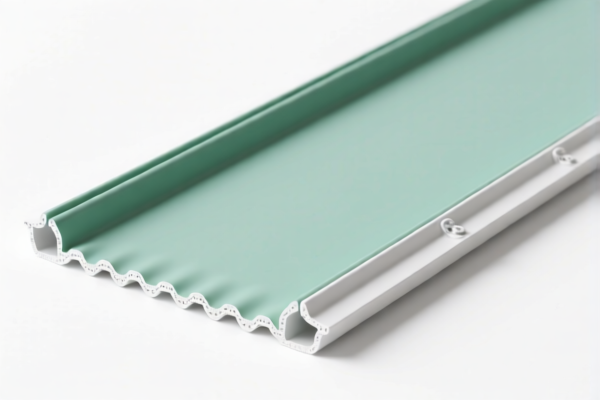
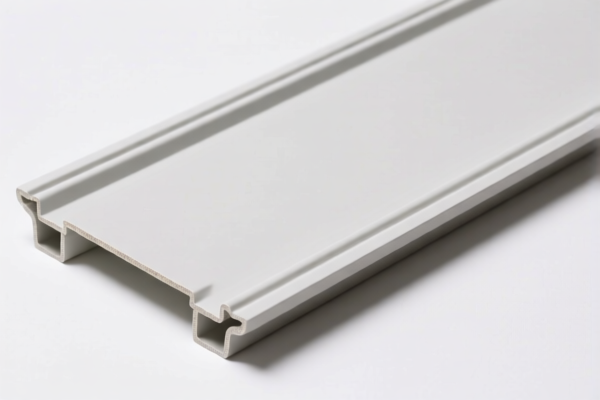
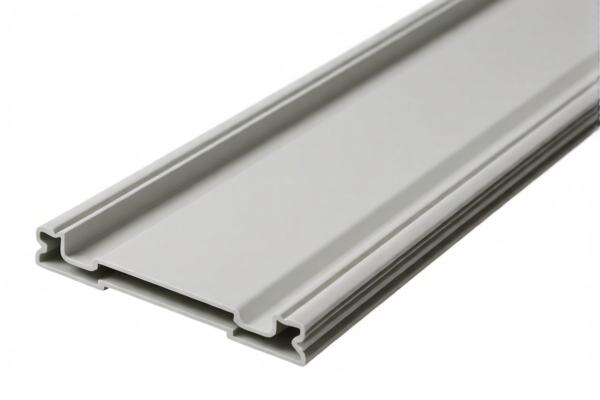
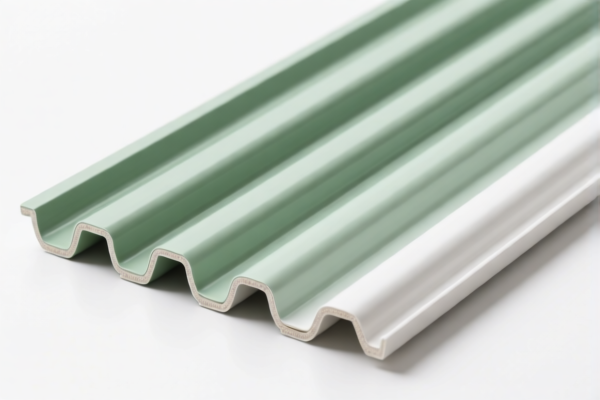
AI Analysis
🏠 PVC Self-Adhesive Ceiling Panel (塑料制房屋建筑用品)
🌐 HS Code Reference & Customs Clearance Guide | 2026 Latest Tariff Analysis | Professional Customs Strategy
📌 1. Product Definition & Classification: What Exactly is a "PVC Self-Adhesive Ceiling Panel"?
PVC Self-Adhesive Ceiling Panels are lightweight, decorative building materials used for interior ceiling finishing. In international trade, they fall under Chapter 39 (Plastics and Articles Thereof), specifically as "Builders' ware of plastics" (HS Heading 3925).
The critical distinction for classification lies in the form and function: 1. Finished Building Ware (HS 3925.90): Panels that are ready for installation, flat or embossed, but do not contain moving parts or mechanisms like slats/blinds. 2. Shutters/Blinds (HS 3925.30): Products that resemble venetian blinds, with slats, cords, or mechanisms for adjustment.
⚠️ Key Distinction Point:
- If it is a flat sheet, tile, or solid panel with adhesive backing → It is "Other Builders' Ware" → 3925.90.00.00
- If it consists of individual slats, slatted structures, or has a blind-like mechanism → It is "Shutters/Blinds" → 3925.30.50.00
📦 2. HS Code Classification Details (2026 Latest Tariff Authority Comparison)
| HS Code | Product Description | Application Scenario | Contains Moving Parts/Slats? |
|---|---|---|---|
3925.90.00.00 |
Other Builders' Ware of Plastics | Flat PVC panels, embossed tiles, solid sheeting for ceilings | ❌ No (Solid/Flat) |
3925.30.50.00 |
Shutters, Blinds (including Venetian Blinds) - Other | PVC slat blinds, adjustable slat ceiling systems, louvered panels | ✅ Yes (Slats/Blind Structure) |
🔍 Important Reminder:
- Most standard "Self-Adhesive" ceiling panels are solid PVC sheets/tiles with pressure-sensitive adhesive on the back. These do not have slats or blinds mechanisms. Therefore, they are typically classified under 3925.90.00.00.
- If the product is marketed as a "Ceiling Blind" with adjustable PVC slats, it must be declared under 3925.30.50.00.
💰 3. 2026 Latest Tariff Rate Breakdown (Including Base & Additional Taxes)
✅ Applicable Country: United States (US)
✅ Origin: China (CN)
✅ Note: Based on data provided in the input data.
🎯 1. 3925.90.00.00 —— Other Builders' Ware of Plastics (Standard Self-Adhesive Panels)
This is the most common classification for flat PVC ceiling panels.
| Item | Details |
|---|---|
| Product Description | Builders' ware of plastics, not elsewhere specified or included: Other |
| Base Tariff Rate | 0.0% |
| Additional Tariff | 0.0% |
| Total Tax Rate | 0.0% |
| Tax Calculation | CIF Value × 0.0% = $0 |
| De Minimis Eligibility | ❓ Note: Base rate is 0%, but check Section 301/IEEPA exclusions if applicable for specific plastics. However, input data explicitly states total tax is 0.0%. |
| Legal Basis Path | HTSUS:3925.90.00.00 → Tax: 0.0% |
📌 Explanation:
- Base Tariff is 0%: This is a favorable classification for general plastic building materials.
- No Additional Tariff: According to the provided data, there are no Section 301 or IEEPA additional tariffs applied to this specific HS code in this dataset.
- Cost Advantage: This is a duty-free entry for this specific classification, making it highly competitive for export.
🎯 2. 3925.30.50.00 —— Shutters, Blinds (including Venetian Blinds) - Other
This applies if the ceiling panels are structured as blinds or slats.
| Item | Details |
|---|---|
| Product Description | Shutters, blinds (including venetian blinds) and similar articles and parts thereof: Other |
| Base Tariff Rate | 5.3% |
| Additional Tariff | 7.5% |
| Total Tax Rate | 12.8% |
| Tax Calculation | CIF Value × 12.8% |
| De Minimis Eligibility | ❌ No (High tariff rates typically exclude de minimis benefits in many contexts, but strictly follow customs ruling) |
| Legal Basis Path | HTSUS:3925.30.50.00 → Base: 5.3% + Additional: 7.5% |
📌 Explanation:
- Base Tariff 5.3%: Standard rate for blinds/shutters.
- Additional Tariff 7.5%: Likely related to specific trade actions or additional duties on plastic blinds.
- Total 12.8%: This is a significant cost increase compared to standard panels. Misclassification can lead to underpayment and penalties.
🛠️ 4. Customs Clearance Practical Advice (Avoid Pitfalls)
✅ 1. Documentation Checklist (Must-Haves)
| Document | Required | Notes |
|---|---|---|
| ✅ Product Specifications | ✔️ | Clearly state material (PVC), dimensions, and adhesive type. |
| ✅ Photos | ✔️ | Show the flat/solid nature of the panel to support 3925.90.00.00. Avoid images that look like slats. |
| ✅ Commercial Invoice | ✔️ | Use precise description: "PVC Ceiling Panels, Self-Adhesive, Flat Sheets" (NOT "Blinds"). |
| ✅ Packing List | ✔️ | Weight and dimensions. |
| ✅ Certificate of Origin | ✔️ | If applicable for other trade agreements. |
✅ 2. Declaration Strategy (Key Tips)
🔥 "Be Flat, Be Solid, Avoid 'Blind' Keywords!"
| Scenario | Correct Declaration | Wrong Declaration |
|---|---|---|
| Flat PVC Sheet with Adhesive | 3925.90.00.00 |
3925.30.50.00 (High Tax) |
| Embossed Ceiling Tile | 3925.90.00.00 |
3925.30.50.00 (High Tax) |
| PVC Slatted Ceiling System | 3925.30.50.00 |
3925.90.00.00 (Low Tax Risk - Underpayment) |
📌 Critical Warning:
- Do not use the word "Blind" in the description if the product is a solid panel.
- If the product is a solid panel, declaring it as3925.30.50.00(12.8%) is unnecessarily expensive.
- If the product has slats, declaring it as3925.90.00.00(0%) is customs fraud.
✅ 3. Special Handling
| Situation | Recommendation |
|---|---|
| OEM Private Label | Ensure the invoice describes the physical form (Panel/Sheet) not just the function (Ceiling Decor). |
| Adhesive Type | Mention "Pressure Sensitive Adhesive" to confirm it's a finished good ready for installation, not raw plastic. |
| Customs Inquiry | If asked, provide a diagram showing the panel is a single piece without moving slats. |
🌍 5. Global Market Comparison (2026 Latest)
| Country/Region | Recommended HS Code | Tax Rate | Notes |
|---|---|---|---|
| 🇺🇸 USA | 3925.90.00.00 |
0.0% | Best for flat panels. No additional tariffs per input data. |
| 🇺🇸 USA | 3925.30.50.00 |
12.8% | Only if classified as blinds/slats. |
| 🇨🇳 China | 3925.90.00.00 |
Varies | Check Chinese Import Tariff for inbound. |
| 🇪🇺 EU | 3925.90.00 |
~5-8% | Standard EU duty for plastic building ware. |
📌 Conclusion:
- For USA imports, the classification of3925.90.00.00offers a 0% duty rate, which is a significant competitive advantage.
- Ensure the product is truly a solid/flat panel to qualify for this 0% rate.
📌 6. Common Mistakes & Pitfalls (Lessons Learned)
❌ Mistake 1: Using the word "Blind" in the product name for flat panels.
👉 Result: Customs may classify under 3925.30.50.00 → 12.8% tax instead of 0%.
❌ Mistake 2: Not distinguishing between "Slatted" and "Solid" structures.
👉 Result: If it's slatted, declaring 0% tax is underpayment → Penalties + Back Taxes.
❌ Mistake 3: Vague description "PVC Ceiling Material".
👉 Result: Customs detention for further inspection → Delays + Storage Fees.
✅ Correct Practice:
"PVC Self-Adhesive Ceiling Panels, Flat Solid Sheets, 12"x12", Interior Decorative, Model XYZ"
🎯 7. Conclusion: Precise Classification Saves Money!
🎯 Remember This Mantra:
🔹 "Flat & Solid = 0% Tax (
3925.90)"
🔹 "Slats & Blinds = 12.8% Tax (3925.30)"
🔹 "Don't Call a Panel a Blind!"
📌 Pro Tip:
If you are exporting to the USA, ensure your commercial invoice clearly states "Flat PVC Ceiling Panels" and NOT "PVC Blinds". This simple wording can save you 12.8% in duties.
📣 Action Required:
📞 Verify the physical structure of your product (Flat vs. Slatted).
📄 Prepare accurate product descriptions for customs.
🚀 Optimize your supply chain with 0% duty efficiency!
✨ Professional Customs Clearance Starts with Accurate Classification!
💼 Your Profit Margin Depends on Precision!
Customer Reviews
About HS Code Classification
The Harmonized System (HS) is an internationally standardized nomenclature developed by the World Customs Organization (WCO) to classify traded products. Over 200 countries use the HS system as the basis for customs tariffs, trade statistics, and import/export regulations.
Each HS code follows a hierarchical structure:
- Chapter (2 digits) — Broad category of goods (e.g., Chapter 84: Machinery and Mechanical Appliances)
- Heading (4 digits) — More specific grouping within the chapter
- Subheading (6 digits) — Internationally standardized breakdown, used by all WCO member countries
- National subdivisions (8-10 digits) — Country-specific extensions for further classification, such as US HTSUS 10-digit codes
Correct HS code classification is essential for smooth customs clearance, accurate duty payment, and compliance with trade regulations. Misclassification can lead to customs delays, overpayment of duties, or penalties.
When importing from CN to US, the applicable tariff rates may include:
- Most-Favored-Nation (MFN) rate — The standard duty rate applied to WTO members
- General rate — Applied to countries without trade agreements
- Trade remedy duties — Additional tariffs such as Section 301 (anti-dumping), Section 232 (national security), or countervailing duties
The information provided on this page is for reference purposes only. For official classification, please consult with your local customs authority or a licensed customs broker.