PVC Skirting Board
CN → US| HS Code | Tariff Rate | Origin | Destination | Doc |
|---|---|---|---|---|
| 3925200091 | 22.8% | CN | US | Official Doc |
| 3925900000 | 40.3% | CN | US | Official Doc |
| 3916200091 | 40.8% | CN | US | Official Doc |
| 3916200020 | 40.8% | CN | US | Official Doc |
Product Images
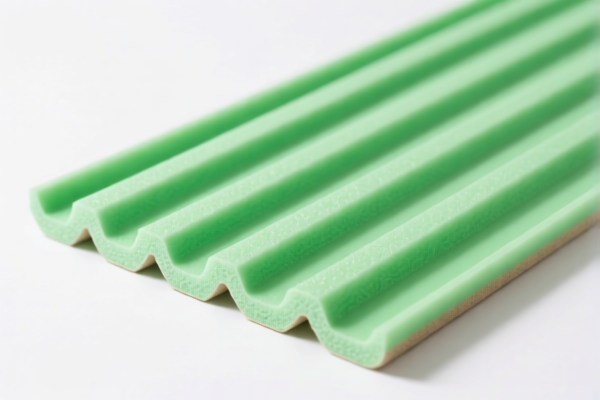
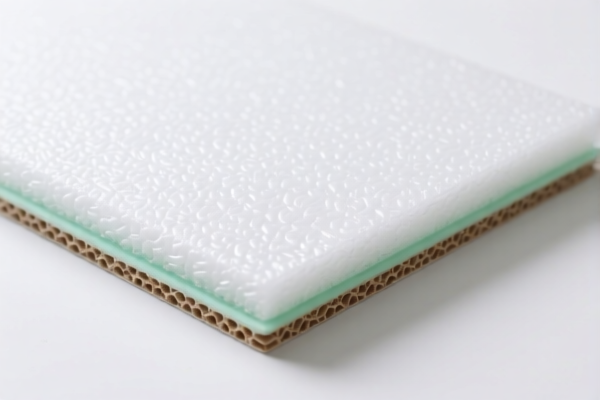
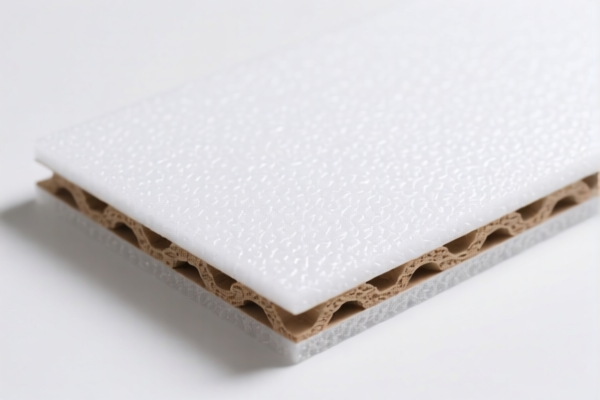

AI Analysis
🏠 PVC Skirting Boards & Profiles: The Ultimate 2026 Tariff & Customs Clearance Guide
🌐 HS Code Reference & Customs Clearance Strategy | 2026 Latest Tariff Analysis | Professional Level Compliance
📌 I. Product Definition & Classification: What Exactly Are We Importing?
PVC (Polyvinyl Chloride) architectural components are versatile building materials used for interior and exterior decoration. In international trade, the classification depends heavily on the specific form and intended use of the product. Misclassification is the #1 cause of customs delays and excessive duties for PVC products.
There are two main categories: 1. Architectural Components (Finished/Ready-to-Install): Items like Skirting Boards designed specifically to cover the joint between a floor and a wall. 2. Raw/Processable Profiles: Extruded PVC Profiles (trim strips) that may be cut to length or used as general building accessories.
⚠️ Key Distinction Point:
- If the item is specifically a "Skirting Board" (finished shape for flooring edges) → It is classified as Other Plastics Articles for Building Purposes (3925).
- If the item is a generic "Profile" (extruded strip, potentially multi-use) → It is classified as Articles of Vinyl Chloride Polymers (3916).
- If the item is specifically for Doors/Windows → It is classified as Door/Window Frames & Sills (3925.20).
📦 II. HS Code Classification Details (2026 Latest Tariff Authority Comparison)
Based on the provided data, here is the breakdown for PVC architectural products:
| HS Code | Product Description | Application Scenario | Key Classification Logic |
|---|---|---|---|
3925.90.00.00 |
Other Plastics Articles for Building Purposes | PVC Skirting Boards | Classified under "Other" building components, not specifically doors/windows. |
3916.20.00.91 |
Other Articles of Vinyl Chloride Polymers | Generic PVC Profiles | General-purpose extruded profiles not specific to doors/windows or finished skirting. |
3916.20.00.20 |
PVC Architectural Decorative Profiles | Decorative PVC Trims | Specific subset of profiles for architectural decoration. |
3925.20.00.91 |
Door & Window Frames, Sills, and Steps | PVC Door/Window Components | Attached parts or frames specifically for doors and windows. |
🔍 Critical Reminder:
- "Skirting Boards" are distinct from door/window frames. Even though they are plastic, they fall under3925(Building Articles), not3916(General Profiles), unless declared as generic profiles.
- The 2025-2026 Trade Policy heavily impacts all Chinese-origin PVC imports due to Section 301 and IEEPA tariffs.
💰 III. 2026 Latest Tariff Rate Breakdown (Including Surcharges & Policy Add-ons)
✅ Applicable Country: USA (US)
✅ Country of Origin: China (CN)
✅ Effective Date: Post-2025 Trade Restrictions Apply
🎯 1. 3925.90.00.00 — PVC Skirting Boards (Other Building Articles)
This is the most common code for PVC Skirting Boards.
| Item | Detail |
|---|---|
| Base Duty Rate | 5.3% (Ad Valorem) |
| Section 301 Surcharge | +25.0% (USITC Footnote 9903.88.01 equivalent) |
| IEEPA Surcharge (Section 1223) | +10.0% (Specific China-related provision) |
| Total Duty Rate | 40.3% |
| Tax Calculation | CIF Value × 40.3% |
| De Minimis Exemption | ❌ NOT Eligible (Denied) |
| Legal Authority Path | USITC:3925.90.00.00 → Section 301: +25% → IEEPA: +10% |
📌 Explanation:
- The 5.3% is the standard Most Favored Nation (MFN) duty.
- The +25% is the standard Section 301 tariff on Chinese plastics/building materials.
- The +10% is the additional IEEPA tax applied to specific Chinese goods.
- Total Impact: Importers pay 40.3% on the value of PVC skirting boards. This is a high-cost item for US importers.
🎯 2. 3916.20.00.91 & 3916.20.00.20 — PVC Profiles (General & Decorative)
These codes apply if the product is declared as "PVC Profiles" rather than specific "Skirting Boards."
| Item | Detail |
|---|---|
| Base Duty Rate | 5.8% (Ad Valorem) |
| Section 301 Surcharge | +25.0% |
| IEEPA Surcharge (Section 1223) | +10.0% |
| Total Duty Rate | 40.8% |
| Tax Calculation | CIF Value × 40.8% |
| De Minimis Exemption | ❌ NOT Eligible (Denied) |
📌 Warning:
- The rate (40.8%) is even higher than for skirting boards (40.3%).
- Declaring skirting boards as "profiles" to save money is risky and may lead to customs audits for misdeclaration.
- Both sub-codes (...91and...20) have identical tariff structures.
🎯 3. 3925.20.00.91 — PVC Door/Window Frames & Parts
| Item | Detail |
|---|---|
| Base Duty Rate | 5.3% (Ad Valorem) |
| Section 301 Surcharge | +7.5% (Reduced Section 301 rate for this specific subheading) |
| IEEPA Surcharge (Section 1223) | +10.0% |
| Total Duty Rate | 22.8% |
| Tax Calculation | CIF Value × 22.8% |
| De Minimis Exemption | ❌ NOT Eligible (Denied) |
📌 Strategic Insight:
- If your product can be legally classified as a door/window component (e.g., a trim piece used exclusively around windows), the duty drops to 22.8%.
- ⚠️ Caveat: You cannot classify a standard floor skirting board as a door/window part. Customs will reject this. Only use this code for products explicitly designed for doors/windows.
🛠️ IV. Customs Clearance Practical Advice (Avoid Pitfalls)
✅ 1. Documentation Checklist (Non-Negotiable)
| Document | Required? | Description |
|---|---|---|
| ✅ Commercial Invoice | ✔️ | Must clearly state: "PVC Skirting Board" or "PVC Profile," not just "Plastic Strip." |
| ✅ Packing List | ✔️ | Include net/gross weight, dimensions, and material composition (100% PVC). |
| ✅ Product Photos | ✔️ | Clear images of the cross-section, length, and intended use (e.g., installed on a wall). |
| ✅ HS Code Pre-Ruling | ✔️ | Highly Recommended to confirm 3925.90.00.00 vs 3916.20.00.91. |
| ✅ Certificate of Origin | ✔️ | Proof of Chinese origin triggers Section 301/IEEPA tariffs. |
| ✅ Material Safety Data Sheet (MSDS) | ✔️ | Often requested for chemical verification of PVC compounds. |
✅ 2. Declaration Best Practices (Golden Rules)
🔥 "Be Specific, Don't Guess. Wrong Code = 20%+ Penalty!"
| Scenario | Correct Declaration | Wrong Declaration | Consequence |
|---|---|---|---|
| PVC Skirting Board | 3925.90.00.00 "PVC Skirting Board for Floor Trim" |
3916.20.00.91 "PVC Profile" |
Risk of Audit: If customs determines it's a skirting board, they may reclassify and issue a penalty. |
| Generic PVC Strip | 3916.20.00.91 "PVC Profile for General Use" |
3925.90.00.00 |
Overpayment: You pay 40.8% instead of potentially lower rates if misclassified differently, but usually, this is the safe generic code. |
| Door Frame Trim | 3925.20.00.91 "PVC Door Frame Component" |
3916.20.00.91 |
Savings: Can reduce total duty from 40.8% to 22.8% if truly a door part. |
✅ 3. Special Cases & Mitigation
| Situation | Recommendation |
|---|---|
| Low-Value Shipments | ❌ No De Minimis Exemption: Even small shipments (<$800) are subject to these tariffs due to IEEPA/Section 301 exclusions. |
| Re-Exporting | If the PVC profiles are shipped to a third country (e.g., Mexico) for further processing, ensure substantial transformation occurs to avoid Chinese origin labeling. |
| Kit Sets | If selling "Skirting Board Kits" (board + adhesive + clips), declare the primary component (PVC Board) as the main HS Code. |
| Customs Audit Defense | Keep product catalogs showing the specific design for floor/wall joints to defend against 3916 classification if challenged. |
🌍 V. Global Market Comparison (2026 Outlook)
| Country/Region | Recommended HS Code | Est. Total Duty (China Origin) | Notes |
|---|---|---|---|
| 🇺🇸 USA | 3925.90.00.00 |
40.3% | High tariffs due to Section 301 + IEEPA. |
| 🇺🇸 USA (Door Parts) | 3925.20.00.91 |
22.8% | Lower rate, but strict classification requirements. |
| 🇪🇺 EU | 3925.90.00 |
~0% - 6.5% | No Section 301 tariffs. VAT applies separately. |
| 🇨🇳 China | 3925.90.00 |
5.3% | Import duty only, no surcharges. |
| 🇬🇧 UK | 3925.90.00 |
~6.5% | Post-Brexit tariffs may vary. |
📌 Conclusion:
- USA is the most expensive market for PVC architectural goods from China.
- EU/UK remain more cost-effective if supply chains are diversified.
- Cost-Saving Strategy: If possible, source PVC profiles from non-China origins (e.g., Vietnam, Thailand) to avoid Section 301 and IEEPA surcharges.
📌 VI. Common Mistakes & Pitfalls (Learn from Others' Failures)
❌ Mistake 1: Declaring Skirting Boards as "Plastic Pipes" or "Tubes"
👉 Consequence: Wrong HS Code → Seizure & Penalty. Skirting boards are not hollow pipes.
❌ Mistake 2: Ignoring the IEEPA 10% Surcharge
👉 Consequence: Underpaying duties by ~10% → Back taxes + Interest.
❌ Mistake 3: Using Generic Descriptions Like "Plastic Strip"
👉 Consequence: Customs may assign the highest applicable tariff code or delay shipment for inspection.
👉 Fix: Use precise terms: "PVC Skirting Board," "PVC Decorative Profile."
❌ Mistake 4: Assuming De Minimis ($800) Applies
👉 Consequence: Small B2B shipments are NOT exempt from Section 301/IEEPA tariffs.
👉 Fix: Prepare for full duty payment even on small orders.
🎯 VII. Conclusion: Precision in Classification Saves Money
🎯 Key Takeaway:
🔹 Skirting Boards =
3925.90.00.00(40.3% Duty)
🔹 Generic Profiles =3916.20.00.91(40.8% Duty)
🔹 Door/Window Parts =3925.20.00.91(22.8% Duty)🔹 Rule of Thumb:
"Be Specific on HS, Declare Correctly, and Pay the Full Tariff to Avoid Audits!"
📌 Pro Tip:
If you are importing large volumes, consider applying for an HTS Code Exclusion (if applicable) or restructuring your supply chain to import from non-China sources to avoid the 40%+ duty burden.
📣 Action Required:
📞 Contact your Customs Broker with product photos and samples.
📝 Request a Binding Tariff Ruling from CBP for your specific PVC product.
🚀 Ensure your invoice accurately reflects the product type to avoid delays at US ports.
✨ Smart Customs Clearance, Higher Profit Margins!
💼 Don't let misclassification eat your margins!
Customer Reviews
About HS Code Classification
The Harmonized System (HS) is an internationally standardized nomenclature developed by the World Customs Organization (WCO) to classify traded products. Over 200 countries use the HS system as the basis for customs tariffs, trade statistics, and import/export regulations.
Each HS code follows a hierarchical structure:
- Chapter (2 digits) — Broad category of goods (e.g., Chapter 84: Machinery and Mechanical Appliances)
- Heading (4 digits) — More specific grouping within the chapter
- Subheading (6 digits) — Internationally standardized breakdown, used by all WCO member countries
- National subdivisions (8-10 digits) — Country-specific extensions for further classification, such as US HTSUS 10-digit codes
Correct HS code classification is essential for smooth customs clearance, accurate duty payment, and compliance with trade regulations. Misclassification can lead to customs delays, overpayment of duties, or penalties.
When importing from CN to US, the applicable tariff rates may include:
- Most-Favored-Nation (MFN) rate — The standard duty rate applied to WTO members
- General rate — Applied to countries without trade agreements
- Trade remedy duties — Additional tariffs such as Section 301 (anti-dumping), Section 232 (national security), or countervailing duties
The information provided on this page is for reference purposes only. For official classification, please consult with your local customs authority or a licensed customs broker.