PVC Sprinkler Pipe
CN → US| HS Code | Tariff Rate | Origin | Destination | Doc |
|---|---|---|---|---|
| 3917320010 | 38.1% | CN | US | Official Doc |
| 3926909987 | 22.8% | CN | US | Official Doc |
| 3917230000 | 38.1% | CN | US | Official Doc |
| 3926909989 | 22.8% | CN | US | Official Doc |
Product Images
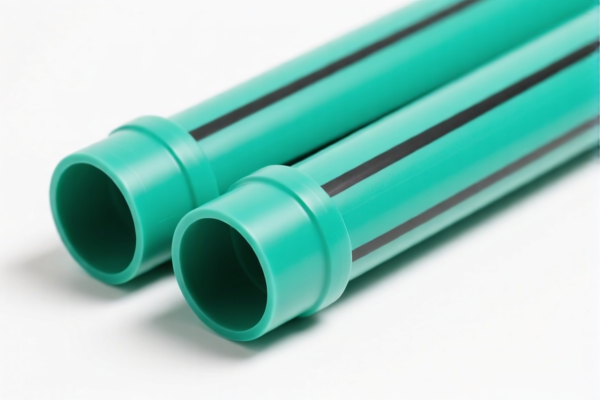
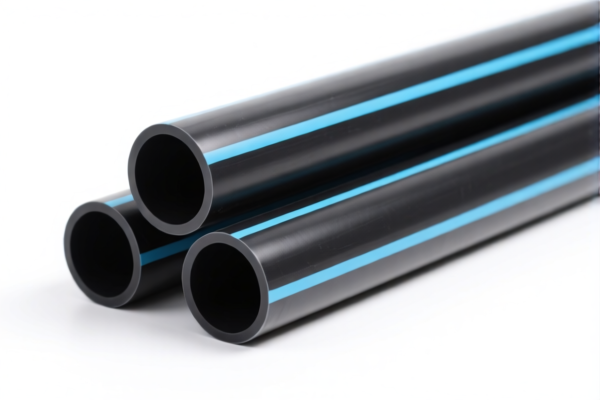
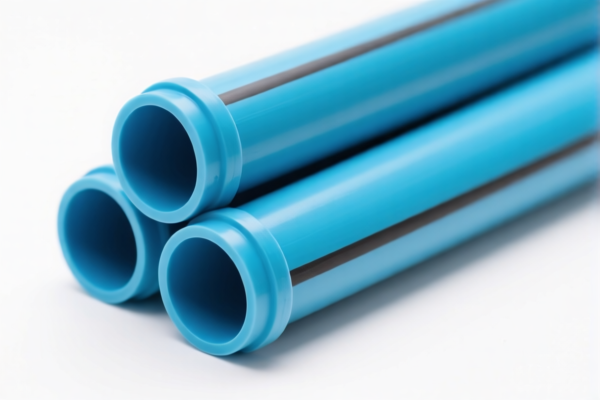
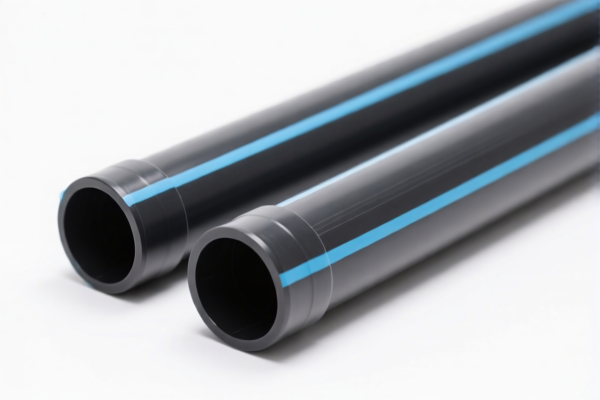
AI Analysis
🚿 PVC Sprinkler Pipes (Polyvinyl Chloride Pipes for Fire Protection)
🌐 HS Code Reference & Customs Clearance Guide | 2026 Latest Tariff Analysis | Professional Level Compliance Strategy
📌 I. Product Definition and Classification: Do You Really Understand "PVC Sprinkler Pipe"?
PVC Sprinkler Pipes are critical components of automatic fire sprinkler systems. In international trade, their classification depends heavily on material composition and specific form, leading to two distinct categorization paths under the Harmonized System (HS):
Path A: Specific Plastic Pipes (3917 Series)
Pipes made specifically of polymers of vinyl chloride (PVC), recognized as rigid tubes/conduits.
Path B: General Plastic Articles (3926 Series)
PVC pipes that may not fit the specific "plastic pipe" definitions strictly, falling into the "Other plastic articles" catch-all category.
⚠️ Key Distinction Point:
- If classified as a specific plastic pipe (3917) → High tariff burden due to specific trade restrictions (Section 301 & 122); - If classified as a general plastic article (3926) → Lower tariff burden, but still subject to base and additional duties.
📦 II. HS Code Classification Details (2026 Latest Tariff Authority Comparison)
| HS Code | Product Description | Applicability | Material/Form Match |
|---|---|---|---|
3917.32.00.10 |
PVC (Polyvinyl Chloride) Pipes, rigid/tubular | Fire sprinkler systems, industrial plumbing | ✅ Matches "PVC material" and "Pipe morphology" exactly |
3926.90.99.87 |
Other plastic articles, PVC pipes not specified elsewhere | Hard pipes/tubes not fitting specific 3917 subheadings | ✅ Matches "PVC material" and "Hard Pipe" requirement; Catch-all |
3917.23.00.00 |
Pipes/Tubes of Polymers of Vinyl Chloride | Fire sprinkler systems, standard plumbing | ✅ "PVC" = Vinyl Chloride Polymer; "Pipe" = Morphology match |
3926.90.99.89 |
Other plastic articles (End-of-line Catch-all) | PVC pipes not fitting other specific plastic categories | ✅ Matches "PVC material" and "Pipe form" as a general plastic product |
🔍 Key Reminder:
- All PVC Sprinkler Pipes must be carefully declared; misclassification can lead to massive tariff differences; - The choice between3917and3926depends on the exact technical definition of the pipe’s rigidity and intended use in the customs broker’s judgment.
💰 III. 2026 Latest Tariff Rate Details (Including Additional Taxes & Policy Add-ons)
✅ Applicable Country: United States (US)
✅ Origin: China (CN)
✅ Effective Date: From 2025 onwards (including subsequent imports)
🎯 1. 3917.32.00.10 & 3917.23.00.00 —— PVC Pipes (Specific Plastic Articles)
| Item | Content |
|---|---|
| Base Tariff | 3.1% (Ad valorem) |
| Section 301 Additional Tariff | +25.0% |
| Section 122 Tariff | +10.0% |
| Total Tariff Rate | 38.1% |
| Tax Calculation | CIF Value × 38.1% |
| De Minimis Exemption | ❌ Not Applicable |
| Legal Basis Path | Base: 3.1% → Sec 301: 25.0% → Sec 122: 10.0% |
📌 Explanation:
- "Section 301 Additional Tariff 25%": Imposed under U.S. Trade Law Section 301 against Chinese products; - "Section 122 Tariff 10%": Additional duty under Section 122 of the Trade Act of 1974; - Total 38.1%: A very high tariff rate, requiring advance planning!
🎯 2. 3926.90.99.87 & 3926.90.99.89 —— Other Plastic Articles (PVC Pipes)
| Item | Content |
|---|---|
| Base Tariff | 5.3% (Ad valorem) |
| Section 301 Additional Tariff | +7.5% |
| Section 122 Tariff | +10.0% |
| Total Tariff Rate | 22.8% |
| Tax Calculation | CIF Value × 22.8% |
| De Minimis Exemption | ❌ Not Applicable |
| Legal Basis Path | Base: 5.3% → Sec 301: 7.5% → Sec 122: 10.0% |
📌 Note:
- Lower total rate (22.8%) compared to3917series; - Applicable if customs authorities classify PVC sprinkler pipes as "Other Plastic Articles" rather than specific "Plastic Pipes"; - Critical to provide technical data to support this classification if advantageous.
🛠️ IV. Customs Clearance Practical Advice (Real-World Pitfall Avoidance Guide)
✅ 1. Required Documentation Checklist (None Can Be Missing)
| Document | Required | Explanation |
|---|---|---|
| ✅ Product Specification Sheet | ✔️ | Includes material (PVC), diameter, pressure rating, fire-proof certification |
| ✅ Material Safety Data Sheet (MSDS) | ✔️ | Proves PVC composition and fire resistance properties |
| ✅ Product Photos (Including Labels) | ✔️ | Clear view of model, brand, pressure class, and "PVC" marking |
| ✅ Fire Safety Certification | ✔️ | UL, FM Approval, or NFPA compliance documents |
| ✅ Commercial Invoice | ✔️ | Must clearly state "PVC Sprinkler Pipe" and HS Code |
| ✅ Packing List | ✔️ | Detailing gross/net weight, dimensions, and piece count |
| ✅ Certificate of Origin (CO) | ✔️ | If non-China origin, can apply for preferential rates |
✅ 2. Declaration Tips (Key Mnemonics)
🔥 "Material Clear, Form Specific, Certification Complete, Tariff Optimized!"
| Situation | Correct Declaration | Incorrect Practice |
|---|---|---|
| Standard PVC Sprinkler Pipe | 3917.32.00.10 or 3926.90.99.87 |
Vague description "Plastic Pipe" → Risk of higher tax |
| Pipe + Fittings | Declare Separately | Bundle together → Misclassification risk |
| Non-PVC (e.g., CPVC) | Check 3917.40 |
Declare as PVC → Wrong HS Code |
| Industrial vs. Residential | Provide Intended Use | Ignoring use case → Potential audit |
✅ 3. Special Cases Handling
| Situation | Handling Advice |
|---|---|
| OEM Custom Pipes | Provide customer order + design specs to avoid "standard goods" misclassification |
| With Fire-Retardant Additives | Disclose additives; may affect classification under 3926 |
| High-Pressure Pipes | Provide pressure rating certificates to justify 3917 vs 3926 |
| Mixed Containers | Separate PVC pipes from other plastics in declaration |
🌍 V. Global Market Customs Clearance Comparison (2026 Latest)
| Country/Region | Recommended HS Code | Tariff | Certification Requirements | Notes |
|---|---|---|---|---|
| 🇺🇸 USA | 3917.32.00.10 / 3926.90.99.87 |
38.1% / 22.8% | UL, FM, NFPA | High additional tariffs |
| 🇨🇳 China | 3917.32.00.10 |
5-7% | CCC (if applicable) | No additional tariffs |
| 🇪🇺 EU | 3917.32.00.10 |
0-4% | CE, EN 1074 | No additional tariffs |
| 🇬🇧 UK | 3917.32.00.10 |
0-4% | UKCA | Post-Brexit rules apply |
| 🇯🇵 Japan | 3917.32.00.10 |
0-3% | JIS Standard | Low tariffs |
📌 Conclusion:
- USA imposes the highest tariffs on PVC Sprinkler Pipes from China; - Tariff difference is significant (38.1% vs 22.8%); correct classification is crucial for cost control; - Other markets have much lower barriers, making them competitive alternatives.
📌 VI. Common Errors & Pitfall Avoidance Guide (Lessons Learned)
❌ Mistake 1: Declaring as "Plastic Pipe" without specifying PVC
👉 Consequence: Customs may misclassify under generic 3926 with higher base rates or audit for fraud.
❌ Mistake 2: Ignoring Section 122 and 301 tariffs
👉 Consequence: Unexpected 38.1% or 22.8% charge at customs → Cash flow crisis.
❌ Mistake 3: Using "Sprinkler System" instead of "Pipe"
👉 Consequence: Wrong HS Code (84.24 for systems) → Complete misdeclaration → Delays and fines.
❌ Mistake 4: Not providing Fire Certification
👉 Consequence: Customs may reject entry as "non-compliant" → Return or Destruction.
✅ Correct Practice:
"PVC Sprinkler Pipe, Schedule 40, 2-inch Diameter, UL Listed, NFPA Compliant, Model XYZ, Origin: China"
🎯 VII. Conclusion: Precise Declaration, Save Time, Reduce Costs!
🎯 Remember the Mnemonic:
🔹 "PVC Pipes, Check 3917 or 3926, Tariffs 38% or 22%, Certifications Are Key!"
🔹 "HS Code Decides the Cost, Declaration Precision Saves Thousands!"
📌 Tip:
If your PVC Sprinkler Pipes are originating from Vietnam, Mexico, Thailand, or Malaysia, you may apply for IEEPA Exemptions, reducing tariffs to 0-5%;
Recommend Advance Ruling (Advance Classification) to avoid clearance risks.
📣 Act Now:
📞 Contact Professional Customs Broker + Provide Product Photos + Apply for HS Code Advance Ruling
🚀 Ensure Your PVC Sprinkler Pipes Clear Customs Smoothly, Export Efficiently, Maximize Profits!
✨ Professional Clearance Starts with Accurate Classification!
💼 Every Penny of Your Cost Deserves Precise Calculation!
Customer Reviews
About HS Code Classification
The Harmonized System (HS) is an internationally standardized nomenclature developed by the World Customs Organization (WCO) to classify traded products. Over 200 countries use the HS system as the basis for customs tariffs, trade statistics, and import/export regulations.
Each HS code follows a hierarchical structure:
- Chapter (2 digits) — Broad category of goods (e.g., Chapter 84: Machinery and Mechanical Appliances)
- Heading (4 digits) — More specific grouping within the chapter
- Subheading (6 digits) — Internationally standardized breakdown, used by all WCO member countries
- National subdivisions (8-10 digits) — Country-specific extensions for further classification, such as US HTSUS 10-digit codes
Correct HS code classification is essential for smooth customs clearance, accurate duty payment, and compliance with trade regulations. Misclassification can lead to customs delays, overpayment of duties, or penalties.
When importing from CN to US, the applicable tariff rates may include:
- Most-Favored-Nation (MFN) rate — The standard duty rate applied to WTO members
- General rate — Applied to countries without trade agreements
- Trade remedy duties — Additional tariffs such as Section 301 (anti-dumping), Section 232 (national security), or countervailing duties
The information provided on this page is for reference purposes only. For official classification, please consult with your local customs authority or a licensed customs broker.