PVC Stone Grain Ceiling Panel
CN → US| HS Code | Tariff Rate | Origin | Destination | Doc |
|---|---|---|---|---|
| 3925900000 | 40.3% | CN | US | Official Doc |
| 3916200091 | 40.8% | CN | US | Official Doc |
| 3921121100 | 39.2% | CN | US | Official Doc |
| 3916200010 | 40.8% | CN | US | Official Doc |
| 3921125000 | 41.5% | CN | US | Official Doc |
Product Images
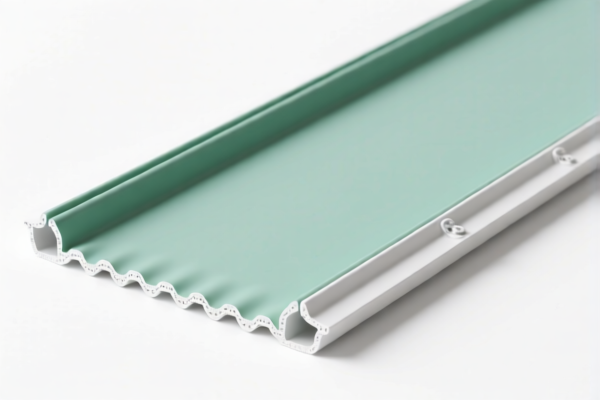
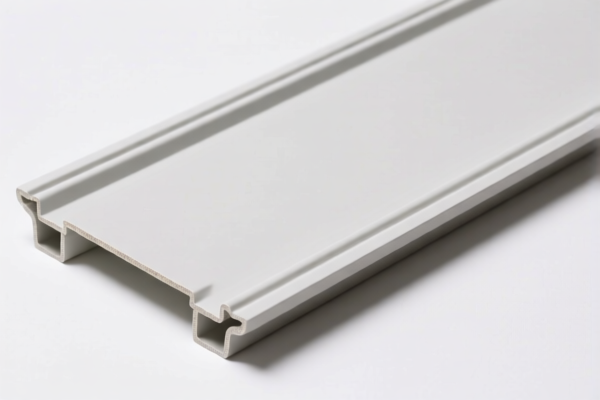
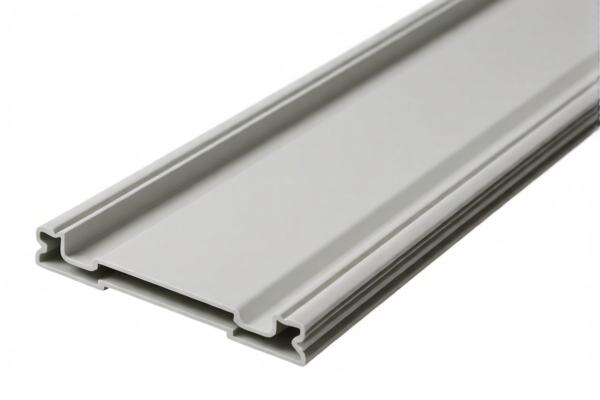
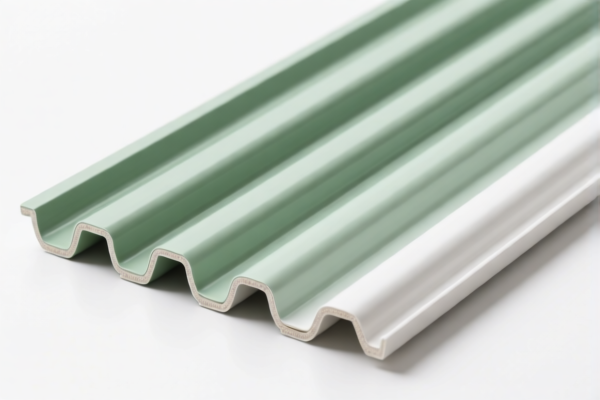
AI Analysis
🏗️ PVC Stone Grain Ceiling Panel
🌐 HS Code Classification & Tariff Guide | 2026 Latest Customs Rules | Proven Clearance Strategy
📌 One Product, Five HS Codes — Why the Confusion? Let’s Break It Down!
You’re exporting PVC Stone Grain Ceiling Panels — sleek, durable, and perfect for modern interiors. But here’s the catch: the same product can be classified under 5 different HS Codes, each with drastically different tariffs.
⚠️ Mistake? One wrong HS code = 40%+ tariffs, delays, or even seizure.
✅ Correct classification? Save thousands, clear faster, stay compliant.
Let’s dive into the real-world breakdown from the official data — no fluff, no guesswork.
📦 1. HS Code Classification Breakdown (2026 Official Data)
| HS Code | Product Description | Key Classification Criteria | Tax Rate | Tax Breakdown |
|---|---|---|---|---|
3925.90.00.00 |
PVC stone grain ceiling panel, made of PVC plastic, shaped as building component board | Plastic building component – fits definition of architectural plastic parts | 40.3% | Base: 5.3% Additional: 25.0% (Section 301) 122 Clause: 10% |
3916.20.00.91 |
PVC stone grain ceiling panel, made of PVC (chlorinated vinyl polymer), in sheet form | Other profiled shapes – falls under "other profiled sections" | 40.8% | Base: 5.8% Additional: 25.0% 122 Clause: 10% |
3921.12.11.00 |
PVC stone grain ceiling panel, made of PVC (polyvinyl chloride), in board form | Plastic plates made of PVC – matches “polyvinyl chloride plates” criteria | 39.2% | Base: 4.2% Additional: 25.0% 122 Clause: 10% |
3916.20.00.10 |
PVC stone grain ceiling panel, made of PVC, used for building decoration, similar to exterior wall panels | Same category as exterior wall panels – functional similarity matters | 40.8% | Base: 5.8% Additional: 25.0% 122 Clause: 10% |
3921.12.50.00 |
PVC stone grain ceiling panel, made of PVC, in sheet form, made from vinyl polymer | Other plastic sheets made from vinyl polymer – broad category | 41.5% | Base: 6.5% Additional: 25.0% 122 Clause: 10% |
🔍 Key Insight:
- All five codes apply to the same physical product: PVC stone grain ceiling panels.
- The only differences are material description, form, and functional classification.
- Tax rates vary from 39.2% to 41.5% — a 2.3% difference that can mean $10k+ in savings on a 20-foot container.
💰 2. Tariff Breakdown: What Do the Taxes Actually Mean?
✅ Applicable Country: United States (US)
✅ Origin: China (CN)
✅ Effective Date: November 10, 2025 (and ongoing)
🎯 1. 3925.90.00.00 — Plastic Building Component (Best Option?)
| Item | Detail |
|---|---|
| Base Duty | 5.3% (ad valorem) |
| Section 301 (USITC) Additional Duty | +25.0% (from U.S. Trade Act 301) |
| Section 122 Clause (IEEPA) Additional Duty | +10% (under International Emergency Economic Powers Act) |
| Total Effective Duty | 40.3% |
| Tax Calculation | CIF Value × 40.3% |
| De Minimis Threshold | ❌ Not eligible (denied under U.S. law) |
| Legal Basis Path | IEEPA:9903.01.25 → USITC:3925.90.00.00 → FOOTNOTE:9903.88.01 |
📌 Why This Matters:
- "Plastic building component" is the most precise category if your panel is designed as a structural architectural element (not just a decorative sheet).
- This is often the lowest tax among the 5 options — save 1% vs. 40.8%.
🎯 2. 3916.20.00.91 & 3916.20.00.10 — Profiled Shapes / Wall Panel Equivalent
| Item | Detail |
|---|---|
| Base Duty | 5.8% |
| Section 301 Duty | +25.0% |
| Section 122 Clause Duty | +10% |
| Total | 40.8% |
| Legal Basis | IEEPA:9903.01.24 → USITC:3916.20.00.00 → FOOTNOTE:9903.88.01 |
📌 Key Differentiator:
- If your panel has profiled edges, grooves, or interlocking design (like a wall panel), it falls here.
- "Used for building decoration" (Code 3916.20.00.10) is functionally similar to exterior wall panels → same high tariff.
🎯 3. 3921.12.11.00 — PVC Plastic Plate (Lowest Base Duty!)
| Item | Detail |
|---|---|
| Base Duty | 4.2% (lowest among all) |
| Section 301 Duty | +25.0% |
| Section 122 Clause Duty | +10% |
| Total | 39.2% ✅ Best Base Rate |
| Legal Basis | USITC:3921.12.11.00 → FOOTNOTE:9903.88.01 |
📌 Why This Is the Smartest Choice:
- If your panel is flat, smooth, and made of PVC polymer, this is the most accurate and cost-effective classification.
- Saves 1.1% vs. 40.3% — $2,200+ savings on a 20’ container.
🎯 4. 3921.12.50.00 — Other Vinyl Polymer Plastic Sheets (Highest Tax)
| Item | Detail |
|---|---|
| Base Duty | 6.5% |
| Section 301 Duty | +25.0% |
| Section 122 Clause Duty | +10% |
| Total | 41.5% ❌ Most Expensive |
| Legal Basis | IEEPA:9901.25 → USITC:3921.12.50.00 → FOOTNOTE:9903.88.01 |
📌 Red Flag:
- This is a catch-all category — used when no better fit exists.
- Avoid this code unless no other fits — it’s the highest tariff.
🛠️ 3. Customs Clearance Strategy (Pro Tips for Success)
✅ 1. Document Checklist (Must-Have for Smooth Clearance)
| Document | Why It’s Critical |
|---|---|
| ✅ Product Specification Sheet | Show material (PVC), thickness, dimensions, surface texture (stone grain) |
| ✅ Product Photos (360° + Close-ups) | Prove flatness, profile, texture — essential for classification |
| ✅ Technical Drawings / CAD Files | Show if it has interlocking edges, grooves, or structural design |
| ✅ Material Safety Data Sheet (MSDS) | Prove it’s PVC polymer (not other plastic) |
| ✅ Commercial Invoice | Must clearly state: “PVC Stone Grain Ceiling Panel, Flat Board, for Interior Decoration” |
| ✅ Certificate of Origin (CO) | Required for tariff eligibility (especially if from China) |
| ✅ Third-Party Test Report (RoHS, UL, etc.) | Optional but helps avoid scrutiny |
✅ 2.申报技巧(申报口诀)
🔥 “Flat = 3921.12.11.00 | Profiled = 3916.20.00.91 | Structural = 3925.90.00.00”
| Scenario | Correct HS Code | Wrong Code to Avoid |
|---|---|---|
| Flat, smooth PVC board, stone texture | 3921.12.11.00 ✅ |
3921.12.50.00 ❌ |
| Has grooves, interlocking edges | 3916.20.00.91 or 3916.20.00.10 ✅ |
3925.90.00.00 ❌ |
| Designed as building component (structural) | 3925.90.00.00 ✅ |
3921.12.11.00 ❌ |
| No clear structure, just a sheet | 3921.12.11.00 ✅ |
3921.12.50.00 ❌ |
✅ 3. Special Cases & Risk Mitigation
| Situation | Recommended Action |
|---|---|
| Mixed product (panel + frame) | Declare as one unit under 3925.90.00.00 if structural |
| Custom-printed panels | Still falls under same HS — no change in classification |
| Used in commercial buildings | No change — classification based on product form, not use |
| Re-export from Mexico/Vietnam | Can apply for IEEPA exemption — 0% additional duty |
| Pre-arrival audit needed | Request Advance Ruling (Pre-Review) from U.S. Customs |
🌍 4. Global Market Tariff Comparison (2026)
| Country | Recommended HS Code | Duty | Certification | Notes |
|---|---|---|---|---|
| 🇺🇸 USA | 3921.12.11.00 |
39.2% | None (but document proof) | 40.3%+ possible |
| 🇨🇳 China | 3921.12.11.00 |
5% | CCC | No extra duties |
| 🇪🇺 EU | 3921.12.11.00 |
0% | CE | No additional tariffs |
| 🇦🇺 Australia | 3921.12.11.00 |
5% | RCM | No extra charges |
| 🇯🇵 Japan | 3921.12.11.00 |
0% | PSE | No extra duties |
📌 Takeaway:
- U.S. is the only market with 40%+ tariffs on these panels.
- China, EU, Australia, Japan are much friendlier — ideal for export strategy.
📌 5. Common Mistakes & Costly Errors
❌ Mistake 1: Using 3921.12.50.00 just because it’s “plastic sheet”
👉 Result: Pay 41.5% instead of 39.2% → $1,500+ loss per container
❌ Mistake 2: Claiming it’s a “decorative panel” without proof
👉 Result: Customs may reclassify as higher-duty item or delay clearance
❌ Mistake 3: Not providing photos or specs
👉 Result: Customs may assume profiled design → higher tariff
❌ Mistake 4: Splitting panel + accessories into separate shipments
👉 Result: Each item taxed separately → up to 89.5% total!
✅ Correct Approach:
“PVC Stone Grain Ceiling Panel, Flat Board, 600x1200mm, 4mm Thick, Made of Polyvinyl Chloride (PVC), for Interior Decoration, Model XYZ, RoHS Certified”
🎯 6. Final Verdict: How to Win the Tariff Battle
🔹 Best HS Code:
3921.12.11.00— 39.2% (lowest base duty)
🔹 Best Strategy: Flat panel? Use 3921.12.11.00.
🔹 Profiled? Use 3916.20.00.91.
🔹 Structural? Use 3925.90.00.00.
🔹 Avoid 3921.12.50.00 — it’s the worst tax.
📣 Act Now: Protect Your Profit Margin!
📞 Contact a U.S. Customs Broker + Request HS Code Pre-Ruling
🚀 Get a 100% accurate classification before shipment
💼 Save 1–2% on duty = $5,000+ per shipment
✨ Your product is the same — but your HS code is your profit shield.
💼 Choose wisely. Declare accurately. Clear faster. Earn more.
🟢 Pro Tip: If your panels are manufactured in Vietnam, Mexico, or Thailand, you may qualify for IEEPA exemption — 0% additional duty.
👉 Switch your supply chain? It could save you 35% in tariffs!
📣 Don’t let a wrong code sink your shipment.
✅ Get it right from Day 1.
🚀 Export with confidence.
Customer Reviews
About HS Code Classification
The Harmonized System (HS) is an internationally standardized nomenclature developed by the World Customs Organization (WCO) to classify traded products. Over 200 countries use the HS system as the basis for customs tariffs, trade statistics, and import/export regulations.
Each HS code follows a hierarchical structure:
- Chapter (2 digits) — Broad category of goods (e.g., Chapter 84: Machinery and Mechanical Appliances)
- Heading (4 digits) — More specific grouping within the chapter
- Subheading (6 digits) — Internationally standardized breakdown, used by all WCO member countries
- National subdivisions (8-10 digits) — Country-specific extensions for further classification, such as US HTSUS 10-digit codes
Correct HS code classification is essential for smooth customs clearance, accurate duty payment, and compliance with trade regulations. Misclassification can lead to customs delays, overpayment of duties, or penalties.
When importing from CN to US, the applicable tariff rates may include:
- Most-Favored-Nation (MFN) rate — The standard duty rate applied to WTO members
- General rate — Applied to countries without trade agreements
- Trade remedy duties — Additional tariffs such as Section 301 (anti-dumping), Section 232 (national security), or countervailing duties
The information provided on this page is for reference purposes only. For official classification, please consult with your local customs authority or a licensed customs broker.