PVC Strip
CN → US| HS Code | Tariff Rate | Origin | Destination | Doc |
|---|---|---|---|---|
| 3926906090 | 39.2% | CN | US | Official Doc |
| 3926905900 | 37.4% | CN | US | Official Doc |
Product Images

AI Analysis
🧱 PVC Strip (Polyvinyl Chloride Belting & Belts)
🌐 HS Code Reference & Customs Clearance Guide | 2026 Latest Tariff Analysis | Professional Clearance Strategy
📌 Part I: Product Definition & Classification: Do You Really Understand "PVC Strips"?
PVC strips, in the context of international trade and customs classification, are primarily categorized under Plastics and articles thereof. However, the specific HS Code depends entirely on their function and composition.
In industrial contexts, "PVC Strip" usually refers to Conveyor Belts, Drive Belts, or Sealing Strips made from plastics (Headings 3901–3914). If the strip contains textile fibers for reinforcement, it falls into a different sub-category than pure plastic belts.
⚠️ Key Distinction Point:
- If the PVC strip is a pure plastic belt (no textile reinforcement) → It falls under 3926.90.60.90
- If the PVC strip is a belt containing textile fibers (e.g., fabric-reinforced conveyor belt) → It falls under 3926.90.59.00
📦 Part II: HS Code Classification Details (2026 Latest Tariff Authoritative Comparison)
| HS Code | Product Description | Application Scenario | Contains Textile Fibers? |
|---|---|---|---|
3926.90.60.90 |
Other articles of plastics: Belting and belts, for machinery: Other | Pure PVC sealing strips, non-reinforced plastic conveyor strips, decorative edge bands | ❌ No |
3926.90.59.00 |
Other articles of plastics: Belting and belts, for machinery: Containing textile fibers: Other | Fabric-reinforced PVC conveyor belts, textile-backed plastic drive belts | ✅ Yes |
🔍 Critical Reminder:
- Pure Plastic Belts (3926.90.60.90): If your PVC strip is made entirely of plastic compounds without any embedded fabric, mesh, or cord reinforcement, it is classified here.
- Textile-Containing Belts (3926.90.59.00): Most industrial conveyor belts are reinforced with polyester, nylon, or cotton. If the belt has a visible textile layer or is described as "reinforced," it must be classified here, even if the outer material is PVC.
💰 Part III: 2026 Latest Tariff Rate Details (Detailed Tax Breakdown)
✅ Applicable Country: United States (US)
✅ Origin: China (CN)
✅ Effective Date: 2025–2026 (Subject to Section 301 and IEEPA adjustments)
🎯 1. 3926.90.60.90 —— Pure Plastic Belting (No Textile)
| Item | Content |
|---|---|
| Basic Tariff Rate | 0.0% |
| Additional Tariff (Section 301/IEEPA) | 0.0% |
| Total Tariff Rate | 0.0% |
| Tax Calculation | CIF Value × 0% = $0 |
| De Minimis Exemption Eligible? | ✅ Yes (Likely eligible under de minimis rules if value < $800, subject to current policy) |
| Legal Basis Path | USITC:3926.90.60.90 → No additional duty footnotes apply |
📌 Explanation:
- This code benefits from zero additional tariffs.
- It is considered a "non-strategic" plastic article in current trade policies.
- Lowest cost option if the product allows for no textile reinforcement.
🎯 2. 3926.90.59.00 —— Plastic Belting Containing Textile Fibers
| Item | Content |
|---|---|
| Basic Tariff Rate | 2.4% |
| Additional Tariff (Section 301/IEEPA) | 25.0% |
| Total Tariff Rate | 27.4% |
| Tax Calculation | CIF Value × 27.4% |
| De Minimis Exemption Eligible? | ❌ No (Often excluded from de minimis due to Section 301 status) |
| Legal Basis Path | USITC:3926.90.59.00 → Footnote: 9903.88.01 (Section 301 List 4) |
📌 Explanation:
- The 2.4% is the standard MFN (Most Favored Nation) duty.
- The 25.0% is the punitive tariff under Section 301 of the Trade Act targeting Chinese goods containing plastics/textiles composites.
- Total 27.4% significantly impacts profit margins.
- Note: Even if the PVC layer is thick, if there is any textile reinforcement intended for machinery use, this higher rate applies.
🛠️ Part IV: Customs Clearance Practical Advice (Real-World Pitfall Avoidance)
✅ 1. Required Documentation Checklist
| Document | Must Provide? | Description |
|---|---|---|
| ✅ Product Specification Sheet | ✔️ | Must explicitly state: "Material: 100% PVC" OR "Material: PVC with Polyester Reinforcement" |
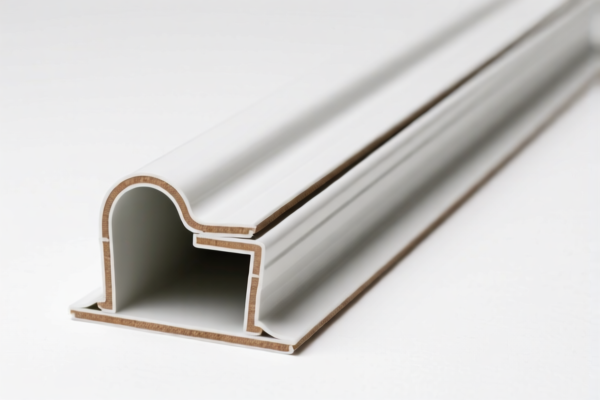
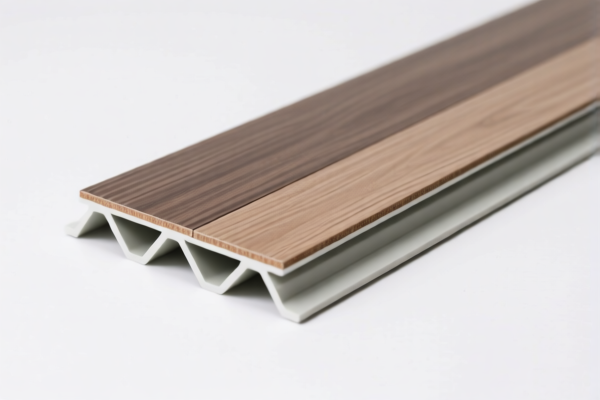
| ✅ Cross-Section Photo | ✔️ | Crucial! Show the internal structure. If no fabric/cord is visible, it proves 3926.90.60.90 eligibility. |
| ✅ Commercial Invoice | ✔️ | Describe accurately: "PVC Conveyor Belt, Pure Plastic" vs. "Reinforced PVC Belt" |
| ✅ Certificate of Origin | ✔️ | Required for origin determination. |
| ✅ Test Report (Optional but Recommended) | ✔️ | Chemical analysis proving absence of textile fibers in the core |
✅ 2. Declaration Strategy (Key Rules)
🔥 “Pure Plastic = 0%, Reinforced = 27.4%! Structure is King!”
| Scenario | Correct Declaration | Incorrect Declaration |
|---|---|---|
| Sealing Strip (No fabric) | 3926.90.60.90 |
Misdeclare as 3926.90.59.00 → Overpay tax |
| Conveyor Belt (Fabric inside) | 3926.90.59.00 |
Misdeclare as 3926.90.60.90 → Customs Penalty + Back Taxes |
| Decorative Edge Band (Thin PVC) | 3926.90.60.90 |
N/A |
| Industrial Drive Belt (Textile core) | 3926.90.59.00 |
N/A |
✅ 3. Special Handling Tips
| Situation | Handling Advice |
|---|---|
| OEM Custom Strips | Provide design drawings highlighting material layers. If "reinforced," accept the 27.4% tax. |
| Mixed Containers | If one container has both types, declare separately. Do not lump them under the lower rate, as customs may audit the entire shipment. |
| Product Name Clarity | Avoid vague terms like "Plastic Strip." Use "PVC Belting, Pure Plastic" or "Reinforced PVC Conveyor Belt." |
| De Minimis Shipment (<$800) | If using 3926.90.60.90, it may enter duty-free under Section 321. Do NOT use 3926.90.59.00 for de minimis, as it is often blocked or taxed anyway. |
🌍 Part V: Global Market Clearance Comparison (2026 Latest)
| Country/Region | Recommended HS Code | Tariff Rate (China Origin) | Certification Requirements | Notes |
|---|---|---|---|---|
| 🇺🇸 USA | 3926.90.60.90 (Pure) |
0% | None | Lowest duty! |
| 🇺🇸 USA | 3926.90.59.00 (Reinforced) |
27.4% | None | High duty due to Section 301 |
| 🇪🇺 EU | 3926.90 |
0% | REACH Compliance | Generally zero tariff for plastics |
| 🇨🇳 China | 3926.90 |
0-2.5% | CCC (if applicable) | Low import duty |
| 🇬🇧 UK | 3926.90 |
0% | UKCA | Post-Brexit trade agreements may offer 0% |
📌 Conclusion:
- USA is the only major market with high punitive tariffs for this category.
- Key Strategy: If possible, design products to be pure plastic (no textile reinforcement) to qualify for 0% duty.
- For industrial belts that must be reinforced, budget for the 27.4% additional cost.
📌 Part VI: Common Errors & Pitfalls (Lessons Learned)
❌ Error 1: Declaring a reinforced conveyor belt as 3926.90.60.90 ("Other plastics")
👉 Consequence: Customs inspection reveals textile layer → 27.4% back tax + 20% penalty + Demurrage fees!
❌ Error 2: Using vague description "PVC Strip" without specifying structure
👉 Consequence: Customs may classify as the higher duty rate by default or hold the shipment for further inquiry → Delay in clearance
❌ Error 3: Assuming all PVC products are duty-free
👉 Consequence: Ignoring the textile reinforcement clause → Unexpected 27.4% tax bill
✅ Correct Practice:
"PVC Conveyor Belt, Pure Plastic, Width 100mm, No Fabric Reinforcement" → 0% Duty
"PVC Conveyor Belt, Polyester Reinforced, Width 100mm" → 27.4% Duty
🎯 Part VII: Conclusion: Precise Classification Saves Money!
🎯 Remember the Golden Rule:
🔹 “No Textile = 0% Duty!”
🔹 “Textile Inside = 27.4% Duty!”
🔹 “Structure Determines HS Code!”
📌 Pro Tip:
If your product is a sealing strip, gasket, or decorative edge that does not require strength, consider modifying the design to be pure PVC (no textile backing). This simple change can save you 27.4% in US import duties.
📞 Action Plan:
1. Check internal structure of your PVC strips.
2. If pure plastic → Declare under3926.90.60.90.
3. If reinforced → Declare under3926.90.59.00and budget for 27.4% tax.
4. Provide cross-section photos to customs broker for pre-confirmation.
✨ Professional Clearance Starts with Accurate Classification!
💼 Your Profit Margin Depends on This 27.4% Difference!
Customer Reviews
About HS Code Classification
The Harmonized System (HS) is an internationally standardized nomenclature developed by the World Customs Organization (WCO) to classify traded products. Over 200 countries use the HS system as the basis for customs tariffs, trade statistics, and import/export regulations.
Each HS code follows a hierarchical structure:
- Chapter (2 digits) — Broad category of goods (e.g., Chapter 84: Machinery and Mechanical Appliances)
- Heading (4 digits) — More specific grouping within the chapter
- Subheading (6 digits) — Internationally standardized breakdown, used by all WCO member countries
- National subdivisions (8-10 digits) — Country-specific extensions for further classification, such as US HTSUS 10-digit codes
Correct HS code classification is essential for smooth customs clearance, accurate duty payment, and compliance with trade regulations. Misclassification can lead to customs delays, overpayment of duties, or penalties.
When importing from CN to US, the applicable tariff rates may include:
- Most-Favored-Nation (MFN) rate — The standard duty rate applied to WTO members
- General rate — Applied to countries without trade agreements
- Trade remedy duties — Additional tariffs such as Section 301 (anti-dumping), Section 232 (national security), or countervailing duties
The information provided on this page is for reference purposes only. For official classification, please consult with your local customs authority or a licensed customs broker.