PVC Textile Bedspread Fabric
CN → US| HS Code | Tariff Rate | Origin | Destination | Doc |
|---|---|---|---|---|
| 6302322060 | 21.4% | CN | US | Official Doc |
| 6302390030 | 21.8% | CN | US | Official Doc |
| 5903102090 | 35.0% | CN | US | Official Doc |
| 5903101000 | 37.7% | CN | US | Official Doc |
| 3921121500 | 41.5% | CN | US | Official Doc |
| 3921121950 | 40.3% | CN | US | Official Doc |
Product Images
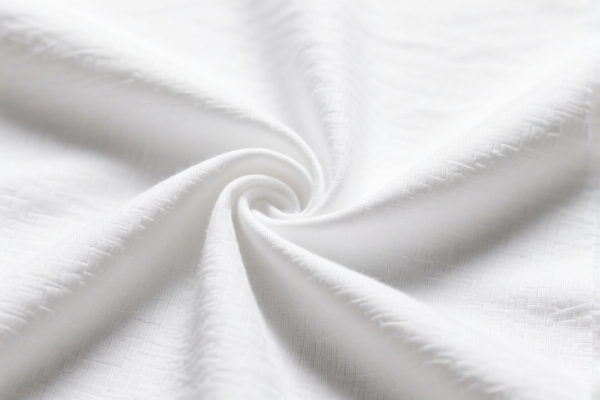
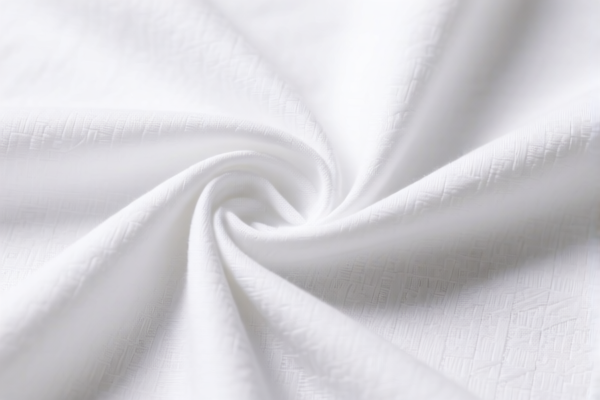
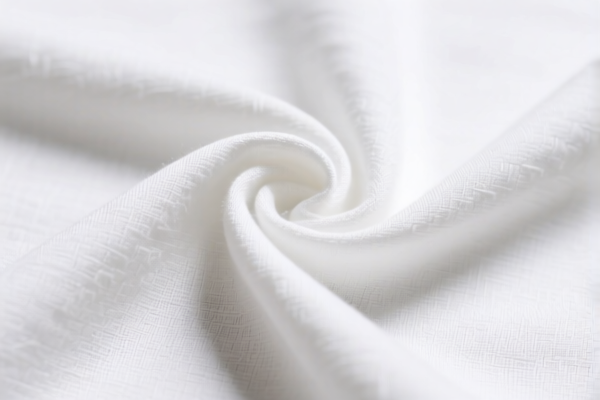

AI Analysis
🛏️ PVC Textile Bedspread Fabric
🌐 HS Code Reference & Customs Clearance Guide | 2026 Updated Tariff Analysis | Professional Import Strategy
📌 One-Stop Classification & Tax Breakdown for PVC-Coated Bed Linen Fabrics
📦 1. Product Definition & Classification: What Exactly Is "PVC Textile Bedspread Fabric"?
PVC Textile Bedspread Fabric refers to bed linen or bedding materials made from textile fabrics coated, impregnated, or laminated with poly(vinyl chloride) (PVC), typically used for bedspreads, mattress covers, or decorative bedding. These fabrics are designed to be water-resistant, durable, and easy to clean, often used in hospital, hotel, or outdoor settings.
⚠️ Key Classification Rule:
- If the fabric is impregnated, coated, or laminated with PVC and used as bed linen, it falls under Heading 5903.10 — Textile fabrics impregnated, coated, covered or laminated with plastics, other than those of heading 5902.
- The type of fiber (man-made, cotton, etc.) and PVC content (over 70% by weight) are critical for precise HS code assignment.
📊 2. HS Code Breakdown (2026 Updated Tariff Authority)
| HS Code | Product Description | Fiber Type | PVC Content | Key Use Case |
|---|---|---|---|---|
5903.10.10.00 |
Textile fabrics impregnated, coated, covered or laminated with PVC: Of cotton | Cotton | Over 70% | Bedspreads, mattress covers, hospital linens |
5903.10.20.90 |
Textile fabrics impregnated, coated, covered or laminated with PVC: Of man-made fibers: Other | Man-made fibers (e.g., polyester, nylon) | Over 70% | Premium bedspreads, luxury bedding, outdoor use |
6302.32.20.60 |
Other bed linen: Of man-made fibers: Other | Man-made fibers | N/A | Non-PVC bedspreads (e.g., polyester sheets) |
6302.39.00.30 |
Other bed linen: Of other textile materials: Other | Mixed/other fibers | N/A | Non-PVC, non-man-made fiber bed linen |
🔍 Critical Distinction:
- Only fabrics with PVC coating/impregnation qualify under 5903.10.
- Non-PVC bed linen (even if made of man-made fibers) falls under 6302.32 or 6302.39 — lower tariff, but not applicable if PVC is present.
💰 3. 2026 Updated Tariff & Tax Detail (US Market, China-Origin)
✅ Applicable Country: United States (US)
✅ Origin: China (CN)
✅ Effective Date: November 10, 2025 (inclusive)
✅ Tariff Type: Ad valorem + Additional Duties (USITC + IEEPA)
🎯 1. 5903.10.10.00 — Cotton-Based PVC-Coated Bedspread Fabric
| Item | Detail |
|---|---|
| Base Duty | 2.7% (ad valorem) |
| USITC Additional Duty | +25.0% (under Section 301) |
| IEEPA Additional Duty | +10.0% (International Emergency Economic Powers Act) |
| Total Effective Duty | 37.7% |
| Tax Calculation | CIF Value × 37.7% |
| De Minimis Threshold | ❌ Not eligible (denied under US law) |
| Legal Basis Path | IEEPA:9901.25 → IEEPA:9903.01.24 → USITC:5903.10.10.00 → FOOTNOTE:9903.88.01 |
📌 Explanation:
- Despite a low base rate (2.7%), the combined USITC + IEEPA duties push the total to 37.7% — very high for a textile product.
- This is not a minor tariff — it significantly impacts profit margins and import cost.
🎯 2. 5903.10.20.90 — Man-Made Fiber-Based PVC-Coated Bedspread Fabric
| Item | Detail |
|---|---|
| Base Duty | 0.0% |
| USITC Additional Duty | +25.0% |
| IEEPA Additional Duty | +10.0% |
| Total Effective Duty | 35.0% |
| Tax Calculation | CIF Value × 35.0% |
| De Minimis Threshold | ❌ Not eligible |
| Legal Basis Path | IEEPA:9903.88.01 → USITC:5903.10.20.90 → FOOTNOTE:9903.88.01 |
📌 Explanation:
- No base duty, but 25% USITC + 10% IEEPA = 35% total.
- Higher than cotton-based (which has 2.7% base), but still extremely high.
- Man-made fiber dominance (e.g., polyester, nylon) does not reduce tariff — PVC coating triggers the same add-ons.
🎯 3. 6302.32.20.60 — Non-PVC Man-Made Fiber Bed Linen
| Item | Detail |
|---|---|
| Base Duty | 0.0% |
| USITC Additional Duty | 0.0% |
| IEEPA Additional Duty | 0.0% |
| Total Effective Duty | 0.0% |
| Tax Calculation | CIF Value × 0.0% |
| De Minimis Threshold | ✅ Eligible (up to $800 per shipment) |
| Legal Basis Path | 6302.32.20.60 — No additional tariffs |
📌 Key Insight:
- If the fabric is not coated with PVC, even if it's man-made fibers, it does not trigger the 30%+ add-ons.
- This is a major loophole — if you can prove no PVC, you can avoid 35–37% tariffs.
🎯 4. 6302.39.00.30 — Other Bed Linen (Non-PVC, Non-Man-Made)
| Item | Detail |
|---|---|
| Base Duty | 0.0% |
| USITC Additional Duty | 0.0% |
| IEEPA Additional Duty | 0.0% |
| Total Effective Duty | 0.0% |
| De Minimis Threshold | ✅ Eligible |
| Legal Basis Path | 6302.39.00.30 — No additional duties |
📌 Note:
- This code applies to non-PVC, non-man-made fiber bed linen (e.g., cotton blends, rayon, mixed fibers).
- No extra tariffs, but must prove no PVC coating.
🛠️ 4. Customs Clearance Best Practices (Pro Tips to Avoid Penalties)
✅ 1. Required Documentation (Must-Have)
| Document | Required? | Purpose |
|---|---|---|
| ✅ Product Specifications | ✔️ | Confirm fiber type, PVC content, coating method |
| ✅ Material Safety Data Sheet (MSDS) | ✔️ | Prove PVC content & composition |
| ✅ Lab Test Report (PVC Coating Test) | ✔️ | Verify if PVC >70% by weight |
| ✅ Commercial Invoice | ✔️ | Clearly state: “PVC-coated textile fabric for bedspread use” |
| ✅ Certificate of Origin (CO) | ✔️ | If non-China origin, may qualify for lower tariff |
| ✅ Packing List | ✔️ | Show unit count, weight, packaging |
| ✅ Sample (Optional but Recommended) | ✔️ | For customs inspection or pre-clearance |
✅ 2.申报技巧(Critical Tips)
🔥 "PVC = High Duty, No PVC = Zero Duty"
🔥 "Fiber Type Matters, But PVC Coating is King"
| Scenario | Correct HS Code | Wrong Code | Risk |
|---|---|---|---|
| PVC-coated cotton bedspread | 5903.10.10.00 |
6302.39.00.30 |
Underpaid duty → penalty + interest |
| PVC-coated polyester bedspread | 5903.10.20.90 |
6302.32.20.60 |
Underpaid duty → seizure risk |
| Non-PVC polyester bedspread | 6302.32.20.60 |
5903.10.20.90 |
Overpaid duty → unnecessary cost |
| Mixed fiber, no PVC | 6302.39.00.30 |
5903.10.20.90 |
Overpaid duty + audit risk |
✅ 3. Special Cases & Solutions
| Case | Solution |
|---|---|
| PVC coating <70% | May qualify under 5903.10.20.90 only if PVC is not dominant — verify lab report |
| PVC coating but no fiber dominance | If cotton > man-made, use 5903.10.10.00 |
| Mixed PVC & rubber coating | Still falls under 5903.10.20.90 — PVC is the trigger |
| Custom-designed bedspread | Provide design drawings + material specs to avoid "non-standard" classification |
| Export from Vietnam/Mexico | Can apply for IEEPA exemption — tariff drops to 0–5% |
🌍 5. Global Market Tariff Comparison (2026)
| Country | Recommended HS Code | Tariff | Certification | Notes |
|---|---|---|---|---|
| 🇺🇸 USA | 5903.10.10.00 / 5903.10.20.90 |
35–37.7% | None (but lab report advised) | High cost — avoid if possible |
| 🇨🇳 China | 5903.10.10.00 / 5903.10.20.90 |
5% | CCC, RoHS | No additional duties |
| 🇪🇺 EU | 5903.10.10.00 |
0% (if CE compliant) | CE, REACH | No US-style add-ons |
| 🇦🇺 Australia | 5903.10.10.00 |
5% | RCM | No IEEPA/USITC |
| 🇯🇵 Japan | 5903.10.10.00 |
0% | PSE | No additional duties |
📌 Conclusion:
- USA is the only market with 35%+ tariffs on PVC-coated textiles.
- China, EU, Japan, Australia are much more favorable — consider shifting supply chain.
🚨 6. Common Mistakes & How to Avoid Them (Real-World Pitfalls)
❌ Mistake 1: Declaring PVC-coated fabric as "non-PVC" to avoid high tariffs
👉 Result: Seizure, fines, audit, reputation damage
❌ Mistake 2: Using 6302.32.20.60 for PVC-coated fabric
👉 Result: Underpaid duty → penalty + interest + legal risk
❌ Mistake 3: Not providing lab test report for PVC content
👉 Result: Customs delays, request for clarification, rejection
❌ Mistake 4: Assuming man-made fibers = lower tariff
👉 Result: Still 35% if PVC is present — fiber type is irrelevant
✅ Correct Practice:
“PVC-coated polyester bedspread fabric, 70% PVC by weight, used for hospital mattress covers, tested by [Lab Name], certified for non-toxic coating”
🎯 7. Final Verdict: Smart Strategy for Profitability
✅ If PVC is present → Prepare for 35–37.7% tariff in the US
✅ If PVC is absent → Use6302.32.20.60or6302.39.00.30→ 0% tariff
✅ Consider shifting production to Vietnam/Mexico → IEEPA exemption possible
✅ Always get a lab test + pre-ruling from customs → avoid surprises
📌 Pro Tip: The 3-Step Checklist Before Shipment
- ✅ Confirm PVC coating is present — get lab report
- ✅ Verify fiber dominance — man-made > cotton?
- ✅ Choose HS Code based on PVC status, not fiber type
📣 Take Action Now:
📞 Contact a licensed customs broker + request HS Code pre-ruling
🚀 Use non-PVC alternatives if exporting to the US
💡 Reconsider sourcing — Vietnam, Mexico, Thailand = lower tariff risk
✨ Smart Classification = Lower Cost = Faster Profit
💼 Your next shipment starts with the right HS code — don’t let a misclassification sink your margins!
Customer Reviews
About HS Code Classification
The Harmonized System (HS) is an internationally standardized nomenclature developed by the World Customs Organization (WCO) to classify traded products. Over 200 countries use the HS system as the basis for customs tariffs, trade statistics, and import/export regulations.
Each HS code follows a hierarchical structure:
- Chapter (2 digits) — Broad category of goods (e.g., Chapter 84: Machinery and Mechanical Appliances)
- Heading (4 digits) — More specific grouping within the chapter
- Subheading (6 digits) — Internationally standardized breakdown, used by all WCO member countries
- National subdivisions (8-10 digits) — Country-specific extensions for further classification, such as US HTSUS 10-digit codes
Correct HS code classification is essential for smooth customs clearance, accurate duty payment, and compliance with trade regulations. Misclassification can lead to customs delays, overpayment of duties, or penalties.
When importing from CN to US, the applicable tariff rates may include:
- Most-Favored-Nation (MFN) rate — The standard duty rate applied to WTO members
- General rate — Applied to countries without trade agreements
- Trade remedy duties — Additional tariffs such as Section 301 (anti-dumping), Section 232 (national security), or countervailing duties
The information provided on this page is for reference purposes only. For official classification, please consult with your local customs authority or a licensed customs broker.