PVC Textile Car Seat Cover
CN → US| HS Code | Tariff Rate | Origin | Destination | Doc |
|---|---|---|---|---|
| 3926905900 | 37.4% | CN | US | Official Doc |
| 6307909887 | 24.5% | CN | US | Official Doc |
| 6306905000 | 14.5% | CN | US | Official Doc |
| 3926305000 | 22.8% | CN | US | Official Doc |
| 6307909891 | 24.5% | CN | US | Official Doc |
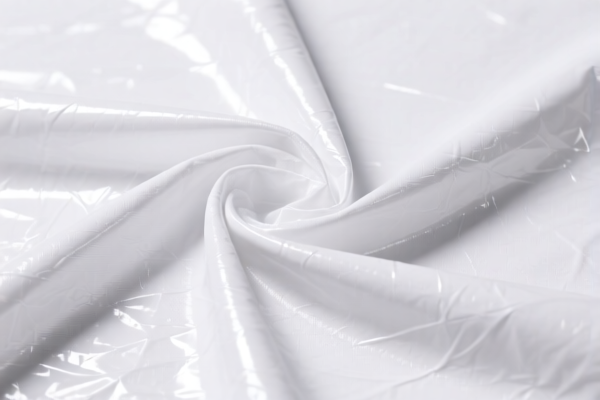
Product Images



AI Analysis
🚗 Car Seat Covers (PVC Textile)
🌐 HS Code Reference & Customs Clearance Guide | 2026 Latest Tariff Analysis | Professional-Level Strategy
📌 I. Product Definition & Classification: What Exactly Is a "PVC Car Seat Cover"?
PVC (Polyvinyl Chloride) Car Seat Covers are essential automotive interior accessories used to protect, beautify, and enhance the comfort of vehicle seats. In international trade, their classification depends heavily on:
- Material Composition: PVC-coated fabric vs. pure plastic sheeting.
- Form: Finished product (stitched, shaped) vs. raw material (fabric/plastic sheet).
- Use: Specifically for car seats vs. general textile/plastic products.
⚠️ Key Distinction Points:
- If it’s a finished, stitched seat cover made from PVC-coated fabric → Generally falls under Heading 6307 (Other Made-Up Articles).
- If it’s classified as a general plastic product without specific textile characteristics → Falls under Heading 3926 (Other plastic articles).
- The exact HS Code determines whether you face 14.5%, 22.8%, or 24.5%+ in duties.
📦 II. HS Code Classification Details (2026 Latest Tariff Authority)
| HS Code | Product Description | Application Scenario | Material/Status |
|---|---|---|---|
6306.90.50.00 |
Other textile materials made-up articles (car seat covers, sunshades) | PVC-backed textile seat covers | ✅ Textile-based |
6307.90.98.87 |
Other made-up articles (artificial fibers/synthetic materials) | Finished PVC seat covers (artificial fiber category) | ✅ Finished, synthetic |
6307.90.98.91 |
Other made-up articles (seat covers) | PVC seat covers as finished goods | ✅ Finished, PVC-based |
3926.30.50.00 |
Other plastic articles (vehicle-related) | PVC plastic sheeting/form for car parts | ✅ Pure plastic |
3926.90.59.00 |
Other plastic articles (textile-type) | PVC textile-type plastic products | ✅ Plastic-textile hybrid |
🔍 Key Reminder:
- If the product is a finished, stitched seat cover with PVC material, 6307.90.98.87 or 6307.90.98.91 are the most appropriate.
- If it’s more of a plastic sheet or raw material shaped for car seats, 3926.30.50.00 or 3926.90.59.00 may apply.
- Misclassification can lead to significant duty differences (from 14.5% to 24.5%+).
💰 III. 2026 Latest Tariff Rate Breakdown (Including Additional Taxes)
✅ Applicable Country: United States (US)
✅ Origin: China (CN)
✅ Effective Date: November 10, 2025 onwards
🎯 1. 6306.90.50.00 —— Textile-Based Car Seat Covers (Sunshades/Covers)
| Item | Details |
|---|---|
| Base Tariff | 4.5% |
| Section 301 Additional Duty | 0.0% |
| Section 122 Duty | 10.0% |
| Total Rate | 14.5% |
| Tax Calculation | CIF Value × 14.5% |
| De Minimis Eligibility | ❌ No (deny_de_minimis) |
| Legal Basis Path | USITC:6306.90.50.00 → FOOTNOTE:122 |
📌 Explanation:
- This is the lowest duty rate among all options.
- Applicable if the product is clearly classified as a textile-based cover with PVC backing.
- No Section 301 additional duty applies, making this the most cost-effective option if classification allows.
🎯 2. 3926.30.50.00 —— Plastic Articles for Vehicle Use
| Item | Details |
|---|---|
| Base Tariff | 5.3% |
| Section 301 Additional Duty | 7.5% |
| Section 122 Duty | 10.0% |
| Total Rate | 22.8% |
| Tax Calculation | CIF Value × 22.8% |
| De Minimis Eligibility | ❌ No (deny_de_minimis) |
| Legal Basis Path | USITC:3926.30.50.00 → FOOTNOTE:301 → FOOTNOTE:122 |
📌 Explanation:
- Higher duty than6306.90.50.00.
- Applicable if the product is classified as a plastic article rather than a textile article.
- Section 301 additional duty of 7.5% applies.
🎯 3. 3926.90.59.00 —— Other Plastic Articles (Textile-Type)
| Item | Details |
|---|---|
| Base Tariff | 2.4% |
| Section 301 Additional Duty | 25.0% |
| Section 122 Duty | 10.0% |
| Total Rate | 37.4% |
| Tax Calculation | CIF Value × 37.4% |
| De Minimis Eligibility | ❌ No (deny_de_minimis) |
| Legal Basis Path | USITC:3926.90.59.00 → FOOTNOTE:301 → FOOTNOTE:122 |
📌 Explanation:
- Highest duty rate in the list.
- Applies if the product is considered a general plastic article with textile-like properties.
- Section 301 additional duty of 25% makes this the most expensive option.
🎯 4. 6307.90.98.87 —— Other Made-Up Articles (Artificial Fibers)
| Item | Details |
|---|---|
| Base Tariff | 7.0% |
| Section 301 Additional Duty | 7.5% |
| Section 122 Duty | 10.0% |
| Total Rate | 24.5% |
| Tax Calculation | CIF Value × 24.5% |
| De Minimis Eligibility | ❌ No (deny_de_minimis) |
| Legal Basis Path | USITC:6307.90.98.87 → FOOTNOTE:301 → FOOTNOTE:122 |
📌 Explanation:
- Moderate duty rate.
- Applicable for finished seat covers made from artificial fibers/synthetic materials.
- Section 301 additional duty of 7.5% applies.
🎯 5. 6307.90.98.91 —— Other Made-Up Articles (Seat Covers)
| Item | Details |
|---|---|
| Base Tariff | 7.0% |
| Section 301 Additional Duty | 7.5% |
| Section 122 Duty | 10.0% |
| Total Rate | 24.5% |
| Tax Calculation | CIF Value × 24.5% |
| De Minimis Eligibility | ❌ No (deny_de_minimis) |
| Legal Basis Path | USITC:6307.90.98.91 → FOOTNOTE:301 → FOOTNOTE:122 |
📌 Explanation:
- Same duty rate as6307.90.98.87.
- Specifically for seat covers as made-up articles.
- Section 301 additional duty of 7.5% applies.
🛠️ IV. Customs Clearance Practical Advice (Avoid Pitfalls)
✅ 1. Required Documentation Checklist (Mandatory)
| Document | Required? | Notes |
|---|---|---|
| ✅ Product Specification Sheet | ✔️ | Include material composition, dimensions, usage |
| ✅ Product Photos (with label) | ✔️ | Show stitching, PVC coating, brand/model |
| ✅ Commercial Invoice | ✔️ | Clearly state “PVC Car Seat Cover” |
| ✅ Packing List | ✔️ | Detail items, quantities, weights |
| ✅ Certificate of Origin (CO) | ✔️ | If non-China origin, may qualify for reduced duty |
| ✅ Third-Party Test Report | ✔️ | Flammability, durability, PVC safety standards |
✅ 2. Declaration Tips (Key Mnemonics)
🔥 “Finished Cover, Use 6307; Plastic Sheet, Use 3926; Get It Wrong, Pay More!”
| Scenario | Correct Declaration | Incorrect Practice |
|---|---|---|
| Finished, stitched PVC seat cover | 6307.90.98.87 or 6307.90.98.91 |
Misdeclare as plastic → 22.8%-37.4% |
| PVC-coated fabric seat cover | 6306.90.50.00 |
Misdeclare as pure plastic → 22.8%-37.4% |
| Raw PVC sheet for seat cover | 3926.30.50.00 or 3926.90.59.00 |
Misdeclare as finished cover → 14.5%-24.5% |
✅ 3. Special Cases Handling
| Situation | Advice |
|---|---|
| OEM Custom Seat Covers | Provide design drawings and customer orders to avoid “non-standard” classification |
| PVC + Leather Combination | Declare based on dominant material; if PVC is primary, still 6307 or 3926 |
| Set with Cushions/Backrests | Declare as a single unit under the main component’s HS Code |
| Non-US Origin | Check if eligible for IEEPA Exemption or FTA Benefits |
🌍 V. Global Market Customs Comparison (2026 Latest)
| Country/Region | Recommended HS Code | Tariff | Certification | Notes |
|---|---|---|---|---|
| 🇺🇸 USA | 6306.90.50.00 |
14.5% | Non-mandatory | Lowest duty for textile-based |
| 🇨🇳 China | 6307.90.98.87 |
5% | CCC | No additional duties |
| 🇪🇺 EU | 6307.90.98.91 |
0-4% | CE | No additional duties |
| 🇬🇧 UK | 6307.90.98.91 |
0-4% | UKCA | Post-Brexit rules apply |
| 🇦🇺 Australia | 6307.90.98.91 |
5% | RCM | No additional duties |
📌 Conclusion:
- USA has the highest tariffs due to Section 301 and Section 122 duties.
-6306.90.50.00offers the lowest duty (14.5%) if the product is textile-based.
- Always verify classification with a licensed customs broker before shipment.
📌 VI. Common Mistakes & Pitfalls (Lessons Learned)
❌ Mistake 1: Declaring finished seat covers as “plastic sheets”
👉 Consequence: Duty jumps from 14.5% to 37.4% → Overpayment!
❌ Mistake 2: Misclassifying textile-based covers as pure plastic
👉 Consequence: Duty increases from 14.5% to 22.8%+ → Unnecessary Cost!
❌ Mistake 3: Ignoring Section 122 Duty (10%)
👉 Consequence: 10% additional tax on all Chinese-origin goods → Budget Blowout!
❌ Mistake 4: Using vague descriptions like “Car Accessories”
👉 Consequence: Customs delays, reclassification, and potential penalties → Shipment Hold!
✅ Correct Practice:
“Finished PVC Car Seat Cover, Textile-Based, Model XYZ, Certified for US Market”
🎯 VII. Conclusion: Accurate Classification, Faster Clearance, Lower Costs!
🎯 Remember the Key Rule:
🔹 “Textile-Based = 14.5%; Plastic-Based = 22.8%-37.4%; Wrong Code = Overpay!”
🔹 “Section 122 Adds 10% Always; Section 301 Adds 0-25% Depending on Code!”
📌 Pro Tip:
If your seat covers are originating from Vietnam, Mexico, or Thailand, you may qualify for IEEPA Exemptions or FTA Benefits, reducing duties to 0-5%.
Recommend applying for an Advance Ruling from US Customs to avoid post-import adjustments.
📣 Take Action Now:
📞 Contact a Licensed Customs Broker + Provide Product Images + Request HS Code Advance Ruling
🚀 Ensure Smooth Clearance, Reduce Costs, and Maximize Profits!
✨ Professional Customs Clearance Starts with Accurate Classification!
💼 Every Dollar Saved Matters in Global Trade!
Customer Reviews
About HS Code Classification
The Harmonized System (HS) is an internationally standardized nomenclature developed by the World Customs Organization (WCO) to classify traded products. Over 200 countries use the HS system as the basis for customs tariffs, trade statistics, and import/export regulations.
Each HS code follows a hierarchical structure:
- Chapter (2 digits) — Broad category of goods (e.g., Chapter 84: Machinery and Mechanical Appliances)
- Heading (4 digits) — More specific grouping within the chapter
- Subheading (6 digits) — Internationally standardized breakdown, used by all WCO member countries
- National subdivisions (8-10 digits) — Country-specific extensions for further classification, such as US HTSUS 10-digit codes
Correct HS code classification is essential for smooth customs clearance, accurate duty payment, and compliance with trade regulations. Misclassification can lead to customs delays, overpayment of duties, or penalties.
When importing from CN to US, the applicable tariff rates may include:
- Most-Favored-Nation (MFN) rate — The standard duty rate applied to WTO members
- General rate — Applied to countries without trade agreements
- Trade remedy duties — Additional tariffs such as Section 301 (anti-dumping), Section 232 (national security), or countervailing duties
The information provided on this page is for reference purposes only. For official classification, please consult with your local customs authority or a licensed customs broker.