PVC Textile Car Sunshade
CN → US| HS Code | Tariff Rate | Origin | Destination | Doc |
|---|---|---|---|---|
| 5903102010 | 35.0% | CN | US | Official Doc |
| 5903102090 | 35.0% | CN | US | Official Doc |
| 6303922030 | 28.8% | CN | US | Official Doc |
| 6303922010 | 28.8% | CN | US | Official Doc |
| 3926206000 | 35.0% | CN | US | Official Doc |
Product Images
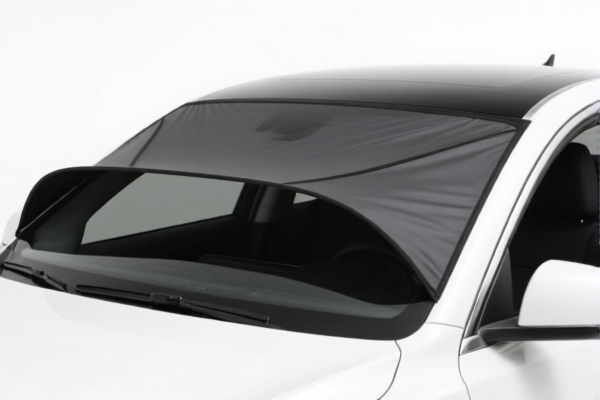
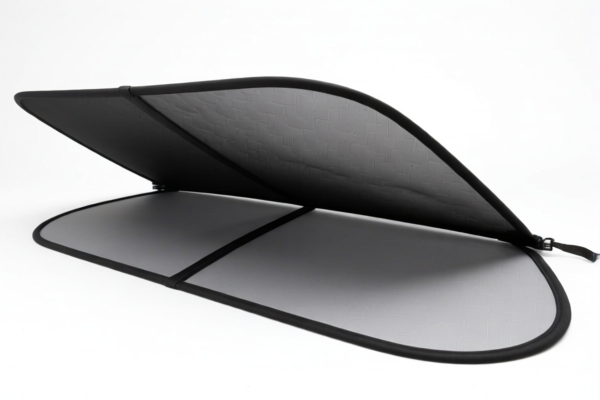
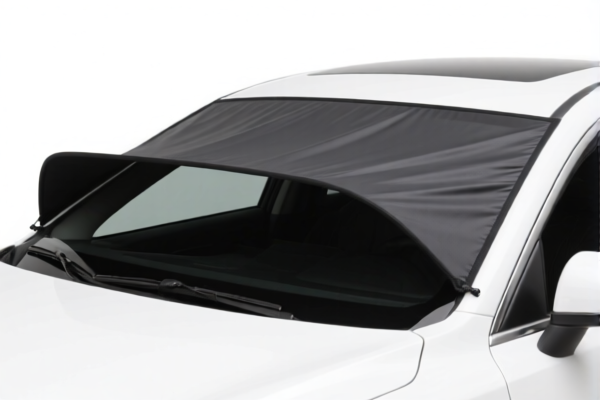
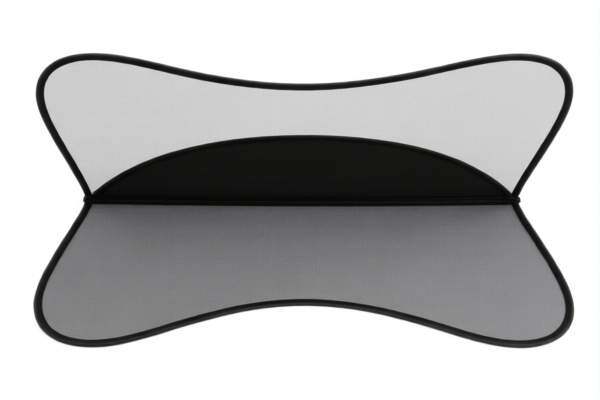
AI Analysis
🚗 PVC Textile Car Sunshade (Car Sun Visors)
🌐 HS Code Reference & Customs Clearance Guide | 2026 Latest Tariff Analysis | Professional Clearance Strategy
📌 I. Product Definition and Classification: What Exactly is a "Car Sunshade"?
A PVC Textile Car Sunshade is an automotive accessory designed to block sunlight, reduce heat, and provide privacy for vehicle occupants. In international trade, the classification heavily depends on the material composition (PVC-coated fabric vs. pure plastic) and the functional intent (curtain-like vs. rigid accessory).
Key Distinction Points: * Textile-Based (Immersed/Covered Fabric): If the product is made of fabric coated or impregnated with PVC, it is often classified under Chapter 59 (Impregnated, coated, covered or laminated textile fabrics) or Chapter 63 (Other made-up textile articles). * Plastic-Based: If the product is considered a general plastic article without the specific "textile" character dominating its identity, it may fall under Chapter 39 (Articles of plastic).
⚠️ Critical Note for US Imports:
Due to Section 301 and IEEPA tariffs, the specific HS Code chosen dramatically impacts the total duty rate. Products classified as "Textiles" (Chapters 59/63) often face different additional duties compared to "General Plastics" (Chapter 39), though in this specific dataset, both high-tax pathways exist.
📦 II. HS Code Classification Details (2026 Latest Tariff Authority)
Based on the provided data, the product maps to five specific HS Codes. Here is the breakdown:
| HS Code | Product Description & Logic | Total Tax Rate | Key Classification Reason |
|---|---|---|---|
5903.10.20.10 |
Textile Fabric, PVC-Coated Matches PVC material & sunshade form. Classified as "Fabric coated with plastic." |
35.0% | Primary material is textile coated with PVC. |
5903.10.20.90 |
Other PVC-Textile Articles Matches PVC material & sunshade form. Classified as "Other textile/film products immersed/coated in plastic." |
35.0% | Similar to above, but covers other specific sub-categories of PVC-coated textiles not listed in .10. |
6303.92.20.30 |
Made-up Textile Curtains/Blinds Matches PVC material (synthetic) & use as "Curtain/Blind" for shading. |
28.8% | Classified based on Use (Curtain/Blind) rather than just material coating. Lower tax rate. |
6303.92.20.10 |
Made-up Textile Curtains/Draperies Matches form (Sunshade) & use (Curtain/Draperie). PVC considered synthetic textile category. |
28.8% | Classified specifically as "Curtain/Draperie." Often preferred for lower duty if accepted by customs. |
3926.20.60.00 |
Other Plastic Articles Matches PVC material & sunshade form. Classified as "Other plastic articles." |
35.0% | If customs determines the textile base is negligible or it's primarily a "plastic good." |
🔍 Strategic Insight:
-6303.92.20.10and6303.92.20.30offer the lowest total tax rate (28.8%).
-5903and3926carry the highest tax rate (35.0%).
- The difference is 6.2% of the CIF value, which is significant for high-volume shipments.
💰 III. 2026 Latest Tariff Rate Breakdown (Including Surtaxes & Policy Add-ons)
✅ Applicable Country: United States (US)
✅ Origin: China (CN)
✅ Effective Time: November 10, 2025 (including subsequent imports)
🎯 1. The 35.0% Tax Bracket (HS Codes: 5903.10.20.10, 5903.10.20.90, 3926.20.60.00)
| Item | Content |
|---|---|
| Base Tariff | 0.0% |
| USITC Surtax (Section 301) | +25.0% |
| IEEPA Surtax (China Specific) | +10.0% |
| Total Tariff | 35.0% |
| Tax Calculation | CIF Value × 35.0% |
| De Minimis Eligibility | ❌ NO (deny_de_minimis) |
| Legal Path | IEEPA:9903.01.25 → USITC:5903/3926 → FOOTNOTE:9903.88.01 |
📌 Explanation:
- Base Tariff 0%: Many PVC/plastic articles have a low base duty.
- 25% Section 301 Tariff: Applied to goods from China under US Trade Act Section 301.
- 10% IEEPA Tariff: Additional surtax targeting Chinese-origin goods under the International Emergency Economic Powers Act.
- Result: You pay 35 cents in tax for every $1.00 of value.
🎯 2. The 28.8% Tax Bracket (HS Codes: 6303.92.20.10, 6303.92.20.30)
| Item | Content |
|---|---|
| Base Tariff | 11.3% |
| USITC Surtax (Section 301) | +7.5% |
| IEEPA Surtax (China Specific) | +10.0% |
| Total Tariff | 28.8% |
| Tax Calculation | CIF Value × 28.8% |
| De Minimis Eligibility | ❌ NO (deny_de_minimis) |
| Legal Path | IEEPA:9901.25 → USITC:6303 → FOOTNOTE:9903.88.01 |
📌 Explanation:
- Base Tariff 11.3%: Textile curtains/blinds often have a higher base duty than pure plastics.
- 7.5% Section 301 Surtax: This is significantly lower than the 25% applied to PVC-coated textiles/plastics in this dataset. Note: This is specific to the provided data context; in other trade contexts, textile surcharges vary.
- 10% IEEPA Surtax: Remains constant at 10%.
- Result: 28.8 cents in tax for every $1.00 of value. This is the most cost-effective classification if the product structure supports it.
🛠️ IV. Customs Clearance Practical Advice (Battle-Tested Tips)
✅ 1. Document Checklist (Non-Negotiable)
| Document | Must Provide? | Description |
|---|---|---|
| ✅ Product Spec Sheet | ✔️ | Must specify: Material = "PVC-Coated Polyester/Textile", Use = "Car Sunshade", Dimensions. |
| ✅ Product Photos | ✔️ | Clear images showing the textile texture and PVC coating. Show it being used in a car. |
| ✅ Commercial Invoice | ✔️ | Description must match HS Code rationale (e.g., "Textile Car Curtain" for 6303 vs. "PVC Sunshade Sheet" for 5903). |
| ✅ Bill of Lading/Air Waybill | ✔️ | Standard shipping documents. |
| ✅ Country of Origin Certificate | ✔️ | Essential for applying IEEPA/Section 301 rules. |
✅ 2. Declaration Strategy (Key Mnemonics)
🔥 “Describe the Function, Highlight the Fabric, Avoid Generic Terms!”
| Scenario | Correct Declaration Strategy | Wrong Practice |
|---|---|---|
Aiming for 28.8% (6303) |
Use terms: "Textile Car Curtain," "Fabric Sunshade," "Automotive Blind." Emphasize the textile nature and curtain function. | Using terms like "PVC Plastic Sheet" or "Rubber Mat." |
Aiming for 35.0% (5903/3926) |
Use terms: "PVC-Coated Textile," "Immersed Fabric." If customs rejects 6303, this is the fallback. | Ignoring material composition. |
| Generic "Sunshade" | Danger Zone! Customs may assign their own code or flag for review, causing delays. | Just writing "Car Sunshade." |
📌 Recommendation:
Try to classify under6303.92.20.10or6303.92.20.30to save 6.2% in duties. To succeed, ensure your product is clearly made of textile fabric (e.g., polyester) that has been coated or impregnated with PVC, and emphasize its function as a curtain/visors for the car window.
✅ 3. Special Case Handling
| Situation | Handling Advice |
|---|---|
| Product is Hard PVC Plastic (No Fabric) | Must use 3926.20.60.00. Do not try to force textile classification. Tax: 35.0%. |
| Product is Fabric + PVC + Metal Frame | Still likely 6303 or 5903 if the textile is the primary character. The metal frame is considered accessory. |
| OEM Custom Colors/Prints | Ensure the spec sheet mentions "Printed PVC-Coated Textile." This supports the textile argument. |
| Pre-Clearance Ruling | Highly Recommended. File an Advance Ruling with CBP for HS Code 6303.92.20.10 to lock in the 28.8% rate. |
🌍 V. Global Market Comparison (2026 Overview)
| Market | Recommended HS Code | Total Tariff (China Origin) | Key Requirement | Notes |
|---|---|---|---|---|
| 🇺🇸 USA | 6303.92.20.10 |
28.8% | IEEPA + Sec 301 | Lowest US Tax. Avoid 5903/3926 (35%). |
| 🇺🇸 USA | 5903.10.20.10 |
35.0% | IEEPA + Sec 301 | High tax. Only if 6303 is rejected. |
| 🇪🇺 EU | 6303.92 |
~4% - 6% | CE/REACH | No Section 301 tariffs. Standard EU duty. |
| 🇨🇳 China | 6303.92 |
10% - 13% | CCC (if applicable) | Standard import duty. No US surcharges. |
| 🇬🇧 UK | 6303.92 |
~4% - 6% | UKCA | Post-Brexit rules apply. No US surcharges. |
📌 Conclusion:
The US market is the most critical for this analysis due to the complex layering of Base + Section 301 + IEEPA tariffs. The 6.2% tax difference between the 28.8% and 35.0% brackets is substantial and should drive classification decisions.
📌 VI. Common Errors & Pitfalls (Lessons Learned)
❌ Error 1: Declaring as "Plastic Sheet" when it is clearly textile.
👉 Consequence: Customs may reassess to 5903 (35%) or impose penalties for misdeclaration.
👉 Better: Be honest about the textile base but argue for the "Curtain" function (6303).
❌ Error 2: Ignoring the IEEPA 10% Surcharge.
👉 Consequence: Underpayment of duties by 10%. Leads to audits, fines, and interest.
👉 Fix: Always add 10% to any China-origin good in the current regulatory environment.
❌ Error 3: Using vague descriptions like "Car Accessory."
👉 Consequence: High risk of customs detention and random inspection.
👉 Fix: Use precise terms: "PVC-Coated Polyester Car Window Sunshade."
🎯 VII. Conclusion: Professional Declaration, Save Costs!
🎯 Remember the Mnemonic:
🔹 "Textile Curtain for 28.8, PVC Plastic for 35.0, IEEPA 10% always on, Section 301 decides the rest!"
🔹 "Describe the Fabric, Not Just the Plastic, Save 6% Instantly!"
📌 Pro Tip:
If your PVC Textile Car Sunshade is made in China, apply for an Advance Ruling for HS Code 6303.92.20.10 or 6303.92.20.30. This locks in the 28.8% rate and protects you from future disputes.
📣 Immediate Action:
📞 Contact your customs broker.
📄 Provide high-res photos showing the textile weave.
📝 Draft invoice with description: "Textile Car Curtain (PVC Coated), for Automotive Window Sun Protection."
🚀 Clear customs smoothly, reduce duties, and maximize profit!
✨ Professional Clearance Starts with Accurate Classification!
💼 Every Percent Matters in International Trade!
Customer Reviews
About HS Code Classification
The Harmonized System (HS) is an internationally standardized nomenclature developed by the World Customs Organization (WCO) to classify traded products. Over 200 countries use the HS system as the basis for customs tariffs, trade statistics, and import/export regulations.
Each HS code follows a hierarchical structure:
- Chapter (2 digits) — Broad category of goods (e.g., Chapter 84: Machinery and Mechanical Appliances)
- Heading (4 digits) — More specific grouping within the chapter
- Subheading (6 digits) — Internationally standardized breakdown, used by all WCO member countries
- National subdivisions (8-10 digits) — Country-specific extensions for further classification, such as US HTSUS 10-digit codes
Correct HS code classification is essential for smooth customs clearance, accurate duty payment, and compliance with trade regulations. Misclassification can lead to customs delays, overpayment of duties, or penalties.
When importing from CN to US, the applicable tariff rates may include:
- Most-Favored-Nation (MFN) rate — The standard duty rate applied to WTO members
- General rate — Applied to countries without trade agreements
- Trade remedy duties — Additional tariffs such as Section 301 (anti-dumping), Section 232 (national security), or countervailing duties
The information provided on this page is for reference purposes only. For official classification, please consult with your local customs authority or a licensed customs broker.