PVC Textile Coated Soundproof Board
CN → US| HS Code | Tariff Rate | Origin | Destination | Doc |
|---|---|---|---|---|
| 3921121100 | 39.2% | CN | US | Official Doc |
| 3921121500 | 41.5% | CN | US | Official Doc |
| 5911101000 | 37.9% | CN | US | Official Doc |
| 5911102000 | 38.8% | CN | US | Official Doc |
| 3926905900 | 37.4% | CN | US | Official Doc |
| 3926905700 | 41.5% | CN | US | Official Doc |
Product Images
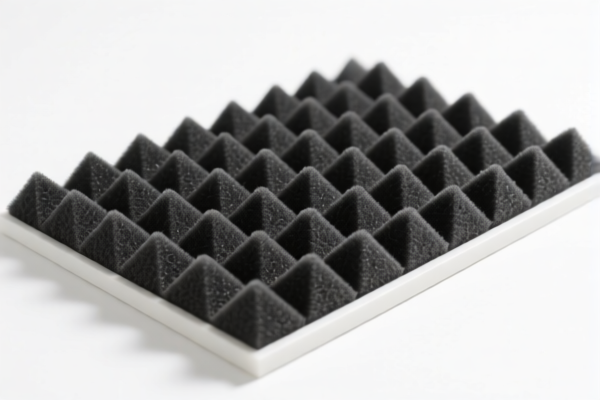
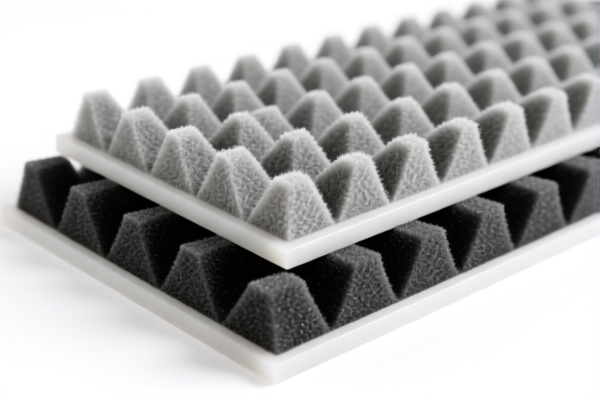
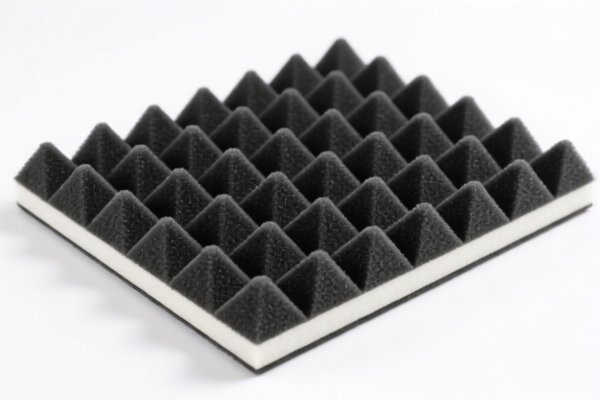
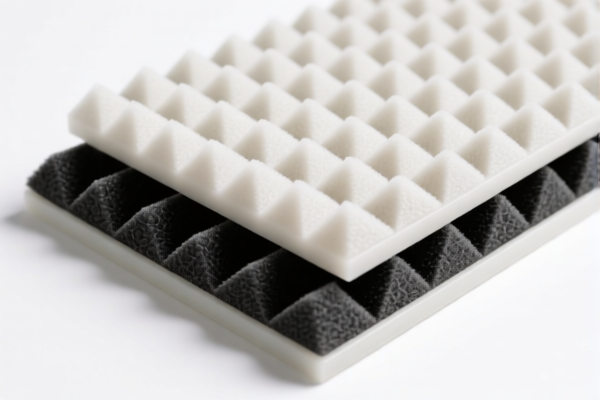
AI Analysis
🏗️ PVC Textile Coated Soundproof Board (Technical Textile Composite)
🌐 HS Code Reference & Customs Clearance Guide | 2026 Latest Tariff Analysis | Professional-Level通关 Strategy 📌 I. Product Definition & Classification: What is a "PVC Textile Coated Soundproof Board"?
A "PVC Textile Coated Soundproof Board" is a composite material typically used in industrial, acoustic, or construction applications. It consists of a base textile fabric (often reinforced with synthetic fibers) coated, covered, or laminated with Polyvinyl Chloride (PVC) or other plastics.
In international trade, the classification hinges on whether the textile function is primary (technical use) or if it is treated as a general plastic sheet combined with textiles. Based on the provided data, two distinct pathways exist:
- As a Technical Textile Product (Chapter 59): If the product is specifically designed for technical purposes (e.g., card clothing, weaving beams, industrial felt) and coated/laminated with rubber/leather/materials, it falls under Chapter 59.
- As a Plastic Composite Article (Chapter 39): If the product is primarily a plastic sheet/film/foil combined with textile materials, it falls under Chapter 39.
⚠️ Key Distinction Point: - If the product is a general soundproofing panel where the PVC is the dominant feature and the textile is just a reinforcement layer within a plastic sheet → Chapter 39 (3921.12). - If the product is a specialized technical textile (e.g., used in machinery, carding, or specific industrial felts) coated with PVC/rubber → Chapter 59 (5911.10).
📦 II. HS Code Classification Details (2026 Latest Tariff Authority Comparison)
| HS Code | Product Description | Application Scenario | Primary Material Composition |
|---|---|---|---|
5911.10.10.00 |
Textile products for technical uses: Printers' rubberized blankets | Industrial printing blankets, specialized technical felts | Textile base + Rubber/Coating (Technical Use) |
5911.10.20.00 |
Textile products for technical uses: Other | Other technical textile fabrics coated/laminated | Textile base + Rubber/Coating (Technical Use) |
3921.12.11.00 |
Cellular PVC plates/sheets combined with textile materials: Over 70% plastics by weight | General acoustic panels, PVC-covered fabric rolls, wall coverings | PVC (Plastic) >70% + Textile reinforcement |
3921.12.15.00 |
Cellular PVC plates/sheets combined with textile materials: Other | Specific PVC composite sheets not meeting the >70% criteria or specific exclusions | PVC (Plastic) + Textile |
3926.90.57.00 |
Articles of plastics (belts/belts for machinery): Man-made fibers predominate | Machinery belts, industrial straps made of plastic/textile composites | Plastic + Man-made Fibers (Machinery Parts) |
3926.90.59.00 |
Articles of plastics (belts/belts for machinery): Other | Generic plastic-textile belts not specified above | Plastic + Textile (Generic) |
🔍 Focus Note: - For a "Soundproof Board", the most likely classification is 3921.12 (Plastic Sheets combined with textiles) if it is a rigid or semi-rigid panel used for acoustic insulation. - 5911.10 is reserved for specialized technical textiles (like card clothing or printing blankets). Unless the "soundproof board" is explicitly a technical textile fabric for machinery (unlikely for standard acoustic boards), Chapter 39 is the more common category for composite plastic-textile panels. - 3926.90 applies only if the product is specifically identified as belting for machinery.
💰 III. 2026 Latest Tariff Rate Details (Including Surcharges, Policy Surcharges)
✅ Applicable Country: USA (US) ✅ Origin: China (CN) ✅ Effective Time: 2025/2026 Current Period
🎯 1. 5911.10.10.00 – Printers' Rubberized Blankets (Technical Textile)
| Item | Content |
|---|---|
| Base Tariff | 0.0% (ad valorem) |
| Additional Tariff (Section 301) | 0.0% |
| Total Tax | 0.0% |
| Tax Calculation | CIF Value × 0.0% = $0 |
| De Minimis Exemption | ❌ Not applicable (Value threshold issues) |
📌 Explanation: - This code has 0% total tariff. However, it is strictly for "Printers' rubberized blankets" or specific technical card clothing. Misclassifying a general soundproof board here could lead to customs audits if the product is not technically a printing blanket.
🎯 2. 5911.10.20.00 – Other Technical Textile Products
| Item | Content |
|---|---|
| Base Tariff | 0.0% |
| Additional Tariff (Section 301) | 0.0% |
| Total Tax | 0.0% |
| Tax Calculation | CIF Value × 0.0% = $0 |
📌 Explanation: - Also 0% total tariff. Suitable for other technical textile fabrics coated/laminated with materials. If your "soundproof board" is a specialized industrial felt or technical fabric, this may apply.
🎯 3. 3921.12.11.00 – Cellular PVC Combined with Textiles (>70% Plastic)
| Item | Content |
|---|---|
| Base Tariff | 4.2% |
| Additional Tariff (Section 301) | 25.0% |
| Total Tax | 29.2% |
| Tax Calculation | CIF Value × 29.2% |
| De Minimis Exemption | ❌ Likely subject to scrutiny if value is high |
📌 Explanation: - This is a high-cost scenario. If the soundproof board is classified as a cellular PVC sheet with textile backing (where PVC dominates by weight >70%), the total tariff is 29.2%. - Legal Basis:
USITC:3921.12.11.00→Footnote: Section 301 Surcharges.
🎯 4. 3921.12.15.00 – Other Cellular PVC Combined with Textiles
| Item | Content |
|---|---|
| Base Tariff | 0.0% |
| Additional Tariff (Section 301) | 0.0% |
| Total Tax | 0.0% |
| Tax Calculation | CIF Value × 0.0% = $0 |
📌 Explanation: - 0% total tariff. This code captures "Other" cellular PVC sheets combined with textiles. If the product does not meet the specific criteria of 3921.12.11.00 (e.g., different polymer structure or weight distribution), this code may offer significant duty savings.
🎯 5. 3926.90.57.00 – Belting for Machinery (Man-made Fibers Predominate)
| Item | Content |
|---|---|
| Base Tariff | 0.0% |
| Additional Tariff (Section 301) | 0.0% |
| Total Tax | 0.0% |
| Tax Calculation | CIF Value × 0.0% = $0 |
📌 Explanation: - 0% total tariff. ONLY applicable if the product is explicitly a belt or belting for machinery. A "soundproof board" is NOT a belt. Misclassification here is a high-risk error.
🎯 6. 3926.90.59.00 – Other Belting for Machinery
| Item | Content |
|---|---|
| Base Tariff | 2.4% |
| Additional Tariff (Section 301) | 25.0% |
| Total Tax | 27.4% |
| Tax Calculation | CIF Value × 27.4% |
📌 Explanation: - 27.4% total tariff. Again, only for machinery belts. High tariff, and likely incorrect classification for a soundproof board.
🛠️ IV. Customs Clearance Practical Suggestions (Combat Pitfall Guide)
✅ 1. Document Preparation Checklist (Non-negotiable)
| Document | Required | Description |
|---|---|---|
| ✅ Product Specification Sheet | ✔️ | Must detail: Layer structure (PVC % vs. Textile %), Cellular structure, Density, Thickness. |
| ✅ Material Composition Certificate | ✔️ | Proof of whether PVC >70% by weight (affects 3921.12.11 vs 3921.12.15). |
| ✅ Product Photos (Cross-section) | ✔️ | Clear image showing the lamination/coating layers to prove "Combined with textile materials". |
| ✅ Commercial Invoice | ✔️ | Describe as "PVC Coated Textile Composite Panel for Acoustic Insulation" – avoid vague terms like "Board". |
| ✅ Packing List | ✔️ | Weight and dimensions to calculate volume/weight ratios. |
| ✅ Usage Declaration | ✔️ | Explicitly state: "Used for soundproofing in construction/industrial settings, NOT for card clothing or printing blankets." |
✅ 2. Declaration Strategy (Key Mantras)
🔥 "Structure Defines Code, Weight Determines Rate, Use Excludes Misclassification!"
| Scenario | Correct Declaration | Wrong Practice |
|---|---|---|
| General Soundproof Panel | 3921.12.15.00 (0% Tax) or 3921.12.11.00 (29.2% Tax) |
Declare as 5911.10 (Technical Textile) without proof of technical use |
| Technical Felt for Machinery | 5911.10.20.00 (0% Tax) |
Declare as 3921 (Plastic Sheet) if it's actually a technical textile |
| Machinery Belt | 3926.90.57.00 (0% Tax) |
Declare as "Soundproof Board" → Rejection for incorrect description |
| Mixed Use | Provide detailed technical data sheet | Vague description "PVC Board" → Leads to Customs Audit & Highest Rate |
✅ 3. Special Case Handling
| Situation | Handling Advice |
|---|---|
| PVC Content >70% | Must declare under 3921.12.11.00 (29.2% Tax) unless you can prove it falls under the "Other" category of 3921.12.15.00 (0% Tax) via structural analysis. |
| PVC Content <70% | Likely falls under 3921.12.15.00 (0% Tax). Ensure documentation supports this weight ratio. |
| Specific Technical Use | If the board is used exclusively in machinery (e.g., as a felt liner), provide evidence to qualify for 5911.10 (0% Tax). Otherwise, it defaults to Chapter 39. |
| Cellular Structure | If the PVC is foamed/cellular, it fits 3921.12. If solid, it might fall under 3921.90 (not in data, but generally higher tax). Ensure "Cellular" is stated if applicable. |
🌍 V. Global Main Market Customs Clearance Comparison (2026 Latest)
| Country/Region | Recommended HS Code | Tariff Rate | Certification Requirements | Notes |
|---|---|---|---|---|
| 🇺🇸 USA | 3921.12.15.00 |
0% | None specific | Avoid 3921.12.11.00 (29.2%) if possible by proving structure. |
| 🇺🇸 USA | 5911.10.20.00 |
0% | None specific | Only if proven to be technical textile. |
| 🇨🇳 China | 3921.12 |
~5-6% | CCC (if electrical/appliance related) | No Section 301 surcharges. |
| 🇪🇺 EU | 3921.12 |
0-6.5% | REACH, RoHS | Low tariffs, strict chemical compliance. |
| 🇦🇺 Australia | 3921.12 |
5% | RCM (if electronic) | No major surcharges. |
📌 Conclusion: - USA Market: The tariff difference between 0% and 29.2% is massive. - Optimization Strategy: Aim for
3921.12.15.00(0%) or5911.10.20.00(0%). Avoid3921.12.11.00(29.2%) unless the product strictly meets the ">70% PVC weight" and "Cellular" criteria without qualifying for the "Other" exemption. - Risk: Misclassifying a standard PVC board as a "Technical Textile" (5911) when it's actually a plastic composite (3921) can lead to penalties. Conversely, misclassifying a high-PVC content board (3921.12.11) as "Other" (3921.12.15) to save taxes is risky if the weight ratio is proven >70%.
📌 VI. Common Errors & Pitfall Guide (Blood & Tears Lessons)
❌ Error 1: Declaring a standard PVC-coated fabric board as 5911.10.10.00 (Printers' Blanket)
👉 Consequence: Customs rejects it because it's not for printing. Re-classification to 3921.12.11.00 → 29.2% Tax + Penalties!
❌ Error 2: Ignoring the PVC Weight Percentage
👉 Consequence: If PVC >70%, declaring under 3921.12.15.00 (0%) is incorrect. Customs will audit weight data → 29.2% Tax + Back Taxes!
❌ Error 3: Using Generic Terms like "Soundproof Material" 👉 Consequence: Customs assigns the highest general rate or delays clearance for detailed inspection → Delays + Storage Fees!
❌ Error 4: Confusing "Belting" with "Board"
👉 Consequence: Declaring a board under 3926.90 (Machinery Belts) → Customs Seizure for Fraudulent Declaration!
✅ Correct Practice:
"Cellular PVC Sheet Laminated with Synthetic Textile, 60% PVC by Weight, Used for Acoustic Insulation in Industrial Walls, Model: ACO-SOUND-2026"
🎯 VII. Conclusion: Professional Declaration, Cost Savings, Efficiency!
🎯 Remember the Mantra:
🔹 "Structure First, Weight Second, Use Third. 0% vs 29% is a world of difference!" 🔹 "Don't call a 'Board' a 'Blanket'. Don't call a 'Sheet' a 'Belt'. Accuracy Saves Thousands!"
📌 Pro Tip:
If your product is PVC Cellular Sheet + Textile, and PVC is <70% by weight, aggressively pursue
3921.12.15.00(0% Tariff) with weight certificates. If PVC is >70% by weight, you are stuck with3921.12.11.00(29.2% Tariff) unless you can prove it's a Technical Textile (5911) through specific use cases. Action: Contact your supplier for a Weight Composition Report and Technical Data Sheet immediately to choose the correct 0% or 29% path.
✨ Professional Clearance Starts with Precise Classification! 💼 Every Percent of Tax Saved is Pure Profit!
Customer Reviews
About HS Code Classification
The Harmonized System (HS) is an internationally standardized nomenclature developed by the World Customs Organization (WCO) to classify traded products. Over 200 countries use the HS system as the basis for customs tariffs, trade statistics, and import/export regulations.
Each HS code follows a hierarchical structure:
- Chapter (2 digits) — Broad category of goods (e.g., Chapter 84: Machinery and Mechanical Appliances)
- Heading (4 digits) — More specific grouping within the chapter
- Subheading (6 digits) — Internationally standardized breakdown, used by all WCO member countries
- National subdivisions (8-10 digits) — Country-specific extensions for further classification, such as US HTSUS 10-digit codes
Correct HS code classification is essential for smooth customs clearance, accurate duty payment, and compliance with trade regulations. Misclassification can lead to customs delays, overpayment of duties, or penalties.
When importing from CN to US, the applicable tariff rates may include:
- Most-Favored-Nation (MFN) rate — The standard duty rate applied to WTO members
- General rate — Applied to countries without trade agreements
- Trade remedy duties — Additional tariffs such as Section 301 (anti-dumping), Section 232 (national security), or countervailing duties
The information provided on this page is for reference purposes only. For official classification, please consult with your local customs authority or a licensed customs broker.