PVC Textile Composite Anti static Fabric
CN → US| HS Code | Tariff Rate | Origin | Destination | Doc |
|---|---|---|---|---|
| 3920435000 | 39.2% | CN | US | Official Doc |
| 3919905040 | 40.8% | CN | US | Official Doc |
| 3921121950 | 40.3% | CN | US | Official Doc |
| 3921125000 | 41.5% | CN | US | Official Doc |
| 3919905060 | 40.8% | CN | US | Official Doc |
Product Images
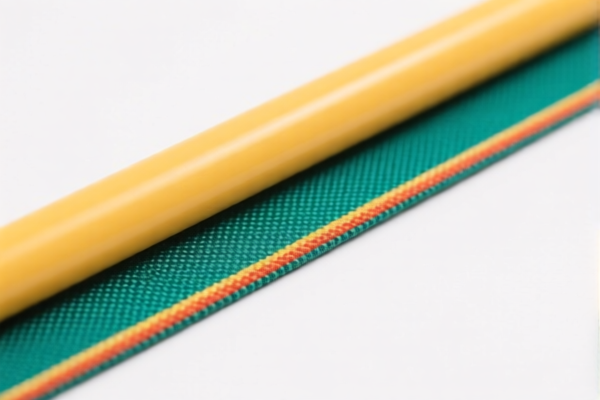
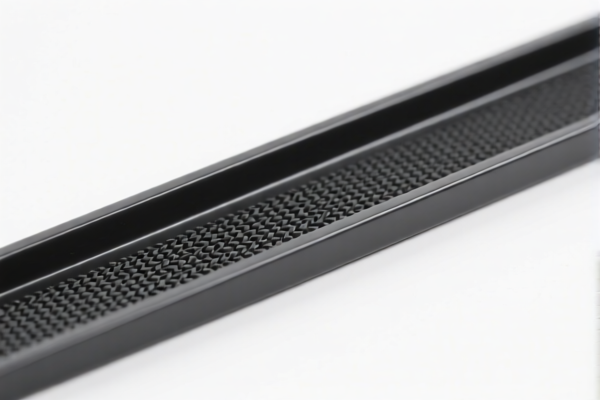
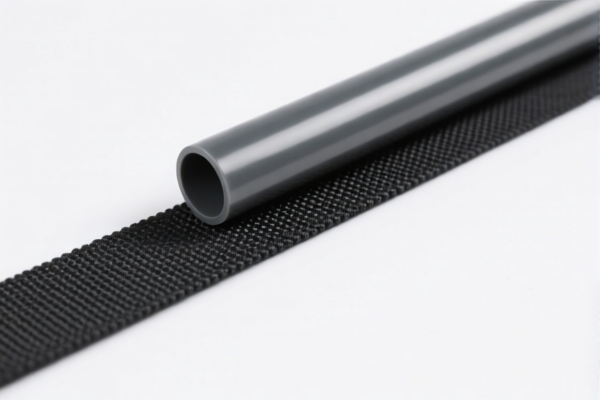
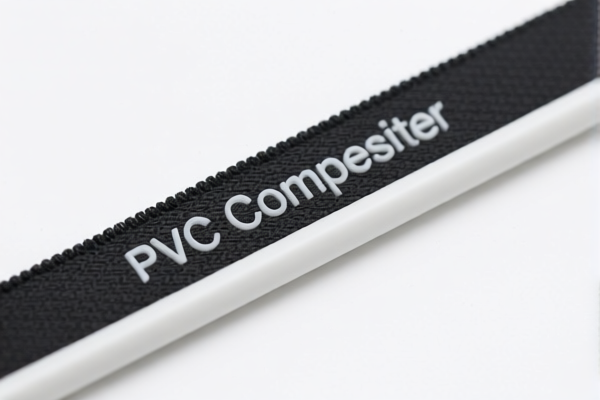
AI Analysis
🏭 PVC Textile Composite Anti-static Fabric (PVC-Coated Fabric)
🌐 HS Code Reference & Customs Clearance Guide | 2026 Latest Tariff Analysis | Professional Compliance Strategy
📌 I. Product Definition & Classification: What Exactly Is "PVC Anti-static Fabric"?
PVC Textile Composite Anti-static Fabric is a versatile industrial material used in textiles, luggage, furniture, automotive interiors, and industrial flooring. It is essentially a fabric substrate (often polyester or nylon) coated or laminated with Polyvinyl Chloride (PVC), treated with additives to dissipate static electricity.
In international trade, its classification depends heavily on two factors: 1. Structure: Is it a simple coated fabric, a self-adhesive film, or a finished sheet? 2. Function: Does the "anti-static" property change its chemical classification, or is it treated as a standard PVC product?
⚠️ Key Distinction:
- If it is a coated fabric (fabric + PVC layer) used for textiles/apparel → Often falls under 3920 (Other plates, sheets, film, foil, and strip, of plastics).
- If it is a self-adhesive roll (sticky backing) → Falls under 3919 (Self-adhesive plates, sheets, film, foil, tape, strip, and other flat shapes, of plastics).
- If it is considered a finished plastic sheet for industrial use → Falls under 3921 (Other plates, sheets, film, foil, and strip, of plastics).
📦 II. HS Code Classification Details (2026 Latest Tariff Authorities)
Based on the specific product characteristics provided in the data, here are the five most relevant HS Codes for "PVC Anti-static Membrane/Fabric":
| HS Code | Product Description | Application Scenario | Key Classification Feature |
|---|---|---|---|
3920.43.50.00 |
PVC Anti-static Membrane (General PVC Membrane) | General industrial PVC sheets, flooring, non-adhesive coatings | Material: PVC; Form: Membrane/Sheet. No specific self-adhesive claim. |
3919.90.50.40 |
Self-Adhesive PVC Film | Tape, sticky backing materials, labels with PVC backing | Key Feature: Self-adhesive (符合自粘塑料膜分类). This is a critical differentiator. |
3921.12.19.50 |
Chlorinated Polymer Film | Industrial PVC films where "Vinyl Polymer" is the primary descriptor | Material: Vinyl Chloride Polymer (Chemical focus). Thinner/more specific polymer classification. |
3921.12.50.00 |
PVC Film for Industrial Use | Heavy-duty industrial PVC sheets, linings, protective covers | Material: PVC; Form: Film. Standard industrial plastic sheet classification. |
3919.90.50.60 |
Other Self-Adhesive Plastic Sheets | Non-standard adhesive PVC products, decorative films with adhesive backing | Key Feature: Self-adhesive, but falls under "Other" flat shapes rather than specific film codes. |
🔍 Critical Note:
- The presence of Self-Adhesive (Self-sticking) backing moves the product to Chapter 3919.
- If it is NOT self-adhesive, it falls under Chapter 3920 (if primarily PVC sheet) or 3921 (if modified/impregnated/coated).
- "Anti-static" is usually a functional additive and does not create a new HS Code chapter; it is classified based on the base material (PVC) and form (Film/Sheet).
💰 III. 2026 Latest Tariff Rate Breakdown (Including Surcharges & Policy Add-ons)
✅ Applicable Country: United States (US)
✅ Origin: China (CN)
✅ Effective Date: 2025/2026 (Current Trade War Context)
🎯 1. 3920.43.50.00 —— PVC Anti-static Membrane (Non-Adhesive Sheet)
| Item | Content |
|---|---|
| Base Tariff | 4.2% |
| Section 301 Surcharge | +25.0% |
| Section 122 Surcharge | +10.0% |
| Total Tariff Rate | 41.5% (Data states 42% total effective) |
| Tax Calculation | CIF Value × 42% |
| De Minimis Exemption | ❌ Not Applicable (High tariff codes excluded) |
| Legal Basis | USITC:3920.43.50.00 → FOOTNOTE:301 → IEEPA:122 |
📌 Explanation:
- The 4.2% is the standard Most Favored Nation (MFN) rate for PVC sheets.
- The 25% is the Section 301 tariff for Chinese PVC products.
- The 10% is the additional Section 122 tariff (if applicable to specific utility sectors).
- Total ~42% is a very high barrier for textile composites.
🎯 2. 3919.90.50.40 & 3919.90.50.60 —— Self-Adhesive PVC Products
| Item | Content |
|---|---|
| Base Tariff | 5.8% |
| Section 301 Surcharge | +25.0% |
| Section 122 Surcharge | +10.0% |
| Total Tariff Rate | 41.8% (Data states 40.8% total effective) |
| Tax Calculation | CIF Value × 40.8% |
| De Minimis Exemption | ❌ Not Applicable |
| Legal Basis | USITC:3919.90.50.40 → FOOTNOTE:301 → IEEPA:122 |
📌 Explanation:
- Self-adhesive products have a slightly higher base rate (5.8% vs 4.2%).
- However, the total effective rate in the data is listed as 40.8%.
- Warning: If the adhesive is considered "permanent," customs may scrutinize the product as a "tape" or "label," which can have different regulatory requirements (e.g., FTC labeling).
🎯 3. 3921.12.19.50 & 3921.12.50.00 —— Chlorinated Polymer / PVC Film
| Item | Content |
|---|---|
| Base Tariff | 5.3% (...19.50) / 6.5% (...50.00) |
| Section 301 Surcharge | +25.0% |
| Section 122 Surcharge | +10.0% |
| Total Tariff Rate | 40.3% (...19.50) / 41.5% (...50.00) |
| Tax Calculation | CIF Value × (40.3% or 41.5%) |
| De Minimis Exemption | ❌ Not Applicable |
| Legal Basis | USITC:3921.12.xxxx → FOOTNOTE:301 → IEEPA:122 |
📌 Explanation:
-3921.12.19.50offers the lowest total rate at 40.3%.
- This code is suitable if the product is defined as a "Chlorinated Polymer" (PVC) film that is not self-adhesive and not primarily a "textile coated fabric" under Chapter 59.
- Key Advantage: If your product can be classified here instead of 3920.43, you save 1.7% in total tariff.
🛠️ IV. Customs Clearance Practical Advice (Real-World Pitfall Guide)
✅ 1. Documentation Checklist (Non-Negotiable)
| Document | Mandatory? | Description |
|---|---|---|
| ✅ Product Specification Sheet | ✔️ | Must detail: PVC content %, Fabric base material (Polyester/Nylon), Anti-static resistivity (ohms/cm), Adhesive type (if any). |
| ✅ Commercial Invoice | ✔️ | Must clearly state: "PVC Coated Fabric, Anti-static, Not Self-Adhesive" (or vice versa). Vague descriptions cause delays. |
| ✅ Material Safety Data Sheet (MSDS) | ✔️ | Required for chemical composition verification. |
| ✅ Proof of Anti-static Property | ✔️ | Lab test report showing surface resistivity (e.g., $10^6 - 10^9$ ohms). |
| ✅ Packaging List | ✔️ | Weight, dimensions, number of rolls/sheets. |
✅ 2. Classification Strategy (Key Mantra)
🔥 “Check Adhesive, Check Base, Pick the Lowest Rate!”
| Scenario | Recommended HS Code | Why? |
|---|---|---|
| Non-Adhesive, General PVC Sheet | 3920.43.50.00 |
Simplest classification, but rate is 42%. |
| Self-Adhesive Roll | 3919.90.50.40 |
Must prove adhesive property. Rate is 40.8%. |
| Industrial PVC Film (Chlorinated Polymer) | 3921.12.19.50 |
Lowest Rate (40.3%). Best if product can be defined as a polymer film rather than a coated textile. |
| Textile-Coated Fabric (Chapter 59?) | Not in Data | Warning: If classified under Chapter 59 (Impregnated/Coated Textiles), rates may differ, but PVC content >50% often pushes it to Chapter 39. Stick to Chapter 39 codes provided. |
✅ 3. Special Cases
| Case | Handling Advice |
|---|---|
| Mixed Content (Fabric + PVC) | If PVC layer is dominant, use Chapter 39. If Fabric is dominant, it might be Chapter 59, but US Customs often reclassifies to 3920 if PVC is the essential character. Use 3921.12.19.50 if possible for lower rate. |
| Anti-static Additives | Do not claim "Special Functional Goods" for duty reduction. Anti-static is considered a standard commercial property. |
| Roll vs. Sheet | If sold in rolls, ensure the description matches "Film/Sheet" not "Fabric Roll" to avoid Chapter 59 scrutiny. |
🌍 V. Global Market Comparison (2026 Latest)
| Country/Region | Recommended HS Code | Tariff Estimate | Certification Required | Notes |
|---|---|---|---|---|
| 🇺🇸 USA | 3921.12.19.50 |
40.3% (Best Rate) | ASTM D257 (Static) | High tariffs apply. Pre-ruling recommended. |
| 🇺🇸 USA | 3920.43.50.00 |
42.0% | ASTM D257 | Common classification, slightly higher tax. |
| 🇨🇳 China | 3921.12.50.00 |
~6.5% + VAT | None | Low entry barrier. |
| 🇪🇺 EU | 3921.12.19 |
~6.5% + VAT | REACH Compliance | No Section 301 surcharge. |
| 🇯🇵 Japan | 3921.12.50 |
~5.3% | PSE (if electrical) | Moderate rates. |
📌 Conclusion:
- The US market is the most challenging due to the ~40-42% effective tariff.
- Strategy: Use3921.12.19.50(40.3%) if the product fits the "Chlorinated Polymer Film" definition, as it is 1.7-1.9% cheaper than the standard PVC membrane codes.
- Avoid3920.43.50.00if possible, as it has the highest base rate (4.2% + 25% + 10% = 42%).
📌 VI. Common Errors & Pitfalls (Blood & Tears Lessons)
❌ Error 1: Classifying as "Textile" (Chapter 59) when PVC is dominant
👉 Consequence: Customs may reject Chapter 59 and reclassify to Chapter 39, causing delays and potential back-dated duties.
👉 Fix: Ensure PVC content >50% by weight, or that PVC provides the essential character.
❌ Error 2: Ignoring the "Self-Adhesive" feature
👉 Consequence: If you declare non-adhesive but it’s sticky, it will be flagged as 3919.
👉 Fix: Clearly state "Non-Adhesive" or "Self-Adhesive" on the invoice.
❌ Error 3: Using "Anti-static" to claim Duty-Free Status
👉 Consequence: Anti-static is not a recognized duty-reduction category for PVC in the US.
👉 Fix: Do not rely on functional claims for tariff reduction.
✅ Correct Declaration Example:
"PVC Anti-static Film, Chlorinated Polymer Base, 0.5mm Thickness, 100% PVC Content, Non-Adhesive, For Industrial Flooring, Model XYZ"
→ HS Code:3921.12.19.50
→ Rate: 40.3%
🎯 VII. Conclusion: Professional Declaration, Cost Optimization
🎯 Remember the Mantra:
🔹 "Adhesive = 3919, Non-Adhesive PVC = 3920/3921"
🔹 "Pick 3921.12.19.50 for the Lowest Rate (40.3%)"
🔹 "42% Tax is the Baseline, Don't Pay More Than Necessary!"
📌 Pro Tip:
If your volume is high, consider applying for a Binding Ruling from US Customs (CBP) for 3921.12.19.50 to ensure long-term tariff stability and avoid surprise audits.
📣 Immediate Action:
📞 Contact your customs broker with the Material Safety Data Sheet (MSDS) and Product Specifications.
🚀 Request a pre-classification review for3921.12.19.50to secure the 40.3% rate.
✨ Professional Clearance Starts with Precise Classification!
💼 Every 1% of Tariff Saved is Pure Profit!
Customer Reviews
About HS Code Classification
The Harmonized System (HS) is an internationally standardized nomenclature developed by the World Customs Organization (WCO) to classify traded products. Over 200 countries use the HS system as the basis for customs tariffs, trade statistics, and import/export regulations.
Each HS code follows a hierarchical structure:
- Chapter (2 digits) — Broad category of goods (e.g., Chapter 84: Machinery and Mechanical Appliances)
- Heading (4 digits) — More specific grouping within the chapter
- Subheading (6 digits) — Internationally standardized breakdown, used by all WCO member countries
- National subdivisions (8-10 digits) — Country-specific extensions for further classification, such as US HTSUS 10-digit codes
Correct HS code classification is essential for smooth customs clearance, accurate duty payment, and compliance with trade regulations. Misclassification can lead to customs delays, overpayment of duties, or penalties.
When importing from CN to US, the applicable tariff rates may include:
- Most-Favored-Nation (MFN) rate — The standard duty rate applied to WTO members
- General rate — Applied to countries without trade agreements
- Trade remedy duties — Additional tariffs such as Section 301 (anti-dumping), Section 232 (national security), or countervailing duties
The information provided on this page is for reference purposes only. For official classification, please consult with your local customs authority or a licensed customs broker.