PVC Textile Composite Cushion Cover
CN → US| HS Code | Tariff Rate | Origin | Destination | Doc |
|---|---|---|---|---|
| 5903102090 | 35.0% | CN | US | Official Doc |
| 9401993580 | 35.0% | CN | US | Official Doc |
| 9401999021 | 35.0% | CN | US | Official Doc |
| 5903102500 | 42.5% | CN | US | Official Doc |
| 3926305000 | 22.8% | CN | US | Official Doc |
Product Images
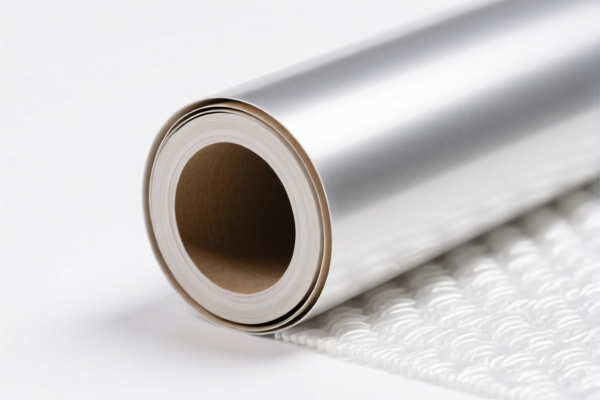
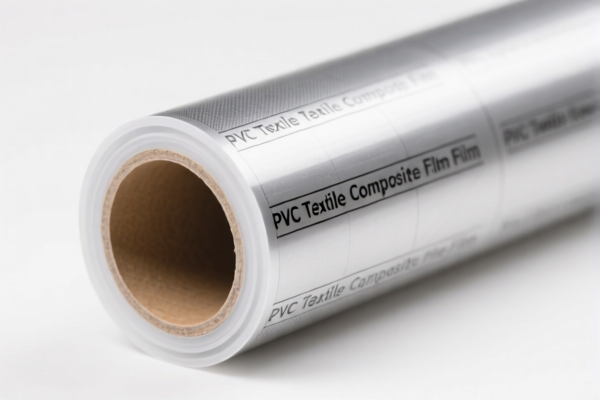

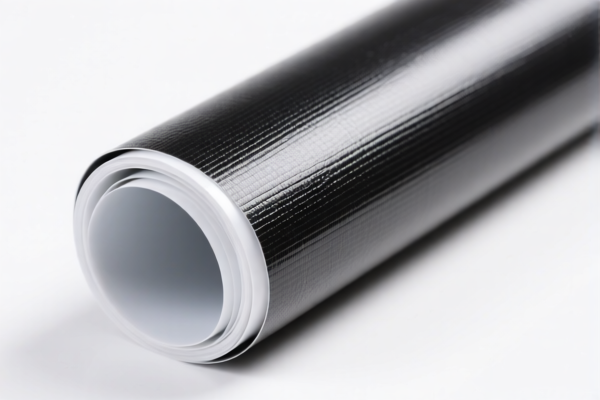
AI Analysis
🛋️ PVC Textile Composite Cushion Cover
Material: PVC-Textile Composite | Application: Automotive/Office/Residential Seating
🌐 HS Code Reference & Customs Clearance Guide | 2026 Latest Tariff Analysis | Professional Clearance Strategy for US Imports 📌 I. Product Definition & Classification: What Exactly is a "PVC Textile Composite Cushion Cover"?
PVC Textile Composite Cushion Covers are versatile materials formed by bonding Polyvinyl Chloride (PVC) with textile fabrics. They are primarily used to upholster seats, providing comfort, durability, and aesthetic appeal.
In international trade, the classification depends heavily on whether the item is recognized as a "part of a seat" (Chapter 94) or as a "textile/plastic material" (Chapter 59/39).
⚠️ Key Classification Distinction: * As a Seat Part: If the product is specifically designed and shaped for seats (e.g., pre-formed car seat covers, office chair cushions) and is recognizable as a part, it falls under Chapter 94 (Furniture Parts). * As a Material: If it is a flat roll of fabric, a generic sheet, or not specifically identifiable as a seat part, it may be classified as Impregnated/Coated Textile (Chapter 59) or Plastic Articles (Chapter 39).
📦 II. HS Code Classification Details (2026 Latest Tariff Authority Mapping)
| HS Code | Product Description | Application Scenario | Key Characteristic |
|---|---|---|---|
5903.10.20.90 |
PVC-impregnated, coated, or laminated textile fabrics (Other) | Generic composite fabrics, rolls, sheets | ✅ Material-focused; Impregnated/Laminated |
9401.99.35.80 |
Parts of seats (Other); Rubber or Plastic materials | Pre-formed seat covers, automotive upholstery parts | ✅ Function-focused; Recognizable as seat part |
9401.99.90.21 |
Parts of seats (Other); PVC Textile Composite | Custom seat cushions, molded seating components | ✅ Function-focused; Composite material structure |
5903.10.25.00 |
PVC-impregnated, coated, or laminated textile fabrics (Other) | Textile-based composites used in broader applications | ✅ Material-focused; Broader textile extension |
3926.30.50.00 |
Other articles of plastics and articles of other materials of heading 39.01 to 39.14; Fittings and trimmings for furniture | Plastic-based furniture accessories, generic covers | ✅ Material-focused; Plastic article/fitting |
🔍 Critical Reminder: * Functional vs. Material: Customs officers will scrutinize the intended use. If the product comes with installation instructions for seats, or is molded to fit a specific seat shape,
9401.xx.xxis more likely. * Generic Materials: If sold as raw material or fabric rolls,5903.10.xxor3926.30.50applies. * Misclassification Risk: Declaring a finished seat cover as a generic "textile" (5903) may trigger scrutiny for undervaluation or incorrect duty rates.
💰 III. 2026 Latest Tariff Rate Breakdown (Including Additional Taxes & Policy Surcharges)
✅ Applicable Country: United States (US) ✅ Origin: China (CN) ✅ Effective Date: November 10, 2025 (and subsequent imports)
🎯 1. 5903.10.20.90 & 9401.99.35.80 & 9401.99.90.21
Classification: High-Surcharge Categories (Textile Material or Seat Part)
| Item | Details |
|---|---|
| Base Tariff Rate | 0.0% (Ad Valorem) |
| Section 301 Surcharge | +25.0% (USITC Footnote 9903.88.01 / Section 301) |
| IEEPA Surcharge | +10.0% (Targeting China/HK products under IEEPA) |
| Total Effective Rate | 35.0% |
| Calculation Basis | CIF Value × 35% |
| De Minimis Eligibility | ❌ NOT ELIGIBLE (Deny De Minimis) |
| Legal Basis Path | IEEPA:9903.01.25 → IEEPA:9903.01.24 → USITC:5903.10.20.90 / 9401.99.35.80 → FOOTNOTE:9903.88.01 |
📌 Explanation: * Despite a 0% base tariff, the combined 35% additional tariff significantly impacts cost. * This rate applies to both material-based (
5903) and seat-part-based (9401) classifications in the provided data, due to current trade restrictions on Chinese-origin goods.
🎯 2. 5903.10.25.00
Classification: Textile Extension Application
| Item | Details |
|---|---|
| Base Tariff Rate | 7.5% (Ad Valorem) |
| Section 301 Surcharge | +25.0% |
| IEEPA Surcharge | +10.0% |
| Total Effective Rate | 42.5% |
| Calculation Basis | CIF Value × 42.5% |
| De Minimis Eligibility | ❌ NOT ELIGIBLE |
| Legal Basis Path | IEEPA:9903.01.25 → USITC:5903.10.25.00 → FOOTNOTE:9903.88.01 |
📌 Explanation: * This category carries a higher total tax burden (42.5%) due to the non-zero base tariff. * Use this only if the product is strictly classified as a textile fabric extension and not a finished seat part.
🎯 3. 3926.30.50.00
Classification: Plastic Furniture Articles/Fittings
| Item | Details |
|---|---|
| Base Tariff Rate | 5.3% (Ad Valorem) |
| Section 301 Surcharge | +7.5% (Note: Lower surcharge rate for this specific plastic heading in some contexts, or adjusted in 2026 data) |
| IEEPA Surcharge | +10.0% |
| Total Effective Rate | 22.8% |
| Calculation Basis | CIF Value × 22.8% |
| De Minimis Eligibility | ❌ NOT ELIGIBLE |
| Legal Basis Path | IEEPA:9903.01.24 → USITC:3926.30.50.00 |
📌 Explanation: * Best Rate Option: Among the provided codes, this offers the lowest total tariff (22.8%). * Strategy: If the product can be legally justified as a "plastic article/fitting for furniture" rather than a textile seat part, this code is the most cost-effective. However, justification must be robust (e.g., emphasis on PVC composition and furniture accessory nature).
🛠️ IV. Customs Clearance Practical Advice (Real-World Pitfall Guide)
✅ 1. Documentation Checklist (Mandatory)
| Document | Required | Notes |
|---|---|---|
| ✅ Product Specification Sheet | ✔️ | Must detail material composition (e.g., "60% Polyester, 40% PVC"), dimensions, and weight. |
| ✅ Material Safety Data Sheet (MSDS) | ✔️ | For PVC content and chemical composition. |
| ✅ Product Photos | ✔️ | Clear images showing the composite nature (PVC layer + Textile layer). |
| ✅ Commercial Invoice | ✔️ | Must accurately describe the item as "PVC Textile Composite" or "Seat Cover Part," not just "Fabric." |
| ✅ Packing List | ✔️ | Weight and dimensions per package. |
| ✅ Declaration of Non-Binding Ruling (Optional) | ✔️ | If uncertain, apply for an Advance Ruling to lock in the HS Code. |
✅ 2. Declaration Strategy (Key Tips)
🔥 "Material Matters, Function Follows, Accuracy Saves Money!"
| Scenario | Recommended HS Code | Reasoning |
|---|---|---|
| Pre-formed Seat Covers (Car/Office) | 9401.99.35.80 or 9401.99.90.21 |
Clearly identifiable as a seat part. Rate: 35%. |
| Raw Composite Fabric Rolls | 5903.10.20.90 or 5903.10.25.00 |
Not yet a finished part. Rate: 35% or 42.5%. |
| Plastic-Heavy Furniture Accents | 3926.30.50.00 |
If PVC dominates and it's viewed as a plastic fitting. Rate: 22.8%. |
| Generic Upholstery Material | 3926.30.50.00 (If defensible) |
Lowers tax burden, but requires strong justification of "plastic article." |
✅ 3. Special Cases & Mitigation
| Case | Handling Advice |
|---|---|
| OEM Custom Seat Covers | Provide design drawings or customer orders proving specific fit for seats → Supports 9401 classification. |
| Mixed Material Claims | If the product is >50% PVC by weight/value, 3926.30.50.00 may be argued, but expect closer scrutiny. |
| De Minimis Exemption | NOT AVAILABLE for China-origin goods under current 10% IEEPA rules. Do not attempt to split shipments to bypass. |
| Audits | Keep samples of the composite layering (cut edge photos) to prove material structure if questioned. |
🌍 V. Global Market Comparison (2026 Update)
| Country/Region | Recommended HS Code | Est. Total Tariff (China Origin) | Notes |
|---|---|---|---|
| 🇺🇸 USA | 9401.99.35.80 / 5903.10.20.90 |
35.0% | High additional duties (301 + IEEPA). |
| 🇺🇸 USA (Plastic Arg.) | 3926.30.50.00 |
22.8% | Lowest US rate, but high audit risk. |
| 🇨🇳 China (Import) | 9401.99.90.21 |
~5-10% | Lower base duties, no US-style surcharges. |
| 🇪🇺 EU | 9401.99.90 |
~0-10% | No Section 301/IEEPA equivalents; CE/RoHS applies. |
| 🇬🇧 UK | 9401.99.90 |
~0-10% | Post-Brexit tariffs may vary; no US-style surcharges. |
📌 Conclusion: * USA remains the most expensive market for Chinese-origin PVC textile composites due to layered tariffs. * Optimization Strategy: If the product allows, argue for
3926.30.50.00(22.8%) to save 12.2% in duties. However, this must be defensible under US customs law (GRI rules).
📌 VI. Common Errors & Pitfalls (Lessons Learned)
❌ Error 1: Declaring a pre-formed seat cover as "Textile Fabric" (5903)
👉 Consequence: Customs may reclassify it, leading to penalties + back taxes. While 5903 might also be 35%, the mismatch in description raises red flags for fraud.
❌ Error 2: Using De Minimis (Section 321) for shipments < $800 👉 Consequence: Rejected. China-origin goods are explicitly excluded from de minimis benefits under IEEPA. Shipments will be held, inspected, and taxed.
❌ Error 3: Ambiguous Description: "Cushion"
👉 Consequence: "Cushion" can be 9404 (upholstered) or 9401 (seat part). If it's a cover (removable, not upholstered), it’s a part. If it’s a pillow, it’s 9404. Misdeclaration leads to delays.
❌ Error 4: Ignoring PVC Composition
👉 Consequence: If PVC is not highlighted, customs may misclassify as pure textile (5903) or pure plastic (3926), leading to incorrect duty calculations.
✅ Correct Practice:
"PVC-Textile Composite Seat Cover, Removable, for Automotive/Office Use, Model XYZ, 100% New, China Origin"
🎯 VII. Conclusion: Precision Classification, Cost Control, Smooth Clearance
🎯 Remember the Golden Rule:
🔹 "Seat Part = 9401 (35%) | Fabric = 5903 (35-42.5%) | Plastic Fitting = 3926 (22.8%)" 🔹 "35% is the baseline; 22.8% is the goal, but only if defensible!" 🔹 "No De Minimis for China! Always declare properly!"
📌 Pro Tip:
If your PVC textile composite is sourced from Vietnam, Thailand, or Mexico, you may qualify for lower or zero tariffs under USMCA or ASEAN agreements. Re-shoring or third-country processing can significantly reduce the 35% burden.
📣 Immediate Action:
📞 Consult a licensed customs broker to validate the 3926.30.50.00 argument. 📄 Prepare material cross-section photos and composition percentages. 🚀 Ensure clear commercial invoices to avoid detention and demurrage fees.
✨ Professional Clearance Starts with Accurate Classification! 💼 Every percentage point saved is pure profit!
Customer Reviews
About HS Code Classification
The Harmonized System (HS) is an internationally standardized nomenclature developed by the World Customs Organization (WCO) to classify traded products. Over 200 countries use the HS system as the basis for customs tariffs, trade statistics, and import/export regulations.
Each HS code follows a hierarchical structure:
- Chapter (2 digits) — Broad category of goods (e.g., Chapter 84: Machinery and Mechanical Appliances)
- Heading (4 digits) — More specific grouping within the chapter
- Subheading (6 digits) — Internationally standardized breakdown, used by all WCO member countries
- National subdivisions (8-10 digits) — Country-specific extensions for further classification, such as US HTSUS 10-digit codes
Correct HS code classification is essential for smooth customs clearance, accurate duty payment, and compliance with trade regulations. Misclassification can lead to customs delays, overpayment of duties, or penalties.
When importing from CN to US, the applicable tariff rates may include:
- Most-Favored-Nation (MFN) rate — The standard duty rate applied to WTO members
- General rate — Applied to countries without trade agreements
- Trade remedy duties — Additional tariffs such as Section 301 (anti-dumping), Section 232 (national security), or countervailing duties
The information provided on this page is for reference purposes only. For official classification, please consult with your local customs authority or a licensed customs broker.