PVC Textile Composite Decorative Panel
CN → US| HS Code | Tariff Rate | Origin | Destination | Doc |
|---|---|---|---|---|
| 3921904010 | 39.2% | CN | US | Official Doc |
| 3921905010 | 39.8% | CN | US | Official Doc |
| 6815190000 | 35.0% | CN | US | Official Doc |
| 3925900000 | 40.3% | CN | US | Official Doc |
| 3921904010 | 39.2% | CN | US | Official Doc |
Product Images

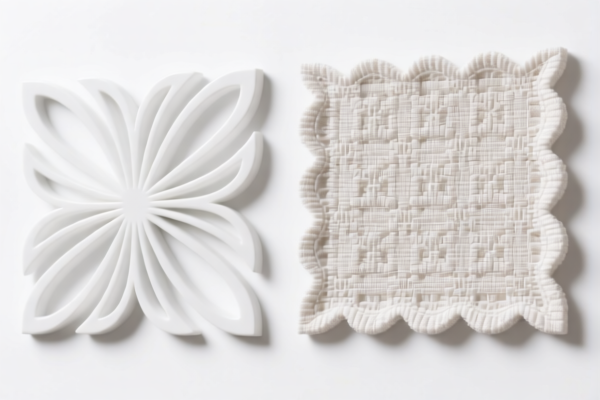
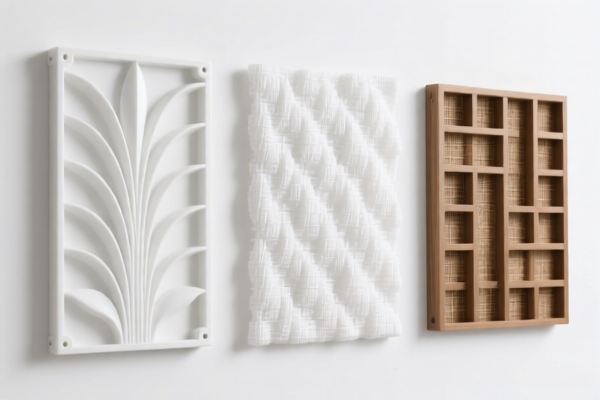
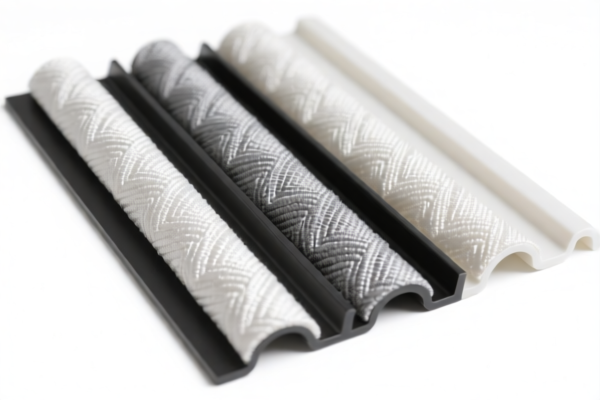
AI Analysis
🏗️ PVC Textile Composite Decorative Panel (纺织增强塑料装饰板)
🌐 HS Code Reference & Customs Clearance Guide | 2026 Latest Tariff Analysis | Professional Clearance Strategy
📌 I. Product Definition & Classification: What is a "PVC Textile Composite Decorative Panel"?
A PVC Textile Composite Decorative Panel is a built-up material typically used for interior wall cladding, furniture finishing, or decorative architectural elements. It consists of a PVC (Polyvinyl Chloride) base or matrix reinforced with textile fibers (such as polyester, glass fiber, or other synthetic/textile fabrics) to enhance strength, dimensional stability, and aesthetic texture.
In international trade classification, the key determinants for HS Code selection are: 1. Material Composition: Is it primarily plastic (PVC) or primarily textile? 2. State/Form: Is it in a raw sheet/board form or a finished architectural fixture? 3. Reinforcement: Does the textile serve as a structural reinforcement within a plastic matrix?
⚠️ Key Distinction: - If the textile is merely a surface layer on a plastic board without significant structural reinforcement logic defined in specific headings, it often falls under Plastics (Chapter 39). - If it is considered a composite of plastics and other materials not elsewhere specified, or if the "textile" aspect is dominant in a way that shifts it to other chapters (e.g., Carbon Fiber/Mineral composites under Chapter 68), different codes apply.
📦 II. HS Code Classification Details (2026 Latest Tariff Authority Cross-Reference)
Based on the provided data, here are the four potential HS Codes with their logical justifications and tax implications.
| HS Code | Product Description | Logical Justification (Why this Code?) | Total Tax Rate |
|---|---|---|---|
3921.90.40.10 |
Plastic Plates, Sheets, Film, Foil and Strip; Other | Primary Recommendation. The product is a "Plastic Board" where the textile reinforcement is considered a variant of plastic board processing. It fits the logic of Chapter 39 (Plastics and Articles Thereof). The textile is treated as an additive/reinforcement within the plastic matrix. | 39.2% |
3921.90.50.10 |
High-Pressure Laminate (HPL) Decorative Layers | Alternative Plastic Classification. The logic here is that the PVC/Textile structure mimics the properties of High-Pressure Laminates. If the manufacturing process involves high pressure/heat to fuse the textile into the PVC like a laminate, this code is applicable. | 39.8% |
6815.19.00.00 |
Articles of Stone or of Other Mineral Substances | Composite/Mineral Interpretation. This code is selected if the "Textile Reinforcement" is inferred to be Carbon Fiber or a Mineral Composite. If the panel is actually a stone/mineral composite with textile reinforcement (rather than pure PVC), it falls here. Note: This assumes a misinterpretation or specific composite nature different from standard PVC. | 35.0% |
3925.90.00.00 |
Builders' Plastering and Plastering Materials | Construction Component Interpretation. If the panel is strictly viewed as a "PVC Composite Fiber Structure Board" used specifically as a building component (e.g., siding, cladding) and not just a generic "decorative board," it may fall under Builders' Plastic Works. | 40.3% |
🔍 Critical Analysis: - Code
3921.90.40.10is the most standard and logical fit for "PVC + Textile Reinforced Decorative Panel" as it treats the product as a plastic plate/sheet. - Code6815.19.00.00has the lowest base tax (0%) but carries a high risk. It is only applicable if the product is not PVC-based but rather a mineral/carbon composite. Using this for PVC will likely result in a classification error and penalties. - Code3925.90.00.00is riskier as it implies a specific "builder" use, which might be challenged if the product is marketed as "decorative" rather than "structural building material."
💰 III. 2026 Latest Tariff Rate Breakdown (Including Surcharges & Policy Add-ons)
✅ Applicable Country: United States (US)
✅ Country of Origin: China (CN)
✅ Effective Date: November 10, 2025 (and subsequent imports)
🎯 1. 3921.90.40.10 – Plastic Plates, Sheets, etc. (Textile Reinforced)
| Item | Detail |
|---|---|
| Base Duty Rate | 4.2% (Ad Valorem) |
| Section 301 Surcharge | +25.0% (USITC Footnote) |
| IEEPA Surcharge | +10.0% (China-Specific, Effective Nov 10, 2025) |
| Total Effective Tax | 39.2% |
| Calculation Basis | CIF Value × 39.2% |
| De Minimis Exemption | ❌ Not Applicable (No de minimis for these surcharges) |
| Legal Path | USITC:3921.90.40.10 → Section 301: 25% → IEEPA: 10% |
📌 Explanation: - The 25% is the standard Section 301 tariff on many Chinese plastic products. - The 10% is the new IEEPA surcharge specifically targeting Chinese goods, effective from late 2025. - Total 39.2% is the mandatory cost for this classification.
🎯 2. 3921.90.50.10 – High-Pressure Laminate Logic
| Item | Detail |
|---|---|
| Base Duty Rate | 4.8% (Ad Valorem) |
| Section 301 Surcharge | +25.0% |
| IEEPA Surcharge | +10.0% |
| Total Effective Tax | 39.8% |
| Calculation Basis | CIF Value × 39.8% |
| De Minimis Exemption | ❌ Not Applicable |
📌 Note: Slightly higher base rate than the primary
3921code. Use only if the product strictly meets "High-Pressure Laminate" manufacturing criteria.
🎯 3. 6815.19.00.00 – Mineral/Carbon Composite (Hypothetical for PVC)
| Item | Detail |
|---|---|
| Base Duty Rate | 0.0% (Ad Valorem) |
| Section 301 Surcharge | +25.0% |
| IEEPA Surcharge | +10.0% |
| Total Effective Tax | 35.0% |
| Calculation Basis | CIF Value × 35.0% |
| Risk Alert | ⚠️ High Risk. This code is for Carbon Fiber or Mineral composites. If you declare a PVC panel here, Customs will likely reject it, demand re-classification to 3921, and impose back-taxes + penalties. Only use if the product is NOT PVC but a mineral/carbon composite. |
🎯 4. 3925.90.00.00 – Builders' Plastic Works
| Item | Detail |
|---|---|
| Base Duty Rate | 5.3% (Ad Valorem) |
| Section 301 Surcharge | +25.0% |
| IEEPA Surcharge | +10.0% |
| Total Effective Tax | 40.3% |
| Calculation Basis | CIF Value × 40.3% |
| De Minimis Exemption | ❌ Not Applicable |
📌 Note: This is the highest total tax rate among the options. It is only viable if the product is clearly marketed and used as a building construction component (e.g., exterior siding) rather than an interior decorative panel.
🛠️ IV. Customs Clearance Practical Advice (Pitfall Avoidance Guide)
✅ 1. Documentation Checklist (Non-Negotiable)
| Document | Required | Purpose |
|---|---|---|
| ✅ Product Specification Sheet | ✔️ | Must clearly state: "PVC Matrix" + "Textile Reinforcement". Avoid ambiguous terms like "Fiberglass" if it's not glass fiber. |
| ✅ Material Composition Statement | ✔️ | Explicitly state the percentage of PVC vs. Textile. This justifies Chapter 39 (Plastics). |
| ✅ Photos (Front/Back/Cross-Section) | ✔️ | Show the layered structure. Prove it is a "Panel/Board" and not a finished fixture. |
| ✅ Certificate of Origin (CO) | ✔️ | To determine eligibility for any potential exemptions (though unlikely for China-origin under current tariffs). |
| ✅ Commercial Invoice | ✔️ | Describe item as "Decorative Plastic Panel, PVC Composite". Do NOT use vague terms like "Decorative Sheet". |
✅ 2. Classification Strategy (Key Mantra)
🔥 “Plastic Base, Textile Add-on, Chapter 39 is King! Don’t claim Mineral unless it’s Stone/Carbon.”
| Scenario | Correct HS Code | Wrong Code | Consequence |
|---|---|---|---|
| Standard PVC + Textile Decorative Panel | 3921.90.40.10 |
6815.19.00.00 |
Avoid 35% rate trap. If you declare PVC as Mineral, you face fraud allegations. |
| High-Pressure Laminate Process | 3921.90.50.10 |
3925.90.00.00 |
Avoid 40.3% rate. Use 3921 unless it’s strictly HPL. |
| Exterior Building Siding (PVC) | 3925.90.00.00 |
3921.90.40.10 |
Only use if it’s a building fixture. Interior panels do not qualify. |
✅ 3. Special Case Handling
| Situation | Advice |
|---|---|
| "Is it Carbon Fiber?" | If the "textile" is Carbon Fiber, consider 6815.19.00.00 (35% tax). However, ensure your product is not PVC. If it is PVC + Carbon Fiber, it may still be 3921. Consult a specialist. |
| "Is it a Finished Fixture?" | If the panel comes with mounting frames, electrical connections, or pre-drilled holes for installation, Customs may view it as a Fixture (higher risk, potentially different codes). Keep it as a raw panel/board for 3921. |
| "Can I use De Minimis ($800)?" | ❌ NO. Section 301 (25%) and IEEPA (10%) surcharges apply to all shipments, regardless of value. No de minimis exemption. |
🌍 V. Global Market Comparison (2026)
| Market | Recommended HS Code | Total Tax (China Origin) | Key Requirement |
|---|---|---|---|
| 🇺🇸 USA | 3921.90.40.10 |
39.2% | Must prove PVC content. No de minimis. |
| 🇨🇳 China | 3921.90.40.10 |
Low/Zero (Check FTA) | CCC Certification if applicable. |
| 🇪🇺 EU | 3921.90.90 |
Varies (0-6.5%) | REACH Compliance, CE Marking (if electrical). |
| 🇨🇦 Canada | 3921.90.40 |
Low | No IEEPA surcharge, but check CUSMA rules. |
📌 Conclusion: - USA is the most expensive market for this product due to the 39.2% total tariff. - Strategy: To mitigate costs, ensure the product is clearly described as a "Plastic Plate/Sheet" (
3921) and not a "Building Fixture" (3925) or "Mineral Composite" (6815) unless technically accurate. - Do NOT use6815.19.00.00for PVC panels to save tax. The risk of penalty far outweighs the 4.2% savings.
📌 VI. Common Errors & Pitfalls (Blood Lesson)
❌ Error 1: Declaring PVC Textile Panels as "Mineral Composites" (6815) to save tax.
👉 Consequence: Customs audit reveals PVC content. Back taxes + 25% penalty + legal fees.
❌ Error 2: Using "De Minimis" for small shipments. 👉 Consequence: Package held at border. Full 39.2% tax + storage fees. No exemption.
❌ Error 3: Describing product as "Finished Wall Panel".
👉 Consequence: Customs may classify it as a Building Fixture (3925) or Furniture, leading to higher duties or rejection.
❌ Error 4: Vague description: "Decorative Board".
👉 Consequence: Customs assigns a "best guess" code, likely 3921.90.40.10 anyway, but delays clearance for additional documentation.
✅ Correct Approach:
"PVC Decorative Panel, Reinforced with Textile Fibers, Flat Sheet, Not a Finished Fixture, Model XYZ, HS 3921.90.40.10"
🎯 VII. Conclusion: Professional Classification, Cost Control
🎯 Remember the Mantra:
🔹 "PVC Base = Chapter 39" 🔹 "Textile is just reinforcement" 🔹 "39.2% Tax is the Real Cost" 🔹 "No De Minimis, No Excuses"
📌 Pro Tip:
If your volume is high, consider Applying for an Advance Ruling with US Customs and Border Protection (CBP) to lock in the 3921.90.40.10 classification and avoid disputes. This provides legal certainty for future shipments.
📣 Immediate Action:
📞 Contact your Freight Forwarder: Confirm the 39.2% tax estimate. 📄 Prepare Documentation: Ensure the Material Composition Sheet explicitly states PVC and Textile. 🚀 Ship with Confidence: Accurate classification saves time, money, and headaches.
✨ Professional Customs Clearance Starts with Precise Classification! 💼 Your Profit Margin Depends on Every Percent of Duty!
Customer Reviews
About HS Code Classification
The Harmonized System (HS) is an internationally standardized nomenclature developed by the World Customs Organization (WCO) to classify traded products. Over 200 countries use the HS system as the basis for customs tariffs, trade statistics, and import/export regulations.
Each HS code follows a hierarchical structure:
- Chapter (2 digits) — Broad category of goods (e.g., Chapter 84: Machinery and Mechanical Appliances)
- Heading (4 digits) — More specific grouping within the chapter
- Subheading (6 digits) — Internationally standardized breakdown, used by all WCO member countries
- National subdivisions (8-10 digits) — Country-specific extensions for further classification, such as US HTSUS 10-digit codes
Correct HS code classification is essential for smooth customs clearance, accurate duty payment, and compliance with trade regulations. Misclassification can lead to customs delays, overpayment of duties, or penalties.
When importing from CN to US, the applicable tariff rates may include:
- Most-Favored-Nation (MFN) rate — The standard duty rate applied to WTO members
- General rate — Applied to countries without trade agreements
- Trade remedy duties — Additional tariffs such as Section 301 (anti-dumping), Section 232 (national security), or countervailing duties
The information provided on this page is for reference purposes only. For official classification, please consult with your local customs authority or a licensed customs broker.