PVC Textile Composite Insulation Fabric
CN → US| HS Code | Tariff Rate | Origin | Destination | Doc |
|---|---|---|---|---|
| 5903102010 | 35.0% | CN | US | Official Doc |
| 5903102090 | 35.0% | CN | US | Official Doc |
Product Images
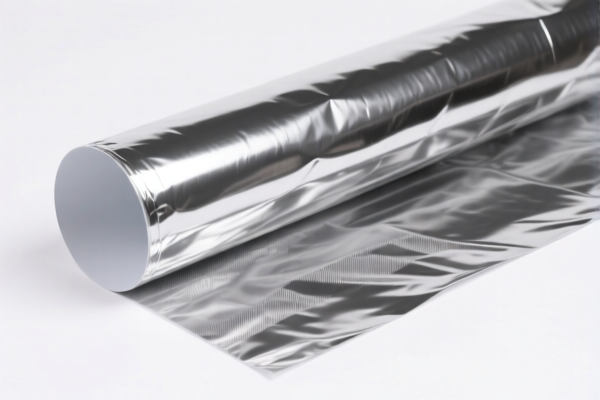
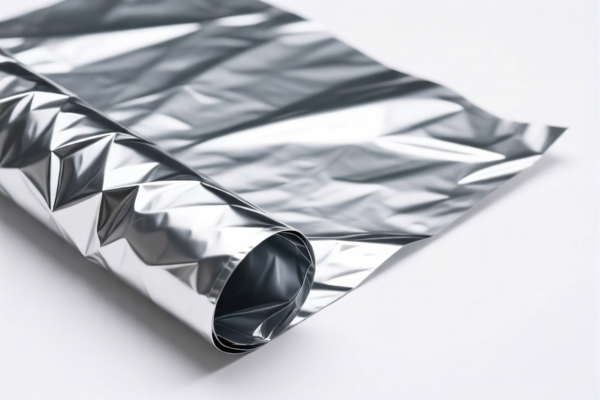
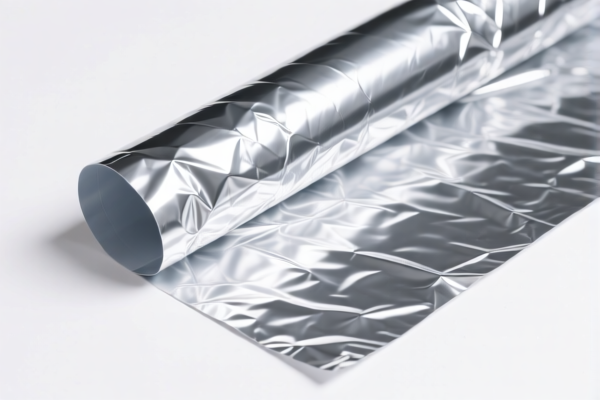
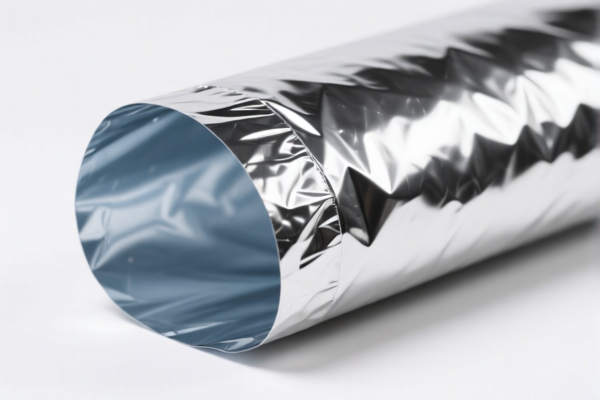
AI Analysis
🧶 PVC Textile Composite Insulation Fabric (Plastic-Impregnated Textile Fabrics)
🌐 HS Code Reference & Customs Clearance Guide | 2026 Latest Tariff Analysis | Professional Customs Strategy
📌 Part 1: Product Definition & Classification: Do You Really Understand "PVC Textile Composites"?
PVC Textile Composite Insulation Fabric refers to textile fabrics that have been impregnated, coated, covered, or laminated with plastics (specifically Polyvinyl Chloride or PVC). Unlike heading 5902 (tire cord fabric), these are general-purpose composite materials used in tarpaulins, awnings, inflatable structures, protective clothing, and industrial insulation.
In international trade, the classification hinges on two critical factors: 1. Material Composition: It must contain over 70% by weight of rubber or plastics (PVC in this case). 2. Substrate Fiber: The underlying textile is made of man-made fibers (synthetic fibers like polyester, nylon, etc.).
⚠️ Key Distinction Points: - If the fabric is coated/laminated with PVC and >70% of its weight is PVC → It falls under Chapter 59 (Impregnated Textiles). - If it is simply yarn sheathed with PVC without further impregnation/coating/lamination → It may fall under different headings (often 5903.10.20.10 as per the data context for specific sheathed yarns). - Crucial: If the plastic content is under 70%, it does NOT qualify for this specific 5903.10 classification and may be classified as plain textile goods.
📦 Part 2: HS Code Classification Details (2026 Latest Tariff Authority Match)
Based on the provided data, there are two specific HS Codes for this product, differentiated by whether the specific sub-item is "Yarns Sheathed" or "Other."
| HS Code | Product Description | Applicable Scenario | Plastic Content Requirement |
|---|---|---|---|
5903.10.20.10 |
Over 70 percent by weight of rubber or plastics; Fabrics of yarns sheathed with PVC, not otherwise impregnated, coated, covered or laminated | PVC-sheathed yarn fabrics (specific structural type) | >70% by weight |
5903.10.20.90 |
Over 70 percent by weight of rubber or plastics; Other (General PVC-coated/laminated textile fabrics of man-made fibers) | Standard PVC-coated tarps, awnings, industrial liners, insulation fabrics | >70% by weight |
🔍 Critical Note: - Both codes require the fabric to be of man-made fibers. - Both codes require the plastic/rubber content to exceed 70% by weight. - The distinction between
.10and.90often lies in the specific manufacturing process (e.g., whether it is "sheathed yarn" vs. general "impregnated/coated/laminated" fabric). Most standard PVC-coated insulation fabrics will fall under.90("Other") unless they are specifically "yarns sheathed with PVC" as defined in the specific sub-heading.
💰 Part 3: 2026 Latest Tariff Rate Breakdown (Including Surtaxes & Policy Add-ons)
✅ Applicable Country: United States (US)
✅ Origin: China (CN) (Assumed based on the "Surtax" context typical for US-China trade data provided)
✅ Effective Time: Current as per 2026 tariff schedules
🎯 1. 5903.10.20.10 & 5903.10.20.90 —— PVC Textile Composites
| Item | Content |
|---|---|
| Base Tariff Rate | 0.0% (ad valorem) |
| Section 301 Surcharge | +25.0% (Additional tariff for Chinese-origin goods under Section 301) |
| Total Tariff Rate | 25.0% |
| Tax Calculation | CIF Value × 25% |
| De Minimis Eligibility | ❌ Not Eligible (Section 301 goods are generally excluded from de minimis relief under current enforcement interpretations for high-volume industrial goods) |
| Legal Basis Path | USITC:5903.10.20.xx → SECTION 301: Footnote 9903.88.01 (or relevant HTSUS note for 5903) |
📌 Explanation: - The base duty for many plastic-coated textile articles is 0%, reflecting the low base duty for many chemical/textile composites. - However, the Section 301 Additional Duty of 25% applies significantly to these goods imported from China. This is a flat 25% on top of the 0% base. - Total Cost Impact: For every $10,000 CIF value, you pay $2,500 in duties. - No IEEPA 10%?: The provided data shows only 25%. This implies the specific 10% IEEPA tariff (if applicable to broader categories) might not be叠加 (stacked) on this specific 5903 subheading in this dataset, or the 25% is the sole additional burden. Always verify if IEEPA 10% applies to your specific HTSUS code in 2026, but based on the provided data, the total is strictly 25%.
🛠️ Part 4: Customs Clearance Practical Advice (Combat-Ready Pitfall Avoidance Guide)
✅ 1. Required Documentation Checklist (Non-Negotiable)
| Document | Required? | Description |
|---|---|---|
| ✅ Product Specification Sheet | ✔️ | Must state % by weight of PVC vs. textile fibers. Crucial for proving >70% plastic content. |
| ✅ Composition Analysis Report | ✔️ | Third-party lab report confirming the fabric is made of man-made fibers (e.g., Polyester) and not natural fibers (Cotton). |
| ✅ Commercial Invoice | ✔️ | Must clearly describe the goods as "PVC Coated Polyester Fabric" or similar. Avoid vague terms like "Plastic Sheet." |
| ✅ Bill of Lading/Air Waybill | ✔️ | Ensure marks and numbers match the invoice. |
| ✅ Country of Origin Certificate | ✔️ | If applicable, to claim FTA benefits (though Section 301 may still apply depending on origin rules). |
| ✅ Packaging List | ✔️ | Detail dimensions, weight, and quantity. |
✅ 2. Declaration Tips (Key Mantras)
🔥 "Weight Matters, Fiber Must be Synthetic, Name Must Be Precise!"
| Scenario | Correct Declaration | Wrong Approach |
|---|---|---|
| Standard PVC-coated tarp/awning fabric | 5903.10.20.90 - "PVC Coated Polyester Fabric" |
Misclassifying as "Plastic Sheets" (Chapter 39) → 0% base but wrong chapter penalty + delay |
| Natural fiber (Cotton) + PVC | Does NOT qualify for 5903.10.20 | Attempting to force into 5903.10.20 → Rejection & Audit |
| PVC content < 70% | Incorrect Classification | Must be classified as uncoated textile (Chapter 50-55) → Lower duty but wrong HTS |
| Yarns specifically sheathed with PVC | 5903.10.20.10 |
Declaring as generic "coated fabric" → Risk of misclassification if specific "sheathed yarn" criteria are met |
✅ 3. Special Circumstances Handling
| Situation | Handling Advice |
|---|---|
| Mixed Origin Materials | Ensure the final weight determination (>70% plastic) is calculated at the final fabric stage, not just component level. |
| Insulation Function | Do NOT declare as "Thermal Insulation Material" (Chapter 39 or 85). It is a textile fabric with plastic coating. The function is secondary to the material definition. |
| Sample Shipments | Even samples are subject to the 25% duty if not de minimis exempt. Prepare duty payments in advance. |
| Renewable Energy Applications | If used for solar panel backsheets, still classify as 5903.10.20.xx. No special "green energy" duty exemption applies to the material itself under general US trade law. |
🌍 Part 5: Global Market Comparison (2026 Snapshot)
| Country/Region | Recommended HS Code | Duty Rate | Certification | Remarks |
|---|---|---|---|---|
| 🇺🇸 USA | 5903.10.20.90 |
25% | No specific cert required for duty, but ASTM/ISO standards may apply for use | High duty due to Section 301 |
| 🇨🇳 China | 5903.10.20.90 |
~5-10% | CCC (if applicable) | Import duty varies |
| 🇪🇺 EU | 5903.10.29 |
0-6% | REACH Compliance (PVC/Phthalates) | Stricter chemical regulations |
| 🇯🇵 Japan | 5903.20.000 |
0-6% | JIS Standards | Low duty, focus on quality |
| 🇦🇺 Australia | 5903.20.00.00 |
5% | RCM (if electrical) | Standard textile tariff |
📌 Conclusion: - The US market is the most expensive due to the 25% Section 301 surcharge. - EU focuses more on chemical compliance (REACH) than duty rates. - Always verify the plastic weight percentage to ensure correct chapter classification.
📌 Part 6: Common Mistakes & Pitfall Guide (Lessons from Blood & Tears)
❌ Mistake 1: Declaring PVC-coated fabric as "Plastic Film" (Chapter 39) 👉 Consequence: Incorrect chapter classification. If found, you may face penalties + back duties + interest. While Chapter 39 might have 0% duty, the misclassification is a serious violation.
❌ Mistake 2: Ignoring the "Man-Made Fiber" requirement
👉 Consequence: If the fabric contains cotton or wool, it cannot use 5903.10.20.xx. It must be classified elsewhere (e.g., 5903.20.xx for other plastics or different textile chapters). This leads to wrong tariff assessment.
❌ Mistake 3: Not documenting the >70% plastic weight 👉 Consequence: Customs may doubt the classification. Without a composition report, they may assess at a higher duty rate or delay clearance.
❌ Mistake 4: Confusing "Sheathed Yarn" (5903.10.20.10) with "Coated Fabric" (5903.10.20.90)
👉 Consequence: If you are a supplier of sheathed yarns, declaring as "Coated Fabric" might be technically incorrect, though duties are the same. It can cause audit discrepancies.
✅ Correct Practice:
"PVC Coated Polyester Woven Fabric, PVC Weight >70%, For Industrial Tarpaulin Use, Model XYZ, Certified ASTM D1922"
🎯 Part 7: Conclusion: Professional Classification Saves Money!
🎯 Remember the Mantra:
🔹 "Plastic >70%, Man-Made Fiber, 25% Surtax in US!"
🔹 "Don't call it Plastic Film, call it Textile Composite!"
🔹 "Get the Weight Report, Avoid Customs Delays!"
📌 Pro Tip:
If your PVC textile composite is not from China (e.g., from Vietnam, India, or Thailand), the 25% Section 301 surcharge does NOT apply. You may only pay the 0% base duty (plus any potential anti-dumping duties if applicable).
Always verify the Country of Origin!
📣 Immediate Action:
📞 Contact your customs broker with the composition report.
🚀 Confirm HS Code5903.10.20.90(or.10if sheathed yarn).
💼 Budget for 25% Duty if importing from China.
✨ Professional Customs Clearance Starts with Accurate Classification!
💼 Every Percent of Duty Saved is Pure Profit!
Customer Reviews
About HS Code Classification
The Harmonized System (HS) is an internationally standardized nomenclature developed by the World Customs Organization (WCO) to classify traded products. Over 200 countries use the HS system as the basis for customs tariffs, trade statistics, and import/export regulations.
Each HS code follows a hierarchical structure:
- Chapter (2 digits) — Broad category of goods (e.g., Chapter 84: Machinery and Mechanical Appliances)
- Heading (4 digits) — More specific grouping within the chapter
- Subheading (6 digits) — Internationally standardized breakdown, used by all WCO member countries
- National subdivisions (8-10 digits) — Country-specific extensions for further classification, such as US HTSUS 10-digit codes
Correct HS code classification is essential for smooth customs clearance, accurate duty payment, and compliance with trade regulations. Misclassification can lead to customs delays, overpayment of duties, or penalties.
When importing from CN to US, the applicable tariff rates may include:
- Most-Favored-Nation (MFN) rate — The standard duty rate applied to WTO members
- General rate — Applied to countries without trade agreements
- Trade remedy duties — Additional tariffs such as Section 301 (anti-dumping), Section 232 (national security), or countervailing duties
The information provided on this page is for reference purposes only. For official classification, please consult with your local customs authority or a licensed customs broker.