PVC Textile Composite Material with Highest Plant Fiber Content
CN → US| HS Code | Tariff Rate | Origin | Destination | Doc |
|---|---|---|---|---|
| 5903102090 | 35.0% | CN | US | Official Doc |
| 3921121910 | 40.3% | CN | US | Official Doc |
| 3921121500 | 41.5% | CN | US | Official Doc |
| 5903103000 | 37.7% | CN | US | Official Doc |
| 3920435000 | 39.2% | CN | US | Official Doc |
Product Images
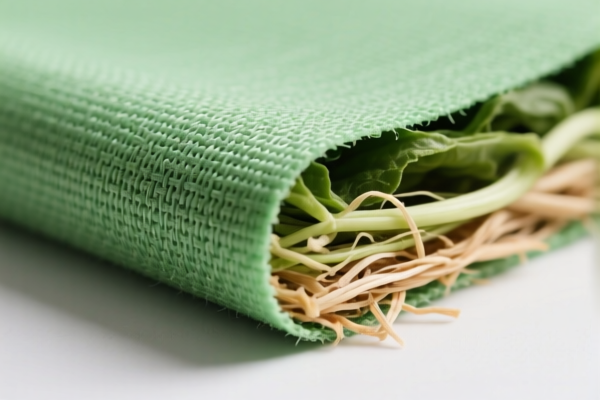
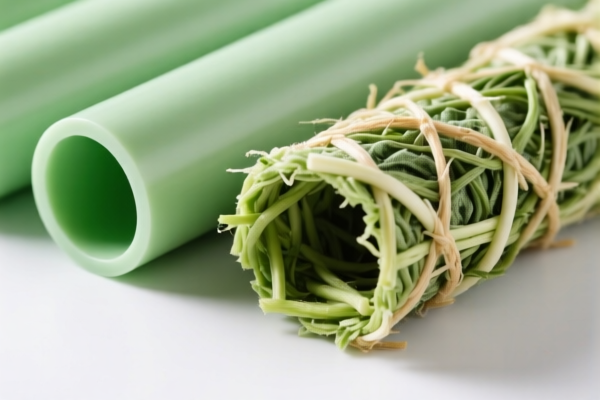
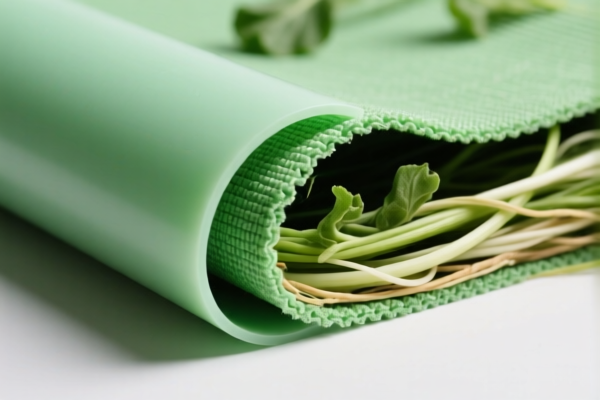
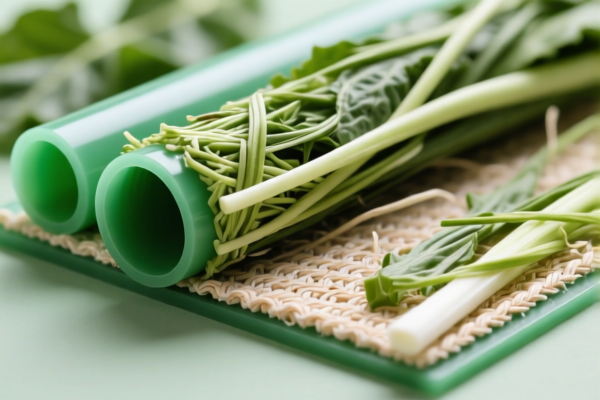
AI Analysis
🧵 PVC Textile Composite Material (Plant Fiber Dominant)
🌐 HS Code Reference & Clearance Guide | 2026 Latest Tariff Analysis | Professional Customs Strategy
📌 I. Product Definition & Classification: Is it a Fabric or a Plastic Sheet?
"PVC Textile Composite Material with Highest Plant Fiber Content" is a hybrid product. It consists of a textile base (primarily plant fibers) impregnated, coated, covered, or laminated with Polyvinyl Chloride (PVC).
In international trade, this product sits at the intersection of Chapter 59 (Impregnated/Coated Textiles) and Chapter 39 (Plastics and Articles Thereof). The critical distinction lies in the primary material composition and the specific fiber type:
- Group A: Textile-Primary (Chapter 59)
If the textile structure (plant fibers) is clearly visible or identifiable, and the PVC acts merely as a coating/impregnation without changing the essential character of a textile fabric, it falls under 5903.10. - Group B: Plastic-Primary (Chapter 39)
If the PVC coating is thick enough or the composition logic dictates that the plastic element defines the product's essential character (e.g., specific subheadings for "other plastics" or "reinforced/non-reinforced" distinctions), it falls under 3921.12 or 3920.43.
⚠️ Key Distinction Point:
- If classified as Textile (5903): Tariffs are generally lower on the base rate, but subject to specific "122 Clause" or trade remedy tariffs.
- If classified as Plastic (3921/3920): Base tariffs are higher (2.7% - 6.5%), leading to a significantly higher total tax burden.
- Misclassification Risk: Declaring a plastic-dominated composite as a simple textile to avoid higher base rates can lead to severe penalties. The "Plant Fiber" content must be proven via composition analysis.
📦 II. HS Code Classification Details (2026 Latest Tariff Authority Cross-Reference)
Based on the provided data, here are the five possible classifications for this specific product, ranging from lowest to highest total tax liability.
| HS Code | Product Description (Summary) | Applicable Scenario / Logic | Total Tax Rate |
|---|---|---|---|
5903.10.20.90 |
PVC Textile Composite (Plant Fiber Base): Impregnated/coated/laminated textile fabric. | Best Case: Recognized primarily as a textile fabric impregnated with PVC. | 35.0% |
5903.10.30.00 |
PVC Textile Composite (Plant Fiber Base): Composite sheet form, impregnated/coated. | Similar to above but specified as "composite sheet" form within the textile chapter. | 37.7% |
3921.12.19.10 |
PVC Textile Composite (Plant Fiber Base): Meets specific fiber composition requirements for plant fibers. | Plastic Chapter: Classified as plastic sheet because it meets specific "plant fiber为主" (plant fiber dominant) criteria under plastic subheadings. | 40.3% |
3920.43.50.00 |
PVC Textile Composite (Plant Fiber Base): Non-reinforced or non-laminated composite logic inference. | Plastic Chapter: Classified under "Other plates, sheets, etc., of plastics" (3920) with a specific inference logic for non-reinforced combos. | 39.2% |
3921.12.15.00 |
PVC Textile Composite (Plant Fiber Base): Combined with textile materials, primarily artificial fibers. | Worst Case: Although described as plant fiber, this code specifically targets "primarily artificial fibers" (often a catch-all for synthetic blends or misidentified natural fibers). | 41.5% |
🔍 Important Note:
- 5903 Codes generally have 0% Base Tariff, making them more attractive despite high additional tariffs.
- 3921/3920 Codes have higher Base Tariffs (2.7% - 6.5%), pushing the total cost significantly higher.
- The "Plant Fiber" claim is critical. If customs suspects the fiber is synthetic (polyester/cotton blend often misidentified), they may force classification under3921.12.15.00(Artificial Fiber) or higher base rates.
💰 III. 2026 Latest Tariff Rate Breakdown (Including Additional Tariffs & Policy Surcharges)
✅ Applicable Country: United States (US)
✅ Origin: China (CN)
✅ Effective Date: 2025/2026 (Current Trade Regime)
🎯 1. 5903.10.20.90 —— PVC Textile Composite (Best Tariff Option)
| Item | Content |
|---|---|
| Base Tariff | 0.0% (Ad Valorem) |
| USITC Additional Tariff (Section 301) | +25.0% |
| "122 Clause" Tariff | +10.0% |
| Total Tax Rate | 35.0% |
| Tax Calculation | CIF Value × 35% |
| De Minimis Eligibility | ❌ No (Section 321 exemption usually denied for textiles/plastics from China under these specific codes) |
| Legal Basis Path | HTSUS:5903.10.20.90 → USITC:Footnote 9903.88.01 (301 Tariff) → IEEPA:9903.01.25 (122 Clause) |
📌 Explanation:
- This is the lowest tax bracket.
- The "122 Clause" refers to specific trade remedy provisions (often related to Section 301 exclusions or specific country-of-origin rules) adding 10%.
- Strategy: If you can prove the product is essentially a "fabric" (Textile Chapter 59), this is the optimal code.
🎯 2. 5903.10.30.00 —— PVC Textile Composite (Composite Sheet Form)
| Item | Content |
|---|---|
| Base Tariff | 2.7% |
| USITC Additional Tariff (Section 301) | +25.0% |
| "122 Clause" Tariff | +10.0% |
| Total Tax Rate | 37.7% |
| Tax Calculation | CIF Value × 37.7% |
| De Minimis Eligibility | ❌ No |
| Legal Basis Path | HTSUS:5903.10.30.00 → USITC:Footnote 9903.88.01 → IEEPA:9903.01.25 |
📌 Note:
- Slightly higher base tariff (2.7%) than the previous code.
- Still classified under Chapter 59, so additional tariffs remain the same.
🎯 3. 3920.43.50.00 —— PVC Textile Composite (Non-Reinforced Logic)
| Item | Content |
|---|---|
| Base Tariff | 4.2% |
| USITC Additional Tariff (Section 301) | +25.0% |
| "122 Clause" Tariff | +10.0% |
| Total Tax Rate | 39.2% |
| Tax Calculation | CIF Value × 39.2% |
| De Minimis Eligibility | ❌ No |
| Legal Basis Path | HTSUS:3920.43.50.00 → USITC:Footnote 9903.88.01 → IEEPA:9903.01.25 |
📌 Note:
- Classification under Chapter 39 (Plastics) increases the base tariff to 4.2%.
- The "Non-reinforced" logic implies the PVC acts as a binder rather than a structural reinforcement, yet it is still viewed as a plastic sheet.
🎯 4. 3921.12.19.10 —— PVC Textile Composite (Plant Fiber Specific)
| Item | Content |
|---|---|
| Base Tariff | 5.3% |
| USITC Additional Tariff (Section 301) | +25.0% |
| "122 Clause" Tariff | +10.0% |
| Total Tax Rate | 40.3% |
| Tax Calculation | CIF Value × 40.3% |
| De Minimis Eligibility | ❌ No |
| Legal Basis Path | HTSUS:3921.12.19.10 → USITC:Footnote 9903.88.01 → IEEPA:9903.01.25 |
📌 Note:
- This code specifically acknowledges the "Plant Fiber" composition but places it in the Plastic Chapter due to the PVC dominance or specific subheading rules.
- Base tariff is 5.3%.
🎯 5. 3921.12.15.00 —— PVC Textile Composite (Artificial Fiber Focus)
| Item | Content |
|---|---|
| Base Tariff | 6.5% |
| USITC Additional Tariff (Section 301) | +25.0% |
| "122 Clause" Tariff | +10.0% |
| Total Tax Rate | 41.5% |
| Tax Calculation | CIF Value × 41.5% |
| De Minimis Eligibility | ❌ No |
| Legal Basis Path | HTSUS:3921.12.15.00 → USITC:Footnote 9903.88.01 → IEEPA:9903.01.25 |
📌 Critical Warning:
- Highest Tax Rate.
- This code is for products "primarily artificial fibers" (synthetic).
- Risk: If customs inspectors believe your "Plant Fiber" is actually a synthetic blend or not sufficiently natural, they will apply this code. Do not risk misrepresentation.
🛠️ IV. Clearance Practical Advice (Battle-Tested Pitfall Guide)
✅ 1. Documentation Checklist (Non-Negotiable)
| Document | Required | Explanation |
|---|---|---|
| ✅ Material Composition Report | ✔️ | Must explicitly state % of Plant Fiber vs. PVC. Lab test results preferred. |
| ✅ Product Specification Sheet | ✔️ | Detail the form: Is it a "Fabric" (woven/knitted) or a "Sheet" (non-woven/felt)? This dictates 5903 vs. 3921. |
| ✅ Photos of Structure | ✔️ | Macro photos showing the textile weave beneath the PVC coating. |
| ✅ Commercial Invoice | ✔️ | Clearly describe as "PVC Impregnated Plant Fiber Fabric" or "PVC Composite Sheet" consistent with HS code. |
| ✅ Binding Ruling (Optional but Recommended) | ✔️ | Apply for an Advance Ruling from CBP to lock in the HS Code before shipment. |
✅ 2. Declaration Tips (Key Mnemonics)
🔥 “Fabric First, Plastic Second; Plant Fiber Must Be Proved; Don’t Guess the Code!”
| Situation | Correct Declaration | Incorrect Practice |
|---|---|---|
| Visible Weave + Thin PVC | 5903.10.20.90 (Textile) |
Declaring as 3921 (Plastic) → Overpaying |
| Thick PVC + Obscured Weave | 3921.12.19.10 (Plastic) |
Declaring as 5903 (Textile) → Risk of Penalty |
| Plant Fiber Content < 50% | Check 3921.12.15.00 or other |
Claiming "Plant Fiber Dominant" falsely |
| Non-Woven/Felt Base | Likely 3921.12.19.10 |
Forcing into 5903 (usually for woven/knitted) |
✅ 3. Special Circumstances Handling
| Situation | Handling Advice |
|---|---|
| OEM Custom Colors/Prints | Ensure the description includes "PVC Textile Composite," not just "PVC Sheet." |
| Hybrid Fiber (Cotton/Polyester) | If the "Plant Fiber" is only cotton, and polyester is present, clarify the ratio. High synthetic content pushes you to 3921.12.15.00. |
| Sample vs. Bulk | Sample clearance is risky for classification. Always use a Binding Ruling for bulk. |
| Transshipment | Do not ship through third countries to hide origin. US Customs tracks origin strictly for Section 301/122 tariffs. |
🌍 V. Global Market Clearance Comparison (2026 Latest)
| Country/Region | Recommended HS Code | Tariff Estimate | Certification Requirements | Notes |
|---|---|---|---|---|
| 🇺🇸 USA | 5903.10.20.90 |
35.0% | No specific FDA/UL, but CBP may request composition proof. | Highest Priority: Aim for 5903 to save 6.5% base tariff. |
| 🇨🇳 China | 5903.10.20.00 |
Low (Import Duty) | CCC (if applicable end-use) | Domestic trade may have different incentives. |
| 🇪🇺 EU | 5903.10.20 |
~9.0% (MFP) | REACH (PVC restrictions), RoHS | No Section 301 equivalent, but PVC has environmental restrictions. |
| 🇬🇧 UK | 5903.10.20 |
~9.0% (MFP) | UKCA, REACH post-Brexit | Similar to EU but separate regulatory bodies. |
📌 Conclusion:
- USA is the most critical market for this product due to the 301 + 122 Clause burden.
- Optimization Goal: Strictly ensure the product qualifies as a Textile (Chapter 59) to minimize the Base Tariff.
- Evidence is Key: Without proof of "Plant Fiber Dominance," customs may default to Plastic codes with higher bases.
📌 VI. Common Errors & Pitfall Guide (Blood & Tears Lessons)
❌ Error 1: Calling it "PVC Sheet" when it is a "Fabric"
👉 Consequence: Forced into 3921 → 37.7% - 41.5% instead of 35.0%.
👉 Fix: Use "Textile" or "Fabric" in the description if the weave is visible.
❌ Error 2: Claiming "Plant Fiber" without lab reports
👉 Consequence: CBP rejects the claim, applies 3921.12.15.00 (Artificial) → 41.5% + Penalties.
👉 Fix: Provide a third-party lab report confirming fiber composition.
❌ Error 3: Ignoring the "122 Clause"
👉 Consequence: Underpaying by 10% → Back taxes + Interest + Seizure.
👉 Fix: Ensure the HS code entry explicitly accounts for all additional tariffs.
❌ Error 4: Splitting the shipment (Fabric + PVC separately)
👉 Consequence: If imported separately, they may be taxed as raw materials or components with different rules, potentially higher combined cost.
👉 Fix: Import as a finished composite good.
✅ Correct Declaration Example:
"PVC Coated Plant Fiber Fabric, 5903.10.20.90. Composition: 60% Jute, 40% PVC. For industrial use. Subject to 25% Sec 301 Tariff and 122 Clause Tariff."
🎯 VII. Conclusion: Precise Classification Saves Money!
🎯 Remember the Mnemonic:
🔹 "Fabric is 0% Base, Plastic is 5%+ Base. Plant Fiber Proof is King. Don't Get Caught in the 41.5% Trap!"
🔹 "HS Code decides the fate. A 10% base difference is thousands of dollars. Prove it or Pay it!"
📌 Pro Tip:
If your plant fiber content is borderline, consider applying for a CBP Binding Ruling before shipping. The cost of a ruling is negligible compared to the potential 6.5% base tariff difference and penalty risks.
📣 Immediate Action:
📞 Contact your customs broker with the lab report + product photos.
🚀 Lock in HS Code5903.10.20.90for maximum savings.
💼 Your profit margin depends on this 10% Base Tariff Gap!
✨ Professional Clearance Starts with Accurate Classification!
💼 Every Dollar Saved is a Dollar Earned!
Customer Reviews
About HS Code Classification
The Harmonized System (HS) is an internationally standardized nomenclature developed by the World Customs Organization (WCO) to classify traded products. Over 200 countries use the HS system as the basis for customs tariffs, trade statistics, and import/export regulations.
Each HS code follows a hierarchical structure:
- Chapter (2 digits) — Broad category of goods (e.g., Chapter 84: Machinery and Mechanical Appliances)
- Heading (4 digits) — More specific grouping within the chapter
- Subheading (6 digits) — Internationally standardized breakdown, used by all WCO member countries
- National subdivisions (8-10 digits) — Country-specific extensions for further classification, such as US HTSUS 10-digit codes
Correct HS code classification is essential for smooth customs clearance, accurate duty payment, and compliance with trade regulations. Misclassification can lead to customs delays, overpayment of duties, or penalties.
When importing from CN to US, the applicable tariff rates may include:
- Most-Favored-Nation (MFN) rate — The standard duty rate applied to WTO members
- General rate — Applied to countries without trade agreements
- Trade remedy duties — Additional tariffs such as Section 301 (anti-dumping), Section 232 (national security), or countervailing duties
The information provided on this page is for reference purposes only. For official classification, please consult with your local customs authority or a licensed customs broker.