PVC Textile Composite Sheet
CN → US| HS Code | Tariff Rate | Origin | Destination | Doc |
|---|---|---|---|---|
| 3925900000 | 40.3% | CN | US | Official Doc |
| 3925200091 | 22.8% | CN | US | Official Doc |
| 3921121100 | 39.2% | CN | US | Official Doc |
| 3921121950 | 40.3% | CN | US | Official Doc |
| 5903102090 | 35.0% | CN | US | Official Doc |
Product Images

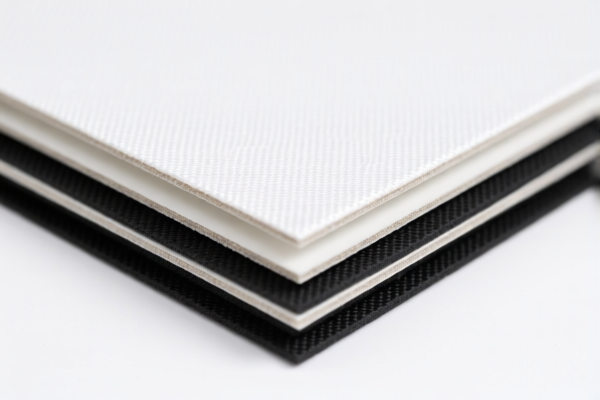
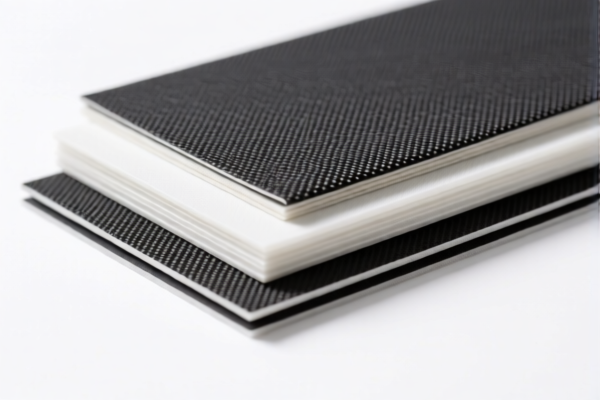
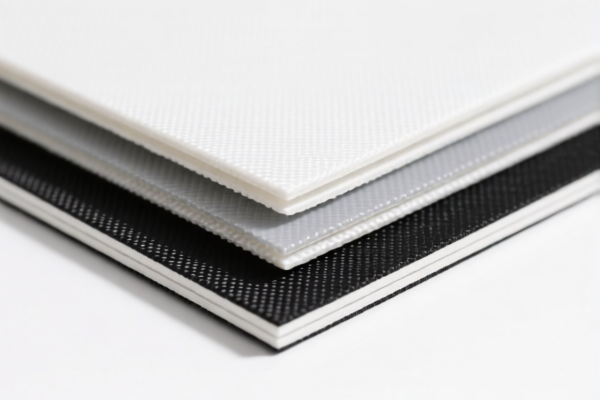
AI Analysis
🧱 PVC Textile Composite Sheet
📦 HS Code Classification & U.S. Customs Clearance Guide | 2026 Tariff Analysis
🌐 Executive Summary
The "PVC Textile Composite Sheet" is a versatile material used in construction, furniture, and industrial applications. It consists of Polyvinyl Chloride (PVC) layers bonded with textile fibers (e.g., polyester, glass fiber, or fiberglass) to enhance strength, flexibility, or fire resistance.
In the context of U.S. imports, classification is critical because this product falls into two major HS Code chapters: Chapter 39 (Plastics) for structural building components and Chapter 59 (Textile Impregnated Coated/Laminated Fabrics) for flexible composite sheets.
Misclassification can lead to significant tariff penalties due to the high additional duties applied to Chinese-origin goods.
📋 I. HS Code Reference & Duty Breakdown (Based on Provided Data)
Below are the four specific HS Codes derived from your data, categorized by product form and application. All rates assume China Origin and include Base Duty, Section 301 Additional Duty, and Section 122/IEEPA Additional Duty.
🏗️ Category A: Structural Building Components (Chapter 39)
Used for roofing, siding, wall panels, and structural boards.
| HS Code | Product Description | Total Tax Rate | Tax Detail Breakdown |
|---|---|---|---|
| 3925.90.00.00 | PVC Composite Fiber Structural Board (Plastic building goods) |
40.3% | • Base: 5.3% • Sec 301: 25.0% • Sec 122: 10.0% |
| 3925.20.00.91 | PVC Composite Fiber Sheet (Plastic building goods) |
22.8% | • Base: 5.3% • Sec 301: 7.5% • Sec 122: 10.0% |
💡 Key Distinction:
- 3925.90.00.00: Applies when the product is specifically identified as a "Structural Board" (rigid, load-bearing, or finished building component).
- 3925.20.00.91: Applies when the product is classified as a generic "Sheet" or panel for plastic building goods. Note the significantly lower Section 301 duty (7.5% vs 25%), resulting in a ~17.5% lower total tax burden.
🧵 Category B: Composite Laminates & Materials (Chapter 39 & 59)
Used for upholstery, flooring backing, industrial liners, or flexible sheeting.
| HS Code | Product Description | Total Tax Rate | Tax Detail Breakdown |
|---|---|---|---|
| 3921.12.11.00 | PVC Composite Structure Board (PVC + Textile Composite) |
39.2% | • Base: 4.2% • Sec 301: 25.0% • Sec 122: 10.0% |
| 3921.12.19.50 | PVC Composite Board (With Textile Combination) |
40.3% | • Base: 5.3% • Sec 301: 25.0% • Sec 122: 10.0% |
| 5903.10.20.90 | PVC Textile Composite Chair Pad (PVC Textile Fabric) |
35.0% | • Base: 0.0% • Sec 301: 25.0% • Sec 122: 10.0% |
💡 Key Distinction:
- 3921.12.11.00 / 3921.12.19.50: These fall under Plastics Plates/Sheets/Laminates containing textile materials. The high base or additional duties (25%) apply.
- 5903.10.20.90: Falls under Textiles. This is the lowest total tax rate (35%) but requires the product to be classified as a textile fabric (e.g., for chair pads, upholstery, flexible covers) rather than a rigid board. The Base Duty is 0%, which is a major advantage.
🧠 II. Classification Logic: Why These Codes?
1. Is it a "Plastic Product" or a "Textile Product"?
- If Rigid/Structural: Customs often views PVC boards with fiberglass reinforcement as Plastic Building Goods (3925).
- Why? The plastic is the essential character, and the form is a "board" for construction.
- If Flexible/Composite: If the PVC is coated/laminated on textile and the textile provides the structural integrity (e.g., a tarp, chair pad, or flexible liner), it may be classified under 3921 (Plastics composite) or 5903 (Textiles coated with plastics).
- Why? Chapter 59 captures textiles impregnated/coated with plastic. If the textile is the primary material, 5903 is preferred.
2. The "Chair Pad" Exception (5903.10.20.90)
- The data shows a specific product: "PVC Textile Composite Chair Pad."
- This is classified as 5903.10.20.90 because:
- It is a textile fabric (5903).
- Coated with PVC (10).
- Specific use or form leads to the .20.90 subheading.
- Benefit: 0% Base Duty reduces the total impact of the 35% total tax.
3. The "Building Component" Trap (3925)
- If you sell "PVC Wall Panels" or "Roofing Sheets," Customs will likely push for 3925.
- 3925.90.00.00 has a 25% Section 301 duty, making it the most expensive option.
- Strategy: If your "sheet" can be argued as a generic building panel (not a finished structural board), try to argue for 3925.20.00.91 (7.5% Sec 301) if applicable, though this is risky without specific ruling.
⚠️ III. U.S. Customs Clearance Advice
🚀 1. Documentation Requirements
- Commercial Invoice: Must clearly describe the item.
- Good: "PVC Laminated Textile Sheet for Chair Upholstery"
- Bad: "PVC Board" (triggers 3925/3921)
- Product Specifications:
- Provide layer structure (e.g., "100% Polyester fabric laminated with 0.5mm PVC").
- Provide dimensions and flexibility (rolls vs. rigid sheets).
- State intended use clearly (e.g., "For manufacturing chair seats" vs. "For exterior wall cladding").
- Material Composition:
- Percentage of PVC vs. Textile.
- Type of textile (Polyester, Fiberglass, Cotton).
🛡️ 2. Risk Mitigation & Strategy
| Risk | Mitigation Strategy |
|---|---|
| High Duty (40.3%) | If the product is flexible and used for upholstery/flooring, aim for 5903.10.20.90 (35%). Argue that the textile provides the essential character. |
| Misclassification | If classified as 3921 (39.2-40.3%) instead of 5903 (35%), you pay 5.2-5.3% more. Provide photos showing the textile weave and PVC coating to support Chapter 59. |
| Section 301 Impact | All codes listed have high Section 301 duties. Consider sourcing from Vietnam/Mexico if possible to avoid these duties entirely (check USMCA/FTA rules). |
| 122 Clause | All listed codes include 10% Section 122 (or equivalent IEEPA) duty. This is non-negotiable for Chinese-origin goods. Factor this into your pricing. |
📝 3. Sample Declaration Statement
"PVC Textile Composite Sheet, composed of polyester fabric laminated with PVC. Flexible form, supplied in rolls. Intended for use in manufacturing chair cushions and interior upholstery. Origin: China."
🌍 IV. Global Comparison (Quick Reference)
| Market | Recommended HS Code | Est. Duty (CN Origin) | Notes |
|---|---|---|---|
| 🇺🇸 USA | 5903.10.20.90 | 35% | Best rate for textile-based PVC. Avoid 3925 if possible. |
| 🇺🇸 USA | 3925.20.00.91 | 22.8% | Only if classified as generic plastic sheet (risky). |
| 🇪🇺 EU | 5903.10.xx | ~0-4% | Low base duty, but VAT applies. No Section 301. |
| 🇨🇳 China | 3921.12.11 | ~4-13% | Import duty into China is lower. |
🎯 V. Conclusion & Action Items
-
Identify Your Product Form:
- Is it a rigid board for building? → Likely 3925 (High Tax: 40.3% or 22.8%).
- Is it a flexible sheet for upholstery/furniture? → Aim for 5903 (Best Tax: 35%).
- Is it a composite laminate? → 3921 (High Tax: 39.2% - 40.3%).
-
Optimize for Lowest Duty:
- If your product is flexible and used for chairs, furniture, or soft furnishings, strictly classify under 5903.10.20.90.
- Do NOT use "PVC Board" in the description if it is flexible. Use "PVC Coated Textile Fabric."
-
Pre-Arrival Ruling:
- Given the high stakes of Section 301 duties, consider filing a Type 6 Entry or requesting an Ad Valorem Rate Ruling from CBP if your product is on the border between 5903 and 3921.
💼 Pro Tip:
"Form dictates Classification. Flexibility points to Textiles (5903). Rigidity points to Plastics (3925). Choose wisely to save 5-17% in duties!"
✨ Disclaimer:
This guide is based on the provided data and general customs practices. HS Code classification is subject to CBP discretion. Always consult with a licensed customs broker or legal counsel before importing.
Customer Reviews
About HS Code Classification
The Harmonized System (HS) is an internationally standardized nomenclature developed by the World Customs Organization (WCO) to classify traded products. Over 200 countries use the HS system as the basis for customs tariffs, trade statistics, and import/export regulations.
Each HS code follows a hierarchical structure:
- Chapter (2 digits) — Broad category of goods (e.g., Chapter 84: Machinery and Mechanical Appliances)
- Heading (4 digits) — More specific grouping within the chapter
- Subheading (6 digits) — Internationally standardized breakdown, used by all WCO member countries
- National subdivisions (8-10 digits) — Country-specific extensions for further classification, such as US HTSUS 10-digit codes
Correct HS code classification is essential for smooth customs clearance, accurate duty payment, and compliance with trade regulations. Misclassification can lead to customs delays, overpayment of duties, or penalties.
When importing from CN to US, the applicable tariff rates may include:
- Most-Favored-Nation (MFN) rate — The standard duty rate applied to WTO members
- General rate — Applied to countries without trade agreements
- Trade remedy duties — Additional tariffs such as Section 301 (anti-dumping), Section 232 (national security), or countervailing duties
The information provided on this page is for reference purposes only. For official classification, please consult with your local customs authority or a licensed customs broker.