PVC Textile Composite Shopping Bag
CN → US| HS Code | Tariff Rate | Origin | Destination | Doc |
|---|---|---|---|---|
| 3924104000 | 13.4% | CN | US | Official Doc |
| 3924905650 | 20.9% | CN | US | Official Doc |
| 4202929336 | 52.6% | CN | US | Official Doc |
| 4202929700 | 52.6% | CN | US | Official Doc |
| 4202929336 | 52.6% | CN | US | Official Doc |
Product Images
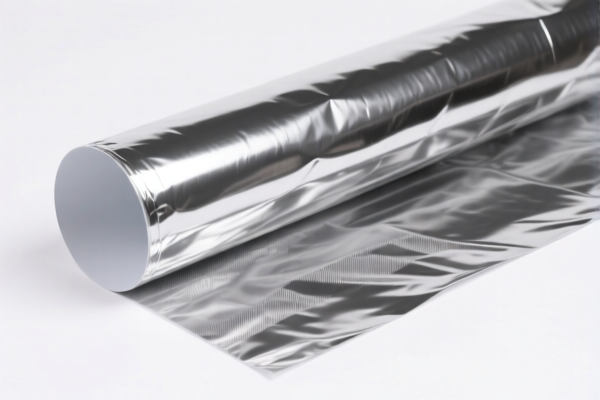

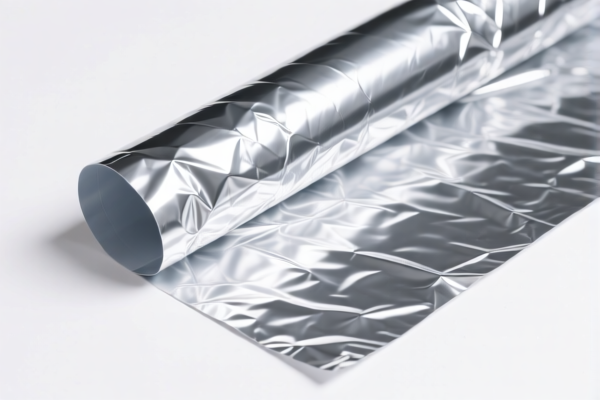
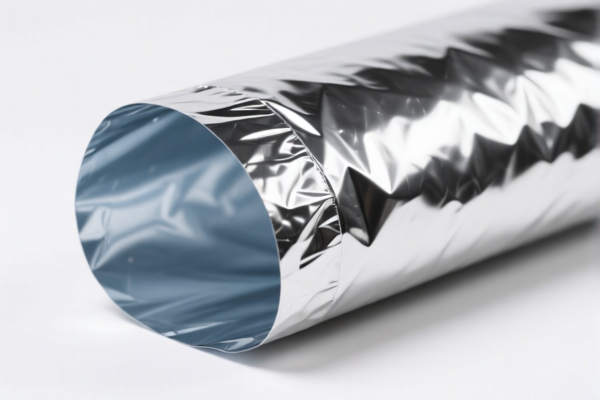
AI Analysis
🛍️ PVC Textile Composite Shopping Bag (PVC纺织复合收纳箱/袋)
🌐 HS Code Reference & Customs Clearance Guide | 2026 Latest Tariff Analysis | Professional Compliance Strategy
📌 I. Product Definition & Classification: What Exactly Is a "PVC Textile Composite Bag"?
The PVC Textile Composite Shopping Bag is a hybrid container combining the durability of textiles with the waterproof/wear-resistant properties of Polyvinyl Chloride (PVC). In international trade, its classification hinges on the primary material and structural composition. It is NOT simply a "plastic bag" nor a standard "textile bag," but a composite article.
Key Distinctions: 1. Plastic-Primary (Housing Function): If the PVC layer dominates the visual and functional aspect, it may fall under Chapter 39 (Plastics). 2. Textile/Container-Primary (Usage Function): If it functions primarily as a storage container or shopping bag with a composite exterior, it often falls under Chapter 42 (Articles of Leather; Saddle Harness and Drapery; Travel Goods, Handbags).
⚠️ Critical Classification Point:
- If viewed as a "Plastic Household Item" (rigid or semi-rigid storage) → Chapter 39.
- If viewed as a "Travel/Storage Container" with composite surface → Chapter 42.
- Misclassification Risk: Declaring as a simple "Plastic Bag" (HS 3923.20) is incorrect and leads to severe penalties if it is a structured container.
📦 II. HS Code Classification Details (2026 Latest Tariff Authority对照)
| HS Code | Product Description (Summary) | Applicable Scenario | Primary Material Characteristic |
|---|---|---|---|
3924.10.40.00 |
Plastic Household Articles (PVC Textile Composite Storage Box) | Rigid/Semi-rigid storage boxes, home organizers, waterproof bins | Plastic-Dominated: Classified as household plastic goods due to PVC coating/structure. |
3924.90.56.50 |
Other Plastic Household Articles (PVC Textile Composite Storage Box) | Non-standard plastic household items, composite storage solutions | Plastic-Dominated: Other plastic household items not specifically listed elsewhere. |
4202.92.93.36 |
Containers with Outer Surface of Plastic Sheeting or Textile Materials | Structured shopping bags, foldable storage bags, travel organizers | Container-Dominated: Classified as a "container" where the exterior is plastic/textile composite. |
4202.92.97.00 |
Similar Containers with Outer Surface of Plastics or Textile Materials | Similar structured bags, generic composite storage bags, promotional bags | Container-Dominated: Broad category for composite-surface containers. |
🔍 Key Reminder:
- Rigid/Semi-Rigid Boxes are often pushed toward Chapter 39 if they function primarily as "household articles." - Foldable/Soft Structured Bags are typically classified under Chapter 42 as "travel or storage containers." - The USITC Footnotes and Section XVI Exclusions play a huge role here. If it's clearly a "bag" for shopping/storage, Chapter 42 is more accurate for structure.
💰 III. 2026 Latest Tariff Rate Breakdown (Including Additional Duties & Policy Surcharge)
✅ Applicable Country: United States (US)
✅ Origin: China (CN)
✅ Effective Time: 2025/2026 (Current Trade War Rates)
🎯 1. 3924.10.40.00 & 3924.90.56.50 —— Plastic Household Articles (Chapter 39 Route)
| Item | Content |
|---|---|
| Base Tariff | 3.4% (Ad Valorem) |
| Section 301 Surcharge | 0.0% (for 3924.10.40) / 7.5% (for 3924.90.56) |
| Section 122 Tariff | +10% (Specific surcharge for PVC/Composite articles in some contexts) |
| Total Tariff | 13.4% (for .40.00) / 20.9% (for .56.50) |
| Tax Calculation | CIF Value × Total Rate |
| De Minimis Eligibility | ❌ No (Deny De Minimis for Section 301/122 items) |
| Legal Basis Path | HTSUS:3924 → USITC:3924.10.40.00 + Section 301 Footnote |
📌 Explanation:
- The 13.4% rate for3924.10.40.00is relatively lower because the Section 301 surcharge is 0% for this specific subheading.
- The 20.9% rate for3924.90.56.50includes a 7.5% Section 301 surcharge + 10% Section 122 tariff.
- Caution: If the customs officer disagrees with the "Household Article" classification and views it as a "Container," you will face a re-classification penalty.
🎯 2. 4202.92.93.36 & 4202.92.97.00 —— Containers with Composite Surface (Chapter 42 Route)
| Item | Content |
|---|---|
| Base Tariff | 17.6% (Ad Valorem) |
| Section 301 Surcharge | +25.0% (High surcharge for Chinese-made containers) |
| Section 122 Tariff | +10% |
| Total Tariff | 52.6% |
| Tax Calculation | CIF Value × 52.6% |
| De Minimis Eligibility | ❌ No |
| Legal Basis Path | HTSUS:4202.92 → USITC:4202.92.93.36 / 4202.92.97.00 + Section 301 Footnote |
📌 Explanation:
- This is the highest risk category. If classified as a "Container" (Chapter 42), the base duty is 17.6%.
- Plus 25% Section 301 surcharge (standard for many Chinese imports) and 10% Section 122 tariff.
- Total 52.6% is extremely high and may render the product uncompetitive in the US market.
- Strategy: Avoid this classification if possible. Argue for "Plastic Household Article" (Chapter 39) if the product is rigid or primarily plastic.
🛠️ IV. Customs Clearance Practical Advice (Avoid Pitfalls)
✅ 1. Documentation Checklist (Non-Negotiable)
| Document | Must Provide | Description |
|---|---|---|
| ✅ Product Specifications | ✔️ | Detailed breakdown: PVC thickness, textile type (e.g., Oxford cloth, non-woven), dimensions, weight. |
| ✅ Composition Ratio | ✔️ | Proof of material composition (e.g., "70% PVC, 30% Polyester Textile") to support Chapter 39 vs 42 argument. |
| ✅ Photos (360°) | ✔️ | Clear images of the bag's structure, handles, closures, and interior. Show if it's rigid or foldable. |
| ✅ Commercial Invoice | ✔️ | Clearly state "PVC Textile Composite Storage Box/Bag" – Avoid vague terms like "Plastic Bag." |
| ✅ Packing List | ✔️ | Indicate if items are sold as a set (e.g., bag + lid + accessories). |
| ✅ Material Test Report | ✔️ | Third-party lab report confirming PVC and textile content. |
✅ 2. Declaration Strategy (Key Mantra)
🔥 “Structure Determines Category, Plastic Lowers Tax, Composite Needs Proof!”
| Scenario | Correct Declaration | Incorrect Action |
|---|---|---|
| Rigid/Semi-Rigid Storage Box | Declare as Household Plastic Article (3924.10.40.00) → 13.4% |
Declare as "Container" → 52.6% |
| Foldable/Soft Shopping Bag | Attempt to declare as Household Plastic Article (3924.90.56.50) → 20.9% |
Declare as "Travel Bag" → 52.6% |
| Highly Structured/Branded Bag | Must use Chapter 42 (4202.92.9x) → 52.6% |
Try to force Chapter 39 → Risk of audit/fine |
| Simple Plastic Bag (No Textile) | 3923.20 (Not applicable here) |
Do not use HS 3923.20 for composite bags |
✅ 3. Special Circumstances Handling
| Situation | Handling Advice |
|---|---|
| OEM Custom Bags | Provide design drawings. If the design mimics a "household bin" more than a "shopping bag," argue for Chapter 39. |
| Mixed Shipments | Do not mix "Plastic Household Articles" with "Travel Goods" in one B/L if possible to avoid complex scrutiny. |
| Pre-Ruling Application | Highly Recommended! Submit an Advance Ruling Request to US CBP with photos and specs. This locks in the HS Code and protects against retroactive penalties. |
| Section 122 Impact | Note that the 10% Section 122 tariff applies to many PVC-related items. Ensure your supplier understands this cost is non-negotiable. |
🌍 V. Global Market Comparison (2026 Latest)
| Country/Region | Recommended HS Code | Tariff Rate | Certification | Notes |
|---|---|---|---|---|
| 🇺🇸 USA | 3924.10.40.00 |
13.4% | ASTM, CPC (if for kids) | Avoid Chapter 42 (52.6%)! |
| 🇨🇳 China | 3924.10.40.00 |
5.0% | CCC (if applicable) | Lower import duty, but export restrictions may apply. |
| 🇪🇺 EU | 3924.10.40.00 |
6.5% | CE, REACH, LFGB | No Section 301/122 equivalent, but high VAT. |
| 🇬🇧 UK | 3924.10.40.00 |
6.5% | UKCA | Post-Brexit rules apply. |
| 🇨🇦 Canada | 3924.10.40.00 |
5.0% | Health Canada | NAFTA/USMCA preferential rates may apply if manufactured in NA. |
📌 Conclusion:
- The US market is the most critical due to the 13.4% vs 52.6% disparity.
- Always aim for Chapter 39 (Plastics) if the product has any rigid or semi-rigid structure.
- Chapter 42 (Containers) is a "tariff trap" for PVC textile composites from China.
📌 VI. Common Mistakes & Pitfalls (Lessons Learned)
❌ Mistake 1: Calling it a "Plastic Bag" (HS 3923.20)
👉 Consequence: CBP will reclassify it as a "Composite Article" → 52.6% tariff + penalties.
❌ Mistake 2: Ignoring the "Section 122 Tariff"
👉 Consequence: Even if you get 0% Section 301, the 10% Section 122 tariff still applies. Do not budget it out!
❌ Mistake 3: Declaring as "Travel Bag" (Chapter 42) for a simple storage box
👉 Consequence: You pay 52.6% instead of 13.4%. Profit killer!
❌ Mistake 4: No Material Composition Proof
👉 Consequence: CBP assumes worst-case scenario → Higher duty rate.
✅ Correct Practice:
"PVC Coated Oxford Fabric Storage Bin, Semi-Rigid, Household Use, Model XYZ, Composition: 70% PVC, 30% Polyester."
🎯 VII. Conclusion: Professional Declaration, Cost Savings!
🎯 Remember the Mantra:
🔹 "Rigid = Plastic (13.4%), Soft = Plastic (20.9%), Structured Bag = Container (52.6%)!"
🔹 "Don't let 'Bag' mislead you. 'Household Article' is your friend!"
🔹 "Section 122 is 10%. Don't forget it!"
📌 Pro Tip:
If your product is foldable, emphasize its use as a "Household Organizer" or "Storage Box" rather than a "Shopping Bag." Provide photos showing its structural integrity (e.g., standing upright, holding heavy items). This supports the Chapter 39 classification.
📣 Immediate Action:
📞 Consult a licensed Customs Broker.
📤 Submit a Pre-Ruling Request with photos and material specs.
🚀 Save 39.2% in tariffs by choosing the right HS Code!
✨ Professional Clearance Starts with Accurate Classification!
💼 Your Every Cent Counts!
Customer Reviews
About HS Code Classification
The Harmonized System (HS) is an internationally standardized nomenclature developed by the World Customs Organization (WCO) to classify traded products. Over 200 countries use the HS system as the basis for customs tariffs, trade statistics, and import/export regulations.
Each HS code follows a hierarchical structure:
- Chapter (2 digits) — Broad category of goods (e.g., Chapter 84: Machinery and Mechanical Appliances)
- Heading (4 digits) — More specific grouping within the chapter
- Subheading (6 digits) — Internationally standardized breakdown, used by all WCO member countries
- National subdivisions (8-10 digits) — Country-specific extensions for further classification, such as US HTSUS 10-digit codes
Correct HS code classification is essential for smooth customs clearance, accurate duty payment, and compliance with trade regulations. Misclassification can lead to customs delays, overpayment of duties, or penalties.
When importing from CN to US, the applicable tariff rates may include:
- Most-Favored-Nation (MFN) rate — The standard duty rate applied to WTO members
- General rate — Applied to countries without trade agreements
- Trade remedy duties — Additional tariffs such as Section 301 (anti-dumping), Section 232 (national security), or countervailing duties
The information provided on this page is for reference purposes only. For official classification, please consult with your local customs authority or a licensed customs broker.